Please ensure Javascript is enabled for purposes of website accessibility

Ruben Gallego and Kari Lake to face off in debate for Arizona Senate

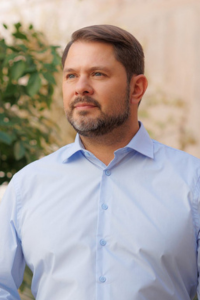
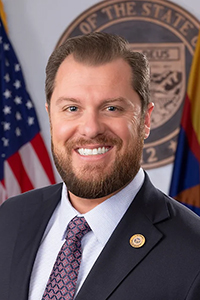
Ruben Gallego and Kari Lake meet Wednesday for the only debate of the Arizona Senate race, a matchup that comes as voters begin casting ballots in a contest that will help determine control of the U.S. Senate.

Lake, a well-known former television news anchor and a darling of the populist right, has tried but struggled to redefine herself since losing the 2022 race for governor.

Gallego, a Democratic congressman representing largely Latino areas of Phoenix, has used his financial advantage over Lake to run ads playing up his military service and up-by-the-bootstraps personal story rather than his progressive record in Congress.

The debate, which will air live on most television stations across the state at 9 p.m. EDT, presents Lake with a chance to reset a race where polls and observers suggest she’s modestly trailing. For Gallego, it’s an opportunity to introduce himself to voters who still don’t know him.

Both candidates are working to win over a small share of Republicans and conservative independents who are open to splitting their vote between the parties. This group has been instrumental in the rise of Democrats in Arizona, which has transitioned from a Republican stronghold to a battleground state over the past decade.

They’ve fought to focus voters on the territory most favorable to them.

For Gallego, that’s abortion rights after a state Supreme Court ruling outlawed virtually all abortions until the Legislature rolled it back to 15 weeks. Lake has spoken favorably of stricter limits.

Lake prefers to talk about the U.S.-Mexico border. She paints a dire picture of drug and human trafficking, and she links Gallego to record border crossings and scenes of disorder during President Joe Biden’s administration. She highlights his prior comments critical of a border wall.

Lake is an unflinching supporter of former President Donald Trump and his lie that he lost the 2020 election because of fraud. She has never conceded she lost her own 2022 race for governor, and continued to fight the outcome in court even after launching her Senate campaign. Separately, she’s tried and failed to convince courts, including the U.S. Supreme Court earlier this year, to outlaw the use of electronic voting machines.

She’s also highlighted Ruben Gallego’s 2016 divorce from Kate Gallego, who is now the mayor of Phoenix. Noting the marriage ended weeks before the couple’s son was born, Lake says Gallego abandoned his wife while she was pregnant. Kate Gallego has endorsed her ex-husband and campaigned with him as recently as last week.

Gallego is a military veteran who has served in Congress for a decade.

The son of immigrants from Mexico and Colombia, he was raised in Chicago by a single mother and eventually accepted to Harvard University. He enlisted in the U.S. Marine Corps Reserve while he was on a break from Harvard. He fought in Iraq in 2005 in a unit that sustained heavy casualties, including the death of his best friend.

GOP senator tries to get Green Party candidate in TV debate

A Freedom Caucus senator is still pressing to include a Green Party candidate in the U.S. Senate debate, which is just one week away.

The ongoing feud between Sen. Jake Hoffman, R-Queen Creek, and the Citizens Clean Elections Commission is centered around their decision to require that candidates receive at least 1% of the total ballots cast in all primaries to participate in general election debates. 

The commission partnered with the Arizona Media Association for broadcasting during the election cycle, and the two decided on the rules that would govern the debate season. 

The rule excluded Green Party candidate Eduardo Quintana from the U.S. Senate debate between candidates Kari Lake, a Republican, and Ruben Gallego, a Democrat. Quintana fell significantly short of the requirement, with about .02% of the total primary votes cast. 

In a letter to the commission on Tuesday, Hoffman asked the Clean Elections Commission to submit their general election candidate qualifying rule to the Governor’s Regulatory Review Council after he alleged that the commission “acted outside of its scope of authority by attempting to create legislative policy excluding candidates from participating in public debates.”

Specifically, Hoffman said the “1% Debate Exclusion” rule was adopted by the commission without the opportunity for public comment that is required under the Arizona Administrative Procedures Act. 

Executive Director Tom Collins said the commission had acted within its right to make a “discretionary decision” by enacting the rule. 

He said the commission had “reasonably exercised its delegated discretion to limit who may participate in a particular debate based on threshold criteria determinations it deems necessary given the input it received from its contracted/broadcast consultants,” in a letter sent to Hoffman on Sept. 12. 

Collins compared Quintana to a Libertarian candidate who was allowed to participate in a CEC debate in 2022. Collins noted that Quintana had not registered a campaign committee with the Federal Elections Commission, going on to state that “it did not appear that he qualified as a ‘candidate’ for purposes of the Commission debate rule.”

Hoffman called the CEC’s letter a “because-I-said-so response completely devoid of legal merit.” 

“Arizona law only gives the Commission discretion to determine the manner in which debates are conducted,” Hoffman said in the letter. “It does not, as your letter contends, give the Commission unfettered discretion to pick and choose which candidates get to participate. Arizona law is clear. The Commission is required to ‘[s]ponsor debates among candidates.’” 

Hoffman said that the state’s law regarding candidacy varies from the federal requirements. 

“Under Arizona law, a person can be a candidate for a public office as long as they expend or receive a single cent,” Hoffman said. 

AMA President and CEO Chris Kline said the rule would not be changed ahead of the upcoming debate, in part, because most had already taken place and it would be unfair to the previous candidates to change the regulation. 

“Our goal is to be as inclusive as possible, but also to make sure that these debates are seen and engaged with by as many people as humanly possible, and it’s a delicate, complicated balance to strike, which is why we try to create the lowest possible threshold,” AMA president and CEO Chris Kline said. “We built this rule as part of the new partnership, as the best opportunity we could come up with to be fair and inclusive. We live in a world of changes every day, and we want to ensure that we continue to talk to lots of folks, and we are staying as nimble as humanly possible, but I don’t have another solution.”

Kline said he does not imagine the 1% threshold for general election debates lowering in the future, but noted that not having a solution now “doesn’t mean that it’s not a part of the conversation.”

Despite Hoffman’s request, all signs from the commission and AMA indicate that they plan to follow through with Lake and Gallego as the debate’s sole participants. 

“Clean Elections is reviewing Sen. Hoffman’s lengthy letter,” CEC said in a prepared statement. “Clean Elections will continue to engage with Sen. Hoffman regarding this issue and looks forward to a spirited debate next week.” 

Hoffman said the commission should have “nothing to fear from holding an open and public process for promulgating rules” if it views the rule as a good idea. 

“Evading this process invites litigation, calls into question the independence of the Commission, and deprives Arizona citizens of the protections afforded under the APA,” Hoffman said. 

However, he has not said whether or not he plans to take further action if the rule is not scrapped ahead of the debate, which is scheduled for Oct. 9.

Key Senate race in Arizona could hinge on voters who back Trump and the Democratic candidate

PHOENIX (AP) — If Ruben Gallego is going to give Democrats their fourth straight U.S. Senate victory in Arizona, he’s probably going to need support from an unlikely group: Donald Trump voters.

Gallego and his GOP rival, former television news anchor Kari Lake, are both targeting undecided Republicans in a contest that will test the strength of Trump’s coattails. Ticket-splitting voters are increasingly rare in an era when partisan loyalty reigns, but they could be central in determining which party controls the Senate.

For Gallego, that means winning over voters like Winfield Morris, a 62-year-old Republican farmer and rancher who plans to vote for Trump for president but can’t get behind his loyal ally in the Senate race.

“I don’t like Kari Lake and I’m not going to vote for her,” said Morris, who lives in southern Arizona and has businesses across the state. “I don’t think she has what it takes.”

Morris supported former U.N. Ambassador Nikki Haley over Trump and Pinal County Sheriff Mark Lamb over Lake in the GOP primaries. He said he was furious to see Lake attack the late Arizona Republican Sen. John McCain in her failed 2022 campaign for governor. Trump also has attacked McCain, but Morris said he doesn’t see Democrat Kamala Harris as a viable alternative.

Morris said he likes that Gallego was a Marine and may vote for him but wants to learn more about him. He’s also considering writing in a Republican he respects, such as Lamb, who got 40% of the vote in the Senate primary despite being vastly outspent and overshadowed by Lake.

Democrats have a difficult path to keep the Senate

Democrats’ difficult path to retaining control of the Senate relies on winning over Republicans in states so red, neither presidential candidate is putting much effort into winning them. But some of those races involve established incumbents who already have a record to run on.

An ad supporting Montana Sen. Jon Tester — one of the most endangered Democrats in the Senate, who has declined to endorse Harris — showcases Republicans crossing party lines.

“Jon got over 20 bills signed into law by President Trump,” one man says in the ad.

Trump is well positioned in Ohio, but the race between incumbent Democratic Sen. Sherrod Brown and Republican challenger Bernie Moreno could be more competitive.

The effort to win over ticket-splitters is harder for less established candidates, but some are trying. In North Dakota, longshot Democratic Senate candidate Katrina Christiansen released an ad this week narrated by a rancher who says he’s voting for Trump but not for Republican Sen. Kevin Cramer.

In swing-state North Carolina, where Republican Mark Robinson’s campaign for governor is struggling following a CNN report linking him to disturbing posts on an online porn site, the Trump campaign is counting on ticket-splitting in the opposite direction, hoping GOP voters who bail on Robinson will stick with the former president in a state he badly needs to win.

In Arizona, meanwhile, Gallego is hoping to replicate the model that has propelled Democrats to narrow statewide victories since Trump’s first victory, including Sens. Kyrsten Sinema and Mark Kelly and Gov. Katie Hobbs, who defeated Lake in 2022.

He’s getting plenty of help. Democrats so far have outspent Republicans on advertising by a wide margin on the race, according to AdImpact, which tracks campaign ad spending. As of Thursday, Democrats had spent $60.7 million on the race, compared to $16.4 million spent by Republicans. Democrats also have $35.7 million in spots reserved between now and Election Day, compared to $11.7 million reserved by GOP-affiliated groups.

Gallego’s strategy relies on Democrats keeping their own supporters united, getting a majority of independents and picking up a small but decisive share of Republicans by appealing to conservatives who dislike Trump.

“Especially in modern times, to have ticket splitters that big is extraordinary. But I think it’s entirely accurate,” said Mike Madrid, a California-based Republican strategist who has worked to defeat Trump. “They’re sticking more to Trump because he’s the top-of-the-ticket nominee, and losing the presidency is a lot different than losing a Senate seat.”

Republicans have had a hard time replicating Trump’s coalition

Celebrity candidates who are close to Trump but lack strong ties to the GOP establishment have had a hard time replicating Trump’s coalition, Madrid said. Television doctor Mehmet Oz and football legend Herschel Walker both lost Senate races two years ago. As a well-known local news personality, Lake fits the mold.

Both Lake’s and Gallego’s messaging reflect the importance of undecided Republicans to the outcome of the race.

Both are running ads focused on border security, almost exclusively so in Lake’s case. Gallego even gently rebukes the Biden-Harris administration in one ad playing in heavy rotation, saying, “Arizonans know — on the border, there is no plan.” He did not appear with Harris when she visited the Arizona-Mexico border on Friday.

And both Gallego and Lake are showcasing support from Republicans. For Gallego, it’s a businessman who says in ads he’s a Republican and calls the congressman a “man of principles.” For Lake, it’s Trump himself, as she reminds his supporters that he’s backing her. She’s been one of his most steadfast allies, embracing his lie that the 2020 election was stolen from him due to widespread fraud.

The cross-currents of divided loyalties among traditionally Republican groups often surface at campaign events. For example, the Arizona Police Association, which represents thousands of officers in the state, endorsed Gallego, citing his background as a Marine combat veteran. Just three days earlier, Trump called the group’s president, Justin Harris, to the stage to bestow an endorsement on the former president at a rally outside Phoenix.

Gallego hopes there’s more where that came from, and there’s some history to suggest that’s possible.

In 2020, Republican Senate candidate Martha McSally privately fretted that she was running behind with Trump voters, which turned out to be the case. While Trump lost Arizona by 10,457 votes — .03 percentage points — McSally lost by 78,806 to Kelly, indicating tens of thousands of voters split their tickets.

Some observers say Gallego fits the profile of the kind of candidate who could replicate the path forged by Kelly, a tough-talking former astronaut.

“Ruben is a legitimate tough guy,” said Stacy Pearson, a Phoenix-based Democratic strategist, who ran the successful 2016 campaign to oust Maricopa County Sheriff Joe Arpaio, which relied on voters who backed Trump at the top of the ticket. “He’s an Iraq War vet. He is a person who sincerely pulled himself up by his bootstraps, and that resonates very much with this Western state.”

___

Associated Press writers Jack Dura in Bismarck, North Dakota, and Amy Beth Hanson in Helena, Montana, contributed to this report.

US Senate candidate fights to keep divorce documents sealed

Ruben Gallego is asking the state Court of Appeals to keep a legal lid on his 2016 divorce papers from ex-wife and Phoenix Mayor Kate Gallego.

Documents filed with the court show that when the then-congressman and now candidate for U.S. Senate filed for divorce while Kate was pregnant, he took the case to Yavapai County even though the address he provided to election officials was in Phoenix. He also sought – and was granted permission – to seal the entire proceedings, not just the filings but even the fact that there was a case on the docket.

The divorce itself became public later as Gallego married lobbyist Sydney Barron, who was working for the Democratic Senatorial Campaign Committee and now is employed by the National Association of Realtors.

But what remains sealed according to legal filings by The Washington Free Beacon is why he filed for divorce while Kate was pregnant “as well as the court’s findings regarding the reasons for granting the request to dissolve the public act of the appellants’ marriage.” It also wants details of the custody arrangements for the child.

The privately owned, for-profit online newspaper behind the fight to unseal the records was founded in 2012 and describes itself as “dedicated to uncovering the stories that the powers that be hope will never see the light of day.”

It is credited with publishing several national stories ranging from a complaint against the former president of Harvard University about accusations of serial plagiarism to releasing documents in 2014, while Hillary Clinton was running for president, about the recollections she shared with a friend about Bill Clinton’s time in the White House.

In this case, attorneys for the publication turned this year to Yavapai County Superior Court Judge John Napper, who did not handle the original case, seeking to open up the records.

Ruben and Kate, represented by the same Phoenix law firm, responded by proposing to release redacted versions of what was in the file. That, however, did not satisfy the publication.

“Without even yet having access to what was being redacted, The Free Beacon could see that the proposed redactions led to a docket that looked like a Central Intelligence Agency classified file, with page and pages of black ink designed to make sure no one was going on,” attorneys for the publication wrote.

Napper, according to the court filings, did not accept what Ruben and Kate sought to keep secret, instead ordering release with specific redactions. And the judge, the attorneys for the publication said, ruled that “the original order sealing the entire file was improper” under court rules.

Now the issue is before the Court of Appeals. And the publication wants an order unsealing the record before early voting starts Oct. 9.

“At stake here is the right of the press to inform the public and voters’ rights to be informed about a candidate prior to the election, with time to digest and process the information,” the lawyers for the Beacon told the court.

It’s not just Ruben’s bid for the open Senate seat being vacated by Kyrsten Sinema that is before voters. The Democrat is facing off against Republican Kari Lake.

But Kate herself is facing a reelection challenge in the nonpartisan race for Phoenix mayor against Matt Evans.

Meeting that deadline sought by the Beacon is not going to happen.

While the appellate judges agreed to the request by the publication’s attorney to expedite the case, they have scheduled the issue for conference for Oct. 10. And whoever loses that argument is virtually certain to seek Arizona Supreme Court review, further delaying a resolution.

What’s in those records, the publication argues, is a public record – and not just because that’s the presumption with all court records.

“The Free Beacon seeks the release of court documents that reflect the character and behavior of a public figure holding and running for federal office, and one official who currently holds executive authority over one of the nation’s largest cities,” the attorneys are telling the appellate court.

Attorneys for the couple, represented by the same law firm, did not respond to a request for comment. Instead, they have filed their own legal arguments with the appellate court against disclosure.

What those arguments are, however, remains unknown: Their lawyers have sought and obtained permission from the appellate court to keep those sealed.

Hannah Goss, the campaign press aide for Ruben, declined to make him available. Instead, she issued a prepared statement by Ruben and Kate blaming the whole situation on Lake and “her allies and those who amplify her cruelty (who) refuse to respect two people who are just trying to raise a beautiful baby boy together.”

It is true that Lake, in a series of social media posts, is already making an issue of all this.

“What’s in those divorce papers that he is fighting tooth and nail to keep from voters ahead of the election even though a judge ordered them unsealed?” she posted.

Goss, however, cited no evidence that the Beacon lawsuit was instigated or influenced by Lake. And the GOP candidate, in her own prepared statement, said she has “nothing to do with this lawsuit,” saying the litigation to keep the records sealed is just his demand for “special treatment.”

“But Ruben’s reaction to it means that whatever is about to come out about his behavior during the divorce is very bad,” she said.

What those records at issue are likely to include is Ruben’s self-admitted efforts to deal with post-traumatic stress syndrome after he returned from Iraq after serving in the Marines from 2002 to 2006.

“I was drinking a lot,” he wrote in his memoir, “They Called Us ‘Lucky.’ ”

“I couldn’t stay in the same place for very long – a chair, the house,” Ruben wrote. “When I went out to a restaurant, I could only spend a small amount of time there. Stay too long in one place, and you’re likely to get mortared.”

Ruben details how he proposed to Kate Widland at the 2008 Democratic Convention where both were volunteers for the Obama campaign. They wed two years later, the same year he was first elected to the state House.

Four years later, he won his bid for Congress.

He also wrote about the breakup, fueled not only by his PTSD but the anticipated arrival of a son.

“Eventually, we both came to the point where we realized we had grown apart from each other in many ways,” Ruben said. “We separated when she was still a few months from giving birth.”

In seeking to open up more of the records, the lawyers for the Beacon say there’s no reason to shield them – and what is in them – from public view. Instead, they referenced what appears to be a claim in the still-sealed filings by the couple that it would somehow affect their safety or that of their child.

“The Gallegos fail to make any particularlized showing about about what information should have been redacted from the case file to protect their ‘safety’ or documenting any existing and serious threat to their safety,” the attorneys for the Beacon told the appellate judges.

What’s in the divorce file, they said, is “historical conduct” and how that might bear on the custody of the yet-to-be-born child.

“Waving the red flag of ‘safety’ without any details as to how this information might affect it falls well short of justifying a seal for any part of the docket, much less all of it,” the lawyers told the appellate court. “It is more likely that appellants are using secrecy and sealing to protect their (ITALICS) job safety (ROMAN) in the positions of public trust as mayor, congressman, and aspiring U.S. senator.”

Kate, who has been Phoenix mayor since 2019, is more than his partner in the legal bid to keep the records sealed. She also is a political supporter.

“I know first-hand his commitment to building a brighter future for Arizona,” she said in a statement last December released by Ruben’s campaign.

“We have real challenges facing our state that require a leader who is dedicated to fighting for working families and the most vulnerable,” she said. “He’ll do an excellent job working for all of us as our next senator.”

Ruben’s ability to avoid talking about the divorce publicly may not last. He is scheduled to face off against Lake in a debate Oct. 9 sponsored by the Citizens Clean Elections Commission.

Protect Medicare Advantage for seniors, including veterans

As the November elections approach, one issue that should be top of mind for Arizona lawmakers is seniors’ access to quality, affordable health care. For older Arizonans, this is not just another policy debate – it’s a daily concern that impacts our lives, financial security and peace of mind.

Arizona veterans are no different. You may not know that millions of veterans – like me – don’t rely solely on the VA for our medical care. Instead, we’ve chosen to enroll in a Medicare Advantage plan.

A recent study found that more than 1 in 3 U.S. veterans – over 35% – are utilizing Medicare Advantage. There are plenty of reasons why. My plan goes far beyond routine care, and includes prescription coverage, dental, vision and hearing – services often not included with traditional Medicare. A full range of preventative care is covered, even access to fitness programs.

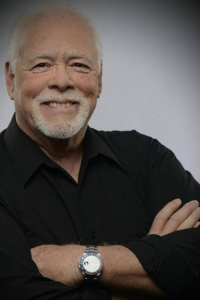
David Lucier

Getting seen by a doctor, nurse or health specialist can be challenging for veterans who don’t live near a VA facility, especially in rural Arizona. That’s another reason why many of us choose Medicare Advantage, which covers both in-person and telehealth medical visits.

Other issues may draw more headlines, but health care remains one of the biggest concerns for American voters. A Pew Research poll this spring found that health care affordability was the third biggest issue among all voters, trailing only inflation and partisan gridlock among all topics. Separately, issues related to health care affordability comprised five of the top six concerns cited by U.S. voters over the age of 50, according to a University of Michigan Institute for Healthcare Policy & Innovation survey earlier this year.

It’s no surprise, considering the number of seniors like me who live on a fixed income. That’s why I’m glad I can choose Medicare Advantage, which has plans with low monthly premiums and caps out-of-pocket costs. 

Medicare Advantage remains a program with bipartisan support. In particular, I thank Congressman Ruben Gallego for being a Medicare Advantage champion who consistently stands up for Arizona seniors and their need for low-cost, accessible care.

As we prepare to cast our ballots in the coming weeks, Arizona seniors will be watching closely to see which candidates prioritize our issues, including health care choice and affordability. And we will be voting – during the 2020 election, adults over the age of 50 made up more than half of all voters. 

Arizona elected officials must remember that Medicare Advantage is more than just a line item in a budget. It’s a lifeline for nearly 700,000 Arizonans, including veterans like me. 

David Lucier is a combat veteran and Green Beret with the U.S. Army. He lives in Tempe.

Endorsements from Parkland survivors group elevates gun debate in Arizona races that pit Democrats against NRA-backed Republicans

WASHINGTON – March For Our Lives, the group founded by survivors of a 2018 high school shooting rampage in Parkland, Florida, has thrown its weight behind Democrats in two contentious races in Arizona.

In the fight for an open U.S. Senate seat, the group is backing U.S. Rep. Ruben Gallego of Phoenix over Kari Lake, and former state Sen. Kirsten Engel of Tucson, who is challenging first-term U.S. Rep. Juan Ciscomani, a Tucson Republican.

March for Our Lives lauded Gallego’s support for universal background checks, expansion of mental health resources and a ban on “assault-style” weapons such as AK-47s and AR-15s.

Parkland
U.S. Rep. Ruben Gallego of Phoenix is the Democratic nominee for U.S. Senate and is facing off with Republican Kari Lake. (Photo from Ruben Gallego for Arizona)

“We’re really excited about getting involved in Arizona and we really think that young people are going to make a big difference in this race,” said Alexa Browning, the group’s policy manager.

She cited Engel’s support for expanded background checks and “safe storage” mandates to keep guns away from minors and anyone who might be a danger to themselves or others.

”That can really help with the suicide issue that’s going on in Arizona,” she said.

Lake and Ciscomani are staunch critics of gun control. Both enjoy backing from the NRA. Neither responded to requests to discuss the March for Our Lives endorsements and their views on gun policy.

Lake, a former Phoenix TV news anchor, has toyed with aggressive rhetoric when it comes to gun rights.

She created a stir in April when she told supporters to “strap on a Glock” to prepare for an “intense” election. At a rally last Friday in Chandler, she told supporters, “Thank God for the Second Amendment,” after asserting that Venezuelan gangs are taking over Colorado.

In a June 2023 speech to Republicans in Georgia, Lake implied that she and tens of millions of other Trump supporters are willing to use guns to protect him from federal prosecutors or even mainstream journalists.

“Most of us are card-carrying members of the NRA. That’s not a threat. That’s a public service announcement,” she said.

Ciscomani opposes restrictions. During the 2022 race, his website touted a promise to “fight against any infringement on an individual’s constitutional right to keep and bear arms.”

Gun rights no longer appear among the priorities listed on his campaign website.

Gun Owners of America, a group that portrays itself as a better defender of gun rights than the NRA, gives Ciscomani a B+. Gallego gets an F. The group has no grades for the candidates’ opponents.

March for Our Lives – one of the largest youth-led movements in the country – had refrained from direct involvement in campaigns before this election cycle. Its first endorsement came on July 24, when it announced support for Vice President Kamala Harris, a Democrat.

Since then it has issued three endorsements in Arizona – Gallego, Engel and U.S. Rep. Raúl Grijalva, D-Tucson, who holds a safe seat – plus three others in Michigan. The group said earlier this year that it would also target elections in New York and Florida where the youth vote could make a difference.

The organization was created in the aftermath of the Feb. 14, 2018, shooting at Marjory Stoneman Douglas High School that left 17 people dead and 17 wounded.

Parkland survivors have led marches and advocated for measures aimed at reducing gun violence at all levels of government.

Gallego, a Marine Corps combat veteran, has long supported such measures while emphasizing that he supports “responsible gun ownership.”

“The vast majority of Arizonans agree we need common sense gun reform to keep our communities safe, and I’m committed to getting it done,” he told Fox News in August 2023, after the network dug up video of comments he’d recently made while stumping in Gilbert.

“We don’t focus on trying to stop everyday gun violence because a lot of politicians are afraid of the NRA and the gun lobby,” Gallego said at that event, at which he mockingly compared Republicans who collect guns to pickup drivers with “little cow nuts hanging in the back.”

He also voiced support for universal background checks for gun buyers and red flag laws, which allow authorities to take guns from people deemed a threat to themselves or others.

“Bad people should not have weapons,” he said.

In 2022, Gallego co-sponsored the Protecting Our Kids Act, which would have banned the sale of AK-47s and similar guns to anyone under age 21, beefed up penalties for gun trafficking, regulated untraceable “ghost guns,” banned large capacity ammunition magazines and curbed the use of bump stocks, devices that allow near-continuous fire with a semi-automatic.

Other gun violence prevention groups also support Gallego and Engel. Among them are Giffords, founded by former congresswoman Gabby Giffords, who survived a 2011 shooting in Tucson; and Brady, named for White House press secretary James Brady, who was paralyzed in an assassination attempt on President Ronald Reagan.

It’s unclear how much impact the gun issue will have on these races.

Polling four years ago commissioned by Everytown for Gun Safety found that 85% of likely voters in Arizona said a candidate’s position on gun policy would be an important factor when deciding who gets their vote.

Arizona ranks 12th among states with the most gun deaths per capita in 2022, and also 12th for deaths by suicide, according to the Centers for Disease Control and Prevention.

Firearms are the third leading cause of death among Arizonans under age 20, according to a 2023 report on gun violence from the Arizona Public Health Association.

Numerous studies have shown a close relationship between suicide and access to guns. A 2022 study from the Kaiser Family Foundation found that states with the most relaxed gun laws had twice as many suicides by firearm as those with the most restrictions on guns.

Arizona allows open-carry, meaning an unconcealed gun may be carried in public without a license. Since July 29, 2010, under a “constitutional carry” law, the state has also allowed anyone 21 or older to carry a concealed gun in public, with exceptions that include schools and bars.

On June 25, U.S. Surgeon General Vivek Murthy declared firearm violence a public health crisis, the first such declaration at the federal level.

“I am running for the seat once held by Gabby Giffords,” Engel said, “and firmly believe that whoever holds this seat has a special responsibility to be an advocate for the common sense measures that will help end the senseless gun violence that continues to take lives and rob our kids.”

Among other policies, Engel supports red flag laws, a ban on assault weapons, and an end to the gun show loophole that lets some buyers avoid background checks.

“We’re getting as many gun violence prevention supporters on the ground in Arizona (as possible) engaged in the legislative process,” Browning said. “We know that this fight for gun violence prevention doesn’t just start and end at elections. It’s a much deeper and long-term process.”

For more stories from Cronkite News, visit cronkitenews.azpbs.org.

Citizens Clean Elections Commission defends debate policy excluding Greens

PHOENIX — The head of the Citizens Clean Elections Commission insists his agency violated no laws or rules in refusing to let the Green Party nominee for U.S. Senate participate in the commission-sponsored debate.

In a letter to Sen. Jake Hoffman, Tom Collins said there is a reasonable basis for limiting the planned Oct. 9 event to Democrat Ruben Gallego and Republican Kari Lake. He said allowing Eduardo Quintana of the Green Party to be on the same stage would dilute the time within the 56-minute debate for viewers to hear from the other candidates who have shown significant public support based on the number of votes they got in their respective primaries.

Collins also contends that, strictly speaking, Quintana is not a “candidate,” at least under commission rules, who can participate in a debate.

“It appears that Mr. Quintana has no campaign committee registered with the Federal Elections Commission as required by federal law for candidates to raise campaign funds,” he told Hoffman.

Collins also disputed Hoffman’s contention that, in excluding Quintana, the commission violated its own published rules.

He acknowledged that the rule governing debates says that write-in candidates in the general election will not be invited to participate. But Collins said that’s as far as it goes.

“The rule does not say that the commission (ITALICS) must (ROMAN) invite everyone who may appear on the general election ballot,” he said. “So the discretionary decision about who to invite to the 2024 debates did not transgress an existing administrative rule.”

And, Collins said, the decision of who to invite, by itself, does not constitute a new rule, something that would require things like public hearings and review by the Governor’s Regulatory Review Council.

All this comes in response to a request by Hoffman, who chairs the Senate Government Committee, asking Collins to explain the decision to exclude Quintana.

He specifically questioned the decision of the commission to invite only those who had received at least 1,239 votes in their party’s primary, a figure equal to 1% of all the votes cast in all the races combined.

Quintana, a write-in at the primary level, tallied just 282 votes.

But there also was no way he could have met the threshold because there are fewer than 3,400 Green Party adherents in the state. And the party chose to have a closed primary — meaning independents could not cast ballots in that race — before they knew of the commission’s new 1% minimum.

Hoffman said he wanted answers for himself and the Government Committee about why the laws requiring rule changes to be approved was not followed.

The response did not satisfy the Queen Creek Republican.

“The Clean Elections Commission clearly believes they’re above the law,” he told Capitol Media Services Friday. “It appears they chose to subvert the voter-approved process in an effort to deter participation of a candidate in a debate who will lawfully appear on the general election ballot,” referring to the 1998 ballot measure creating the commission to provide the option of public funding for candidates and requiring it to do voter education, including debates.

But he was less clear on what’s next and what, if anything, he and his committee can do about it.

“The investigation continues,” Hoffman said.

But Quintana, who said the new rule — or whatever it is — was sprung on him and the Green Party at the last minute, said he is weighing a lawsuit.

The Tucson resident does not dispute his write-in tally. But Quintana also pointed out that the Green Party had to submit about 63,000 signatures on petitions to gain ballot status for its candidates — the same legal status as the Democrats and Republicans — an indication that there is support.

There also is a political side to all of this.

Traditional thinking is that Green Party candidates take votes from Democrats while Libertarians can siphon votes from Republicans. There is, however, no Libertarian candidate in this year’s Senate race.

In a social media post, Hoffman said the change from the procedures in prior years “exposed (the commission) allegedly rigging the U.S. Senate debates to help Democrat Ruben Gallego against Republican Kari Lake.”

And Lake’s campaign committee, in its own post, said the commission “shouldn’t be disenfranchising third parties just to protect Gallego.”

But a Gallego spokeswoman said Lake agreed to the debate — under the rules that had just the two of them participating. “And now that she’s getting cold feet she wants to change the rules,” she said.

There is no way to know whether allowing Quintana to participate in the debate — and possibly gain some votes — would affect the outcome of the race.

All recent polls show Gallego with an edge, though Lake claims that while she is behind the difference is small and can be overcome.

There also is national attention because the candidates are racing to replace retiring Sen. Kyrsten Sinema. While the former Democrat reregistered as a political independent, she continued to be aligned on most issues with her former party. And the loss of the seat to a Republican could shift the balance of power in the Senate.

In his 8-page, single-spaced response to Hoffman, Collins said the decision goes beyond the legal issues he said entitle the commission to set a threshold for participation. And what it comes down to, Collins said, is fulfilling the commission’s statutory role of public education.

Up through the 2022 campaign, commission debates had been conducted at and broadcast from the studios of KAET-TV, the Phoenix PBS affiliate.

A dust-up over the station’s decision to give Democratic gubernatorial hopeful Katie Hobbs time of her own after she had refused to debate Lake led the commission to seek an alternative.

What emerged was a contract with Rieser Advertising Agency, in partnership with the Arizona Media Association, to produce and broadcast debates this year.

Collins said that is likely to get broader viewer notice, saying that 90% of association members in TV and radio have agreed to carry the event.

But there’s a flip side to all that.

Collins said the 56 minutes for debate will be without commercials, meaning the participating stations will be giving up “substantial revenue opportunities.” And he said that means the stations want some assurance that viewers will remain interested, something that might not happen if substantial air time is given to a candidate who has little public support.

Put another way, Collins said if time has to be divided among minor candidates “many Arizona broadcasters will opt out of broadcasting the debate altogether because the debate will not long appropriately dedicated its limited time to the candidates that have shown viable candidacy.

“This undermines the voter education responsibilities of the commission,” he said.

Quintana was not impressed by what Collins said about how the decision was made to set that 1% threshold.

“I don’t understand why they had a discretionary decision to exclude an entire perspective, and that’s the Green Party,” he said.

Republicans decry Green candidate held out of Senate debate

A Republican-controlled Senate panel is launching an investigation into why the Citizens Clean Elections Commission won’t let the Green Party nominee for U.S. Senate participate in an upcoming televised debate.

Sen. Jake Hoffman, who chairs the Government Committee, is demanding answers about what he said is a new rule which says that only candidates who pick up the support of at least 1% of all votes cast in all primaries can participate in the general election debate for statewide and federal races.

That would total about 12,400 votes in the race for the U.S. Senate. But Eduardo Quintana tallied just 282 votes in the Green Party primary.

Hoffman, Freedom Caucus, conservatives, Democrats, Republicans, Prop 400
Sen. Jake Hoffman, R-Queen Creek

In fact, even if he had picked up the votes of everyone registered with the Green Party he would have tallied only 3,344.

But Chris Kline, director of the Arizona Media Association, whose members will be airing the debates, said it makes sense to limit the available time to only those candidates whose primary tallies have shown they have a reasonable chance of winning. Adding in everyone else, he told Capitol Media Services, would have diluted the ability of those viable candidates to get their message across in the 56 available minutes.

Nor was Kline persuaded by the limited number of Green Party adherents.

He pointed out that in Arizona’s open primary system, voters who are not affiliated with any recognized party are free to participate in the primary of any party. And with nearly 1.4 million unaffiliated voters in the state, Kline said there were opportunities for Quintana to find support outside his own party.

There is, however, a separate legal question.

Hoffman, a Queen Creek Republican, says that the Clean Elections Commission, which is sponsoring the debate – and is a state agency –  never got the rule limiting who could participate formally reviewed under the Administrative Procedures Act. That process, he said, would have given the Green Party a chance to object, particularly given that Libertarian Party candidate for Senate Marc Victor was invited to participate in the 2022 debate along with Democrat Mark Kelly and Republican Blake Masters.

Hoffman, in a letter Sept. 5 to members of the Clean Elections Commission, is demanding answers by Sept. 12 about why the procedures for amending the rules were not followed. The Senate debate is scheduled for Oct. 9.

What Hoffman and his committee can do about any violation –  assuming there actually is one –  is unclear. And he told Capitol Media Services he never mentioned the possibility of trying to stop the debate from going on without Quintana.

There was no immediate response from the commission.

Questions about the rules aside, the issue has political overtones.

Quintana’s bid for participation is being supported by Republican contender Kari Lake.

“The Green Party’s nominee for U.S. Senate Eduardo Quintana will be on the ballot in November,” she said in a prepared statement. “I believe we need to ensure that every candidate and every voter is heard and respected.”

But there may be some self-interest in that given what could be a close race with Democrat Ruben Gallego, it is generally understood that Green Party candidates take votes from Democrats.

Gallego, for his part, is not calling for Quintana’s inclusion.

“Kari Lake agreed to this debate weeks ago, and now that she’s getting cold feet she wants to change the rules,” said Gallego campaign spokeswoman Hannah Goss. She said Gallego looks forward to participating “under the rules that Clean Elections and the Arizona Media Association established.”

The new rule about who is in and who is not comes on the heels of a change in how Clean Elections handles debates.

Until this year, there was an agreement with KAET-TV, the Phoenix PBS affiliate, to host and air it, with other stations free to pick up the feed. The rules in effect said the only people who could not participate in a general election debate were write-in candidates.

But the Clean Elections Commission ended that practice after KAET agreed to give Democratic gubernatorial contender Katie Hobbs time of her own after she refused to participate in the official debate with Lake, the Republican nominee.

The new arrangement is with the much broader Arizona Media Association, which consists of broadcast and print outlets.

Kline said his group and commission staffers studied prior debates in an effort to improve them.

The decision was made to allow multiple candidates to participate in each party’s pre-primary debate. But he said the conclusion was that, when it came to the general election, there should be some sort of threshold based on their level of primary support to qualify to preclude having multiple candidates on the stage –  and eating up time.

He said such a standard is consistent with rules adopted not only for federal debates but also what is in place in other states.

But there’s also a financial consideration – Kline said that extending the debate to 90 minutes to accommodate multiple candidates was a non-starter with the commercial stations.

“An hour was basically the sweet spot of the maximum amount of time that we could convince all the media partners to give up for these debates,” he said.

“These are commercial-free debates,” Kline explained.

“So we’re asking TV and radio stations to, in many cases, actually lose money to do these debates and make a financial investment in the important stuff,” he said. “Had we pushed that to 90 minutes, I don’t think we would have the accessibility in order to get these debates on all TV stations and have the radio time.”


Be ready to see a lot of Ruben Gallego ads

Sick of those political ads on TV and radio?

You ain’t seen nothing yet.

A new report by AdImpact, which tracks these things, finds that politicians and the political action committees that support them have reserved almost $1.8 billion worth of commercial time between Labor Day and Election Day.

And close to $150 million of that is here in Arizona.

Most of that money, $65 million, is being devoted to the hotly contested race for the U.S. Senate, with about three-fourths of that on behalf of Democrat Ruben Gallego. In fact, AdImpact reports that Gallego himself set aside $18.3 million from his own campaign funds – the highest amount of any individual candidate in any Senate race in the nation.

The balance will come not just in whatever money that Republican Kari Lake can raise – she is far behind Gallego – but what outside interests spend here on both sides in an effort to influence the outcome.

That race has become one of the most highly watched as it could determine who gets control of the Senate. And it has become particularly important to Democrats to at least maintain their slim majority, with the House run by the GOP and the presidential race between Kamala Harris and Donald Trump being a potential toss-up in electoral votes.

Overall, AdImpact predicts more than $603 million will be spent on the 34 Senate races in 2024, And almost $348 million of that is on behalf of Democrats.

That, the organization says, should come as no surprise.

“Democrats are facing an uphill climb for control of the Senate, running against a historically challenging map,” its new report states. And Republicans, who control 49 of the 100 seats, are poised to pick up the seat being vacated in West Virginia by Joe Manchin, “meaning they are on the precipice of a majority.”

And that means winning just a single other seat currently held by a Democrat – or, in the case of Arizona, by Kyrsten Sinema who reregistered from Democrat to independent – would give them control.

In another development, NBC News just reported that the political action committee affiliated with the Congressional Hispanic Caucus is going to spend about $1.1 million in Arizona in a bid to get Gallego elected. That will be nearly $690,000 in Spanish broadcast spots, $250,000 on digital advertising and $158,000 on statewide Spanish radio.

Arizona also is crucial in the presidential race.

The most recent Cook Political Report figures 226 electoral votes are Democratic or leaning that way, with 219 for the GOP. That leaves 93 votes at play, with 270 needed to win.

And that list of toss-up states includes Arizona and its 11 electoral votes.

AdImpact says there’s nearly $40 million already reserved for ads in Arizona in the presidential race between now and Election Day.

The lion’s share of that – $34.9 million – is earmarked to elect Kamala Harris, with just $9.9 million in reservations on behalf of Donald Trump.

That, however, is less than the $86 million the company says was spent four years ago here in the same Labor Day to Election Day period.

Then, too, Democrats outspent Republicans: $51 million to $35 million. And that was just enough to have Joe Biden defeat Trump by 10,456 votes statewide.

Still, the nearly $40 million already reserved in Arizona for presidential ads this year is dwarfed by $136 million in Pennsylvania with its 19 electoral votes. Trump himself, in a recent pitch in Philadelphia, said, “If we win Pennsylvania, we win the presidency.”

That nearly $150 million estimate in total advertising spending in Arizona also includes ballot measures, though the report does not break out who has set aside funding.

Much of that is likely to be spent on Proposition 139, which would for the first time put a right to abortion in the Arizona Constitution. Even after paying for things like signature gathering, the most recent report of Arizona for Abortion Access, covering the period through the middle of July, listed more than $9.7 million cash on hand.

By contrast, It Goes Too Far, the committee organized in opposition, had less than $400,000 cash available at the same time.

In fact, AdImpact reports that almost $40 million is reserved in Arizona for commercials in that contest between Kamala Harris and Donald Trump. Only viewers in the swing states of Pennsylvania, Georgia and Michigan will see more.

Kari Lake has opportunity to improve image in debate, consultants say

Republican U.S. Senate candidate Kari Lake has an image problem with some Arizona voters that she’ll need to erase if she is to win November’s election against her Democratic opponent, U.S. Rep. Ruben Gallego.

That’s the conclusion of political observers from both sides of the aisle.

Her most likely chance to do that will be in an Oct. 9 televised debate that she finally agreed to participate in late last week. 

But Lake’s initial response to the Arizona Clean Elections Commission debate deal shows she hasn’t broken free of her tendency to be just a bomb-thrower while showing little policy chops or ability to moderate her tone to win undecided voters in the political middle.

Lake, in a tweet just this week she deleted and then reposted, took aim at Gallego, saying that Arizonans “deserve to see the difference between common sense and radicalism.”

The next two lines in the tweet, though, show Lake just can’t avoid making the petty schoolyard barbs that she’s embraced since entering the 2022 governor’s race and continued in her Senate campaign. Those antics have hurt her with those middle-of-the-road voters.

“I’ll look Ruben in the eye & tell him exactly how I feel about his policies,” she wrote. “However, to make that happen, I can’t wear heels.”

That reference to Gallego’s diminutive stature was the kind of barb that has hurt her, along with a years-long court battle she is still waging after refusing to concede her clear loss to Democrat Katie Hobbs in the 2022 governor’s race and her policy flip-flops on topics like Arizona’s now repealed total abortion ban.

Gallego had readily agreed to the debate organized by the state commission by the Aug. 16 deadline, while Lake dithered and requested a week-long extension before finally agreeing to appear on the slate with two moderators chosen by Clean Elections.

On Friday, she reposted that interview she did with a conservative group where she repeated the reference to Gallego’s height and said she wanted more debates. 

“I’ll do 10 debates if he wants to,” Lake said. “I want people to know there’s a huge difference here,” ticking off her “America First” agenda. 

The delay in agreeing to the Clean Elections debate baffled some Arizona political observers, since Lake clearly needs to boost her policy image and a formal debate has the ability to do that. Whether she embraces that chance is the wildcard, since she’s consistently refused to moderate her tone, both in 2022 and this year. 

For Lake to break out in a debate, she’ll need to ditch those antics and focus on policy, longtime Republican political consultant Chris Baker said. 

Behind in the polls and with far less cash or national fundraising prowess than Gallego, Lake needs to convince wavering voters in her own party and independents inclined to vote Republican that she’s serious about enacting conservative policy in Washington. 

“Not just talking about it, not just making appearances, not just stirring up people for attention,” Baker said.

Lake’s problem is with some suburban Arizona voters who watched her 2022 campaign and are hesitant to vote for her this year because she’s shown no sign of a real change.

“I think she has it in her to be a serious candidate and talk serious about policy,” Baker said. “But suburban Republican voters … have shown now for going on three elections that they want substance – they don’t just want talk and flash,” he said. “And she needs to cross that bridge.”

A particular issue that could boost Lake’s standing in a debate would be a focus on economic policy and conveying a real plan to address inflation, Baker said.

“I think if she does that and does it well for the next 2 1/2 months, she might have a chance,” he said.

Gallego, a five-term congressman representing a heavily Democratic south Phoenix district, has been working for two years to cast aside his liberal background and show voters statewide that he’ll be a moderate Senator. 

He has leaned into his family narrative: raised by a poor single mother, making it into Harvard University, then joining the Marine Corps and going to war when he had much more lucrative and less dangerous options. 

And in the debate and beyond, Gallego must capture the same voters that Lake is chasing.

He’s increasingly focused on not only his personal narrative but on policy – education, federal regulatory overreach, the fentanyl crisis and more, in an effort to show he’s an Arizona moderate palatable to voters. He’s championed solutions for veteran’s issues, highlighting them in a primetime speech at Thursday night’s Democratic National Convention.”

“He needs to convince those very same independent voters, those undecided voters, that he is more in line with Kyrsten Sinema-type politics than with AOC-type (liberal firebrand Rep. Alexandria Ocasio-Cortez, D-N.Y.)  or Kamala Harris-type policy,” Baker said.

Sinema, the Arizona senator who declined to seek re-election after defecting from the Democratic Party and turning independent in late 2022, started her political career as a liberal in the Arizona state Legislature. Once reaching Congress in 2011, Sinema recast herself as a moderate and continued moving to the center after winning her U.S. Senate seat in 2018.

That moderate tack could be what’s needed to win statewide in Arizona, which was a longtime Republican stronghold until the past decade, when changing demographics tilted the state and it became a presidential battleground. The result of the Lake-Gallego contest could determine the political balance in the U.S. Senate, so it has drawn national attention.

Rodd McLeod, a Democratic campaign consultant, said Gallego has the edge in the race based on his narrative and on policy. 

“Imagine a child of immigrants who grew up in a single-parent family and worked his ass off to get into Harvard,” McLeod said. “You know, you graduate from Harvard you can go to Wall Street and earn $7 trillion. And this guy decided to go to Fallujah.”

That, he said, is a powerful message.

“So the patriotism, I just think at the end of the day, even if you disagree with him on policy X, Y or Z, you’ve got to look at this guy and say he cares more about the country than he cares about himself,” McLeod said. “And that’s who I want making decisions for me in the U.S. Senate.”

Lake is working to attack Gallego on immigration, linking him with President Joe Biden and the huge surge of migrants who have entered the country since he took office in 2021. 

Mike Noble, an independent Phoenix-based political pollster, said Lake clearly has the chance to improve her image in a debate. 

“She has an opportunity to really share with Arizona voters not only her vision, but also how she compares and contrasts with Ruben Gallego, especially when it comes to Ruben’s previous voting record,” Noble said.

“One of the big differentiators between the two is that she doesn’t have a voting record,” Noble said. “He does.”

That voting record reflects the liberal heavily Democratic district he represented in Congress and, for years before that, in the Arizona Legislature.

“And given his district and everything else, there’s a lot of things to attack on,” Noble continued. That, he said, gives Lake the chance to “compare and contrast on border, on housing affordability,” as long as she is “not stepping into the goo of election integrity if she’s smart,” a reference to the fact that Lake continues to insist that the 2020 presidential election was rigged as was her own 2022 loss in the race for governor.

“So her goal, the biggest thing is just vision,” he said.

On the other side, Noble said that Gallego, with a polling and cash lead, needs to avoid debate mistakes or let Lake get his goat. 

“Ruben’s got the high ground,” he said.

“I think for him, it’s not taking the bait and keeping his composure,” Noble said, when Lake goes after him on certain items “and he is able to respond to those and not stumble over himself.”

The Clean Elections debate is set for Oct. 9, and will be broadcast on multiple television stations and streamed online across the state. The commission entered into a new partnership to produce, air and distribute their debates through the Arizona Media Association this year. 

That came after it dumped its longtime partner, Arizona PBS, after a 2022 dustup involving the gubernatorial contest between Lake and now-Gov. Katie Hobbs. After Hobbs declined a debate and the commission offered Lake a 30-minute interview slot under its debate rules, PBS independently offered the same amount of time to Hobbs, provoking Lake’s ire even though it wasn’t Clean Elections that made that decision.



CD3 recount goes to Yassamin Ansari

Former Phoenix Vice Mayor Yassamin Ansari was confirmed as the winner of the Congressional District 3 primary following the release of automatic recount results, putting her on the path to a highly likely general election victory in the heavily Democrat tilted district. 

According to the automatic recount results, announced by a Maricopa County Superior Court judge Tuesday, Ansari held onto her lead and prevailed over former Arizona Democratic Party chair and former Senate minority leader Raquel Terán by 39 votes. 

Because Congressional District 3 lies entirely in Maricopa County, the county elections department ran all ballots through the tabulation machines a second time after another round of logic and accuracy testing, submitted the results to the court and saw the final count read aloud by a judge Tuesday. 

The final tally showed Ansari received 19,087 votes and Terán received 19,048. Unofficial final election results initially showed Ansari beating Terán by 42 votes, or a 0.1% margin, which under state law triggered an automatic recount and revealed a difference of three votes. 

“When we got into this race a year and a half ago, many told me it wasn’t possible … And this victory, this 39 vote landslide victory, it’s the product of 165,000 doors that were knocked across the district,” Ansari said. “We made thousands of phone calls, wrote thousands of postcards, everything, every little thing of it mattered.”  

In a written statement, Terán said she had called to congratulate Ansari. 

“The recount concluded this morning, and though we came so incredibly close, this time, we lost,” Terán said. “This 39 vote difference has been a testament to what we as Democrats already know: every vote matters.” 

Over the course of the campaign, Ansari and Terán both highlighted their respective progressive records. 

Ansari, as former Phoenix vice mayor, emphasized her work on housing and homelessness, heat relief, climate change and workers rights, while Terán noted her work heading a repeal of the 1864 abortion ban during her time in the Senate and ensuring the election of Democrats in top state offices in 2022 as chair of the Arizona Democratic Party.  

The race between Ansari and Terán brought out millions in outside spending, and barbs over funding followed. 

On the campaign trail, Terán claimed Ansari had accepted dark money from “MAGA extremists” and zeroed in on Protect Progress, a cryptocurrency PAC in particular. Protect Progress spent about $1.4 million in support of Ansari. 

In addressing the same claims again today, Ansari noted Senate candidate and current CD3 congressman Ruben Gallego is set to benefit from $3 million in spending from the same PAC. 

“It’s a Democratic PAC supporting Democrats all across the country,” Ansari said, though she added, “I would have much preferred this race with no outside money.” 

Ansari now heads to the general election to face Republican Jeff Zink, though according to the Arizona Independent Official Congressional Map, the district is not competitive and leans Democrat. 

She said her campaign apparatus would now pivot to focus on securing wins for Senate candidate Ruben Gallego, Vice President Kamala Harris and Gov. Tim Walz, and the passage of the Arizona Abortion Access Act, and would continue door-to-door to bolster voter participation come November. 

“The tough part for us is over,” Ansari said. 


Kari Lake still deciding whether to debate

Democrat Ruben Gallego is all in on holding a Clean Elections debate with his challenger in the race for an open U.S. Senate seat. Republican Kari Lake, maybe not so much.

On Friday, Gallego’s campaign told the Arizona Citizens Clean Elections Commission, which holds candidate debates that are widely viewed across the state, that he’s prepared to participate under their standard format. But Lake’s campaign has been hesitant to agree, although a campaign spokesman said they are in ongoing “productive conversations” about a Clean Elections debate.

The state commission initially asked all candidates to respond by Friday to scheduling requests. That deadline, however, wasn’t a hard one. And the commission, at the behest of Lake – who has declined to commit so far one way or the other – agreed to give her another week to make up her mind.

What makes Lake’s balking significant is it comes just two years after a dust up when Democrat Katie Hobbs, her foe in the gubernatorial race, refused to face off against her. Arizona PBS, which was hosting the Clean Elections debates at the time, responded by giving Lake what amounted to a half-hour interview.

But the situation was exacerbated by the decision of the station to give Hobbs her own half-hour interview despite her refusal to abide by Clean Elections rules.

That decision, however, was not made by Clean Elections. And the commission in response quickly ended its long-running partnership with PBS to air its debates.

Lake spent much of the remainder of the campaign slamming Hobbs, who eventually pulled out a slim victory, for refusing to debate. For her part, Hobbs’ campaign said any debate with Lake would be a “spectacle.”

This year, Clean Elections announced a new partnership to produce, air and distribute their debates through the Arizona Media Association. Debates were simulcast on multiple television stations before July’s primary election and general election debates will also air statewide on multiple outlets.

Now, however, the shoe is on the other foot for Lake, and she’s apparently not rushing.

Gallego, for his part, is taking full advantage of her failure to decide, saying he is looking forward to participating in the Clean Elections debate “in keeping with Arizona tradition.”

“I believe Arizonans deserve to hear firsthand about the choice in this election between a Marine combat veteran with a lifetime of service and someone who is only in this race for herself,” he said in a prepared statement. “I will spend the next 80 days laser-focused on bringing Arizonans across the political spectrum together to build a better Arizona.”

In a U.S. Senate race that has already seen millions of dollars in television advertising with much more to come, a debate would be the only chance for voters – both undecided and those already committed to a candidate – to see them lay out policy and display their personalities in a side-by-side faceoff. And the result of the election could determine which party controls the Senate.

Gallego’s announcement is not a surprise.

Before Friday, he had publicly said he’s ready to participate in a Clean Elections debate with Lake. But so far Lake’s only public comments since the primary have made it clear she’s still upset with the commission, even though the decision to give time to Hobbs was not the panel’s doing.

She told NBC News earlier this month that she wants to find “a fair place, a fair platform to do that.”

Not doing a debate is politically risky for Lake, who is trailing big in fundraising and behind in all non-partisan polls. A poll sponsored by Republicans and released this week showed the race even, while one released early this month by HighGround, an Arizona consulting and polling firm not affiliated with either campaign, showed Gallego up by 11 percentage points. 

“I think it would be a missed opportunity for Kari Lake to not engage Ruben in a debate,” said Mike Noble, who runs a different Phoenix-based political polling firm.

“He has four times the amount of cash on hand,” Noble said.

“He has the better image right now among the electorate,” he continued “And he has the advantage of polling. Based on these factors, why would she not debate?”

Noble said it would be a “big win for Ruben if Kari doesn’t debate.”

And Stan Barnes, a Republican political consultant and lobbyist, said if Lake refuses to debate, it would be “a head scratcher to me.”

Barnes noted that Lake was well ahead of her primary challenger, Pinal County Sheriff Mark Lamb, in both money and refused to debate him. 

“Typically, you don’t debate if you have the advantage,” Barnes said, “Now she’s in the juxtaposed position and she’s not going to debate?”

Whether Lake agrees or not, Gallego will get a chance to use that air time under rules adopted by the Citizens Clean Election Commission, a public board that is required by law to oversee pre-election debates.

Skipping a Clean Elections debate would have been highly unusual before 2022.

The voter-created commission, which funds candidates that agree to forego private campaign funding, oversees many campaign finance rules and does voter outreach, including the debates, has done them for two decades and most major candidates signed on.

But starting in recent years, debates became easier for candidates to skip in Arizona and across the country. Some Republicans were just avoiding mainstream media events and some Democrats like Hobbs pointed to issues with GOP candidates, as she did.  


You don't have credit card details available. You will be redirected to update payment method page. Click OK to continue.