Please ensure Javascript is enabled for purposes of website accessibility

Efficiency, not water wars, can save the Colorado River

Jason Shulman

I write as a resident of Colorado, where every drop of the river matters to our farms, families, and future. I have no fiduciary interest in water. I don’t own land around it, nor any water rights attached to it. But, simply put, I like to drink water to survive so its supply in the very dry American West has always interested me. Particularly the Colorado River and the millions of us who depend on it.  

The Colorado River is the lifeline of the American West, but it is dangerously over‑appropriated. Agriculture consumes the majority of its flow, and nowhere is this more concentrated than in the Imperial Irrigation District (IID) in California and Yuma. These regions supply most of America’s winter vegetables — but they also devote massive acreage to alfalfa hay, much of it exported overseas, using about six acre‑feet of water per acre each year.

That fact often leads people to frame the problem as “food vs. alfalfa.” But I believe we can solve this without starving our nation of food. The answer is targeted efficiency — rewarding real, measured conservation and shifting crop mixes where it makes sense.

Shifting even 10% to 25% of IID’s alfalfa acreage into lettuce and wheat rotations could free up 65,000 to 160,000 acre‑feet annually while strengthening the winter vegetable supply. Paying growers to idle feed crops during the hottest summer months could save another 150,000 to 200,000 acre‑feet. Together, these steps would conserve roughly 300,000 acre‑feet per year — water that could help stabilize Lake Mead — without undermining the winter lettuce and greens on which Americans depend from November to March.

These programs are not hypothetical. IID’s Deficit Irrigation Program allows landowners to voluntarily forgo irrigation for 45 to 60 days, with gates physically locked, paying participants based on historical usage baselines. In 2024, DIP alone conserved over 172,000 acre feet in Lake Mead. IID’s broader On‑Farm Efficiency Conservation Program (OFECP) also produces field‑level conservation credits; in 2024, more than 70,000 acre feet of its conserved water was set aside as “System Conservation Water” to remain in Lake Mead. The federal government’s Lower Basin System Conservation Program is currently offering $300 to $400/acre feet in verified incentives for conservation. To verify savings, we can leverage satellite evapotranspiration tools like the OpenET platform, which enables measurement of actual crop water use across fields.

Other countries have already shown the way. In the Netherlands, advanced greenhouses can produce tomatoes with as little as 4 liters of water per kg in closed systems, compared to 60 liters in open‑field drip systems. Israel reuses nearly 90% of its wastewater, sending much of it to agriculture after treatment, dramatically reducing freshwater demand. These are not distant models — they are blueprints we can adapt to the Colorado Basin, tailored to our crops and climate.

The Colorado River does not have to be a story of litigation or interstate war. It can be a story of smart contracts with farmers, science‑based verification, and pragmatic crop shifts. Paying fairly for real water savings is likely far less expensive and faster than building new dams, pipelines, or large‑scale desalination plants.

My hope is that the future of the river will not depend on finger‑pointing but on practical, measurable solutions that protect both farmers and families. Efficiency — not water wars — is the path forward.

Am I crazy to think we can fix this? Maybe. But I’d rather be crazy for proposing solutions than complacent while the river runs dry.

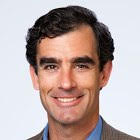
Jason Shulman is a Colorado resident and owner of Colorado CareAssist, a home health agency. 

Attorney General’s lawsuit against Fondomonte could set new precedent for groundwater use

Key Points:
  • Lawyer for farmers and cities seeks to join lawsuit against Attorney General Kris Mayes
  • Mayes accuses Fondomonte LLC of creating public nuisance by withdrawing too much groundwater
  • Judge will soon rule on whether farmers can join lawsuit as affected parties

Saying she’s trying to overturn decades of settled water law, the lawyer for a group of farmers, businesses and cities told a judge they should be able to join the legal fight against Attorney General Kris Mayes.

Attorney Brad Pew acknowledged on August 12 that the attorney general, to this point, has filed suit against only Fondomonte LLC, with Mayes accusing it of creating a public nuisance because of the amount of groundwater it is withdrawing to grow alfalfa in western Arizona. The result, the attorney general argues, is that the company, a subsidiary of a Saudi dairy producer Alamari, is harming other nearby landowners.

But Pew told Maricopa County Superior Court Judge John Blanchard that what Mayes is doing is a wholesale attack on rural groundwater users.

“This case … is an open attempt to utilize the court system to disrupt long-standing statutory law governing groundwater use in Arizona,” he said.

More to the point, Pew contends — and Mayes does not disagree — that nothing farmers are doing actually violates state water law. And the attorney general admitted she has filed her nuisance lawsuit because the Legislature has failed to enact regulations and limits on pumping in rural Arizona.

What that means, Blanchard said, is that the outcome of Mayes’ unique lawsuit against Fondomonte could set a new legal precedent, one that would affect members of the Arizona Farm and Ranch Group Coalition which represents not just farmers, ranchers and cattle feeders, but also irrigation districts and cities like Holbook, Show Low and Winslow that pump — and rely on — groundwater.

That contention is being backed by Briana Campbell, who represents Fondomonte. She wants Pew’s clients on her side when the case goes to trial.

And Campbell told Blanchard this legal fight is not just about alfalfa, saying that there are other crops grown in Arizona like cotton, that use more water, all of which could be affected by the outcome of this lawsuit.

“If Fondomonte, acting within the law, can be held as a public nuisance by the state of Arizona through the usurping of the Legislature, then so can every other farmer in Arizona,” Campbell said. And she told Blanchard those other operations — the ones Pew represents — also are entitled to be in court to argue that there is no legal basis for what Mayes is trying to do.

In filing suit, Mayes contends that Fondomonte has created a “public nuisance” by pumping so much water it has dried up nearby wells and already resulted in subsidence of the land around Vicksburg in La Paz County. It also says that’s just the beginning, with the damage threatening sediment buildup that reduces water quality and damages appliances, pumps and pipes.

Mayes has already acknowledged that none of that pumping violates state water laws.

There are portions of the state that are within “active management areas” where pumping of groundwater is regulated.

Pretty much everywhere else — including where Fondomonte operates — is ungoverned, meaning that those on the property have the right to grow what they want and, specifically, pump as much water as they need for those crops. In fact, Arizona law says, outside these AMAs, property owners can withdraw and use as much groundwater as they need “for reasonable and beneficial use.”

So Mayes is basing her case on that “public nuisance” theory, one that has never been tested in Arizona in this kind of claim. Pew informed Blanchard that if she secures a favorable ruling, she will have the authority to pursue his other clients, whom he claims are not violating any statutes governing water use in rural areas.

“This case is, for practical purposes, an attempt to nullify or work around long-standing statutory protections for groundwater users under the Groundwater Management Act,” he said.

Mayes already has admitted that if she is successful in using public nuisance laws against Fondomonte, she could use it to go after other large corporate farms operating in areas without pumping restrictions. And she already has her next target in mind.

“Cochise County is being seriously damaged by the Riverview Dairy,” she said, a farm operating in the Willcox Basin when she filed the 2024 lawsuit against Fondomonte. “The evidence of damage is just as strong, if not potentially stronger, than here.”

The lawsuit came after discussions at the Capitol about imposing new rules on pumping in rural areas broke down amid disputes over what regulations are appropriate. And Mayes blames the problem here on “legislative failure to address a water crisis with catastrophic effects on the groundwater level in the Ranegras Basin.”

That failure, she said, was the reason Fondomonte came here to grow alfalfa to feed dairy cattle in Saudi Arabia, where farming of “green fodder” has been banned since 2018.

“Fondomonte is taking advantage of Arizona’s failure to protect its precious groundwater resources,” Mayes said.

So that failure to tighten water laws, she said, left her with the public nuisance theory.

“Arizona law is clear on this point: No company has the right to endanger an entire community’s health and safety for its own gain,” Mayes said when she filed suit.

Arizona’s nuisance law has two methods of enforcement.

One makes it a Class 2 felony to maintain a public nuisance. But with the defendant being a limited liability company, jail time is off the table. That leaves only a fine of $750 that would make no difference in a case like this.

The other, though, allows her office to ask a court to enjoin the activity. That is precisely the order she wants here as well as a requirement for Fondomonte to set up an “abatement fund” to reimburse others who have been affected.

Pew said he wants to make the case that Mayes is not entitled to play with the gray area around existing water law, not just when it involves Fondomonte, but when what she is arguing affects other farmers, ranchers and cities.

“Groundwater users, including my clients, have dedicated substantial resources to developing groundwater resources in reliance on the Groundwater Management Act,” he told Blanchard.

“The Arizona Attorney General brought this lawsuit because it perceives a legislative failure in how the Arizona Groundwater Management Act regulates rural groundwater use,” Pew said. “That should be a legislative debate, not a judicial debate.”

For the moment, though, Mayes wants to keep the legal arguments limited to Fondomonte, saying there is clear evidence of the effects of the company’s operations.

Operating in the Ranegras Basin since 2014, she said the company has multiple wells, each capable of pumping up to 4,000 gallons of water per minute. She said, in 2023 alone, Fondomonte used about 31,196 acre-feet of groundwater within the basin. That is considered enough to serve about 93,000 single-family homes.

But the attorney general said there are more immediate and visible consequences.

Mayes said a well less than a mile from Fondomonte’s properties went dry about five years ago. And in late 2017, the same happened to a well for the Friendship Baptist Church about 1.8 miles away.

“The land is literally sinking in La Paz County with as much as 9.8 inches of subsidence documented in the immediate vicinity of Fondomonte’s farms,” she said.

All this, said Mayes, is enough to fit within the legal definition of a “public nuisance,” even if the company is not violating any other laws.

Blanchard promised a ruling in a few days on whether Pew’s clients will get to participate in the lawsuit. But whatever he rules, no date has yet been set to hear the arguments.

Arizona officials shift focus to secure state’s share of Colorado River

Key Points:
  • Officials celebrated the passage of Ag-to-Urban groundwater legislation on July 29, but noted more work needs to be done
  • Gov. Katie Hobbs and Republican Sen. T.J. Shope are setting their sights on ongoing Colorado River negotiations
  • Shope said lawmakers are beginning to discuss a “game plan” for legislative approval of a potential Colorado River agreement

Arizona officials are celebrating the passage of new groundwater legislation, but setting their sights on getting Colorado River negotiations across the finish line in 2026. 

At a bill signing for Sen. T.J. Shope’s “Ag-to-Urban” legislation, Gov. Katie Hobbs, state lawmakers, local officials and farmers said the bill was a step in the right direction for water conservation. But almost all of those officials also acknowledged that it is only one piece of the puzzle. 

The legislation allows housing developers operating under water restrictions to purchase the water rights of farmers heading into retirement. The governor anticipates it will result in the construction of tens of thousands of homes and the conservation of 10 million acre-feet of water, yet that alone may not be enough. 

“Ensuring that Arizona gets our fair share of Colorado River water is critical,” Hobbs told reporters after the signing. “It’s maybe the most critical issue in front of us in terms of water management.”

Shope, a Republican, said during the bill signing that he is already looking “upward and onward” to the Colorado River. 

“We have a tough road ahead of us with Colorado River negotiations,” Shope said. “Arizona must have a united front as we approach the Colorado River.”

Arizona’s share of the Colorado River water, which is split between seven Western states, remains undecided as the states renegotiate their agreement to divvy up the water. Negotiations have been tense due to disagreements over which states should bear the brunt of usage cuts, but an agreement could be on the horizon. 

The Lower Basin states, Arizona, California and Nevada, put a new proposal on the table in late June, which seems more agreeable to the Upper Basin states, Colorado, New Mexico, Utah and Wyoming. The new proposal would use a formula to determine how much water each state gets based on actual water flows from the river in preceding years. 

A new agreement to replace the original Colorado River Compact must be in place by October 2026 and the federal government is warning that if a draft agreement isn’t on the table by Nov. 11, federal officials will intervene. The agreement must go through environmental review and be approved by Congress in order to take effect.

Arizona will face a unique hurdle in the process of adopting a new compact: legislative approval. Shope said Arizona is the only Colorado River state that requires its legislature to approve any agreement the governor enters into.

“It’s something that I’m ready to dive head first into,” Shope told the Arizona Capitol Times.

Getting a majority of Arizona’s 90 lawmakers to agree to support a new Colorado River Compact could be tough. Groundwater has been a particularly sensitive issue in the Legislature, with Republican Rep. Gail Griffin largely seen as the arbiter of water legislation in rural communities.

Griffin has long opposed any groundwater management proposals that restrict farmers or take away local control from rural cities and counties. Arizona could face drastic cuts to its Colorado River supply under various proposed agreements, which would be a hard sell for Griffin and other rural lawmakers. 

The Republican-controlled Legislature may also be reluctant to give Hobbs any wins before her reelection campaign in 2026. 

Additionally, many lawmakers are unhappy with the Department of Water Resources and its director Tom Buschatzke, who is representing the state in Colorado River negotiations, over their handling of groundwater management in the state. 

Ultimately, lawmakers still have time to create a “game plan” for legislative approval of any Colorado River deal, Shope said. He said those conversations are beginning to take shape, and he hopes recent compromises like the Ag-to-Urban bill will help build momentum for future bipartisanship on water issues. 

“As long as I’m around, we’re going to try to find that consensus, to make sure that we’re all speaking with one united voice so that Arizona is in the prime position to continue to grow,” Shope said. 

And all of those conversations rely on the Colorado River states coming to an agreement, which is still tenuous. If the federal government intervenes as promised, it could prompt lawsuits, for which Hobbs noted the state is fully prepared.

“It is critical that Arizona is not taking the brunt of federal cuts that will result if we don’t get a fair deal,” Hobbs told reporters. “I was able to secure $3 million in the state budget that ensures that we’re ready to fight for our share if we have to. But I’m hopeful that we can come to some resolution.”

Arizona approves first water transfer to rural areas for new construction

Key Points:
  • Arizona approves first-ever water transfer from rural Arizona to active management areas
  • Buckeye is now allowed to withdraw nearly 6,000 acre-feet of water from Harquahala basin
  • Transfer will serve over 17,000 homes in Buckeye for 110 years

State water officials approved the first-ever legal transfer of water from rural Arizona into one of the state’s “active management areas” on July 18.

The Department of Water Resources will permit Buckeye to withdraw up to 5,926 acre-feet of water annually from the Harquahala basin in western Arizona for up to 110 years. That is enough to serve more than 17,000 homes.

In the same order, the agency said Queen Creek can take up to 5,000 acre-feet a year, sufficient to build about 15,000 homes.

All this comes two years after DWR refused to issue any permits for new subdivisions in some areas of both communities after concluding they lacked the legally required 100-year supply of water. That resulted in a lawsuit by the Home Builders Association of Central Arizona, which charged that the agency’s modeling is flawed.

None of what occurred Friday is likely to end the legal disputes over how the state implements the historic 1980 Groundwater Act, a foundational water regulation measure which ties development to available water. However, it could alleviate some of the pressure on developers who have argued that the inability to build in the far suburbs of Phoenix has barred them from developing on some of the last affordable land, which, in turn, has driven up the price of housing in Arizona.

It also is unlikely to provide help to residents of the state’s other active management areas who are running into problems maintaining the necessary supply of water for sustained growth.

That’s because the law the agency used to provide the permission to Buckeye and Queen Creek spells out that there are only three places outside active management areas where transfer of water is allowed. Harquahala is the largest of them.

But there are concerns that this approval, touted in a press release from Gov. Katie Hobbs, amounts to only an interim solution to a much larger problem.

Underlying all of this is the need for developers to demonstrate a 100-year supply of water to be state approved for construction.

That’s not an issue for municipal and private water companies, which can demonstrate they have sufficient water, including through contracts to obtain supply from the Colorado River.

They are presumed to have their own assured supply. So anyone the utility agrees to serve who is seeking to build homes within that service territory is presumed to have the amount of water required and can start construction without further approval.

Queen Creek and Buckeye, however, don’t have such assurances, which led state water chief Tom Buschatzke to conclude in 2023 that the state cannot guarantee there will be enough groundwater to support new development in these areas.

But Buschatzke said construction can take place if developers find sources beyond what’s under their land. And what occurred Friday paves the way for some of that.

“This approval from the Arizona Department of Water Resources unlocks another water supply that Arizona can use to support our communities, economy, and way of life,” Gov. Katie Hobbs said.

Senate Minority Leader Priya Sundareshan acknowledged that what DWR did is legal and in accordance with decades-old laws that set aside water beneath the Harquahala Valley for purchase from landowners to be piped where needed. But the Tucson Democrat said she remains skeptical of the longevity of the solution.

“I don’t think it solves anyone’s problems really on a permanent basis,” said the Tucson Democrat. Beyond that, she said the whole concept of denoting one area of the state as a place that other areas can raid for water is “philosophically wrong.”

That impact of such use has crossed the mind of Sarah Porter, the director of the Kyl Center for Water Policy at Arizona State University.

“The total amount of water that Buckeye and Queen Creek can withdraw over 110 years is a great deal of water,” she said, amounting to more than a million acre feet. “This is an area where less than 2% of the rain that falls results in recharge.”

So is the transfer good news? 

“It’s good news for Buckeye and Queen Creek,” Porter said. “These are two of the communities that are more challenged to have continued development unless they bring in new water supplies.”

But Porter, like Sundareshan, said this inter-basin transfer isn’t a total solution to ensuring that Arizona has enough water to continue to grow — especially with shortages of Colorado River water and the chances that the recent drought will shrink available supplies.

“Increasingly, there’s a recognition that we need to find some other water supplies,” Porter said, both for the Phoenix and Tucson areas.

“It’s going to be incremental,” she said. “And this is one of those incremental opportunities.”

She said that some other options are already being advanced.

One is the newly approved “Ag-to-Urban” legislation, which allows developers to acquire water rights from farmers who are retiring their land from agriculture.

Sundareshan said that it is the preferred choice when considering taking water from the Harquahala Valley, mainly because it ensures that one area of the state is not robbing the supply from another area. In fact, the new law not only limits where this new development can occur — within a mile of the retired farmland — but also caps the amount of water that can be withdrawn.

What’s also likely to be a source is “advanced water purification,’ a process that essentially purifies sewage to the point where it can be put back into the drinking water supply. While some communities are beginning to move in that direction, there has been some pushback against this approach.

And there’s something else that will prevent new construction from starting in those far edges of Phoenix that are affected.

Simply getting permission to transfer the water is just the first step. State water officials said the cities will need to demonstrate that they have a method for delivering the water, a process that could take years and millions of dollars, before any building permits that rely on that water are issued.

Despite that, officials of both cities said they were pleased by Friday’s development.

“This has been years in the making and will help diversify the town’s water portfolio with a more sustainable source of water that has been set aside for growth in the state,” said Queen Creek Mayor Julia Wheatley in a prepared statement. And Eric Osborn, her Buckeye counterpart, called it “a significant development … to ensure our current and future residents continue enjoying a great quality of life.”

There’s also a benefit for Harquahala Valley landowners, who will gain financially as they exit the farming business.

“This transition from farming to renewable energy was the long-term plan for this area, and we are grateful to be part of this process,” said David Lamoreax, who said his family has been farming in Arizona for more than 100 years.

Lawmakers reaffirm commitment to passing rural groundwater policy

Key Points:
  • Lawmakers say they are committed to new rural groundwater management policy 
  • Two attempts to establish a regulatory framework stalled last session
  • Residents are growing frustrated with legislative inaction

State lawmakers on both sides of the aisle have vowed to continue addressing the depletion of groundwater in rural areas after attempts to pass a regulatory framework stalled during the last legislative session.

Legislators introduced multiple bills that would’ve enacted restrictions on groundwater pumping in rural basins, but the measures were ultimately derailed by disagreements over the extent of regulation needed to preserve groundwater in the mostly unregulated areas.

While lawmakers continue to debate how much pumping should be reduced and juggle the interests of various stakeholders, residents and local lawmakers in rural areas have grown increasingly frustrated with the Legislature’s inaction.

“It should be important to the whole state to keep Arizona strong, not just the urban areas, but all of Arizona strong,” said Mohave County Supervisor Travis Lingenfelter. “And to do that, we have to have certainty in our water.”

The state hasn’t approved a groundwater management plan since lawmakers created the Groundwater Management Act of 1980, which established Active Management Areas covering mostly urban areas of the state.

However, rural areas have remained largely unprotected from excessive groundwater pumping as various proposals introduced throughout the years have stalled, with some not even receiving a committee hearing in either the Senate or the House.

Two major measures were introduced last session that aimed to establish a framework for managing groundwater in the depleted basins.

Sen. Tim Dunn, R-Yuma, introduced Senate Bill 1520, which would’ve created Basin Management Areas and imposed a series of restrictions intended to preserve groundwater in Gila Bend, Hualapai Valley and the Willcox Groundwater Basin. 

The legislation would’ve repealed the Willcox Active Management Area, which was established to preserve the existing groundwater supply in the Willcox Basin, and converted it into a Basin Management Area.

However, the bill stalled in the final weeks of the legislative session after Dunn and other stakeholders failed to come to an agreement during negotiations.

An update from the Arizona Department of Water Resources on the draft management goals for the Willcox Active Management Area also delayed progress on the bill after officials asked if Dunn’s measure could align with those goals, he said last month.

However, Dunn said he’s still committed to working with stakeholders to develop a framework that’s better than the current options available to rural communities.

“I believe Arizona needs a better tool than the existing AMA and (Irrigation Non-Expansion Area) options for groundwater management,” Dunn said in a statement. “We have made progress with a wide group of stakeholders at the table hearing their concerns and goals. All basins should not be treated the same.”

Another set of twin bills introduced earlier this session by Sen. Priya Sundareshan, D-Tucson, and Rep. Chris Mathis, D-Tucson, would’ve also enacted groundwater preservation measures in certain rural areas.

The legislation, dubbed the Rural Groundwater Management Act, would’ve created Rural Groundwater Management Areas in the Gila Bend Basin, Hualapai Valley Basin, Ranegras Plain Basin, and San Simon Sub-basin. The Willcox AMA would’ve been converted to a Rural Groundwater Management Area.

However, the measures never received a hearing, despite being touted as bipartisan by the governor and a group of Republican rural lawmakers, including Lingenfelter of Mohave County.

Sundareshan said she would continue to pursue rural groundwater management reform, although any bill she introduces will probably look different than this year’s legislation.

“It will probably take a different form because the bill that we had introduced this year was reflective of the negotiations that we thought the Republican legislators wanted to see,” she said.

She said she hopes to work directly with rural residents, small farmers and rural Republican elected officials to better understand what needs must be addressed to gain support for future legislation.

“We’ll continue to have this conversation because the need hasn’t gone away,” she said.

Sundareshan and Mathis’ legislation would’ve proposed up to a 40% reduction in groundwater pumping over 40 years, although the cuts would have been incremental and started at a lower rate, while Dunn’s legislation would reduce pumping by 10% — 1% each year — within 10 years of the formation of a Basin Management Area.

Critics of Dunn’s proposal said the bill didn’t do enough to reduce groundwater pumping and would continue to benefit large farming corporations. Those who disagreed with Sundareshan’s and Mathis’ proposals stated the legislation called for groundwater reductions that could hurt the agricultural industry.

Lingenfelter initially supported the Democratic proposal but was hoping to negotiate a groundwater pumping reduction within a 20-25% range, he said.

“We were hoping that the senators and the representatives would get together, they would bring some of us that are stakeholders to the table, along with working with the governor’s staff, negotiate something that would be in between their bills that everybody could live with,” he said. “And then that would actually be the version that would get passed. But that didn’t happen. We had, I think, two meetings the whole session, and that’s really it.”

The Department of Water Resources designated the Hualapai Valley Groundwater Basin in Mohave County as an Irrigation Non-Expansion Area, which places limits on the expansion of irrigated lands.

But the restrictions have done little to stem the flow of groundwater pumping in the area.

Lingenfelter said an ideal framework for his county would include a council appointed by state lawmakers with members who reflect the local economy.

There would also be no certificated water rights, limited government involvement, measures to prevent corporate interests from taking over basins, and technical assistance from the Department of Water Resources, he said.

Conservation targets would have to be customized to the specific basin, he said.

“Anything that’s required on the management plan would not be some sort of formulaic, one-size fits-all type of thing,” Lingenfelter said.

Gov. Hobbs recaps progress as the legislative session comes to a close

Key Points:
  • Gov. Katie Hobbs considers latest legislative session a success
  • Budget approved at $17.6 billion, close to requested amount
  • Transparency, crypto bills vetoed; development deals approved

The way Gov. Katie Hobbs sees it, the recently completed legislative session was the best that could be hoped for in a divided government.

In a wide-ranging interview with Capitol Media Services, she noted that the approved $17.6 billion budget was close to what she had requested when she made her initial request in January.

There also was the enactment of what could be considered one of the most significant changes in water law in nearly half a decade. It frees up some farmers to sell their rights to pump groundwater to developers, helping them meet their legal requirements to demonstrate an assured water supply for their proposed subdivisions.

She beat back efforts to impose new requirements on eligibility recipients of Medicaid and food stamps.

And, with the help of parents bringing their children with disabilities to the Capitol to stare lawmakers in the face, she outmaneuvered Republicans who sought to slash funds that were available for those parents to provide care.

There’s more money for subsidized child care and pay raises for state police and firefighters. And the governor beat back a plan to cut university funding by mandating they slice tuition by 2.5% and freeze it there for the next three years, with no additional state aid to make up the difference.

But there were controversies and things on which the governor had to give, or where she didn’t get what she wanted at all.

Little noticed is a provision in the new budget deal that nearly doubles, to $500,000, the value of equipment that businesses can shield from property taxes.

Under Arizona law, businesses pay taxes not only on land and buildings but also on any equipment they own, from tables and chairs to printing presses. Sen. J.D. Mesnard, R-Chandler, said that’s not fair, given they’ve already paid sales taxes on their purchases.

But for most levels of government, property taxes are a zero-sum game. They are allowed by law to raise a certain amount of money. If the assessed value of all property is reduced, then the tax rate increases, resulting in higher taxes for homeowners and other property owners.

Mesnard conceded that. However, he stated that the total reduction in assessed value of $100 million per year will have only a minimal impact on the increased amount passed on to others, although he could not quantify the exact figure.

Hobbs agreed.

“Small businesses are very important in our economy,” she said.

“And this was a compromise budget,” the governor continued, allowing her to get some of her own priorities funded.

Hobbs again gained no traction in her efforts to scale back vouchers of taxpayer dollars that allow parents to send their children to private, parochial and home schools.

Vouchers, formally known as Empowerment Scholarship Accounts, have been in existence for over a decade. They initially were enacted to provide options to parents of children with special needs.

That was expanded over the years to cover foster children, children living on reservations and students in schools rated D or F.

However, the significant change occurred under her predecessor, who approved “universal vouchers” for anyone seeking the funds, including parents who were already using personal funds to send their children to private schools. That ballooned the cost from approximately $65 million to nearly $1 billion.

In 2023, her first year in office, the governor sought to repeal the expansion, a proposal that the Republican-controlled Legislature ignored.

This year, she was back with a modified plan: full vouchers of about $7,400 for families making less than $100,000, reduced vouchers up to $200,000, and no state funds for those with incomes higher than that. That, too, proved a non-starter.

Complicating matters is that lawmakers failed to ask voters to approve the extension of Proposition 123, which provided more than $300 million to K-12 education. Approved in 2015, it expired this year.

But some GOP lawmakers want a renewal tied to putting a right to vouchers in the Arizona Constitution, something the governor does not want.

“I don’t think there’s an appetite for a measure that protects ESAs in the constitution,” she said.

While lawmakers approved the “Ag-to-Urban” water transfers for developers, Hobbs had no luck with legislation to limit how much water any given landowner can pump in rural Arizona, even if it dries up the wells of neighbors.

There had been anticipation of tying the issues of urban and rural water regulation together. And what provided that hope was the fact that politically powerful homebuilders were so anxious for that urban water transfer deal that the governor could use that as leverage for an all-encompassing package.

It was not to be.

“It was clear that there wasn’t a path forward at the end of the day on rural groundwater,” Hobbs said.

In the meantime, Hobbs said she has some authority, through her Department of Water Resources, to establish “active management areas” in certain communities to regulate pumping.

She’s already done that in Willcox and Gila Bend. But it can take years to do the necessary studies, even as the governor acknowledges that residents of many other areas, notably Mohave and La Paz counties, seek action.

“These folks have been clamoring for change for years,” she said. And Hobbs said she knows where to put the blame: Rep. Gail Griffin, who chairs the House Natural Resources, Energy and Water Committee.

“It is really unfortunate that one legislator is choosing to block that reform,” Hobbs said.

“The comment about one legislator holding up rural water bills is totally false,” Griffin told Capitol Media Services. She said it is the governor who is the problem.

“We had over 15 bills this past session that would have helped rural Arizona,” she said. “The governor vetoed 13 of them.”

Nor was Griffin apologetic about the fact that none of them provided the kind of comprehensive regulation that Hobbs wants, saying that there are less-onerous options.

“All along, the plan for the water situation in Willcox was to stop the bleeding, stabilize the water table, and plan on implementing the tools to put water in the basin,” she said.

Griffin also questioned the need for the kind of regulation that would be imposed, saying that even the voters in Willcox had rejected the creation of an “active management area.” Yet she said Hobbs imposed it anyway.

Hobbs also signed several controversial measures she billed as economic development.

She penned her approval to a plan to let the Arizona Diamondbacks divert tax revenues to upgrade the stadium the team uses in downtown Phoenix, rejecting arguments that this amounted to Arizona taxpayers subsidizing billionaire team owner Ken Kendrick. Instead, the governor said she saw it as a “mutually beneficial relationship” based on the economic benefits of having a professional sports team there.

“You used to be able to shoot a cannon down the street,” she said, with little foot traffic.

“And you can’t do that anymore,” she said. “It’s vibrant. It’s busy. It’s driving the economy. It’s great for businesses downtown.”

Anyway, Hobbs pointed out that the dollars being diverted are those being generated from sales and income taxes at the stadium.

“I keep reminding folks if the Diamondbacks aren’t there, playing there, if the stadium’s not there, there is no revenue,” she said.

Separately, the governor agreed to pave the way for Axon, the maker of Taser, to build a 2,000 unit apartment complex near a new headquarters.

Hobbs has not disputed that the legislation amounts to overriding the signatures of those who had signed a referendum petition to delay construction until the issue could be put to voters in November 2026. But she said that the Scottsdale city council had approved the plan and that the state could not afford to lose the corporate headquarters.

One of the governor’s 174 record-smashing vetoes drew particular attention.

Hobbs had campaigned for office in the 2022 election by promising to “deliver transparency.”

Yet she rejected legislation that would have provided more, if not easier, public insight into whether there is a link between money going to public officials and the awarding of state contracts.

As approved, SB 1612 made some changes in how the Arizona Health Care Cost Containment System, the state’s Medicaid program, awards certain contracts.

But Sen. T.J. Shope also included language to say that any company responding to any bid request must disclose any direct or indirect donations in the past five years to the governor, any committee set up by the governor and any entity set up by anyone seeking to oust the governor.

That wording was not accidental.

It came after reports that Sunshine Residential, which operates group homes for foster children, was denied a rate increase in December 2022.

Just days later, the company donated $100,000 to the inaugural fund established by the governor. In 2023, it received an increase to $234 a day, surpassing the $169 average for other group homes. That led to “pay to play” investigations by the Attorney General’s Office and the Maricopa County Attorney, both of which are still ongoing.

Shope, a Coolidge Republican, said what was in SB 1612 would provide public knowledge, ahead of time, of potential conflicts.

Hobbs, in vetoing the measure in May, said she was rejecting it because the process the state uses to award managed care contracts “are consistent with Medicaid industry best practices,” making no mention of the disclosure requirements.

But asked about it by Capitol Media Services, the governor called it “a political stunt, nothing more.” She said the information that would have been provided already is available elsewhere.

That’s true — but only up to a point.

State campaign finance laws allow anyone to look up anyone else’s name and find out to whom they contributed. However, linking that to a specific bidder would require that the person inquiring know who the officers and directors of a given corporation are, as well as the names of their family members.

And nothing requires the governor to disclose donors to an inaugural. However, her campaign finally agreed to a request by Capitol Media Services to make public the names of those individuals and corporations that provided more than $1.5 million for an event that cost $207,000, with the balance being allocated to future campaigns.

What Hobbs refuses to disclose is who has given to a separate legal defense fund she set up to pay the legal bills that accumulated from challenges by Kari Lake to her 2022 win. But even SB 1612 would not have covered those dollars.

Shope said the fact that some of this information was available elsewhere was no excuse for the veto.

“If the state’s top elected official was handling state business in an ethical manner, then why on earth would she block efforts to provide the public with easy access to proof of that?” he asked.

Hobbs defended her record by pointing out that she signed legislation last year making it easier for the public to find out how much money she has amassed in her campaign war chest and who has been donating to her.

However, that proposal came not from the governor but from Shope, who noted that there was a loophole in the law that allowed elected officials with four-year terms — including Hobbs — to avoid filing quarterly finance reports until the last year of their term. The new law he crafted — and that she signed — requires all elected officials to file quarterly reports throughout their entire tenure.

Hobbs also drew out her veto stamp several times this session on measures designed to recognize the use of cryptocurrency in Arizona.

One rejected measure would have allowed the state to invest up to 10% of assets funds in Bitcoin and similar crypto assets. She said that state funds for retirement should not be exposed to “untested investments like virtual currency.’

The governor was no more accepting of another bill to create a “digital assets strategic reserve fund.” Additionally, failing to obtain her approval meant allowing state agencies to accept cryptocurrency for payments.

She agreed to allow the state to retain unclaimed cryptocurrency and other digital assets. And Hobbs gave her approval to regulate cryptocurrency ATM operators to protect consumers.

Still, the governor said she’s not sure the state should be in the crypto market at all.

“I think we can continue to have conversations about that,” she said. “That doesn’t mean that we should.”

Sarah Porter: The future of Arizona’s water policy

Sarah Porter’s fondest memories of growing up in Phoenix include spending time with her family camping, hiking, and fishing.

So when Porter saw an opportunity to transition from her career as a lawyer working in complex commercial litigation to serving with the National Audubon Society, she stepped into a role that reconnected her with one of her passions. 

Her work with the Audubon Society ultimately led to her current position as director of the Kyl Center for Water Policy at Arizona State University’s Morrison Institute for Public Policy, where she has served in this capacity since 2015.

Porter sat down with the Arizona Capitol Times to discuss her career trajectory, the state’s groundwater usage and other prominent water issues.

How did you end up in your current position as director of the Kyl Center for Water Policy?

As I was doing my demanding legal practice at a big law firm in Phoenix, I became involved with the newly formed state office of the National Audubon Society, which was working to build a nature center in south Phoenix, the Nina Mason Pulliam Rio Salado Audubon Center. That project really attracted me, because I love the idea of getting more families and children to have opportunities, connections with the amazing Sonoran Desert and the amazing places of Arizona. And I saw that project as creating a gateway, especially for families that didn’t necessarily have the money to have access to nature experiences.

With Audubon, I became the deputy director to help lead that project. I was part of a team that helped make that project happen. Then I went on to become the state director, and from that position, I realized that, in the West — and especially the Intermountain West — the one thing that we could do to help protect places for birds and other wildlife, and also to protect the beautiful places that people just love so much … was to focus on rivers and wetlands … because that is the critical habitat for western wildlife. They all depend on rivers and wetlands. That is also so important to humans and what we do. That’s really where the tension is.

So, I helped gather Audubon in the Intermountain West — from Wyoming, Colorado, New Mexico, Arizona — to look at what could we do collectively to help people understand the trade offs and the values of protecting riparian and wetland habitats in the Intermountain West, and particularly thinking about birds and other animals that migrate.

You can protect one space somewhere way up north, but if you’re not protecting all of the spaces all along a migratory path, you’re not really helping those animals. So we were looking at, how can we just get people to understand the need to protect … this chain of important places for wildlife? That got me into western water policy. I kind of went back to my law roots. Water law is complicated in the West, and that’s because we’ve had … around 150 years to develop it. And nothing could be more important. So we’ve developed a rather complex, arcane and wonderful water law system. 

When the Kyl Center was being formed by Morrison Institute … they had a group of about maybe 30 or 40 stakeholders giving advice on forming the Kyl Center and what it would do. And I was one of the environmental NGO representatives in that stakeholder group. So then I started to think, ‘Wow, this is really what I want for my next act’ because water is infinitely fascinating.

What has surprised you the most about working in water policy?

I feel like I’m surprised every day; ‘the most’ is hard. I guess learning that everything that you can do in water policy will have ramifications for other water users in Arizona or in the West because water is scarce. That means that, for the most part, most of the rules and regulations and laws are based on very defensible reasons. If you’re new to it, you can look at it and say, ‘It doesn’t make sense.’ Sometimes, you know a person may not like how water law breaks, how it works. But there are almost always very defensible reasons for a water policy in Arizona and in the West. And that is very much connected with why it gets complicated, because it’s trying to accommodate all these different needs.

In many parts of Arizona, there is virtually no natural groundwater recharge. And I think that is something people don’t appreciate. In much of Arizona, probably well over half of Arizona … the groundwater recharge is so low that it’s almost immaterial, in vast swaths of the state. That’s just a hydrological reality that it took some time for me to come to terms with.

The exception to this is the White Mountains and the Coconino aquifer in the northeast, but in most of the state, less than 2% of the water that falls on the ground in snow or rain makes its way to the aquifer.

This was another year where the state didn’t pass a groundwater management framework for rural areas. How will the lack of a framework affect some of these rural areas?

It’s the status quo, continuing with how it was. In the vulnerability of different areas, there’s a great deal of difference. We have 51 sub basins in the state, which are like misshapen, leaky bathtubs holding groundwater aquifers. And in some of those sub basins, we see a very high rate of depletion. And in some, not so high. Most of the northern half of the state is really not at risk. Let’s say the northern third. It’s in the southern parts of the state where we have more groundwater reliant agriculture — where we see more risk. And the most depleted, or rapidly depleting aquifer, currently is the Gila Bend Basin. Mostly, the economic activity that’s going on there is farming. 

So it means that those people who have farms there are going to be grappling with the costs of pumping deeper and deeper. There are other places where there are communities. In La Paz County, there are people with fairly shallow wells who probably can’t afford to dig deeper wells, and they’re finding that their groundwater table is declining. The impacts may be greater for those … there may be more people in that situation in a sub basin that isn’t (in) as much trouble. How to assess impacts is really complicated. So, it just means we have the status quo for now.

There are some interesting developments occurring up in the Prescott area. There is a group … they have an intergovernmental agreement, and they’re working at a more local and, to some extent, voluntary level, to get a grip on groundwater use. And I think we could see more of that in southeastern Arizona and Sulphur Springs. There’s a group that’s (trying) to figure out if there are ways they can work through voluntary agreement to collectively reduce their groundwater consumption.

They kind of differed, but essentially the legislation that has been contemplated … would enable local areas to decide they want groundwater regulation if they met certain conditions. The other version that made its way through the Legislature was limiting the sub basins that actually could have groundwater regulation. The framework wouldn’t be available to every sub basin in the state that met the conditions. I think there’s traction. There is some very good thinking that’s happened in the last few years that maybe a future Legislature can build on. 

What do people misunderstand about water in Arizona?

There’s a really important thing that I wish people understood. Cities don’t need much water. I mean, in context of water demand currently, cities in Arizona are responsible for maybe 20% of demand, all of the water that cities deliver, that cities and towns and any water provider. And why this is important is that, if we were looking at a water shortage or a predominantly agricultural economy, we would be looking at very expensive and I would say, arguably, very disruptive solutions. How do we move the water from a large water supply from a river, to where we want to farm? That’s historically what has been done in the U.S. It was the policy of the United States in the 19th and first part of the 20th century, because there was such a priority on settling the U.S. and feeding people. 

Now, we’re at a different time. We have different technology. We can grow more with less water. We don’t need to have that as our priority. And so when we’re looking at cities that are at risk of water supply shortages, the solutions for getting more efficient and finding water supplies to make up whatever cuts there are, the solutions are much more manageable and less disruptive than historically. A combination of … making sure that we’re being efficient with water and new water supplies from multiple sources will be sufficient. It’ll be enough water for growth, enough water for lots of economic activity and have a nice place to live.

I wanted to make sure to say that, because it’s easy to feel really, really anxious about what’s going on with water. You hear cuts to the Colorado River and groundwater. But we’ve been working on this for a long time. I would say earnestly working on this for arguably 100 years, (and) certainly since the Groundwater Management Act in 1980. We’re facing challenges, but we also have a lot of solutions out there.

Hobbs signs ‘Ag-to-Urban’ bill, paves way for new water management in Arizona

Key Points:
  • New law expected to conserve groundwater
  • Could spur homebuilding in Phoenix, Pinal County
  • Despite bipartisan support, some foes raise concerns

Legislation designed to save huge amounts of water by allowing farmers across central Arizona to sell their land and associated groundwater rights to developers was signed into law on June 30 by Gov. Katie Hobbs.

The Democrat said the legislation will preserve the state’s limited supply of groundwater while allowing growth to continue, create jobs and help lower the price of new homes. 

Senate Bill 1611 was prompted by a moratorium on issuing new certificates of 100-year assured water supplies to builders. That initiative was imposed in 2023 over the Pinal and Phoenix “active management areas.” It didn’t bar new buildings if the area was served by an existing water supplier.

The halt that triggered screams from homebuilders was prompted by new analyses from the Arizona Department of Water Resources showing there just wasn’t enough groundwater to support new housing. 

Although the new law only initially applies to the Phoenix and Pinal AMAs created by the state’s landmark 1980 Groundwater Management Act, the Tucson AMA could be added to the new Ag-to-Urban program if a similar moratorium on development is issued there.

Builders in outlying areas of Maricopa and Pinal counties are increasingly relying on groundwater instead of Colorado River or Salt River Project supplies, and the moratorium halted developments in parts of Buckeye and Queen Creek and other far-flung suburban areas. 

But the state has faced cutbacks in its Colorado River supply and is fighting to avoid much steeper cuts as federal officials work on new allocations among the western states that tap into the river. Long-term drought and climate change have lowered the amount of water in the river. 

Hobbs was joined by lawmakers from both sides of the aisle in touting the legislation she called “historic.”

“The Ag-to-Urban water conservation legislation shows what we can achieve when state policymakers come together to focus on solving the problems that Arizonans care about most,” Hobbs said in a statement. “Arizona has long led the country in water management, and today we have shown that we will continue this legacy of addressing our most pressing challenges.” 

While there was bipartisan support for the measure, not everyone was happy.

Hobbs faced some criticism for not using the builders’ push for the Ag-to-Urban law as leverage to secure new groundwater rules in rural areas like Cochise and Mohave counties not currently in an active management area. But she said in the June 30 statement that she is not giving up on efforts to stop overpumping in those areas by large corporate farms that have moved into Arizona in recent years.

“I will continue fighting to protect groundwater in rural Arizona so every community throughout our state will know they have the tools they need to secure their water future,” she said

The legislation passed the Senate on a 26-4 vote and the House by a slimmer, but still bipartisan, 35-20 margin. Hobbs negotiated with Republican lawmakers led by Sen. T.J. Shope, R-Coolidge, to reach a deal after vetoing a similar measure last year over concerns it would not actually save water.

“The Ag-to-Urban plan represents nearly two years of painstaking negotiations between the Legislature, the executive, stakeholders, water experts, water users, and community leaders,” Shope said. “I’m proud of the end result.”

He also touted the law’s potential impacts on home prices and said it also will allow farmers who are ready to retire cash out while cutting overall water use.

The law limits pumping from former farms to 1.5 acre-feet per acre a year in the Phoenix AMA and 1 acre-foot a year in the Pinal AMA. Farms in the area currently pump about three times that much water, said Spencer Kamps, a lobbyist for the Home Builders of Southern Arizona, which pushed for the bill. 

An acre foot is about 326,000 gallons – enough water to cover an acre of land one foot deep and, more to the point, typically enough to supply three homes.

Homebuilders have been pushing for higher density developments to lower costs for buyers. Kamps said the small pumping allocation will be a challenge.

“This is a new program and time will tell about the success of that program,” Kamps said. “We’ve done a lot of analysis about projects getting through at 1.5 (acre-feet per year) and we’re concerned about that because it’s such a low water amount.” 

Kamps also noted that many of the developers who have been targeted on the far western fringes of the metro Phoenix area won’t be helped because they’re desert areas with no nearby farmland. That’s because the law requires land initially to be within a mile of the farm it would be getting its water from.

Despite the wide vote margin, there were critics in the Legislature, including Rep. Chris Mathis, D-Tucson. 

Although Mathis said this year’s version of the bill is much better than the one Hobbs vetoed last year, he opposed it because of new groundwater replenishment rules that Ag-to-Urban will trigger.

Farmland owners generally are not required to put water into the ground to make up for what they pump. But new homes that rely on groundwater do, and that is the job of the Central Arizona Groundwater Replenishment District, known as CAGRD. 

The district is overseen by the Central Arizona Project, which has a massive canal that transports water from the Colorado River to Phoenix and then south to Tucson. The district has relied on that water to recharge aquifers in the region.

The district has seen cutbacks in its river water supplies and doesn’t have extra water to cover additional areas, Mathis said.

“There are already structural concerns with the CAGRD system,” Mathis said.

“There’s just no way to do this Ag-to-Urban program without adding a significant amount of new replenishment obligation onto the already fully subscribed CAGRD system,” he said. “And so for that reason, I don’t think we ought to be doing it.”

A Senate Democrat from Tucson, minority leader Priya Sundareshan, had a different take, saying details in the new law assured her it was a good move for all concerned and will lower groundwater use. 

“Importantly, it contains many key guardrails designed to ensure that groundwater savings will be achieved over the next 100 years as a result of this program,” she said. “I am pleased that the various parties were able to reach agreement here, and we must continue to strengthen our state groundwater management, including by supporting our replenishment obligations and by protecting rural groundwater.”

Whether the measure will actually lead to large tracts of agricultural lands being converted is unknown, said Sarah Porter, director of the Kyl Center for Water Policy at Arizona State University.

She said the moratorium created the unintended consequence of preventing farmers from retiring their land and cutting water use, and SB1611 would remove that disincentive. Builders have been buying up agricultural land to use for homes for decades, and now will be able to do so again.

But it isn’t clear just how much the new law will come into play in the coming years.

“The estimations of the acres of land that are available are really significant,” Porter said, with “hundreds of thousands of acres of land that essentially are available to do it.”

But that still leaves the restriction that new homes must be within a mile of the farm from which the water was retired.

“But that may not be land that anyone cares about acquiring to do this kind of development,” Porter said.

‘Ag-to-Urban’ clears Legislature, paves way for new water strategy

Key Points:
  • Bill would allow the sale of agricultural land for home development
  • Proposal intends to increase housing while preserving groundwater
  • The measure was sent to the governor for final approval

A bill that’s intended to address two of the state’s biggest issues — groundwater conservation and housing development — passed the Legislature and was sent to Gov. Katie Hobbs for final approval.

The House approved on June 23 Senate Bill 1611,  sponsored by Sen. T.J. Shope, R-Coolidge, that would allow farmers to sell agricultural land and the accompanying water rights to developers in hopes of boosting the state’s housing supply and preserving groundwater, driven by the idea that single family homes use less water than agricultural land.

The measure, dubbed “Ag-to-Urban,” was joined with a mirror bill in the House introduced by Rep. Gail Griffin, R-Hereford.

When the legislation passed the Senate on June 19, Shope hailed it as the most consequential groundwater measure since the Groundwater Management Act of 1980.

“The Ag-to-Urban program is a win-win for farmers who are ready to retire but still want to capitalize on their land and for Arizona families looking to obtain their American dream through homeownership,” Shope said after the bill passed the Senate.

The bill would affect areas of Maricopa and Pinal counties, specifically Queen Creek and Buckeye, where new home construction has been restricted due to groundwater shortages. Pima County could also benefit if state water regulators were to place a moratorium on new water certificates, according to Capitol Media Services.

“This will alleviate some of that pressure that was building up in the West Valley and the Southeast Valley … to the extent that those units could not be produced,” said Nick Ponder, senior vice president for governmental affairs at public affairs firm HighGround, Inc. “Now they can because they’ll be able to get their certificates of assured water supply.”

According to numbers previously shared by Republican Senate staff, there are 425,232 acres of irrigated farmland in the Phoenix, Pinal and Pima Active Management Areas that could use the Ag-to-Urban program. If half of the farmland is converted for development, more than a million homes could be built, as new developments typically average five homes per acre.

The Legislature passed a similar version of the bill last year, but Hobbs vetoed it. In her veto letter, Hobbs stated that she supported the concept of the bill, but the data from the state’s initial Active Management Areas didn’t support the universal adoption of the program.

Shope reintroduced the bill this year, and it initially received Republican support during a Senate Natural Resources Committee meeting in February. 

He spent the following months working with stakeholders and the Governor’s Office to negotiate the bill before it advanced to the Senate floor, where it received bipartisan approval.

Before the chamber passed the bill, Senate Minority Leader Priya Sundareshan, D-Tucson, said, “This represents an important step forward for being able to show that we can continue to put forward rules that can assist with further development in our urban areas while also maintaining our water security.”.

The bill maintained its bipartisan support when it reached the House, although a number of Democrats and Republicans still opposed it.

Democrats who spoke in opposition expressed concerns about how the legislation would impact groundwater replenishment needs in those areas, as well as the Colorado River water supply.

“The added burden this bill will place on this system concerns me deeply, and should concern all of us,” said Rep. Chris Mathis, D-Tucson.

Rep. Sarah Liguori, D-Phoenix, also questioned how the legislation could impact the state’s Colorado River supply while lamenting the Legislature’s inability to pass any significant groundwater management bills this year.

“So while I wholeheartedly hope that this policy turns out to be the great success that will bring housing and water conservation to our state, I have reservations and can’t wholeheartedly support it,” Liguori said.

Rep. Stacey Travers, D-Phoenix, shared her colleagues’ concerns regarding replenishment needs, but said the benefits could be “huge” if the legislation works as expected.

“We can’t let the perfect get in the way of the good,” Travers said. “Should there be an opportunity that allows us to come once again to the table to address those issues that we have some concerns with, then I am completely without a doubt assured that we’re going to do that.”

New deal on Ag-to-Urban water plan moving in Senate

Key Points:
  • Water proposal lets builders buy water from retiring farmers
  • Plan could allow 1 million new homes statewide
  • Rural areas feel left out, fear water shortages

Housing developers left stranded and stalled by a lack of an assured water supply are getting a lifeline under a deal cut between Republicans and Democratic Gov. Katie Hobbs. 

The proposal, known as “Ag-to-Urban,” allows homebuilders to buy water rights from farmers who retire their agricultural land if they promise to use only a certain percentage of the water to supply new developments.

The agreement was confirmed on June 18 by Sen. T.J. Shope, R-Coolidge, who said GOP lawmakers and Hobbs “think it’s the most consequential water bill that’s been passed and will get signed since the 1980 Groundwater Act.”  

The deal immediately affects only Maricopa and Pinal counties, but the Pima County Active Management Area may also fall under its guidance if a moratorium on new water certificates is put in place by state water regulators, Shope said.

If all three areas were included, more than 400,000 acres of farmland could be eligible for conversion. Shope said if half the land were converted from farmland, up to a million homes could be built while saving a huge amount of water. 

“The Ag-to-Urban program is a win-win for farmers who are ready to retire but still want to capitalize on their land and for Arizona families looking to obtain their American dream through homeownership,” Shope said in a statement. 

Still, not everyone is happy.

While big developers are celebrating a win, elected officials in rural Arizona are criticizing Hobbs for backing the proposal without tying it to new protections for groundwater in their areas. They have been pushing for a way to protect their water supplies for years, but Republicans who control the Legislature have refused to move their proposals. 

Mohave County Supervisor Travis Lingenfelter, a Republican who chairs the northwestern Arizona county’s board, called it a missed opportunity. 

“We really thought that that was the best leverage opportunity that we’ve seen since the groundwater management code was adopted,” Lingenfelter said. “We were disappointed that they let that go.”

Hobbs spokesman Christian Slater declined to comment on either the Ag-to-Urban deal or the criticism. 

Minority Democrats and Hobbs want additional areas of the state designated as active management areas so that big farms can’t move in and pump all the water out of the basins their cities, towns and small farmers rely upon. 

The Ag-to-Urban proposal was prompted by a moratorium on issuing water certificates for new developments in western and southeastern parts of metro Phoenix — including parts of Buckeye and Queen Creek — adopted by the state in June 2023. 

That moratorium was put in place by the Arizona Department of Water Resources in 2023, with backing from Hobbs, after new data showed there was not enough groundwater in those areas to meet the requirements of the landmark 1980 Groundwater Management Act.

That law requires builders to show they have an assured 100-year supply of water. 

The ban on new certificates drew howls of protests from developers and Republican lawmakers who want more development.

Shope has been working on a fix for the past two years and got Republicans who control the House and Senate to pass a version of Ag-to-Urban last year. 

But Hobbs vetoed the measure, saying that, while she supported the concept, the bill fell short. 

She wrote in her 2024 veto letter that the proposal did not ensure that water would actually be conserved and that homebuyers were not guaranteed that there was enough water for 100 years. Hobbs also said the concept should not be adopted statewide because differing supplies in each of the state’s four initial active groundwater management areas required a more nuanced approach.

Shope introduced a different version early this year but it has been stalled amid negotiations with the governor.

“My hope is that it’s completely bipartisan,” Shope told Capitol Media Services. 

He said the Senate was expected to vote on the proposal on June 19 and send it to the House. If it passes as he hopes, it could be on Hobbs’ desk by the end of the week.

Shope cited data from the Arizona Department of Housing which estimates there is currently a shortage of 270,000 housing units statewide. That, in turn, is driving up housing prices, saying the average median home sale price in Arizona has increased more than 50% in the past five years.

All that, however, still does nothing for the rural residents who are worried that large corporate farms will drain their regions of water.

Willcox Mayor Gary Hancock said he was frustrated by the failure of the governor to push for new protections for rural areas.

“We’ve got a lot of people out here in rural Arizona that need this water too,” Hancock said. “It’s hard to see the focus shift away from us.”

Lingelfelter, the Mohave County supervisor, said a coalition of counties in the northern and western part of the state have teamed up to try to break the logjam on rural groundwater. 

“Collectively, we represent almost 650,000 rural Arizonans that don’t have any water security at all,” he said. “We were really hoping that this was going to be the year that all the leverage was used, and we got something finally passed for our citizens.”

Groundwater bill stalls; no help for rural communities this year

Key Points:
  • Groundwater bill unlikely to be finalized before the Legislature adjourns
  • Negotiations are continuing
  • Gov. Katie Hobbs and Democrats claim partisan opposition

Residents of rural communities concerned about depleted groundwater levels will likely have to wait longer for a solution after the latest groundwater bill stalled in the Legislature.

Senate Bill 1520 would allow the creation of Basin Management Areas, which would impose a series of restrictions intended to preserve groundwater in Gila Bend, Hualapai Valley and the Willcox Groundwater Basin. 

The legislation would repeal the Willcox Active Management Area, established to preserve the existing groundwater supply in the Willcox Basin, and convert it into a Basin Management Area.

However, the bill is unlikely to be finalized before the Legislature adjourns, especially since lawmakers are expected to begin advancing budget bills within the next couple of weeks.

“We’re not giving up on the overall conversation,” Sen. Tim Dunn, R-Yuma, the bill’s sponsor, said. “The reality of getting something done before the end of the session … there’s really no time for that.” 

Dunn said negotiations are continuing and he’s working to find consensus with Democrats and other stakeholders.

However, Gov. Katie Hobbs’ office and other Democrats said the two sides have moved farther apart in agreement on the legislation.

“Unfortunately, legislative Republicans are putting big corporations and special interests over the everyday people they represent,” said Christian Slater, the governor’s spokesman, in a statement. “As they have for decades, they continue to stick their heads in the sand and stonewall bipartisan, common sense reforms. For months, they’ve given the Governor’s Office no response, and no indication of any willingness to compromise.”

Slater said the governor is willing to call a special session if it leads to meaningful reform. 

“But she won’t call one if Republicans … continue to stonewall on behalf of their special interest donors and out-of-state corporations,” he said.

Lawmakers on both sides of the aisle have been working for years with municipalities, residents, agricultural groups and environmentalists to establish groundwater regulations for rural basins, but progress has been stalled due to disagreements over the restrictions needed to preserve groundwater in mostly unregulated areas. 

Another set of twin bills introduced earlier this session by Sen. Priya Sundareshan, D-Tucson, and Rep. Chris Mathis, D-Tucson, would’ve also enacted groundwater preservation measures in certain rural areas.

But the legislation, dubbed the Rural Groundwater Management Act, never received a hearing despite being touted as a bipartisan measure by the governor and a group of Republican rural lawmakers.

Part of the debate over Dunn’s bill stems from how much groundwater pumping should be reduced in these areas, as well as a desire from those who oppose the measure to see it include more basins.

Dunn said a recent update from the Arizona Department of Water Resources on the draft management goals for the Willcox Active Management Area also delayed progress on the bill after officials asked if his measure could align with those goals.

According to a Department of Water Resources presentation from early April, the agency is looking to reduce groundwater overdraft in the basin by at least 50% by 2075.

Overdraft occurs when the volume of groundwater extracted from an aquifer exceeds the amount being replenished.

“The discussions pivoted to ‘what can we do? Can we match that?’” he said. “I don’t believe our Basin Management Area can compete with that.”

Dunn’s legislation would reduce pumping by 10% — 1% each year — within 10 years of the formation of a Basin Management Area. The Democratic legislation proposed up to a 40% reduction in groundwater pumping over 40 years, although the cuts would have been incremental and started at a lower rate, Sundareshan said.

“There’s still a desire for an alternative that’s better than the (Active Management Area), but it seems like the department is focused on these higher cuts that … put the people with the water rights … out of business,” he said.

Dunn has remained steadfast about maintaining flexibility for each basin and avoiding groundwater reductions that could hurt farmers.

John Boelts, president of the Arizona Farm Bureau, said in April that Dunn’s proposal strikes a balance between maintaining conservation efforts, addressing the needs of the farming, ranching, industrial and mining industries, and preserving local control.

Other proposals, such as those from Mathis and Sundareshan’s bills, called for groundwater reductions that could hurt the agricultural industry, he said.

However, opponents have said the bill wouldn’t do enough to reduce groundwater pumping and would continue to benefit large farming corporations.

Sundareshan said the bill she co-sponsored with Mathis would have offered a better solution and she lamented that the legislation never received a hearing despite the bipartisan support from rural Republicans.

“We had moved closer to the Republicans in that bill, where we had listened to conversations we’ve had over the past year and we really wanted to get to that bipartisan solution,” said Sundareshan, who has served as the key negotiator for the Senate Democrats. “But unfortunately Senator Dunn’s bill, it seems like they took two steps backwards away from our negotiating table.”

The implications of not passing legislation this session could be “devastating” to residents of the rural communities contending with groundwater declines, she said.

“These rural communities experiencing these declines have Republican legislators representing them,” she said. “I think it’s got to be devastating to see their own legislators basically say that they don’t care about their residents who are losing access to their wells.”

State Republicans want to block Biden national monument

Key Points:
  • Arizona Republicans are pushing to void a newly designated national monument
  • Opponents of the monument argue the designation harms Arizona’s economy
  • The monument sits on large uranium and water reserves

Rebuffed by a federal judge, Republican state legislative leaders want an appellate court to give them a chance to void the decision by former President Biden to designate nearly a million acres in northern Arizona as a national monument.

In new filings on May 14, attorney Justin Smith is arguing that U.S. District Court Judge Stephen McNamee got it wrong in January when he concluded that House Speaker Steve Montenegro and Senate President Warren Petersen have no legal standing to challenge creation of the Baaj Nwaavjo I’tah Kukveni Ancestral Footprints of the Grand Canyon National Monument.

To the extent there is a right to sue — and that has not been decided — McNamee said it belongs to the executive branch. But neither Gov. Katie Hobbs nor fellow Democrat Attorney General Kris Mayes have sought to overturn the 2023 designation.

But Smith, in his new filings with the 9th Circuit Court of Appeals, said federal law allows anyone who is harmed by the designation to sue. He said the Legislature fits that category, what with the risk of reduced tax revenues because of things like restrictions on mining.

Smith said the fact that there will be no uranium mining allowed within the monument has an effect because it could force Arizona utilities to rely on supplies from “hostile powers like Russia.” And that, he said, could mean higher power costs for everyone — including the Legislature itself.

He also said it’s not just the Legislature that is affected, with Mohave County and the towns of Colorado City and Fredonia also challenging the designation.

Even if Smith convinces the appellate court, that still doesn’t mean the GOP leaders ultimately will win their challenge. All that would do is send the case back to McNamee to judge the merits of their claims that the designation was illegal.

But Petersen also has a fallback plan — he is working with the Trump administration “in an effort to end this legal battle.”

Even that, however, is not a sure thing. There are legal questions about the extent of Trump’s authority to overturn Biden’s decision.

This case stems from a lawsuit filed last year by Montenegro and Petersen who called Biden’s actions an illegal “land grab.”

Both acknowledge that the 1906 federal Antiquities Act does allow a president to set aside parcels of federal land for protection.

But they say such a proclamation has to be limited to historic landmarks, historic and prehistoric structures and other objects of historic or scientific interest.

More to the point, they argue that such designations have to be confined to the “smallest area compatible” with the care and management of the items to be protected. Opponents of the monument contend the 1,462-square-mile designation meets neither requirement.

First, however, they need to convince the 9th Circuit that they have legal standing. Smith is telling the appellate judges that the damage to the state from the designation provides them that right.

“Fewer jobs will be created due to the mining ban, and Arizona and local governments will not collect the billions of dollars in tax revenues that the jobs and mining activities would have created,” he wrote. “Diminishing the tax contribution form the mining operations will simply shift the tax burden to other parties or require governments to cut necessary services.”

Smith said this is especially true of uranium mining.

He cites a 2009 study that indicated such mining would provide a $29 billion benefit to local economies in northern Arizona and southern Utah over 42 years.

And then there’s the larger issue of what happens if the uranium ore in the area — deposits Smith said are “some of the highest … in the country” — becomes unavailable, what with 29% of the state’s total electricity generation coming from nuclear power.

“Domestic nuclear energy production is dependent on foreign importations of uranium — an inherently risky proposition as many uranium imports are sourced from countries with interests adverse to the United States or areas that are unstable,” Smith said. And, as to standing to sue, he said anything that affects the state’s ability to produce nuclear power is “harming the Legislature as a consumer of energy.”

McNamee, in tossing the lawsuit, sniffed at all that.

“This argument is exceedingly speculative,” he wrote. “The court concludes that legislative plaintiffs’ fears of potential geopolitical shifts that may impact domestic uranium processes in the future are inadequate to support an injury-in-fact,” the judge said, the standard for filing suit.

Smith told the appellate judges that McNamee got it wrong in dismissing the potential harm from the U.S. having to rely on foreign suppliers and ignoring the “consistently elevated” uranium prices for the past 20 years.

“The proper inference to draw from the allegations is that uranium prices will remain high enough to justify continued interest in mining in the area,” he wrote.

Smith is also telling the appellate judges that local governments face harm from the monument, beyond the tax loss to Mohave County.

He said reduced mining activity means reduced economic development for Fredonia. And Smith said Colorado City’s water comes from beneath the monument, raising the question of whether the federal government will claim the designation restricts the community’s ability to withdraw from the aquifer.

The announcement from the White House at the time of Biden’s designation of the monument said the name translates in part in the Havasupai language to “where indigenous peoples roam” and in Hopi to “our ancestral footprints.”

You don't have credit card details available. You will be redirected to update payment method page. Click OK to continue.