Sign In


Upcoming Event
 Free Newsletter

Efficiency, not water wars, can save the Colorado River
Jason Shulman, Guest Commentary//September 25, 2025//
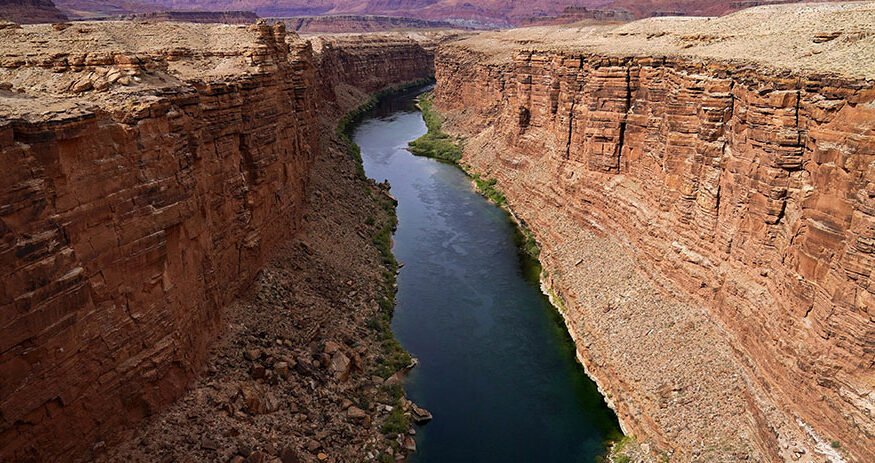
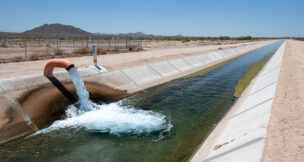
The Colorado River in the upper River Basin is pictured in Lees Ferry, Ariz., on May 29, 2021. (AP Photo/Ross D. Franklin)
Efficiency, not water wars, can save the Colorado River
Jason Shulman, Guest Commentary//September 25, 2025//



I write as a resident of Colorado, where every drop of the river matters to our farms, families, and future. I have no fiduciary interest in water. I don’t own land around it, nor any water rights attached to it. But, simply put, I like to drink water to survive so its supply in the very dry American West has always interested me. Particularly the Colorado River and the millions of us who depend on it.
The Colorado River is the lifeline of the American West, but it is dangerously over‑appropriated. Agriculture consumes the majority of its flow, and nowhere is this more concentrated than in the Imperial Irrigation District (IID) in California and Yuma. These regions supply most of America’s winter vegetables — but they also devote massive acreage to alfalfa hay, much of it exported overseas, using about six acre‑feet of water per acre each year.
That fact often leads people to frame the problem as “food vs. alfalfa.” But I believe we can solve this without starving our nation of food. The answer is targeted efficiency — rewarding real, measured conservation and shifting crop mixes where it makes sense.
Shifting even 10% to 25% of IID’s alfalfa acreage into lettuce and wheat rotations could free up 65,000 to 160,000 acre‑feet annually while strengthening the winter vegetable supply. Paying growers to idle feed crops during the hottest summer months could save another 150,000 to 200,000 acre‑feet. Together, these steps would conserve roughly 300,000 acre‑feet per year — water that could help stabilize Lake Mead — without undermining the winter lettuce and greens on which Americans depend from November to March.
These programs are not hypothetical. IID’s Deficit Irrigation Program allows landowners to voluntarily forgo irrigation for 45 to 60 days, with gates physically locked, paying participants based on historical usage baselines. In 2024, DIP alone conserved over 172,000 acre feet in Lake Mead. IID’s broader On‑Farm Efficiency Conservation Program (OFECP) also produces field‑level conservation credits; in 2024, more than 70,000 acre feet of its conserved water was set aside as “System Conservation Water” to remain in Lake Mead. The federal government’s Lower Basin System Conservation Program is currently offering $300 to $400/acre feet in verified incentives for conservation. To verify savings, we can leverage satellite evapotranspiration tools like the OpenET platform, which enables measurement of actual crop water use across fields.
Other countries have already shown the way. In the Netherlands, advanced greenhouses can produce tomatoes with as little as 4 liters of water per kg in closed systems, compared to 60 liters in open‑field drip systems. Israel reuses nearly 90% of its wastewater, sending much of it to agriculture after treatment, dramatically reducing freshwater demand. These are not distant models — they are blueprints we can adapt to the Colorado Basin, tailored to our crops and climate.
The Colorado River does not have to be a story of litigation or interstate war. It can be a story of smart contracts with farmers, science‑based verification, and pragmatic crop shifts. Paying fairly for real water savings is likely far less expensive and faster than building new dams, pipelines, or large‑scale desalination plants.
My hope is that the future of the river will not depend on finger‑pointing but on practical, measurable solutions that protect both farmers and families. Efficiency — not water wars — is the path forward.
Am I crazy to think we can fix this? Maybe. But I’d rather be crazy for proposing solutions than complacent while the river runs dry.
Jason Shulman is a Colorado resident and owner of Colorado CareAssist, a home health agency.