Sign In


Upcoming Event
 Free Newsletter

‘Gas station heroin’ is putting Arizona families at risk — our laws haven’t kept up
Sen. Shawnna Bolick, Guest Commentary//May 11, 2026//
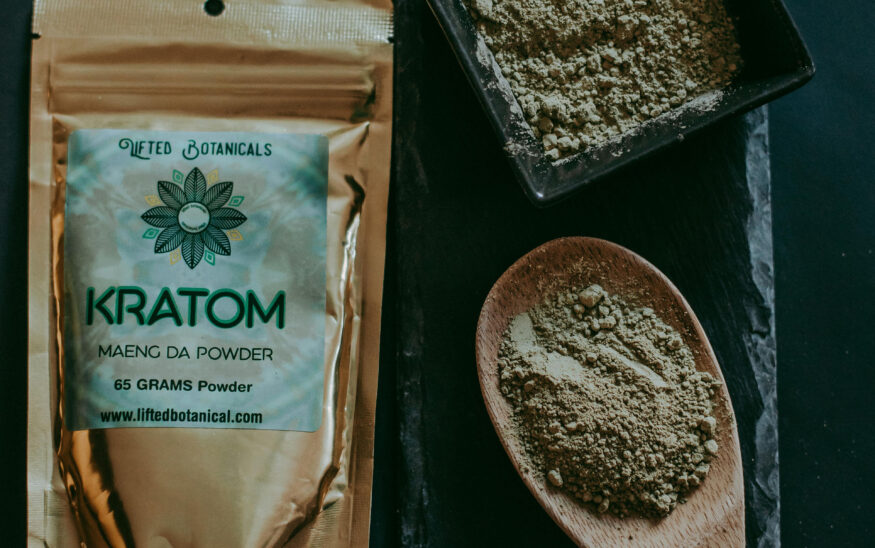
(Pexels)
(Pexels)
‘Gas station heroin’ is putting Arizona families at risk — our laws haven’t kept up
Sen. Shawnna Bolick, Guest Commentary//May 11, 2026//


Addiction specialists and pediatricians across Arizona are sounding the alarm about unregulated kratom products sold in convenience stores and gas stations. Scottsdale Recovery Center reports patients experiencing kratom dependence and opioid-like withdrawal driven by products that vary wildly in potency and purity.
Addiction-medicine specialist Dr. Michael Sucher warns that kratom acts on the same receptors as opioids and can contain high-potency or even synthesized alkaloids far stronger than consumers realize.
Dr. Gary Kirkilas of Phoenix Children’s Hospital cautions that kratom can cause dangerously high blood pressure, hallucinations, convulsions and respiratory depression — reminding us that “natural” does not mean safe.
And Dr. Todd Vanderah of the University of Arizona underscores that kratom’s opioid-like effects and inconsistent labeling create real risks for dependence and toxicity.
Their message is unified and urgent: Arizona families deserve stronger safeguards and honest information about the risks posed by unregulated kratom products.
Kratom’s active compounds bind to the same receptors targeted by opioids, creating real risks for dependence, withdrawal and toxicity. Marketing it as “natural” misleads consumers into underestimating those dangers and underscores why policymakers must treat kratom with the same seriousness as other substances acting on opioid pathways.
The human cost is devastating. Mesa resident Cullen Logan shared the heartbreaking story of losing his wife in a new documentary titled, “Kratom: Side Effects May Include,” after her struggle with kratom dependence and severe health consequences neither of them anticipated. A product sold as “natural” and readily available in Arizona quickly upended their lives. Cullen now speaks out so no other family endures the same tragedy.
Arizona’s Kratom Consumer Protection Act, passed in 2019, was written and pushed by the American Kratom Association (AKA) — a national trade group for a $1.5 billion industry, not a consumer-protection organization.
What was billed as a safeguard has instead functioned as an industry shield. As kratom products have grown more potent, more adulterated and more aggressively marketed, that framework has failed to protect the very people it was supposed to help.
Last week, I joined a bipartisan group of legislators for a virtual panel on the “Arizona Kratom Addiction Crisis,” hosted by Dean Francis, whose son became addicted to kratom after believing it was a harmless supplement. He nearly died twice. His family’s story shows how deceptive marketing and inconsistent potency can devastate families who never imagined they were at risk.
During the panel, Dr. Sucher warned that some kratom products sold in Arizona contain high-potency or even synthesized alkaloids — far more dangerous than consumers realize. With no consistent testing or regulation, young people are especially vulnerable. He was blunt: banning kratom is the strongest action legislatures can take. States including Connecticut, Kansas, Kentucky and Tennessee have enacted bans this year, and those states have seen significant drops in poison-control calls.
This spring, Utah took decisive action. Gov. Spencer Cox signed SB 45, sponsored by Sen. Mike McKell, which allows only pure kratom leaf, restricts sales to specific smoke shops, raises the purchase age to 21, and phases out all extracts, concentrates and high-potency products by 2027. Utah’s approach reflects a growing recognition that today’s kratom marketplace — dominated by potent extracts and inconsistent labeling — requires far stronger safeguards than industry-written model bills provide.
Sen. McKell also warned Arizona lawmakers about the influence of former Congressman Matt Salmon, who has served as a paid lobbyist and senior advisor for the AKA. His work advancing industry-written “Kratom Consumer Protection Acts” helped shape Arizona’s 2019 law — steering state policy toward weaker, industry-driven regulation even as medical experts raise alarms.
Earlier this session, I sponsored legislation to ban kratom. The AKA and its lobbyists immediately pushed back, generating more than a thousand opposition emails to my office. The bill died in committee. Weeks later, the House passed HB 2415, a measure written by the AKA’s lobbyist. Its text is a Trojan horse — appearing to regulate kratom while leaving consumers largely unprotected.
When HB 2415 reached the Senate floor, I proposed an amendment, which added real safeguards: a 500-foot buffer around schools and childcare facilities, behind-the-counter storage, strong advertising restrictions modeled on Arizona’s adult-use marijuana laws, civil penalties and an automatic repeal if the DEA schedules kratom. These reforms transformed HB 2415 into a bill that protected families.
But the sponsor asked the Senate to strip out my amendment — gutting the safeguards and advancing a watered-down bill that leaves Arizonans at risk.
Meanwhile, HHS Secretary Robert F. Kennedy Jr. and FDA Commissioner Dr. Marty Makary now support classifying 7-hydroxymitragynine (7-OH) — one of kratom’s most potent alkaloids — as a Schedule I controlled substance. Even the U.S. military bans kratom for service members, citing threats to readiness, discipline and health. The federal message is unmistakable: high-potency kratom products carry opioid-level risks and demand strict controls.
Arizona’s current law leaves consumers exposed to the very products federal officials and military leaders warn are most likely to cause addiction, toxicity and severe withdrawal. The gap between federal urgency and Arizona’s industry-driven statute is untenable.
Arizona must not fall behind. The Legislature should adopt meaningful, enforceable safeguards that reflect the realities of 2026 — not the assumptions of seven years ago. We should never wait for the federal government to “rescue” us. Our families and our public health depend on it. It is time for Arizona to act.
Shawnna Bolick is the state senator for Arizona’s 2nd Legislative District.