Sign In
Upcoming Event
 Free Newsletter

Arizona Supreme Court to decide the fate of campaign donation disclosure law
Kiera Riley Arizona Capitol Times//September 12, 2025//

(Pexels)
Arizona Supreme Court to decide the fate of campaign donation disclosure law
Kiera Riley Arizona Capitol Times//September 12, 2025//


Key Points:
-
Arizona Supreme Court hears argument on donor disclosure
-
Claims of threats, retaliation come after close-to-home killing
-
Justices take matter under advisement, note statewide importance
The Arizona Supreme Court is now weighing a legal challenge to the Voters Right to Know Act, a 2022 law requiring heightened donor disclosure, from two conservative groups who fear it could lead to doxxing, threats, harassment and chilled speech.
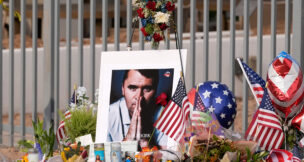
Arguments over the law, and the claimed potential for further disclosure to give way to harm, fell squarely in the shadow of the September 10 death of Turning Point USA founder Charlie Kirk, with attorneys for the plaintiffs and leaders of the Center for Arizona Policy and the Arizona Free Enterprise Club pointing to the shooting as an example of the current “retaliatory environment.”
“It’s not lost on us what happened yesterday,” Justice William Montgomery said.
Proposition 211, or the Voters Right to Know Act, requires anyone making an independent expenditure for campaign media that surpasses a specific dollar amount — $25,000 for local campaigns and $50,000 for statewide campaigns — to disclose the origin of their funding. It also requires a mandatory identity disclosure for anyone contributing more than $5,000 to a campaign. The act passed in 2022 with support from more than 70% of voters. It was a significant push to create more transparency for campaign spending amid public concern for “dark money,” or untraceable campaign donations.
The Center for Arizona Policy and the Goldwater Institute claim the measure is unconstitutional and creates a chilling effect on donors. Both organizations also claim they are particularly affected, given the fear of retaliation, threats and harassment that their donors could face if their information is made more transparent.
Both the facial and as-applied challenges to the law have failed so far at both the superior and appellate courts, but the state high court granted review and heard arguments on September 11.
Andrew Gould, attorney for the plaintiffs, argues that the law’s broad constitutional failure stems from compelled disclosure and the threat of retaliation, which would deter donors from making donations.
Chief Justice Ann Timmer first pressed Gould on the as-applied challenge to the act and asked whether the act is unconstitutional, in every circumstance, or if it just pertains to more high tension issues that both the Center for Arizona Policy and the Arizona Free Enterprise Club work on.
“If you had a specific initiative … the abortion initiative for example, then sure, you can go and say, ‘Look, Judge, we’ve had this harassment, we’ve had these threats, we’ve had all of these things because it’s such a divisive issue, and it really does chill donors wanting to come and contribute,” Timmer said. “But if it’s a situation where it’s a tax issue, people aren’t also riled up about that.”
Gould said there exists no requirement for organizations to forecast a retaliatory environment in the future legally, but did conclude the fear generally has to be related to what the organization stands for.
Montgomery then asked why the opt out provision, written into the statute itself, would not suffice to ensure donors who feared reprisal could keep their names private.
“Why isn’t that good enough?” Montgomery said. “If the statute specifically contemplates the ability for a governor to make a necessary showing to preclude having to disclose their information, why isn’t that good enough?”
Gould said the very idea of a threat of retaliation would lead to donors self-censoring.
“Every time you’re required by the government to disclose your name, there’s a chilling effect,” Gould said.
Eric Fraser, attorney for the Citizens Clean Election Commission, argued that campaign finance disclosures are a core value of state founders, as shown in the state Constitution, and the Voters Right to Know Act follows in the same vein.
Justice John Lopez pressed on the issue of political violence, though, noting the string of vandalism against Tesla owners given a distaste for Elon Musk.
Fraser reiterated that disclosure was a constitutional requirement and that a reasonable probability of threat or retaliation must be found under the case law.
“We have to consider that our founders looked at the risks and benefits of disclosure versus allowing people to remain anonymous. And they chose disclosure,” Fraser said.
Alexander Samuels, principal deputy solicitor general, pointed out too that the law does not apply to small donors, or indirect donors, noting a likely chain of communication between donors and recipients on how dollars are spent that could improve transparency.
“What we have here is large scale donors, and the odds that these folks are not going to be talking to each other, the odds that an organization is going to spend a donor’s money against their wishes, I think they’re very unlikely. And the indirect donors can always, always restrict their donations,” Samuels said.
The justices took the matter under advisement.
“We realize this is an extraordinarily important case and issues will reverberate for many years to come. So we will take this under advisement. We certainly give all due consideration and discussion among us,” Chief Justice Ann Timmer said.