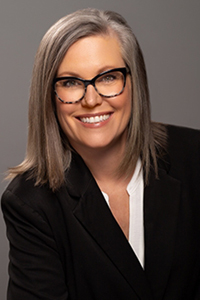
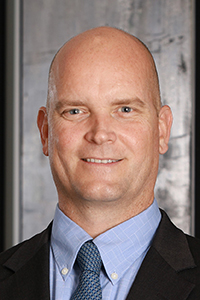
The first week at the Legislature saw both parties and two branches of government laying out their plans for the 2025 session. But it also saw Republicans lay out their plan to make Gov. Katie Hobbs a one-term governor.
With a Freedom Caucus news conference, State of the State Address rebuttals and state agency sunset hearings, legislative Republicans had ample time to make the case against Hobbs’ reelection. And they’ve put forth the message they want voters to remember in 2026 – the Governor’s Office is “out of touch” with the major issues facing the state and how Arizonans want them to be addressed.
Sen. Jake Hoffman, R-Queen Creek, is the founding chairman of the Arizona Freedom Caucus and perhaps Hobbs’ most vocal critic in the Legislature. While other Republicans cited specific concerns like border security and affordability as their top priorities in 2025, Hoffman said he is focused on ousting Democrats next year.
“The single most important task that we will work on over the coming two years that will produce the greatest positive benefit for the people of Arizona possible is our efforts to fire Katie Hobbs, Kris Mayes and Adrian Fontes in the 2026 election,” Hoffman said at a Jan. 13 news conference.
Hoffman was referring to the governor, attorney general and secretary of state, respectively.
On the other hand, in her State of the State Address, Hobbs seemed to ask lawmakers to focus on the current session rather than its broader implications.
“For too long, politicians have been focused on the wrong things – chasing headlines, playing politics, and looking toward their next election or their next office rather than standing up for the people we represent,” Hobbs said during her Jan. 13 speech.
Newly-elected House Speaker Steve Montenegro said he thought Hobbs’ speech did not do enough to address the issues Arizonans were most concerned about in the last election.
“The governor spent millions of dollars trying to sell the same vision we’re hearing today, and the voters rejected it,” Montenegro said. “Not only rejected it, they increased Republican majorities. We made a commitment to Arizonans to focus on the areas where we have and we have to come through.”
Senate President Warren Petersen, R-Queen Creek, emphasized that point in a video rebuttal posted after the State of the State speech.
“Arizona families want real solutions that empower them to create their own American Dream,” Petersen said. “They don’t want the government handouts that the executive is proposing and they don’t want the government telling them how to live their lives.”
However, Montenegro painted a much more rosy picture than Hoffman about how the Legislature and Hobbs could work together on certain issues.
“There’s always room for bipartisanship,” he told reporters. “It’s going to depend on what we see the members bring forth and what the governor is wanting.”
Legislative Republicans and the Governor’s Office at least agree that affordability, border security and housing are big issues that need to be addressed this session. But how to address them is an entirely different question, and Republicans want to make sure they can take credit for the solutions.
Hoffman said at the Jan. 13 news conference that many of those issues can actually be attributed to the Hobbs administration.
“Let me be very clear, the Arizona executive branch has made our state less safe, less affordable, less prosperous and less competitive on both the national and international stage,” Hoffman said.
Republicans had an early opportunity to score points against the Hobbs administration during sunset review hearings for several state agencies and boards that are set to expire this year. Throughout the first week of the session, Republicans questioned agency heads about the effectiveness of their departments but none did so as directly as Hoffman.
At a Jan. 10 Senate Government hearing on the Governor’s Regulatory Review Council, Hoffman took the chance to jab at the new state logo commissioned by the Hobbs administration and used in the agency’s presentation.
“Were you directed by anybody in the Governor’s Office to use this God-awful, $750,000 logo?” Hoffman asked.
The new state logo was part of a $700,000 rebranding effort undertaken by the Office of Tourism that was widely criticized by Republicans for its cost, especially after news reports of a conflict of interest that led to the resignation of the office’s director.
Despite his talk of “firing” Hobbs, Hoffman did not offer up any ideas for Republican candidates to face off against her. Former Republican gubernatorial candidate Karrin Taylor Robson has all but announced her candidacy and received an endorsement from newly elected President Donald Trump, to Hoffman’s chagrin.
In a post on X shortly after the Robson endorsement, Hoffman said “Arizona doesn’t want [Robson’s] open borders, pro-amnesty liberal policies.” But he did not answer questions from reporters about who he thinks should run instead.
As the 2026 election cycle grows closer, Petersen said in the video rebuttal that Republicans will work with Hobbs to a point.
“We look forward to working with the governor where our priorities align with the majority of Arizonans,” Petersen said.
A bipartisan group of legislators announced the creation of a housing and homelessness caucus dedicated to finding common ground on housing policy this session.
One mission for the group – pass the Arizona Starter Homes Act.
“The starter home bill is what we need to get done,” said House Majority Leader Leo Biasiucci, R-Lake Havasu City, during a Jan. 15 press conference announcing the formation of the caucus. “The reason why we created this caucus is to make sure to get as many voices as possible into a room from all sides of the aisle.”
Biasiucci and Sen. Analise Ortiz, D-Phoenix, have emerged as leaders of the caucus. Both members also played key roles in negotiations of last year’s version of the Starter Homes Act, which was controversial because many city leaders worried the bill wouldn’t lead to more affordable homes being built.
Leo Biasiucci
The Starter Homes Act proposed prohibiting zoning regulations intended to create houses with smaller lot sizes. It also would have prohibited new developments from requiring property owners to be forced into homeowners associations.
Cities largely opposed the measure in 2024, and it was met with a veto from Gov. Katie Hobbs who cited public safety concerns with the measure.
Hobbs made a commitment to lawmakers during her State of the State Address on Jan. 13 to continue working on housing measures.
“We must further cut the red tape that’s driving up the cost of housing,” Hobbs said. I’m proud of the progress we’ve made expanding access to casitas and building duplexes and triplexes in our downtowns. But Arizonans are depending on us to find more common sense solutions that don’t expose our neighborhoods to untested experiments.”
The governor had three other key housing goals: extending the state’s low-income housing tax credit, regulating short-term rentals and doubling the number of first-time homebuyers who receive assistance through the Arizona Is Home program.
Biasiucci said the housing caucus is hoping to work with the League of Arizona Cities and Towns and Hobbs’s office to find an agreement on the Starter Homes Act. The caucus will be meeting regularly through the session and has extended invitations to the Governor’s Office.
“We can bring together experts, advocates and policymakers to develop comprehensive solutions to ensure every individual has access to safe and stable housing,” Ortiz said. “It is unacceptable that in the wealthiest nation in the world, millions of people are struggling to find affordable housing and are forced to live on the streets.”
The league also plans to run a Starter Homes Act bill. Nick Ponder, the league’s legislative director, told the Arizona Capitol Times in a text that the league’s bill will likely focus more on reduced lot sizes and making affordable units a conditional right.
“There was nothing in their bill last year that required the homes to be starter homes. Nothing that required them to be affordable,” Ponder said. “In fact, nothing that required them to be purchased by an individual so you could have corporations owning more homes which is one of the root causes of the problem today.”
No version of the Starter Homes Act has been filed for the 2025 session yet. Biasiucci said it’s possible that the caucus files its version of the bill after discussions on the issue.
Another purpose of the caucus is to consider other housing measures and help lawmakers workshop their bills.
Sen. Catherine Miranda, D-Laveen, introduced SB1043, which would require cities with more than 75 people experiencing homelessness to have at least one shelter bed for every four people that are unhoused.
Miranda said she’s confident she can get Republicans and Hobbs to support her measure, although Biasiucci said he wasn’t sure if he could since he hasn’t read her measure yet.
Catherine Miranda
“Each of us kind of grabs a layer, a piece on this problem,” Miranda said.
Another lawmaker who attended the Jan. 15 press conference is Rep. Selina Bliss, R-Prescott. Bliss has filed several bills during her time as a legislator seeking to regulate short-term rentals, but none have been heard in committee hearings yet.
This session, Bliss has introduced HB2131, which would require an online marketplace to verify that an owner of a short-term rental is in compliance with Arizona licensing and insurance requirements.
Republican leadership at the Legislature has been resistant to regulating short-term rentals since then-Republican Gov. Doug Ducey signed a law in 2016 that prohibits cities and towns from regulating short-term rental properties.
Some cities like Scottsdale and Sedona have pointed to short-term rentals as contributing factors to local housing issues. Biasicucci said he expects the league to run a short-term rental bill this session.
Some Democrats have said short-term rentals aren’t as significant of a problem to Arizona’s housing market compared to other issues. Ortiz previously told the Arizona Capitol Times that short-term rentals make up a small percentage of the housing stock and while it can be an issue for some specific cities, it’s not going to be the key to finding affordable housing in the state.
“We won’t agree on everything, but by forming this housing and homelessness caucus, we can amplify the voices of those who are most affected by these issues and advocate for the areas where we do have common ground,” Ortiz said.
A bill that aims to accelerate vote counting in Arizona passed its first test Jan. 15 after the Senate Judiciary and Elections Committee approved it 4-3 along party lines.
SB1011 would eliminate early ballots delivered on Election Day and instead require those voters to drop off their ballots by 7 p.m. on the Friday before an election. An amended version of the bill removes the requirement for voting locations to be open on the Saturday and Monday before the Election Day for in-person early voting and would allow county recorder offices to send ballots up to 29 days before an election. The previous version called for ballots to be sent up to 27 days before an election.
Senate President Warren Petersen, R-Gilbert
Other provisions would prohibit public school principals from denying a request to use their school as a polling place and allowing voters to show identification instead of having to verify their ballot signature.
The bill is part of a larger effort gaining momentum among Republicans in both chambers who want to emulate Florida and get results on election night instead of days later.
The House ad hoc Committee on Election Integrity and Florida-Style Voting also met Jan. 15 to consider a concurrent resolution that would ask voters if they prefer an election system similar to Florida’s.
Rep. Alexander Kolodin, R-Scottsdale, filed HCR2013, which proposes moving the late-early ballot drop off date to the Friday before an election like the Senate bill.
The House measure would also eliminate the signature verification process by giving early voters a unique voter ID number. Kolodin said this was a faster way to verify ballots for election officials and it eliminated changed or irregular signatures from voters who may have difficulty signing their signature consistently.
One provision of Kolodin’s measure that some election officials say could be a challenge is a requirement for early voters to verify their addresses with county recorders before every election. Kolodin said county recorders in Florida do this practice through online web portals or even some county recorders will have their staff call voters directly.
Alexander Kolodin
Critics say the move to a Florida-style election process would potentially limit voting access, especially in rural areas, cause confusion among voters and not provide contingencies for unforeseen circumstances that may hinder someone from dropping off their ballot in a timely manner, such as forgetting their identification card.
There are concerns regarding potential obstacles for voters with disabilities and others who may need a caregiver to drop off their ballot.
Republicans have countered by saying the bill would provide voters plenty of time to return their ballots.
Senate President Warren Petersen, R-Gilbert, who introduced the Senate bill, testified before the Senate Judiciary and Elections Committee, saying speedier elections are a “constituent issue” rooted in frustration over slow election results.
“I think I received more frustration over this issue, more texts, more comments than almost any other issue since I’ve been here,” Peterson said. “So I committed to making sure Arizona could be a state, just like so many other states, who have election results (the) night of instead being the state who delivered their electoral results last.”
Sen. Analise Ortiz, D-Phoenix, said she disagreed with the idea that people want quicker election results so much that they’re willing to sacrifice voter access.
“I think this bill is an absolutely atrocious attempt to make it harder to drop off your early ballots,” Ortiz said. “This nonsense about so many people wanting election results right away, and therefore we have to jeopardize voter access, is just ridiculous.”
Ortiz said the Democrats have a plan of their own to speed up election results that would include expanding in-person voting during the weekend and Monday before Election Day, removing duplicative identification requirements and increasing the funding for county election departments.
Maricopa County Recorder Justin Heap spoke in support of the bill, citing concerns over the security and integrity of the state’s elections.
“I think that, across the board, concerns over election integrity have been a major issue in Arizona for a very long time,” said Heap, a former state lawmaker and an attorney.
Pima County Recorder Gabriella Cázares-Kelly expressed concerns over accessibility, especially in rural areas outside of Tucson where there are limited buildings to set up voting facilities, she said. Cázares-Kelly also said there are no drop boxes in Pima County.
“There’s major concerns about reducing the time of being able to return a ballot, especially for household members who are returning (a ballot) on behalf of another in a rural area,” she said. “I think that is very much an issue.”
Income caps, Gov. Katie Hobbs’ sole solid policy proposal to rein in the Empowerment Scholarship Account program in her State of the State Address, expectedly saw early support from public education advocates and immediate dismissal from school choice supporters.
Those in support of Hobbs’ plan deemed it a solid first step, given a string of zip code analyses that found high income households typically utilize the ESA program at a higher rate than low-income families.
But school choice supporters deemed Hobbs’ proposal mere rhetoric and raised the comparison to district or charter schools, which see no means-test or income cap as a determinant of entry or funding.
Ahead of the unveiling of the executive budget Jan. 17, the proposal generally left questions on structure, data collection and how any attempted bill might fare in the Legislature.
In her State of the State on Jan. 13, Hobbs ended her remarks with another call to install greater accountability in the ESA program.
“The current program is unchecked, flawed, and rife with exploitation. Three years ago, it went far beyond its original purpose, which was to support kids with special needs and military families,” Hobbs said. “Today, it has ballooned into a billion-dollar boondoggle increasingly scamming Arizonans. Other entitlements funded by taxpayers have strict oversight and income requirements. Yet the ESA program has the privilege of virtually no safeguards.”
Hobbs specifically proposed instituting “responsible” income caps and made general calls to “ensure taxpayers know where their money is going and create real responsibility for taxpayer dollars.”
“Members of this Legislature must ask themselves: Do we finally put guardrails around ESAs to protect against fraud, waste and abuse – or do we continue to write a blank check with taxpayer money?” Hobbs said. “Do we lower costs by investing in child care and housing – or do we continue to subsidize the rich? Do we provide lifesaving care to new mothers and their children – or do we continue paying for grand pianos to sit in multi-million-dollar homes? Do we give our police a raise and secure our border – or do we continue to pay for ski resort passes?”
Tyler Kowch, communications manager for Save Our Schools Arizona, deemed an income cap program to be a “fiscally conservative common sense reform,” likely to include “common sense cut offs,” with a scheme likely allowing full funding to low-income students and a taper-off in dollar amount as household incomes rise.
Data collection on ESA enrollees income would have to be wrapped into any proposal since such data is not collected by the Department of Education.
The closest analysts have come to gauging how the program breaks down by income is by looking at zip codes.
Dave Wells, research director for the Grand Canyon Institute, published the initial income analysis of zip codes in November 2022, and found, at the dawn of universal expansion, 45% of universal ESA applicants at the time hailed from zip codes where the median household income was $80,000 or more.
Since then, zip code data has been incorporated into publicly available ESA data, but the analyses have, by-and-large, revealed the same.
In a report published in May 2024, the Brookings Institution analyzed data from the department’s 2024 Q2 report and found as the poverty rate increases, the number of students using ESA decreases, with the state’s lowest-poverty areas boasting the highest participation rates in the program.
ProPublica reporters Eli Hager and Lucas Waldron followed up with another analysis in October 2024, again finding neighborhoods with high poverty rates had low ESA enrollment.
“Everybody seems to come to the same correlation conclusion,” Wells said. “ESAs are disproportionately used by wealthier zip code residents.”
Given a continued disparity in use by zip code, Wells said Hobbs’ income cap proposal could be a step in the right direction.
“Esentially, what the ESA program is doing is it’s diverting resources that could be used to really target kids who are at risk of not graduating from high school,” Wells said. “Instead, they’re helping more affluent parents have more educational options for their child, and I think the state really ought to prioritize or emphasize investments in the at-risk children.”
He continued, “There’s a bit of an equity issue … What the state really needs to do is they want to make sure you improve the educational outcomes for your most at-risk kids, and the most at-risk kids need those resources. So, the income cap helps.”
Matt Beienburg, director of education policy for the Goldwater Institute, said Hobbs had “simply recycled the same failed talking points she made last year,” referencing a proposal the governor floated last year to reinstate eligibility requirements to ensure students participating in universal ESA had attended a public school for at least 100 days.
He drew comparisons to funds spent per-pupil in district schools, as the program is funded at 90% of the state’s per-pupil base funding, and generally noted the lack of any means testing in attending a district or charter.
“Unless the governor is proposing placing an across-the-board income cap on all Arizona families utilizing the state’s K-12 funding formula, she ought to find a bigger fig leaf for her blatant double standard,” Beienburg said.
Jenny Clark, founder of pro-school choice group Love Your School, argued along the same lines.
“The wealthiest families in Arizona are allowed to put their kids in Arizona public schools at a greater cost to the taxpayer than the ESA program,” Clark said. “When there is an income cap on what we spend on public school families, then we’ll entertain an income cap on the ESA program, but otherwise it’s just another talking point and a bit of rhetoric from the Governor’s Office she likes to reuse.”
Hobbs’ executive budget, with details on her proposed income caps,was set to be released at 3 p.m. on Jan. 17.
Gov. Katie Hobbs said Wednesday she wants $7 million to speed up the repatriation of Native American human remains and artifacts.
In an address to tribal leaders Wednesday, Hobbs said the collection at the Arizona State Museum has continued to grow. The governor said that is hampered because there has been “no significant financial investment from the state.”
Gov. Katie Hobbs
“It is time for that to change,” she said. “It is time for the state to take repatriation seriously.”
Stephen Roe Lewis, governor of the Gila River Indian Community, said he is glad the governor is asking lawmakers to help finance the effort.
But Lewis told Capitol Media Services the problem is not strictly financial.
“From what I’m hearing from certain tribal repatriation specialists a lot of these institutions are not wanting to, or are dragging their feet to be in accordance with the federal law,” he said. Lewis said there needs to be a focus on those, though he said he will not call them “bad actors.”
“This shines a light on it,” he said.
Lewis stressed that the money should help. But he said the focus by the governor will “make sure that this pushes these institutions along, that they’re under the microscope, at least in the state of Arizona.”
The governor’s request for more dollars drew support from Jim Watson, the acting director of the Arizona State Museum at the University of Arizona. He said it has about 4,000 human remains that have yet to be repatriated and “maybe 800,000 objects.”
“We’re an old, large museum and there’s a lot of material here,” Watson said, with some of the items going back to the 1920s.
He said money will help.
It starts, said Watson, with the fact that the building is 100 years old with limited space. And that, said Watson, has hampered the ability of staffers to do the necessary research.
It’s even more complex than that.
He said the federal Native American Graves Protection and Repatriation Act requires institutions that receive federal money to facilitate the return of human remains and eligible other items. But to do that, Watson said, they have to be brought out of storage, put them together in what he called “appropriate housing,” and either bring them to the affected tribe or have tribal officials come to the museum to take the remains.
He said a request for funding was made directly to the Arizona Board of Regents last year to at least fund some of the maintenance that has not been done over the years.
“They tabled it,” Watson said, with board members saying that this is something that should be funded by the Legislature. And, so far, there has been no money forthcoming from the Capitol even though the facility was closed in August for anticipated maintenance.
“We’ve sort of been in limbo,” he said. Watson said the governor’s Wednesday announcement came as a welcome surprise.
But even if there were more up-to-date space, he said that, by itself, won’t solve the problem.
“It takes awhile to pore through the archives and the objects and, in some cases, human remains to be able to identify all of repatriation-eligible items and individuals that we have,” Watson said. That, too, he said, is a function of not having enough money to hire more staff.
Still, Watson said the work has continued.
“We have been actively repatriating,” he said, saying the museum already has given about 50% of its collection back to tribes. And Watson said that began even before the federal law began in 1990.
That, however, still leaves the question posed by Lewis of whether there has been some “dragging of feet” by institutions that have built up collections of Native American artifacts.
“I would say that that thinking was probably when NAGPRA was first passed … and people did intentionally drag their feet,” Watson said. “Within the past couple of years, I would argue there are a very few institutions that still have that approach.”
Still he said, there are those museums and others who need to be prodded.
“There’s evidence of that,” Watson said. He said new federal regulations were approved a year ago “that were specifically designed to force institutions to stop dragging their feet and remove some of the excuses they had often used to prevent repatriation from occurring.”
Some of those “excuses” offered he said included things like time, money and “the intricacies of doing the research.”
And then there is the question of “culturally unaffiliated remains.” He said some museums argued that if they cannot identify which tribe the remains are related to, they should just keep them.
Watson said the way the Arizona State Museum is working to deal with that issue is through an advisory board made up of representatives of all the recognized tribes in Arizona. He said they have found ways to reduce the number of these items to half of what was initially concluded.
What’s left, Watson said, are those remains for which there is no context to suggest to which tribe the remains belong other than “we think they came from Arizona.” What he suspects the advisory board will come up with is a plan to have tribal representatives or a single tribe to facilitate a single reburial “because we don’t have a good sense of where they’re coming from.”
It isn’t just the Arizona State Museum that deals with tribal remains and antiquities.
So does Arizona State University. And an investigation by Cronkite News and the Howard Center for Investigative Journalism at Arizona State University concluded last year that ASU had returned fewer than 2% of the remains it had to tribes.
Jay Thorne, an associate vice president at ASU, said the school takes issue with the report and disputes the 2% figure, though he did not immediately have a different figure. But he said that all this needs to be examined in context.
“It’s a complicated process,” he said, of categorizing and repatriating returns. And Thorne said the school works closely with tribes.
He said, though, the progress should not be measured strictly in the time involved.
“Everybody wants it done,” Thorne said. “But doing it fast isn’t necessarily the appropriate way of doing it.”
Hobbs’ request for the funds came as she gave a revised version of the State of the State speech she gave Monday to lawmakers. But aside from unveiling her $7 million ask, the Arizona governor added other comments specifically designed for the ears of the tribal leaders:
– Directing the Department of Public Safety to set up a version of the “Amber alert” program, which is designed to provide public notice of missing or kidnapped children, specifically for missing tribal members. She said more than 188,000 individuals went missing in 2023, including tribal members, who did not meet the criteria for the existing program.
– Asking lawmakers to expand the services provided by the state’s Medicaid program to include “traditional healing services so that indigenous people in this state can receive the health care they want.”
– Directing $4 million to four tribal colleges for scholarship and workforce programs.
An Army veteran who earned a Bronze Star for his actions in combat in Iraq wants to send some of those who fake their veteran status or their medals to prison.
But Rep. Walt Blackman, R-Snowflake, said he crafted his Stolen Valor legislation to avoid the same legal problems that resulted in the U.S. Supreme Court in 2012 voiding a similar federal law as a violation of free speech rights in the First Amendment. He said only if someone seeks to profit from a deliberate misrepresentation could they end up behind bars.
And the former tank commander said there’s another reason for the state to have its own law: It would spell out that anyone convicted under the legislation who was holding public office would be forced to resign, something he said could not be covered by a federal law.
At its heart, Blackman said it’s an issue of identity theft. The victims, he said, are all those who actually have served and have been awarded special medals and other designations, whose service is diluted by those who are falsely making such claims.
“Every veteran in the United States, the half a million veterans here in Arizona, we are all victims when somebody steals our valor,” he said. “You are also looking at the family members left behind, Gold Star families, when somebody said they did something in combat when they did not,” Blackman said, referring to the parents, siblings, children and extended families of those who are killed in combat.
HB 2030 would make it a crime to impersonate a veteran to obtain employment or government contracts, or to claim veteran benefits such as health care, education or disability compensation.
But it does not stop there. Blackman’s legislation also would make felons of anyone who uses a fake claim “to secure votes, campaign contributions or political advantages.”
Consider, he said, someone who tells voters he or she was deployed to Vietnam when the military records show otherwise.
“By doing that, I have raised X amount of dollars, $5,000, $10,000, $50,000, and that is why I was able to raise that money, that is a crime,” Blackman said. He said it’s no different than existing laws that make it illegal to gain money through false schemes.
The issue actually came up last year in a bid by Blackman to reclaim the House seat he had previously occupied before 2022 when he instead made an unsuccessful run for Congress.
On his website, Steve Slaton, his foe in the GOP primary for the state House, claimed that he worked as a crew chief and co-pilot on a Cobra helicopter, serving in Vietnam and Korea. But the DD-214, the official military record, does not mention Vietnam and only that he was listed as a helicopter repairman in Korea.
Slaton offered several explanations, including that he was the victim of identity theft and his military discharge papers had been altered.
Blackman did not mention Slaton on Wednesday.
“I’m not going to get into names about who actually did it in Arizona,” he said.
“To say their names, folks would think it’s a personal vendetta,” Blackman said. “It is not.”
Another part of the legislation would make it a crime to wear or display any unearned military award, ranging from the Medal of Honor and the Distinguished Service Cross to the Bronze Star and Purple Heart.
That section does not mention wearing any of those medals for the purpose of personal gain. But Blackman insisted that is the intent and that no one will end up in prison simply for dressing up with such a medal.
“If a person wants to walk around and look like George S. Patton, that’s their business,” he said of the much-decorated World War II general whose honors include the Army Distinguished Service Cross, the Silver Star, the Legion of Merit and the Purple Heart.
“However, if they say, ‘I want to be in office’ or ‘I need this contract because I am George S. Patton, but they’re not, then they have committed a crime.”
At a minimum, HB 2030 would make impersonating a veteran a Class 4 felony, which carries a presumptive 2 1/2-year prison term.
But Blackman’s bill provides for a Class 2 felony, presumptively 5 years in prison, if the value of the benefit they were seeking is worth at least $50,000. And anyone convicted under that part of the statute would have to serve at least 85% of their sentence before they were eligible for parole.
A Casa Grande Republican lawmaker wants to force Gov. Katie Hobbs to cooperate with any federal order issued by President Trump when he takes office to begin mass deportation of those not here legally.
And Rep. Teresa Martinez wants the same mandate on Attorney General Kris Mayes.
But to make that the law in Arizona, she will need to first get Hobbs’ signature on her HB 2099. And a press aide to the Democratic governor, who has sought to say she’s willing to work with Trump on at least some immigration issues, declined to say what his boss will do with the bill if and when it reaches her desk.
Mayes, however, said through her own spokesman that a blanket requirement to go along with whatever Trump wants – which is what could be covered under the wording of the legislation – is unacceptable.
“We’re going to wait and see what the new administration’s plans are and then respond to them,” said Richie Taylor. “But if they are at odds with the U.S. Constitution and the rights and guarantees that it allows for, then we’re going to have an issue with that.”
And Mayes already has staked out a position that she will fight the future president if he enacts measures she believes interfere with individual rights.
Martinez, however, said the issue is much simpler for her. She said Trump’s electoral victory, including in Arizona, is a mandate for him to carry out the policies he announced during the campaign, including launching “the largest deportation operation in American history.”
Of note is that HB 2099 does not simply require Hobbs and Mayes to comply with federal law.
Instead, it mandates that they “enforce, administer and cooperate with federal actions, orders and programs that relate to the enforcement of federal immigration laws.” And given Trump’s statements about the actions he intends to take unilaterally, that could be much broader than anything Congress approves.
Martinez, for her part, does not see an issue.
“I say illegal immigrants do not have a right to be in the United States,” she said.
“Illegal immigrants do not have a fundamental right to be in the state of Arizona,” Martinez continued. “They don’t. I’m sorry. I do not believe that.”
Nor does Martinez believe her legislation runs afoul of the Republican philosophy of “states’ rights” and how that supersedes federal law. In this case, she said, HB 2099 would actually have the state voluntarily accede to do what Trump mandates.
The legislation comes at a time when both Hobbs and Mayes, in the wake of Trump’s 187,382-vote victory in Arizona and Democratic losses at the Legislature, are trying to chart a moderate path on what they think should happen to the approximately 11 million people who are in this country without authorization.
Martinez claims that Hobbs, in an interview, said “Not on my watch” when asked about cooperating with federal mass deportation efforts.
Other than some second-hand references on X, formerly Twitter, there is no evidence Hobbs actually used those words, at least not about what Trump has in mind.
But Hobbs has clearly said there are limits on her willingness to work with the new president. That includes a pre-session interview with Capitol Media Services where she said “we’re not going to use state resources to participate in misguided efforts that harm our communities.”
Still, the governor, in that same interview, sidestepped questions of what she would do if Trump issues orders to have the state police and the Arizona National Guard round up those not here legally.
“I’m not going to ‘what if’ because there’s no clear details on what exactly he’s going to do or how he’s going to carry that out,” she said.
Martinez said the issue isn’t that complex.
“What we need to do is we need to obey federal law,” she said. “And that is what the bill says.”
Martinez said her legislation to direct Hobbs and Mayes – and future elected officials – is narrowly crafted.
For example, federal law makes the possession of marijuana a crime. But Arizona voters have decided that individuals should be allowed to possess and use it.
“I didn’t say all federal laws,” Martinez said.
“This bill doesn’t affect marijuana use,” she said of the requirement to cooperate and enforce federal laws. “This bill simply says ‘immigration.’ ”
Martinez said the mandate on the governor and the attorney general in HB 2099 is necessary.
“You have a group of Democratic governors who have sworn some sort of blood oath to fight President Trump in every way, shape or form,” she said.
“Gov. Hobbs is one of those people,” Martinez said. “It is up to the Republican legislature to defend and to help Donald Trump as much as we can.”
And Martinez said if Hobbs had made no statement about cooperating, or not, with a Trump deportation plan “I would not feel the need to compel the governor or the AG of Arizona to help President Trump when it comes to immigration actions and orders.”
But it is that question of what constitutes “actions and orders,” aside from actually enacted federal laws, that her legislation would mandate the cooperation of Hobbs and Mayes.
Trump himself has referred to a 1954 order by then-President Dwight Eisenhower, which rounded up perhaps a million Mexican immigrants and some people who actually were U.S. citizens. Martinez, however, brushed aside questions of whether a presidential directive by itself, one that might even deny court hearings to those rounded up, would be something that her HB 2099 would require Hobbs and Mayes to follow.
“You’re talking about stuff that may never happen,” she said. “You’re giving me a hypothetical question that President Trump may or may not do.”
But Martinez said that ultimately comes back to the “philosophical question” of whether those not here legally have a fundamental right to be in this country in the first place.
Martinez said this isn’t meant to be “gotcha” legislation, bills being crafted by Republicans to send to the governor for an anticipated veto so they can use it against her when she campaigns for reelection in 2026.
“I hope she does sign it,” Martinez said. “I want her to sign it.”
And she noted the governor did mention in her State of the State speech on Monday the importance of the state having a role in stopping the flow of illegal drugs across the border.
“If she does not sign it, it is because she believes that illegal immigrants, illegal aliens, have a fundamental right to be in the United States,” Martinez said. “And that is it to the core.”
Nor is Martinez concerned about family separation.
She acknowledged there are people who are not here legally but who have had a child in this country who, according to a constitutional amendment, is a U.S. citizen. But Martinez said that should not be an excuse to let the parents remain.
“If you are a 2-year-old child and both your parents are illegal, then the three of you should go back to your home country,” she said.
But Martinez said there should be a path to permanent legal residency status for “dreamers” who were brought here illegally as young children but have spent at least three-fourth of their lives here. She said, however, if their parents want to apply for residency they would first have to go home to their own country.
Editor’s note: This story has been revised to report that the Arizona Democratic Party reported payments to Treasurer Rick McGuire to the Federal Election Commission.
An Arizona Democratic Party executive board member is calling for an independent audit of party finances amid a claim the party treasurer engaged in “self-dealing” for an alleged $66,000 in payments in the past two years for his work responding to finance questions from party members.
Chair Yolanda Bejarano deemed any allegation of “self-dealing” to be “defamatory” and called the concerns outlined in a letter “misplaced,” given public reporting of party finances.
In a letter sent to Bejarano on Jan. 10, ADP vice chair Will Knight claimed Treasurer Rick McGuire billed the party, or “paid himself” for work done fielding finance questions from party members.
He claimed the party and McGuire had failed to properly disclose payment and engaged in “systemic thwarting” of efforts to review party finances, ultimately culminating in a demand that Bejarano commission an independent audit of party finances.
In response, Bejarano confirmed the party paid McGuire $36,000 in 2023 and $30,000 in 2024 under the budget line item “Treasurer Training and Support” but maintained he was paid legally as an independent contractor for work “beyond his voluntary role as Treasurer.”
She wrote his role as a consultant was “to assist umbrella organizations within our party, including county parties and legislative district (LD) committees, which were often incurring substantial fines due to preventable errors,” and added in 2024 alone, McGuire answered nearly 4,000 questions from county and LD chairs, treasurers, staff, vendors and candidates.
Party bylaws outlaw ADP officers and executive board members from concurrently working as party employees but say nothing about leadership working as contractors. The party implemented a similar structure as a way to start paying Bejarano in 2023.
The party has an internal conflict of interest policy, too, requiring party officers to report “a compensation arrangement with the ADP or with any entity or individual with which the ADP has a transaction or arrangement.”
But Knight alleges that McGuire’s work as an independent contractor was never properly reported and claims his attempts to investigate the expenditures hit dead ends in attempting to review party financial records.
“I am unaware of any authorized contract, Bylaw, or other legitimate authority that would have permitted the Treasurer to pay himself as much as $100,000, or more,” Knight wrote to Bejarano, “and I am disheartened at your persistent efforts to prevent the Executive Board from performing its oversight responsibilities.”
Knight, elected vice chair in January 2023, initially requested financial documents after the 2023 budget presentation in February. The party declined to share the documents electronically, given security concerns. McGuire allegedly offered to show Knight the documents in-person, but then deemed them confidential the morning of the budget vote.
Throughout 2023, Knight attempted to put a discussion of party finances on executive board agendas and create a financial committee, though neither materialized, and Bejarano directed him to the public campaign finance filings with the FEC and Arizona Secretary of State to fulfill his request for review.
Ahead of the 2024 budget, Knight said he was able to confirm with McGuire that he had been paid $36,000 for operating as an independent contractor during 2023 and planned to bill an additional $30,000 to ADP in 2024.
Knight further claimed McGuire admitted to making similar payments in years past.
Patricia Socarras, director of communications for the party, said the payments to McGuire were reported in filings with the FEC and confirmed McGuire was on a “similar contract” under previous leadership.
“McGuire’s training and leadership has been incredibly invaluable to the Party, which is whyChair Bejarano decided to continue the arrangement during her term,” Socarras said.
FEC records show McGuire received $25,000 in 2024 for compliance services, $9,900 in 2023 as a financial consultant for treasurer training, and $32,000 in 2022 and $37,000 in 2021 as a financial consultant for treasurer training and ongoing support.
In a letter sent Friday, Knight asked Bejarano to commission an independent certified public accounting firm with no ties to the party to conduct a review of party finances over the past 10 years.
Bejarano effectively deemed an audit out of the question.
“The Party does not have extra resources to placate unreasonable claims. What exactly would a costly independent audit show that a review of publicly available information would not?” she wrote.
Bejarano maintained the party “transparently” reported the contracts in filings to the FEC and secretary of state, which she noted are reviewed by a FEC analyst, “multiple layers of ADP’s professional staff, an attorney specializing in state campaign finance, our compliance firm, myself, and the Treasurer,” all of which have not identified “any problems with our reports or operations.”
She asked Knight to retract the claims of “self-dealing,” deeming it “false and damaging” to both the party and McGuire’s reputation.
Knight declined to comment beyond the letter.
Socarras said in a statement, “The Arizona Democratic Party is held to very high reporting standards by both federal and state law, which we enthusiastically meet because we believe all Arizonans should have that transparency from their local parties. Mr. Knight’s claim is baseless and a distraction from the hard work that we have ahead to ensure Democrats are prepared to win in 2026.”
In her annual State of the State address, Gov. Katie Hobbs laid out what she called “the Arizona Promise,” highlighting affordable housing, child care, border security, reproductive freedom and water conservation as her priorities for the 2025 session.
Hobbs is midway through her term as governor and her reelection campaign will be top of mind as she and lawmakers attempt to make headway on some of the biggest issues in the state. But she will have to work alongside a Republican majority that was only strengthened during the November election.
The governor said her focus in 2025 is “the Arizona promise.”
“The promise that everyday people can find opportunity, security and freedom,” Hobbs said. “The promise that through hard work and perseverance, you can build a good life for yourself and your family and leave your kids with a better tomorrow.”
Hobbs said that promise is slipping away, due to high living costs, attacks on freedoms and a lack of security.
“For too long, politicians have been focused on the wrong things – chasing headlines, playing
politics, and looking toward their next election or their next office rather than standing up for the
people we represent,” Hobbs said.
She pledged to work alongside Republicans to find bipartisan solutions to protect the border and conserve groundwater, but did not provide specific examples for policies she hopes to pass this session. However, she did caution that she would take action to protect groundwater if lawmakers are unable to pass legislation as they have been in years past.
As for specific proposals, Hobbs said she plans to introduce the Working Families Child Care Act to lower child care costs by two-thirds, create the Homes for Heroes Fund to end veteran homelessness and extend the Low-Income Housing Tax Credit.
She also pledged to increase law enforcement pay by 5% and firefighter pay through her executive budget proposal, but did not mention funding for border law enforcement agencies that have asked for more money to enforce Proposition 314.
Even after Arizonans voted to enshrine abortion rights in the state constitution during the 2024 election, Hobbs said more needs to be done to protect reproductive freedom and called on lawmakers to pass legislation protecting contraception and fertility treatments. She said she will also advocate for the repeal of the state’s abortion reporting law, which requires clinics to provide data on abortion procedures.
For the third year in a row, Hobbs called on lawmakers to reign in the Empowerment Scholarship Accounts program and pledged to introduce reforms as part of her executive budget. She also emphasized the importance of reaching a compromise on Proposition 123, the education funding measure that will expire at the end of 2025.
Hobbs acknowledged that it will take bipartisan efforts to accomplish many of her ideas, and urged lawmakers to keep that in mind during the session.
“We know what is possible when we put our differences aside and do what’s right – no obstacle is too great and no divide is too wide to overcome,” Hobbs said.
In addition to state lawmakers, Hobbs’ speech was attended by all statewide elected officials, members of the Arizona Supreme Court, the three public university presidents and Republican gubernatorial hopeful Karrin Taylor Robson. Robson is aiming to oust Hobbs in 2026 and Republican lawmakers will try to help her do just that this session.
The speech was uneventful, met with polite applause and occasional standing ovations from the Democrats in the room. Republicans stood to applaud for law enforcement and military officers Hobbs recognized during her remarks, but shook their heads when Hobbs spoke about reforming ESAs.
After the speech, newly-elected House Speaker Steve Montenegro, R-Goodyear, said the governor’s speech was “out of touch” with the issues voters want lawmakers to address.
“The governor spent millions of dollars trying to sell the same vision we’re hearing today, and the voters rejected it,” Montenegro said. “Not only rejected it, they increased Republican majorities. We made a commitment to Arizonans to focus on the areas where we have and we have to come through.”
The new House Minority Leader Oscar De Los Santos, D-Laveen, said after Hobbs’s speech that the governor was consistent with many caucus priorities. He specifically noted the governor’s plan to reduce child care costs by two-thirds.
“That’s going to be a gamechanger and we have to pass the Working Families Child Care Act. That’s going to be a top priority for House Democrats,” De Los Santos said.
Republicans have been resistant to calls from Hobbs over her term as governor to reform the ESA program and De Los Santos said he expected more of the same opposition this session.
“I’m not backing down,” De Los Santos said. “If Republicans want to be on the record spending taxpayer money on flat Earth curriculum, on luxury sewing machines – $10,000, – let them.”
In a video response to Hobbs’ speech, Senate President Warren Petersen, R-Gilbert, and Senate President Pro Tempore T. J. Shope, R-Coolidge, criticized the governor’s proposals, claiming Democrats have been working for the past three years to undermine the freedom of Arizonans. The two lawmakers agreed with Hobbs that housing has grown more unaffordable but denounced the governor for pausing home construction to preserve groundwater.
“Arizona knows how to conserve water right now, we have legislation to allow us to continue to grow and build homes while conserving water,” Shope said.
The two lawmakers also pledged to support the Trump administration as it looks to secure the border and threatened to take Hobbs and any other elected leader to court if they interfered with those efforts.
Hobbs will introduce her executive budget on Friday, which will provide more insight into her legislative agenda and how she plans to use state funds to achieve it.
AI and digital assets are undergoing rapid transformation, with significant changes expected under the new administration. With the appointment of David Sacks as the new AI and Crypto Czar and the resignation of Gary Gensler from the Securities and Exchange Commission (SEC), these developments signal a shift in how the federal government plans to regulate and support these groundbreaking technologies.
Sacks is a seasoned entrepreneur in technology and blockchain. His appointment reflects the administration’s recognition of the interconnectedness of these two fields. With a deep understanding of decentralized systems and open-source innovation, Sacks is expected to champion policies that balance innovation with necessary safeguards.
David McCarville
Sacks’ appointment signals a pivot from the historically fragmented regulatory approach, where AI and cryptocurrency were often treated as distinct domains. His mandate includes fostering collaboration between industry stakeholders and government agencies, streamlining regulatory frameworks, and promoting U.S. leadership in these critical areas.
The new administration is set to clarify rules for U.S. dollar-denominated stablecoins, paving the way for their broader use in payments. Stablecoins are digital assets designed to maintain a stable value by being pegged to a reserve asset, such as the U.S. dollar. These assets combine the efficiency and speed of blockchain-based transactions with the reliability of traditional currencies, making them a compelling tool for modern payment systems.
Regulatory clarity is expected to establish clear standards for the issuance, management, and use of stablecoins, particularly for payment purposes. This clarity will likely address concerns around consumer protection, reserve backing, and financial stability, enabling stablecoins to be seamlessly integrated into the broader financial system.
For businesses, the adoption of stablecoins as a payment method offers several advantages:
Faster Transactions:
Stablecoins can facilitate near-instantaneous payments across borders, reducing the time delays often associated with traditional banking systems.
Lower Costs:
By bypassing intermediaries such as banks and payment processors, stablecoins can significantly reduce transaction fees, especially for international payments.
Improved Cash Flow Management:
Stablecoins enable real-time settlement, allowing businesses to access funds immediately and improving liquidity management.
Increased Financial Inclusion:
Businesses operating in regions with limited access to traditional banking infrastructure can leverage stablecoins to expand their customer base and streamline operations.
Bitcoin as a Treasury Asset
Bitcoin, despite stablecoin advancements, remains uniquely positioned as a strategic asset for businesses. As the first and most prominent cryptocurrency, Bitcoin has evolved beyond its initial use case as a decentralized peer-to-peer payment system. Today, it is increasingly viewed as a store of value and a potential hedge against inflation, similar to gold.
Regardless of whether the U.S. government adopts Bitcoin as part of a strategic reserve, private companies are beginning to emulate the approach of MicroStrategy and other pioneers by diversifying their treasury holdings to include Bitcoin. Businesses that allocate a portion of their treasury to Bitcoin benefit from several potential advantages:
Inflation Hedge:
Bitcoin’s fixed supply of 21 million coins makes it a deflationary asset, offering protection against the erosion of value caused by inflation.
Portfolio Diversification:
Holding Bitcoin can reduce risk by diversifying a company’s treasury portfolio beyond traditional fiat currencies and assets.
Enhanced Liquidity and Accessibility:
Bitcoin operates 24/7 on a global scale, allowing companies to access liquidity and settle transactions outside of traditional banking hours.
Market Leadership and Innovation:
Adopting Bitcoin signals to stakeholders that a company is forward-thinking and prepared to embrace innovative financial strategies.
For businesses considering Bitcoin as a treasury asset, it is critical to weigh the risks, including price volatility and regulatory uncertainty. However, as institutional adoption grows and regulatory frameworks solidify, the case for Bitcoin as a strategic asset is becoming increasingly compelling.
Non-Fungible Tokens (NFTs) faced challenges due to regulatory uncertainty but hold significant potential in the collectibles and sports trading card markets. NFTs are poised to make a strong comeback, particularly once regulatory clarity confirms they are not categorized as securities.
NFTs represent unique digital assets that are verified on the blockchain, making them ideal for collectibles and trading card applications. In the sports market, NFTs can revolutionize the way fans engage with their favorite teams and athletes. For example, college athletes, leveraging their Name, Image, and Likeness (NIL) rights, could use NFTs as part of their revenue generation strategies.
NFTs allow fans to own exclusive digital memorabilia, such as game highlights, autographed digital collectibles, or limited-edition trading cards. This creates a direct connection between athletes and their supporters.
New Revenue Streams for Athletes:
College athletes can mint and sell NFTs tied to key career moments, personal branding, or exclusive experiences. By doing so, they can generate income while maintaining control over their intellectual property.
Transparency and Authenticity:
Blockchain technology ensures the authenticity and provenance of NFTs, reducing issues of counterfeiting and fraud common in traditional collectibles markets.
Expanding Market Opportunities:
As NFTs become more accessible, businesses operating in sports merchandise, gaming, and entertainment can explore partnerships with athletes to create co-branded NFT products, reaching a broader audience.
The resurgence of NFTs in these markets hinges on clear regulatory guidelines that distinguish them from securities. Once this clarity is established, businesses and athletes alike will have the confidence to fully leverage NFTs as a tool for engagement and monetization.
AI and digital assets share decentralized, transparent, and open-source traits, making their connection natural. Both are rooted in decentralization, transparency, and open-source innovation, which are reshaping traditional paradigms in industries ranging from finance to health care.
AI and blockchain technologies thrive on decentralized models. Blockchain’s distributed ledger system eliminates the need for intermediaries, just as AI increasingly leverages decentralized computing power to enhance scalability and efficiency.
Both fields benefit from open-source ecosystems. The transparency of open-source AI models and blockchain protocols fosters collaboration and accelerates innovation. However, it also raises concerns about misuse and security risks, necessitating thoughtful governance.
Blockchain’s immutable ledger offers a robust solution for ensuring data integrity, which is critical for training AI models. By combining these technologies, businesses can enhance trustworthiness and accountability in AI-driven applications.
Both AI and digital assets operate beyond national borders, raising challenges around jurisdictional regulations and compliance. Harmonizing international standards will be a key focus of the new administration’s policy agenda.
Business owners face both challenges and opportunities as the policy landscape evolves. Understanding the shared characteristics of AI and digital assets can help businesses anticipate how regulatory changes might impact their operations.
A unified regulatory framework could simplify compliance processes, reducing the burden on businesses that utilize both AI and blockchain technologies.
Policies aimed at fostering innovation, such as tax incentives or grants for AI and blockchain startups, could create new opportunities for growth and investment.
The adoption of stablecoins for payments can create more efficient and cost-effective financial transactions, benefiting businesses that embrace these technologies early.
Diversifying treasury holdings to include Bitcoin can provide an inflation hedge and signal a commitment to financial innovation.
Clear regulatory guidance on NFTs can unlock new revenue opportunities for businesses in sports, entertainment, and collectibles markets.
Enhanced data security measures and transparency requirements could improve consumer trust, benefiting businesses that prioritize ethical practices.
AI is transforming industries by significantly increasing efficiency and reducing operational costs. Early adopters of AI technologies can gain a competitive advantage by automating repetitive tasks, improving decision-making through data analysis, and enhancing customer experiences. These innovations not only reduce expenses but also enable businesses to capture greater market share by delivering faster, more personalized services.
The rise of AI also supports the growth of “little tech” companies — small and mid-sized firms leveraging AI to develop niche solutions and disrupt traditional markets. By democratizing access to advanced tools, AI empowers these companies to compete with larger players, fostering an innovative and dynamic economy. This wave of innovation could further solidify the U.S. as a global leader in technology, driving economic growth and creating new opportunities across industries.
The new administration aims to position the U.S. as a leader in AI and digital assets by fostering innovation and streamlining regulations. By recognizing the interconnected nature of these fields, providing regulatory clarity around stablecoins and NFTs, and supporting Bitcoin’s adoption as a treasury asset, policymakers are paving the way for a more cohesive and supportive regulatory environment.
For business owners, staying informed about these changes will be crucial. Embracing the potential of AI, digital assets, stablecoins, Bitcoin, and NFTs while navigating the evolving regulatory landscape can unlock new opportunities and ensure long-term success in a rapidly changing world.
David McCarville is a legal technologist and partner at Fennemore, the fastest-growing AMLaw 200 law firm in the country. He chairs Fennemoe Labs, the firm’s technology committee and leads groundbreaking initiatives to integrate advanced legal technologies, particularly AI, into the practice of law. His expertise extends to blockchain and cryptocurrency and he is an adjunct professor at the Sandra Day O’Connor College of Law at Arizona State University where he teaches a course on blockchain and cryptocurrency law.
Attorney General Kris Mayes wants everything a federal special counsel has found out about the interference of Donald Trump and his allies in the peaceful transition of power after the 2020 election that he lost.
And the goal is to help her with her own case against those involved in a scheme to send a slate of fake electors from Arizona to Congress.
In a letter Monday, Mayes reminded U.S. Attorney General Merrick Garland that she had sought access to the work of Jack Smith nearly two years ago. At that time, Mayes said, the special counsel “was not ready or able to share any materials.”
Since that time, Smith has folded his investigation after concluding that the decision by voters to return Trump to the White House makes any move to prosecute him impossible because of the Department of Justice policy that prohibits the federal prosecution of sitting presidents. Instead, Garland plans to release only Smith’s report – but not other materials he gathered.
That, Mayes wrote to Garland, changes everything.
A state grand jury last year indicted not only the fake electors who were claiming that Trump won the 2020 race in Arizona and was entitled to the state’s 11 electoral votes but seven others who were his lawyers and supporters. That includes attorney Rudy Giuliani and Mark Meadows who was Trump’s chief of staff.
And Trump himself was listed as an “unindicted co-conspirator.”
The case is set for trial a year from now. And Mayes thinks that what Smith uncovered will help, especially now that he isn’t pursuing his own case.
“Today, my office has one of the only remaining cases that includes charges against national actors,” she told Garland. “Undoubtedly, disclosing special counsel’s file to my office will help ensure that those who should be held accountable are.”
But Mayes assured Garland she’s not just looking for things to help convict those indicted.
“I am also Arizona’s chief law enforcement officer and a minister of justice,” she wrote. “I must be sure the rights of defendants are protected as well, and I would welcome any exculpatory material that the special counsel possesses.”
Anyway, Mayes said, it appears from “media reports” that Smith already has made “substantial disclosures” to some of those he had targeted – the same people who are in the state indictment.
All this comes amid a legal fight playing out in federal courts about whether Smith’s report will be made public.
A federal judge ruled Monday that the Department of Justice can release the documents that are anticipated to detail Trump’s efforts to not give up the White House after the 2020 election and any role in the Jan. 6, 2021, riot at the Capitol that sought to thwart the counting of the electoral votes. But an injunction remains in place for the time being.
Mayes said whatever is occurring on that legal front is irrelevant to her request, saying a federal rule of criminal procedures “gives you the authority to disclose grand jury information for use in Arizona’s criminal case.”
Garland’s office declined comment.
At the heart of the case is that Trump lost Arizona by 10,457 votes. Several legal challenges to the results were dismissed, including one filed by Kelli Ward, then chair of the Arizona Republican Party.
At that point, Ward and 10 others came together to sign a document declaring that Trump had won Arizona and that they were the rightful electors whose votes should be counted. They then submitted that to Congress.
But the indictment says the plan actually was hatched by Trump allies, with the president himself involved. And the goal was to prevent Biden from getting the necessary 270 electoral votes.
If nothing else, the dispute over electors was designed to allow Mike Pence, then vice president and, as such, president of the Senate, to refuse to certify the results on Jan. 6. Pence refused and Biden’s election was confirmed.
Jenna Ellis, one of Trump’s attorneys, already has agreed to cooperate in prosecuting the remaining defendants in exchange for eventually having all the charges against her dismissed.
Ellis promised to not only give interviews to investigators from the state Attorney General’s Office but also testify wherever they want, including future grand jury proceedings and any civil or criminal trials. She also agreed to turn over any documents she has related to the probe.
Ellis played a key role in arguing in Arizona and elsewhere that there was fraud in the 2020 race and that Trump should have been elected.
She worked with Giuliani to convince lawmakers in Arizona to move to overturn the election results. That includes meeting with then-House Speaker Rusty Bowers who refused to call a special legislative hearing where Trump supporters wanted to present what they claimed was evidence that Biden actually lost the race.
Kenneth Chesebro, who had been a legal adviser to the Trump campaign, already had met with investigators in Arizona even before the indictment was issued in April.
He was not among those charged. And Mayes already has put him on a list of witnesses she intends to call when the case goes to trial.
Separately, Lorraine Pellegrino, the founder and former president of Ahwatukee Republican Women, pleaded guilty to a misdemeanor charge of filing a false instrument and was placed on unsupervised probation with community service.
In a recent interview with the Arizona Capitol Times, incoming Representative-elect Kevin Volk from Legislative District 17 discussed some of his priorities in the upcoming legislative session as the singular Democrat representing the district. Volk, the cofounder of the affordable and sustainable housing company Vivablox and a real estate agent for his family’s company, also discussed his relationship with his late Senate running mate John McClean. On Nov. 15, Mclean, 68, died after his vehicle was hit by a suspected drunken driver in Tucson. McLean lost his Senate race to Senator-elect Vince Leach and conceded the race a day before his death.
What made you want to serve in the Legislature?
I felt compelled to serve based on the significant challenges that our state faces, especially in the areas of partisanship more broadly, and then policywise – education, water, cost of living, and housing affordability. There’s just really pressing issues that were concentrated at a state level and I felt compelled as someone who grew up and was born and raised in southern Arizona, it felt like our state was not only affecting our region. The issues that were being decided by the state Legislature were starting to really have a significant and sometimes very negative impact on our communities. I wanted to do what I could to change that and work together with people to come up with solutions to some of these major challenges.
What do you want to see with the issues you mentioned?
Yeah, an education priority is making sure that every kid has an opportunity to obtain an excellent education, and that includes the over 90% of kids who are in public schools that have been woefully underfunded. It means paying our teachers and other educators more. It means funding schools on an equitable basis so they’re not forced to do constant bonds and overrides just to stay alive. It means addressing archaic policy like the aggregate expenditure limit that can really threaten the whole school system and Arizona economy on an ongoing basis.
You have a professional background in housing. What can you bring to the table at the Legislature?
Creativity and real world experience. I’ve done some challenging and innovative things within housing, whether it’s converting an office property into six residences or creating a business to convert used shipping containers to affordable, residential studio units. So, I’ve done some different, innovative things including conversion, including using prefabricated techniques to create housing. I also have the perspective of working on housing and other real estate issues, personally doing projects here in southern Arizona. I’m familiar with some of the pain points of the actual process of creating new housing and I’ve also got creative ideas that are market-based in terms of how we can try to make housing fundamentally more affordable so that more entities, whether private or nonprofit, can create housing to try to fill in all the units we need to accommodate Arizonans who are struggling right now.
What are the biggest challenges the housing market is facing?
I think the higher interest rates are a major hurdle. I think construction costs, labor, and material shortages are major issues. We need to see how we can creatively help mitigate some of those factors. There’s certainly more to be done on streamlining processes for development and streamlining processes in a way that accommodates some innovative ways to approach housing. We can’t just have systems that are solely designed for the same exact type of new subdivision development. It’s got to be able to accommodate mixed use and adaptive reuse and prefabricated housing and other innovative approaches.
What’s your approach to working across the aisle?
I grew up in a household that was part Republican and part Democratic. My approach is to work with anybody to get things done and that’s been my experience in my personal and professional life. That’s exactly the approach that I’m committed to taking. I committed to that on the campaign and that’s just who I am – someone who will reach out and try to find common ground and work toward that no matter what.
What worked for you in a Republican-leaning district this election when a lot of the state and the country shifted red?
Unlike some of the districts, it is a fundamentally new district. Meaning, it’s not just shifting around existing districts’ borders. It is a brand new district. On party registration, there’s a significant Republican registration advantage. What was evident in the result of 2022 was that there was a real willingness from people to cross party lines if they felt like they could vote for candidates who were more focused on delivering results rather than just talking about the same partisan issues. I worked really hard to get out in the community and talk to as many people as possible. I ended up knocking on almost 7,000 doors to get out in the community as much as possible and listen. The public service approach is to listen first and then commit to working to solve problems, regardless of who I’m connecting with and working alongside to make that happen. What we’ve seen in my district is a rejection of the really hyper-partisan approach. I’m very thankful that the voters of District 17 entrusted me and felt I had the right approach.
What do you look forward to most with your committee assignments?
Public safety is important to the folks I talked to in the district when knocking on doors. We’ve got some of the safest communities where we’ve got public safety systems that people are really happy with overall and yet at the same time, there’s challenges that folks are concerned with. I’ve already been meeting with a number of public safety stakeholders in the district and will continue to do so. For appropriations, I think responsible budgeting and investing taxpayer dollars wisely is one of the paramount duties of being a state legislator. I’m excited to learn a lot about the appropriations process and the different needs to work hard to invest those taxpayer dollars in the most prudent way that will result in the best outcomes for Arizonans.
What can you tell me about the budget situation early on before session begins?
We’re likely to be pretty close to even in terms of not having a significant deficit or surplus that’s projected at this point. But there are a lot of factors that can change and so we just have to be really responsible when we’re making these decisions.
What do you like to do when you’re not working?
Spend time with family and friends. Go travel when possible both here in the United States and sometimes abroad. I love Mexico. It’s always fun to go down to Mexico. I helped teach English there for a year in Aguascalientes near central Mexico. That’s one of the incredible elements of living in southern Arizona. You’re only 60 miles away.
What was your relationship like with your running mate John McLean?
Everyone who met John kind of fell in love with him. He’s such an incredible, positive and energetic guy who was devoted to everything he has done, which was about improving other peoples’ lives – even animals’ lives. We were the two people who had the experience of running for office in Legislative District 17 on the Democratic side. We were both first-time candidates together. We both came from a business background with deep roots in southern Arizona, so there was a lot of affinity. We shared some campaign staff so we got to know each other over the course of the nine or so months from the time he got into the race to his passing. We just shared a very unique experience and it was devastating to hear the news of his loss. I’m still grieving him as many of us are because he was just such an incredibly dedicated person to serving the community. He came up just a little short electorally, which was tough news for me as someone who was so invested in his campaign and his success. But he would have done something else to serve. It’s just such a loss for Arizona and in our community, but also just for everyone in his family, his friends, and people like me who were on the campaign trail. I’m very glad that because of the campaign, thousands of people got to know a little bit more about what an amazing person he was. He’s just an incredible man and leaves a really impressive legacy of service and warmth, kindness and generosity. It’s hard to believe and it takes time to process.
Anything else you wanted to mention?
I’m excited to meet my fellow members of the state Legislature and get to know people and find opportunities to work together. I want to get things done and have as productive of a session as possible.
You don't have credit card details available. You will be redirected to update payment method page. Click OK to continue.

 Sign In
 Free Newsletter