Please ensure Javascript is enabled for purposes of website accessibility

New Faces: Michael Way

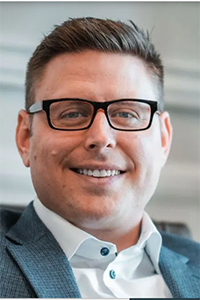
Michael Way, a Republican candidate for LD15. Residency.
Michael Way, a Republican candidate for LD15.

Legislative District 15’s newest representative is a business man with a background in education management. Rep. Michael Way, R-Queen Creek, is the President of Business Development at Charter One, a business that provides management services to charter schools, private schools and district schools. Way first moved to Arizona in 2009 and he’s called the state home ever since. He sits on several finance-related committees. Way serves as the vice chairman of the House Commerce Committee, and he holds seats on the House Appropriations Committee and House Judiciary Committee. He also sits on the Joint Legislative Budget Council and Joint Committee on Capital Review. Way lists fiscal responsibility, the border, election integrity and economic prosperity as some of his top issues on his campaign website, stating he’s seeking to reduce taxes and push back against the Biden administration’s economic policies. He also lists education as a top issue. “Wokeness has taken over many classrooms and boardrooms across the country. I will fight back against this dangerous ideology and stand up for Arizona families’ right to choose,” Way wrote on his campaign website. Way has not filed any bills as a primary sponsor yet, but he has cosponsored several pieces of legislation, including measures that would exempt immunizations in public schools and a resolution that would cut taxes on grocery food items. 

Democrats oust party chair, treasurer

Editor’s note: This story has been revised to correct Robert Branscomb’s first name and Kim Khoury’s last name. 

Arizona Democrats ousted incumbent chair Yolanda Bejarano and elected Robert Branscomb to take her place at the party’s state committee meeting Saturday. 

The change in leadership follows an election season marked by Democrat losses up and down the ballot and a contentious week after an outgoing vice chair raised concerns about alleged “self-dealing” by the party’s longtime treasurer, allegations Bejarano wholeheartedly denied and deemed “defamatory.”

Both Bejarano and Treasurer Rick McGuire were voted out today. 

Despite Bejarano securing endorsements from most all elected Democrats in the state, Branscomb, a vice chair for the party and owner of an insurance agency in Phoenix, is now the party’s chair, securing 318 votes to Bejarano’s 206.  

Bejarano, Arizona Democratic Party, Mayes, Fontes, Hobbs, Kelly, Gallardo, down-ballot, election
Yolanda Bejarano

Following his election, Branscomb told the Arizona Capitol Times, he believed the party did need an audit and emphasized his focus on transparency and party unity as chair. 

“I want to, number one, get the party together and make sure we come together and make sure we’re solid. It’s hard after a loss,” Branscomb said. “But I don’t want that despair to turn into inaction.” 

Bejarano was first elected party chair in 2022, with endorsements from Secretary of State Adrian Fontes, U.S. Sen Mark Kelly and Attorney General Kris Mayes at the time. She faced off against Maricopa County Supervisor Steve Gallardo, who campaigned with the support of Gov. Katie Hobbs. Despite the split in support from the governor, Bejarano took 70.2% of the vote 

She entered today’s election with backing from a swath of elected Democrats in the state, with Hobbs stepping up to the mic to nominate Bejarano. 

“She is the exact leader we need for the 2026 election cycle to help ensure we reelect our incumbents and elect even more Democrats at all levels of government,” Hobbs said. 

But her candidacy did not go unchallenged. 

Branscomb challenged Bejarano, along with Cathy Ransom, former Democratic candidate for Legislative District 1; Dave Braun, an attorney and former Maricopa County Justice Court Judge; and Nicholas Mink, a coalition lead for Progressive Victory. 

Branscomb touched on election losses in 2024, calling for “bold and transformative change.” 

He said he was committed “to rebuilding trust and respect, by not just listening to your concerns, but by returning your phone calls and advocating for everyday people.” 

“If you believe in bold leadership, if you see the need for change, if you’re ready to fight to turn Arizona blue, vote for me,” Branscomb said.

He saw support from his opponent Cathy Ransom, too, who ended her speech by calling for committee members to vote for Branscomb. Ransom seized on recent frustration with a lack of financial transparency in her remarks.

“The failure that the party suffered was not your failure. It was a failure of our state party leadership,” Ransom said. “If you want transparency, you must vote for change … If you want an audit, you must vote for change.”  

In her candidate speech, Bejarano boasted her endorsements and noted Sen. Ruben Gallego’s win and the success of the abortion initiative. She said she would continue to enter the 2026 cycle with a “bold economic message.” 

“We need to meet voters where they are, engaging them in their neighborhoods and focusing on the economic issues that matter most to them,” Bejarano said. “I believe in an Arizona where every child has the opportunity to succeed, where every worker is treated with dignity and respect, and where no one is left behind. This is not just political to me, it’s personal. As a child of immigrant parents, I understand what it means to work hard to face adversity and dream of something better.” 

Branscomb ultimately prevailed by 112 votes in the final call. 

Some intrigue swirled around the treasurer’s election as well after former vice chair Will Knight penned a letter earlier this week to the party raising concerns of “self-dealing” by the party’s treasurer, Rick McGuire, given contract payments spanning back to 2021 and totalling $121,500.

Bejarano and the party maintain the payments were above board and properly compensated McGuire for outside work assisting county parties and legislative districts with treasurer training, and said any claim of the contract being improper are misplaced. 

Following some slight unrest at the meeting, Greg Freeman, candidate for Maricopa County Assessor last year, successfully challenged McGuire, who has served as party treasurer since 2007.  

Some slight cracks in the party’s concerns over a lack of financial transparency appeared early in the meeting. After McGuire’s treasurer report, committee members called for further information and a light on staff salaries and contractors employed by the party. 

The same frustration built as Bejarano later moved past the rules adoption portion of the meeting without a proposal to create a financial oversight committee. She said the item would be taken up at a later meeting, which resulted in some boos. 

Secretary of State Adrian Fontes spoke after and said the party has “far too many other major issues to deal with than to worry about internal squabbles and a little bit of pettiness,” which was met with light booing. 

He noted though that he did want to see an audit every two years and ended his remarks with a call for greater unity in the party. 

“Do not lose focus on the battles out there because the politics outside of this hall are far more important to our communities, our families, our people and the whole state than the politics in here,” Fontes said. “Whether we agree or disagree, regardless of the results, folks, we have an obligation as Democrats and as leaders in Arizona to fight like hell for all Arizonans, and for all of Arizona.”I

ncumbent Lisa Sanor will again serve as secretary after running unopposed. Committee members elected Kim Khoury as first vice chair, Paul Eckerstrom as senior vice chair and Shanna Leonard, Shawnté Rothschild, Joshua Polacheck, Nicholas Mink, Aaron Marquez and Melissa Galarza as the six remaining vice chairs.

New Faces: Justin Olson

Justin Olson

Justin Olson returns to the House of Representatives after a stint at the Arizona Corporation Commission and Turning Point USA, where he works as the chief financial officer. Olson served in the House from 2011 to 2017 and chaired the House Appropriations Committee and the Federalism and Fiscal Responsibility Committee. This time around, Olson will chair the Ways and Means Committee and sit on the Appropriations, Education and Joint Legislative Budget committees. Olson serves Legislative District 10 alongside newcomer Republican Ralph Heap and longtime Republican Sen. David Farnsworth. Olson previously worked as a tax analyst for Apollo Education Group and as a research analyst for the Arizona Tax Research Association. He also worked as a congressional aide for former U.S. Rep. Trent Franks. Olson unsuccessfully ran for the GOP nomination for U.S. Senate in 2022 and for the 2016 GOP nomination to the congressional seat ultimately occupied by U.S. Rep. Andy Biggs. Olson was born and raised in Mesa, where he currently resides with his wife and their nine children. Olson did not immediately respond to a request for comment for this profile. 

Hobbs budget proposes eliminating school vouchers for affluent families

Unable to convince Republican lawmakers to repeal universal vouchers, Gov. Katie Hobbs now is trying to get them to at least scale back eligibility.

In unveiling her $17.65 billion spending plan for next fiscal year, Hobbs said that allowing the program that funds tuition for private and parochial schools as well as home schooling to continue as is would cost nearly $964 million. So Hobbs proposes to put some income restrictions on families.

As crafted, full universal vouchers of between $7,000 and $8,000 – those for children who do not meet any other category to make them eligible – would continue to be available to families earning less than $100,000 a year.

But the plan calls for reduced vouchers at incomes above that. And any family earning more than $200,000 would be ineligible.

All that is estimated to save at least $150 million a year.

None of this would affect those who were entitled to vouchers before lawmakers opened the program to all in 2023. That includes students with special needs, those attending schools rated D or F, children in foster care and children of those in military service.

This modified plan, however, is unlikely to get more traction than her two prior attempts to kill it outright. Both House Speaker Steve Montenegro and Senate President Warren Petersen said they will oppose any effort to scale back what they describe as “parental choice” in education.

But gubernatorial press aide Christian Slater said lawmakers will have to choose between what he called an “entitlement program” and other priorities in Hobbs’ spending plan including:

– Putting more money into reducing the cost of child care for working families;

– Providing additional dollars for both direct help in down payment assistance for first-time homebuyers and expanding tax credits for those who build affordable housing;

– Giving a 15% raise to state firefighters, 5% more to state police and corrections officers, and smaller ones for other state employees;

– Making grants available to local law enforcement to help stem the flow of drugs across the border.

“So, at some point, our friends in the Legislature are going to have to ask themselves, ‘Do you like pay raises for police and firefighters or would you like to keep paying for grand pianos in multi-million dollar homes?’ ” Slater said. That refers to reports that some parents were using their voucher funds for items beyond traditional books and curriculum under the claim that equipment like a piano is needed for music instruction.

“Do you want to lower the cost of child care and do you want to lower the cost of housing, or do you want to keep paying for luxury car driving lessons of the children of the 1%?,” he said. And Slater said if Republicans insist on maintaining the universal voucher program “they need to be held accountable for their unwillingness to bring that accountability over where taxpayer dollars are being spent.”

Slater, however, bristled at a question of whether the governor believes this is strictly a binary choice –  universal vouchers versus child care and affordable housing – especially as there are other items in the governor’s spending proposal that lawmakers may decide deserve lower priority than vouchers.

Vouchers have been the subject of debate since they were first approved by lawmakers in 2012. At the time they were sold as a way for parents of children with special needs to get the services they need that were not offered in public schools.

But eligibility has been expanded to the point where it covers things like students who attend public schools rated D or F, foster children and children living on reservations.

There are currently about 24,000 youngsters enrolled in that part of the program.

But in 2022 GOP lawmakers and then-Gov. Doug Ducey removed all limits, making the vouchers available to all. That added another more than 70,000.

Of note is that the governor’s office says that nearly three out of every four of those now in the universal voucher program have never been to public school. That, they say, is proof that most, if not all of them, already were attending private schools with their parents picking up the tab – a tab that now is borne by taxpayers.

On the issue of child care, a new “Bright Futures AZ” initiative proposed by Hobbs would tap a small amount of state general fund money – just $7 million a year – along with a small amount from a special Department of Health Services fund to create a new public-private partnership where businesses, the state and parents each chip in a third of the cost of child care. 

“It’s asking a business, ‘Hey, will you chip in $400 a month, government will match you, and then families pick up the rest,’ ” Slater said. “That public private partnership for participating families will cut child care costs by two thirds.”

There’s also a newly proposed tax credit that could reach $1 million per business if they fund child-care slots, plus tuition assistance for people interested in early childhood education. And Hobbs wants grants to help care providers to improve health and safety conditions.

The biggest spending on child care in the governor’s plan calls for more than $190 million a year in spending to increase a current subsidy program for low-income working Arizonans.

That program was greatly expanded using federal pandemic relief funds but those are going away and Hobbs wants to continue the program and cut the number of families sitting on a wait list for public funding. An estimated 25,000 children should qualify for assistance under the plan. 

The governor’s office says there is a price tag for inaction, saying those who can’t afford child care end up not being able to work, creating an economic loss to the state’s economy estimated at $5 billion a year.

State involvement in affordable child care has strong support from business interests.

But it may be a difficult sell among some GOP lawmakers. Senate President Petersen, for example, has questioned the need for state subsidies, saying the best thing lawmakers could do is create more high-paying jobs so parents can afford the care themselves.

Then there’s housing.

Lawmakers from both parties have complained for years that housing, both for buyers and renters, has become unaffordable. Legislators did approve some measures last session designed to deal with some of that, ranging from requiring cities to allow more duplexes, triplexes, fourplexes and townhomes to allowing homeowners to build back yard “casitas” that can be rented out.

The governor’s budget instead focuses on things more likely to help low and moderate-income families, both with direct financial aid and using grants and tax breaks to get developers to build more affordable homes and apartments.

And there is $5 million in what the governor is calling a “Homes for Heroes” program to provide housing for veterans.

There also are some other issues in the governor’s budget that might be considered must-fund items, ranging from an increase in enrollment in the Arizona Health Care Cost Containment System, the state’s Medicaid program, to boosting the money given to K-12 education for a yearly inflation increase. 

Where the governor’s budget plan may fall short is in increased spending for prison health care costs.

The state is under a federal court order to vastly improve what has been ruled to be unconstitutionally poor mental and physical health care for inmates. And despite adding $179 million in new health care money in the current budget, a new report filed with the judge overseeing the long-running case over poor inmate care shows it is still woefully inadequate. 

Judge Roslyn Silver recently asked for a report on any additional state spending proposed to help fix the issue. Hobbs’ budget gave the judge her answer: adding just $6 million to the current budget and $6 million to the upcoming one.

Slater said Hobbs is well aware that there are issues in the prisons and that having Silver take over direct oversight would not be good for taxpayers. But he blamed the problems on years of Republican administrations and lawmakers ignoring prison health care as a real issue. 

“Look, we didn’t get to this problem overnight. We’re not going to fix it overnight,” Slater said.

“Its a complex and multi-layered problem,” he continued. “But this budget does contemplate steps forward in order to address some of the problems.”

One thing not in the budget is money for state and local police to enforce a provision of Proposition 314 approved in November by voters. It allows them to arrest those who are not U.S. citizens who enter the country at other than a port of entry.

Instead, pretty much all of what the governor has labeled as “border security” money is earmarked to help law enforcement stem the flow of illegal drugs into the country.

At least part of the reason for that absence, according to the governor’s office, is that provision cannot take effect until federal courts rule on the legality of a nearly identical program enacted by Texas. So far that has not occurred.

Other asks by the governor include:

– Setting aside $3 million for the Department of Water Resources to use if it has to go to court to protect Arizona’s share of Colorado River water.

– Additional dollars to help maintain the caseload limit of workers in the state’s Adult Protective Services program;

– Expanding both family planning and postnatal care services for those enrolled in the Arizona Health Care Cost Containment System, the state’s Medicaid program;

– Providing state dollars to eliminate the co-pay that now exists for school lunches for certain students who do not meet federal guidelines for free meals.

 

Lawmaker proposes executions by firing squad

Calling the current system inhumane and problematic, a state lawmaker wants to give voters the chance to replace the current method of killing convicted murderers with the firing squad.

The proposal by Rep. Alexander Kolodin follows a preliminary report last year by a special “death penalty commissioner” hired by Gov. Katie Hobbs to look into how the state executes criminals by lethal injection. Retired federal magistrate David Duncan reported there is “no humane way” to do that.

And Duncan said if the state is to continue with executions, the most humane way of doing that is the firing squad.

So now Kolodin, a Scottsdale Republican, wants to put a measure on the 2026 ballot asking voters to approve the change.

Kolodin told Capitol Media Services that he believes in the death penalty. But he said the record shows that the current method of execution, one approved by voters in 1992, is filled with problems.

“I don’t know what it is,” he said. “But lethal injection just seems to be incredibly complicated where it always leads to these delays and these hiccups and whatever.”

Kolodin said just preparing for an execution itself creates issues.

The state has had trouble in prior years even in obtaining lethal chemicals.

In 2015, for example, Arizona ordered 1,000 vials of sodium thiopental, a muscle relaxant used in the process, from a supplier in India, after a domestic manufacturer refused to sell it for executions.

That came despite a warning from the federal Food and Drug Administration that such importation would be illegal. And it ended up with Customs and Border Protection seizing the drugs at Sky Harbor International Airport.

The state now uses a different drug. But even that has issues: It not only has to be compounded but has a limited shelf life.

Then there’s the process itself.

Hobbs appointed Duncan after what she said were a series of “botched” executions, including reports by witnesses of both pain and bleeding as state employees had trouble inserting the necessary intravenous line.

In the interim, Attorney General Kris Mayes said she would not seek any warrants of execution until the report was done.

Duncan, in his preliminary report, said the state should consider using a firing squad, saying it results in near instantaneous death. He said it “does overcome the impediments to lethal injection from unavailability of material and skilled personnel.”

The governor subsequently fired Duncan, saying that suggestion was beyond the purview of what he was supposed to study. But Kolodin said it’s time to take that report seriously.

“We actually know what’s always humane and always seems to work properly, which is the firing squad,” he said.

“And this has actually been known for a long time,” Kolodin continued. “I’m surprised that Hobbs fired the guy for saying so because people who have at least a reasonable amount of exposure to criminal law already know this.”

He said that using this method could end some of the litigation about the method of execution that can result in death penalty cases dragging out for years, if not decades.

“We would not have all of these freakin’ legal hang-ups in terms of delivering capital punishment,” Kololdin said.

“And it would be far more humane,” he continued. “So why don’t we just do it that way?”

Hobbs has not discussed her own personal feelings about both the death penalty and the method it is administered in Arizona. In fact, what she thinks is legally irrelevant.

First, the method of execution is spelled out in the Arizona Constitution. And that can be changed only with voter approval, a process that bypasses the governor.

Second, the governor plays no role in the process. Instead, that rests with Mayes who has to be the one to ask the Arizona Supreme Court for a warrant to execute someone.

A spokesman for Mayes said she opposes what Kolodin is proposing.

“The attorney general supports the current protocol,” said press aide Richie Taylor of the use of lethal injection.

He also said that Mayes has reviewed a report by Ryan Thornell, director of the Department of Corrections, Rehabilitation and Release. He said he has reviewed and revamped the execution process.

Based on that, Richie said, his boss is convinced that the agency, going forward, can use lethal injection in a humane fashion to execute inmates.

That first execution could occur on March 18 if the Supreme Court grants Mayes’ request to execute Aaron Gunches. He has been on death row since pleading guilty to the 2022 murder and kidnapping of Ted Price, his girlfriend’s ex-husband.

Arizona initially executed inmates by hanging. That was changed to use of lethal gas in 1934.

But voters approved changing to lethal injection in 1992 after Donald Eugene Harding took more than 10 minutes to die after cyanide pellets were dropped into sulfuric acid in a bowl beneath his chair. Witnesses said that Harding gasped, shuddered and tried to make obscene gestures with both of his hands strapped  down.

There was one execution by gas after that: Walter LaGrand in 1999. Having been sentenced before the 1992 change, he had the option of choosing lethal gas, which he did in a protest against the death penalty.

What Kolodin is proposing is further amending that provision to make the firing squad the only legal method.

Several states authorize firing squads, including  Mississippi, Oklahoma, South Carolina and Utah. Idaho became the latest state added to the list in 2023, though the law says that is authorized only if the state cannot obtain the drugs needed for lethal injection.

Kolodin’s proposal, based on his assessment of what is humane, contains no such condition.


Chuck Essigs: Making sense out of school finance dollars

Chuck Essigs, director of government relations for the Arizona Associations of School Business Officials, has been the go-to guy on school finance for lawmakers, lobbyists and reporters alike for more than two decades. As he enters another session, he plans to do what he’s always done: provide answers to difficult school finance questions. 

How did you get to where you are now? 

I was working in the Arizona Department of Education in the special education department, And back when they redid the formulas and everything, and the formula that we have now that was implemented in 1980. I got assigned to go over to the Legislature and help on special education funding. And then when I got over there, it expanded into working on total school finance and the funding formulas for schools across the state. And then when I came back to the Department of Education, I was appointed as the director of school finance, and I’ve been in school finance ever since that time. And then I went to the Mesa School District and worked as an assistant superintendent for business services for almost 20 years. So, I moved out of special education into school finance.

What drew you to school finance? 

I realized in school districts, as you look at the programs that are needed and the services that you want to provide, school finance is a major issue. If they don’t fund it, or can’t fund it, then those programs are at risk or don’t exist. So it’s a very important function in the school district that you have your school finance program working together with what the district goals are. So you’re using your funding to do the things that are important – first the things that are mandated, and also the things that are important to the community and that are important to your school district.

How have you navigated the human and community aspects of school finance? 

Well, I think it’s important that you listen to people, and you may ultimately not be able to provide the funding for the programs that they think are important or they want to see but, it’s really important that the people in the school district feel that the business office is listening and doing the best they can to use the resources to provide the programs that are needed in the school district. But it’s important that people say, “I appreciate that, because he or she listens.” They may not always agree, but they listen to the person’s concerns and they listen to the issues. 

There’s only so much budget, there’s always going to be kind of a give and take. How do you have those hard conversations? 

In Mesa, we would always meet in January with our teachers and our staff to explain to them, here’s how much funding we’re going to have because of what we say with the Legislature, until they you know, it’s adjusted because of the formula, but these are the dollars that we’re going to have available next year. Because if you can’t agree on how much money you have, you can’t agree on how the money should be spent, so you need to make sure that the community understands the funding formula and the amount of monies that are available. 

What have you found are the greatest misconceptions about budgeting? 

I think they need to know that the funding for schools is formula driven, and you have to operate within that in formula funding. It’s not like you don’t want to spend more on some programs. It’s not that you don’t want to do more things, but Arizona and school districts across the country have limits on Arizona’s very restrictive resources – we have a limit on how much you can spend. 

People need to understand that’s not a decision by districts, but we have this amount of funding that’s determined by state formulas, where the Legislature is very important, that about all of the formulas, except for the ones that come from the federal government and federal funding, are put in place by the Legislature. So if you want to have funding formulas that are different, in most cases it takes legislative action to bring about those changes. 

How has your work in the Legislature changed over the years? 

I am still trying to answer questions by legislators and provide legislators with information that they need to make their decisions. That’s been pretty consistent for many, many years. It’s just now that there’s more disagreements to address. 

The last time you did a Q&A with the Arizona Capitol Times, Proposition 123 had just passed. What do you make of how the measure has shaped out in the last ten years? 

For a major funding proposal like Prop. 123, you need to have something permanent in place, because right now, districts are facing the problem that if Prop. 123 doesn’t get through the Legislature, the Legislature is going to face the fact that they have some additional funding responsibility for school districts. Maybe it’s not the best way – to do these 10-year programs. Make them permanent, and then if they’re not working, repeal them.

Now, as we’re reimagining this funding source, what do you expect lawmakers to do? 

The fears people may have had ten years ago … the state land trust has just moved in the opposite direction. They’ve done a great job of investing those monies, and maybe as part of the renewal of Prop. 123 one of the things people may want to take a look at is if there is more secure funding available from the state land trust and they could start using more of that money to help the current education needs of students.

It’s too early to determine what the solution is going to be, because you have different people looking at different things, with different ways of doing things. 

What have you found is the best way to translate complex finance concepts to a freshman lawmaker or someone totally new to school finance? 

I will always try to remember that education is one of many issues. They have water issues, they have health issues, they have education issues. So you want to make sure that you listen to what their questions are, and try to explain and answer those questions with the understanding that this is one of many, many things they have to work on, and one of many, many things that they have to address during the legislative session.

You answer their questions directly. You listen to what their question is, and you provide the answers that they need to have their questions answered. Good or bad. If there’s maybe a situation where things could be better in an area, or whatever – you want to give them all the facts, not just the select facts. 

What guides you in your work? 

You don’t take criticism personally. If somebody’s disagreeing with what you’re talking or asking to be done, or disagreeing with information that you’re giving them, or whatever, it’s important that that’s not personal. You don’t take offense. You just want to make sure that the person had all the information that you can give them, 

As long as they’re hearing the information, hearing the facts, and then making the decision based upon that, and that decision is different from what you asked them to do or what you thought should be done. That’s not personal. That’s the way the process works. 

How do you reflect on past legislative sessions now? 

There’s always some major issues each year that you feel that you worked on. If you feel that the message that you provide was used by the Legislature in the decision-making process, you feel good about it. And then some years where you think you’ve done an excellent job of explaining something and giving arguments for it, and the Legislature doesn’t act on it or acts in a different mode, that’s the way the process works, and you just have to look to the next year.

Do you have any goals for this upcoming session? Future sessions? Are you thinking about getting out of the business anytime soon? 

Ironically, I still enjoy what I do. So when I get to a point where I don’t enjoy it anymore, or I don’t feel that I’m playing any role, then probably that is time. And I put enough time in where if I wanted to retire I could, but I like what I do.

There are some things, like teacher salaries. We all want to increase teacher salaries. I shouldn’t say we all do. But you know, there’s certainly many people who are involved in the Legislature, involved with school districts, school district people want to be able to increase teacher salaries, and hopefully we can find some solutions that best allow that to happen. 

What do you like most about your job? 

You feel good when you know that someone had a question and you were able to answer the question.

What’s something the average person may not know about you? 

Before I got into education, I wanted to be in construction. I wanted to drive a truck and run a bulldozer. I did that for a summer and during the time I was in college. And then I didn’t go back to college because of that. I really like this. And then it got cold, and then I was in New Jersey, and then we had to work in the snow, do all those difficult things. That kind of taught me that maybe going to college and going into teaching is not so bad after all.

What is your personal motto or ethos? 

Treat people with respect, even when you disagree with them. 

Republicans bring back rejected ballot measure as new bill

Despite voters rejecting Proposition 315 during the November election, Republicans in the Legislature are bringing the ballot measure back as a newly introduced bill. 

Rep. Matt Gress, R-Phoenix, introduced House Bill 2276 Jan. 15, which features the same language as the legislative referral that led to Prop. 315. That ballot measure would have required legislative approval for regulatory rulemakings that increased regulatory costs by $500,000 over five years, but 53% of Arizona voters voted against it. 

Gress said he brought the proposed policy back via HB2276 because “government overreach and government overregulation is a problem” and he thinks most Arizonans agree with that.

hotel, shelter, homeless, Scottsdale, Gress, David Ortega
Rep. Matt Gress, R-Phoenix

“I’m going to blame the length of the ballot for why it failed, and not so much as the policy that we sought to propose,” Gress said. 

Voters rejected 7 of the 11 ballot referrals legislative Republicans sent to them. Gress cited confusing descriptions of ballot measures as a possible reason voters rejected Prop. 315 and said he doesn’t think it’s too early to revisit the policy. 

“Just because something fails at the ballot doesn’t mean that you can never revisit the issue,” Gress said. “What if the Abortion Access Act had failed at the ballot? Would that mean that people would still not be pursuing abortion access laws?” 

Gress’ bill features the same language as the resolution introduced by former Republican Sen. Anthony Kern in 2024 that ultimately made it to the ballot. Kern ran the idea as a legislative referral after Democratic Gov. Katie Hobbs vetoed his original bill. 

“This would create an unnecessary burden on state agencies that would inhibit their ability to carry out duties in a timely manner,” Hobbs wrote in her April 2024 veto letter for Senate Bill 1153. 

Melinda Iyer, the co-founder of Civic Engagement Beyond Voting, said she was “shocked but not surprised” to see the proposition come back. 

“Falling back on the length of the ballot or voter confusion is arrogant,” Iyer said. “It’s saying I know better than my own constituents, and that’s not what we send people down there to do. They are our representatives, they’re supposed to represent our views and our views in this instance are clear.” 

Arizona law does protect voter-approved ballot measures from being vetoed by the governor or repealed by the Legislature, under the Voter Protection Act. But that law, passed via ballot measure in 1998, does not extend to voter-rejected propositions. 

Gress said he thinks that is a good thing, given that public opinion can change over time.

“I certainly think that each year is different and the day after the election is a brand new day, and public sentiment changes throughout a year,” Gress said. “We have new people moving to the state every day that have their own view of how Arizona should be run. So, things aren’t really set in stone, in my view.”

However, Iyer said she thinks bringing back legislation that was vetoed by the governor and rejected by voters is not a good use of a lawmaker’s time.

“We sent [Gress] to the Capitol to work on the issues facing Arizonans, and trying to relitigate this rejected issue seems like a waste of everyone’s time,” Iyer said. 

Will Humble, a former director of the Dept. of Health Services, was a vocal opponent of Prop. 315 and called HB2276 “a statement bill.” 

“This is a message to say we don’t trust the executive branch with their decisions, because [the governor is] a Democrat,” Humble said. 

He said agencies are already required to do economic impact evaluations of proposed rules before they can be approved, making a legislative review redundant. Humble also pointed out that the Legislature created a committee in 2009 – the Administrative Rules Oversight Committee – that it could use to review agency rules but it has since remained dormant. 

Hobbs’ office does not comment on bills making their way through the Legislature, but given Kern’s bill fell victim to her veto stamp, it’s likely Gress’ will as well.

“We’ll see how the legislative process plays out,” Gress said. “But I think it’s a great bill, and should be enacted into law.”

Arizona Capitol Times – Jan. 17, 2025

Schools need more funding, not misplaced blame on administration

As Arizona lawmakers deliberate on renewing Proposition 123, the conversation has rightfully centered on increasing funding for our public K-12 schools. With Arizona ranking 49th in the nation in per-pupil funding, the time has come to ensure our schools have the resources they need.

Renewing and strengthening Prop. 123 is essential to delivering these resources without raising taxes. This funding is a critical step toward ensuring our schools can offer high-quality educational experiences while remaining competitive with other states. 

Paul Tighe

The Arizona School Administrators commends the chairs of the House and Senate Education committees for recognizing the urgent need to raise teacher salaries. However, our schools’ staffing challenges extend beyond the classroom. School districts are struggling to recruit and retain not only teachers, but also bus drivers, paraprofessionals, counselors, and support staff. 

Operational expenses, health insurance premiums, and the state’s rising minimum wage have all outpaced the growth we have seen in education funding, putting even more pressure on already strained budgets.

Some critics argue that administrative “bloat” is draining resources from classrooms. This claim is false. According to the latest U.S. Census Bureau data, Arizona spends an average of $657 per pupil on general and school administration — the lowest in the nation and significantly below the U.S. average of $1,141 per pupil. 

Arizona also allocates a smaller portion of its education budget to administration compared to the national average. In fiscal year 2023, our state spent 10.4 percent of its education budget on administration, while the national average is 11.7 percent. In short, Arizona already operates the most efficient schools in the country. And while charter schools in Arizona were designed to promote innovation through reduced regulation and administrative burden, their administrative spending is twice that of public school districts (per Grand Canyon Institute study).

It’s also important to understand that administrative roles are critical to schools and districts. Principals, assistant principals, superintendents, and other administrators ensure schools run smoothly and remain in compliance with state and federal regulations. From managing transportation and facilities to supporting student services and curriculum development, these roles are vital to a well-functioning and safe educational environment.

Focusing solely on administrative costs distracts from the real issue — the chronic underfunding of our schools. Renewing Prop. 123 offers a practical solution to channel additional funds into K-12 education without burdening taxpayers. This extension is an opportunity to address funding shortfalls, improve compensation for all school staff, and invest in the future of Arizona’s students.

It is time to prioritize sustainable education funding that supports every aspect of our schools. Prop. 123 is not just a policy renewal — it is a commitment to Arizona’s future. We must invest wisely and reject misleading narratives that undermine progress. Our students, educators, and communities deserve nothing less.

Paul Tighe is executive director of the Arizona School Administrators, a professional organization serving school administrators across the state.

Don’t let California fires today become Arizona’s tomorrow

The scenes of devastation in California’s foothills are tragic and terrifying. Homes and businesses burning, cars abandoned, fire hydrants empty, are all reminders of the power of Mother Nature and the destructive consequences of California’s misguided policies.

These scenes should also serve as a wake-up call for policymakers in Arizona.

David Tenney

As a former state forester, elected county supervisor, and longtime resident of northern Arizona, I know firsthand about the deadly and destructive threat that wildfires pose to residents and communities throughout the state. 

I also know what the prescription is to avoid becoming the next California.

Years ago, in my capacity as a Navajo County supervisor, I worked with local elected officials, environmental groups, and the Forest Service to lead and develop the Four Forest Restoration Initiative (4FRI) – a multi-pronged effort to restore Arizona’s forests at landscape scale. Instead of thinning 10,000-to-15,000 acres per year, we proposed that the Forest Service rely on the private sector to thin 40,000-to-50,000 acres per year, thus protecting a much larger landscape and many more communities.

4FRI was an enormous success – on paper. Unfortunately, poor contracting decisions by the Forest Service and other economic concerns have resulted in far fewer acres being thinned than we had originally planned.

In spite of those challenges, 4FRI, along with aggressive steps that the state took under the leadership of former Gov Doug Ducey, has resulted in a healthier forest than 10 years ago.

Nevertheless, I am deeply concerned that, absent aggressive and immediate action by state and federal policymakers, the images from California we see on our screens will be repeated on a much larger scale throughout northern Arizona. 

Arizona can’t afford to become the next California.

Fortunately, there is a path forward. It involves Arizona’s state and federal policymakers making forest health a top priority by:

  1. Fully funding the State Forester’s Good Neighbor and Shared Stewardship programs. 

Arizona has had great success working with the Forest Service and other agencies to expand thinning. To expand on this success will require a commitment from the Legislature and Governor Katie Hobbs. This is not a partisan issue; legislative leadership and the governor should commit now to making it a priority.

 2. Supporting the state’s utilities in their efforts to manage the vegetation in their rights of way and reduce the risk of catastrophic fires.

Legislation sponsored by Rep Gail Griffin is under development that will require utilities to develop Wildfire Mitigation Plans that identify how the utility will manage vegetation in its rights of way and take other steps to reduce the risk of wildfire and protect communities. The bill also aims to protect utility customers from bearing the costs of frivolous lawsuits related to wildfires. Rep Griffin’s legislation should be a priority for both parties at the Legislature.

3. Demanding that Congress provide the Forest Service with the resources it needs to fully implement 4FRI.

Insurance companies are exiting communities throughout the country. We can’t allow that to happen in Arizona. Only a fully committed and fully funded effort by the Forest Service will provide our rural, forested communities with the protection they need and deserve.

When the Rodeo-Chediski Fire hit northern Arizona in 2002, my family and I were evacuated without warning. For days, we weren’t sure whether our home had burned or survived. When we returned home 10 days later, my wife and daughter burst into tears of joy when they saw our home still standing.

No family in Arizona should go through such uncertainty and such trauma.

Let’s work together to ensure that California’s tragedy today does not become Arizona’s tomorrow.

David Tenney served as director of the Arizona Department of Forestry and Fire Management from 2018 to 2023. He served on the Navajo County Board of Supervisors from 2005 to 2015. He resides in Heber.

Supporting our young professionals is crucial to Phoenix’s future

As we embark on a new year, it is evident that the vitality of our community hinges on the development and engagement of young professionals. These individuals are not merely the workforce of tomorrow; they are today’s changemakers, leaders, and entrepreneurs. By investing in their growth, we are investing in the future success of our community. 

Todd Sanders

A community that fosters opportunities for growth, mentorship, and leadership development creates a robust talent pipeline that attracts businesses and fuels innovation. When young professionals feel valued and supported, they are more likely to stay, contribute, and build their futures here, ensuring a thriving economy for decades to come.

Supporting young professionals in Phoenix is not just a noble endeavor but a strategic imperative for businesses and organizations aiming to thrive in today’s competitive landscape. Young professionals bring a wealth of fresh perspectives, innovative ideas, and a dynamic energy that can propel companies to new heights. Furthermore, the city of Phoenix’s strategic plan highlights the necessity of a skilled workforce for sustaining and enhancing economic competitiveness. By investing in young professionals, businesses are not only contributing to the growth of their own organizations but also to the broader economic development of Phoenix. 

Veronica Aguilar

In 2025, the Greater Phoenix Chamber is doubling down on its commitment to local young professionals. Through Valley Young Professionals (VYP), we are dedicated to ensuring that more young professionals have access to the resources, connections, and support they need to succeed. VYP has been a cornerstone of our community, fostering the growth and development of young professionals who are poised to become the leaders of tomorrow. The VYP board, which includes young leaders actively shaping the direction of the organization, is a testament to the impact that young professionals can have when given the opportunity to lead.

As we enter the new year, the Valley Young Professionals are excited about the opportunities ahead. This spring, we remain committed to hosting events that foster professional growth, enhance business skills, and cultivate a strong sense of community. These gatherings will help you expand your network and create lasting connections among young professionals in the Valley. With numerous chances to grow, learn, and connect, we look forward to seeing you at our upcoming events. Join programs, attend events, and don’t hesitate to take a seat at the table when the opportunity arises. We invite you to join us in celebrating the vibrant, driven individuals who make our region thrive.

In the new year, we are excited about the possibilities and are committed to fostering a community where young professionals can thrive. Together, we can achieve great things and ensure a bright future for the Greater Phoenix region.

 Todd Sanders is president and CEO of the Greater Phoenix Chamber, and Veronica Aguilar is vice president of recruitment for Teach for America and VYP’s board chair.

Prop 139 passage is new chapter in AZ abortion fight, but it’s not over

In November, Arizonans across the political spectrum came together to approve Proposition 139, amending our state Constitution to include some of the strongest abortion protections in the country. 

The passage of Prop. 139 was a major win for reproductive freedom in our state, but success at the ballot box was only the first phase in the fight for abortion rights in Arizona. We are now entering the second phase — implementing the law — and there’s still a long way to go to accomplish the goals laid out by Prop. 139. 

Eric Reuss

As we celebrate Prop. 139’s victory, we can’t lose sight of the work and challenges ahead. Here’s what I mean. 

Even though Prop. 139 added the right to abortion to Arizona’s Constitution, the state’s current 15-week abortion ban is still on the books — it doesn’t automatically disappear. So how do we resolve this? By going to court to ensure that the 15-week ban is taken off the books, permanently. I’ve joined several other Arizona doctors to file a lawsuit that does exactly that. Although the state has agreed not to enforce the 15-week ban while the litigation against it proceeds, our work will not be complete until the ban is struck down by a court. 

As a Scottsdale-based OB/GYN who has dedicated my life to advancing women’s reproductive health, I’ve seen firsthand how our state’s abortion restrictions — such as the current 15-week ban and countless other constrictive laws — cause Arizonans to suffer. 

As our lawsuit progresses, all Arizonans should stay vigilant and ensure the will of the people is carried out. But there’s another potential wrench in implementing Prop. 139 — national attacks on abortion from Washington. This year, some extreme groups went all out to weaken abortion access as much as possible. 

They sought to revoke FDA authorization of mifepristone — an essential medication used in most U.S. abortions that is safer than Tylenol and has been safely used by millions of Americans since it was approved over 20 years ago. Mifepristone is also routinely used to treat early pregnancy loss, decreasing the likelihood that a woman would need to undergo surgery to treat a miscarriage. If access to mifepristone is restricted nationally, that would absolutely be felt in Arizona.

Extremists are also in court arguing that our nation’s federal emergency care law shouldn’t protect patients experiencing pregnancy complications — even when the health of the woman is at risk. While the law is clearly on our side, that’s not stopping extremists from throwing up roadblocks to continue limiting the rights of all people across this country, including Arizonans.  

In summarizing the challenges on the horizon, I don’t mean to diminish the significance of 61% of Arizonans voting for Prop. 139’s passage — in fact, that was a historic, statewide step forward. Instead, I aim to shed light on the important work that must be done to fulfill Prop. 139’s promise to Arizona.

And even beyond these local and national threats, there’s still so much more to do to ensure not just the legal right to abortion but true access for all Arizonans regardless of where they live or how much money they make. 

We have a tremendous opportunity to build the Arizona we want — both for us and future generations — so we need to do it right. This work has already started in the courts, but when our elected leaders come back they have the power and responsibility to honor the will of the people by repealing harmful, medically unnecessary, and burdensome laws that restrict access to abortion. Prop. 139 has the potential to enormously impact our state for the better, so it’s time to make sure that potential becomes a reality. 

Dr. Eric Reuss is an OB/GYN in Scottsdale and a plaintiff in the case Reuss v. Arizona.

You don't have credit card details available. You will be redirected to update payment method page. Click OK to continue.