Please ensure Javascript is enabled for purposes of website accessibility

New Faces: Pamela Carter

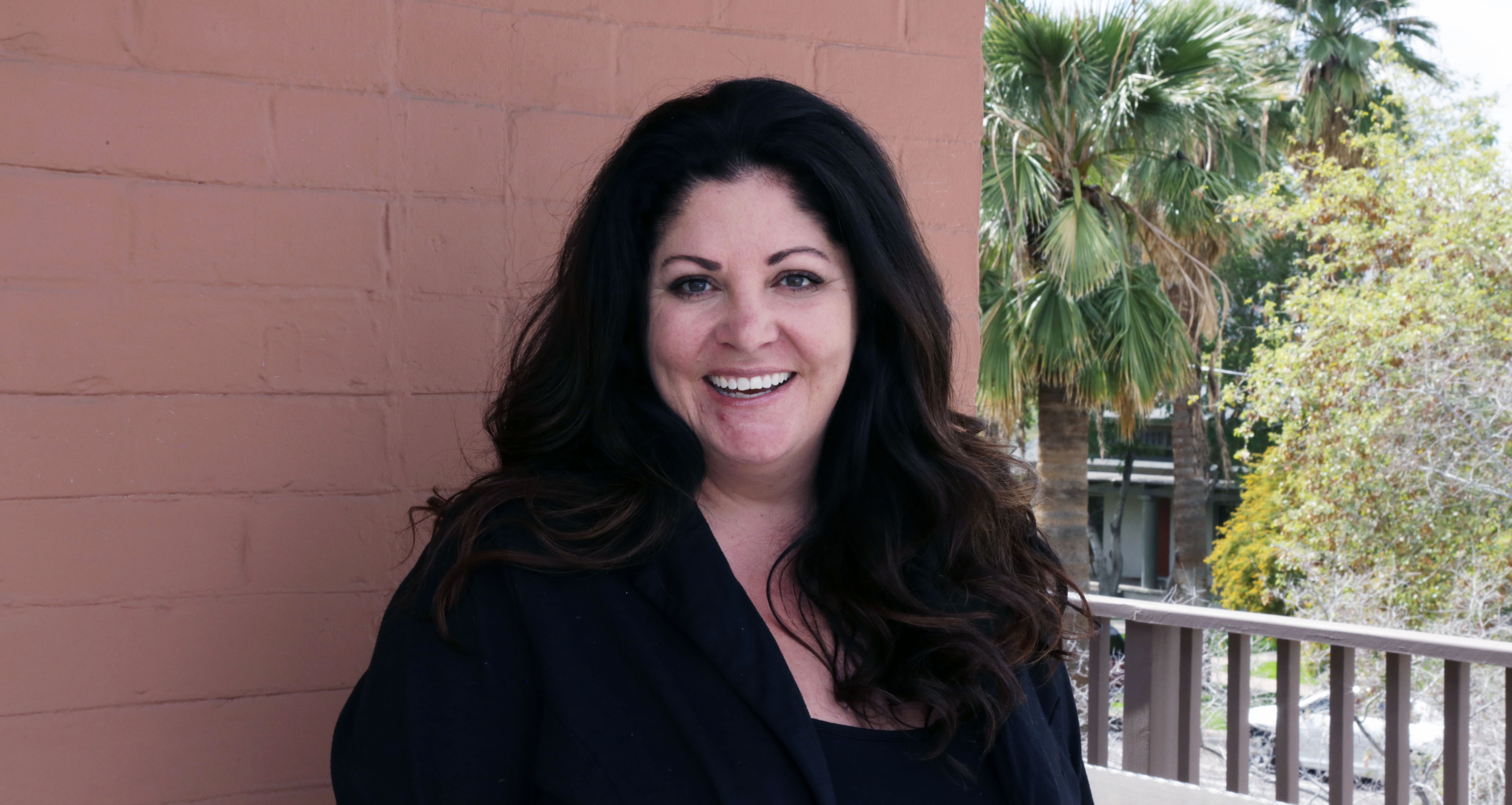
Pamela Carter

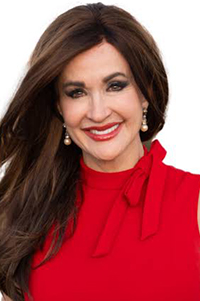
The newest representative in Legislative District 4 is a major pickup for the GOP, which took both House seats in one of the most competitive districts of the state. Representative-elect Pamela Carter, a Republican from Scottsdale, will serve her first term at the Legislature after previously running for Scottsdale City Council in 2022. Carter will serve on the Natural Resource, Energy, and Water Committee, the Transportation and Infrastructure Committee, and she will be the vice chairwoman of the Public Safety and Law Enforcement Committee. Carter lists low taxes, school safety and supporting law enforcement as some of her top legislative priorities on her campaign website. “I’m committed to protecting our children from radical left-wing agendas that seek to impose harmful ideologies on kids,” Carter wrote on her campaign website. “I firmly believe parents should have the final say in matters regarding their children’s education.” She once owned a sports medicine and weight training business in Scottsdale, which served NFL athletes and ASU football players, leading to the TV show “Get in Shape with Pamela Carter” that aired for 18 years. Carter did not return a request for an interview from the Arizona Capitol Times before its publishing deadline.

Uphill battles in store for several agency directors awaiting confirmation

Nineteen state agency directors will need to be confirmed during the 2025 legislative session, and while some are likely to make it through, others face an uphill battle before the Senate Committee on Director Nominations.

After a failed 2023 confirmation process led to a 2024 legal battle, Gov. Katie Hobbs and Senate President Warren Petersen, R-Gilbert, agreed that the remainder of Hobbs’ agency appointees would be sent back to the Legislature for confirmation this year. Hobbs pulled those 19 appointees from consideration and named them “executive deputy directors” after many were blocked by the chair of the committee, Sen. Jake Hoffman, R-Queen Creek. 

With Hoffman set to return as the committee chair and several rejected nominees reappointed, it’s unclear whether the process will shake out differently this time around. Four agencies do not yet have permanent appointees, but will get new leadership when Hobbs officially submits her nominees to the Legislature during the first week of the session.

Those nominees who have been serving as executive deputy directors will likely have even more questions to answer this time around, as some state agencies have dealt with scandals and criticisms during the past two years. 

In addition to Hoffman as chair, the committee will include Sens. T.J. Shope, R-Coolidge, and John Kavanagh, R-Fountain Hills, and Democratic Sens. Flavio Bravo, D-Phoenix, and Analise Ortiz, D-Phoenix.

Nominees facing an uphill battle

Some of Hobbs’ renominated directors already have difficult histories with the committee and Hoffman. Republicans grilled Joan Serviss of the Department of Housing and Elizabeth Thorson of the Department of Administration when they appeared before the committee in 2023.

The committee ultimately rejected Serviss after Republicans accused her of plagiarising letters written during her time as director of the Arizona Housing Coalition. Serviss said during her confirmation hearing that it was accepted practice for advocacy groups to share language in letters.

Additionally, in 2024 the auditor general found that ADOH inadvertently gave $2 million to scammers while working on affordable housing initiatives, a misstep that Republicans criticized heavily.

Thorson was held from consideration after a tense hearing during which Republicans questioned her mainly about abortion issues. ADOA serves as the state government’s human resources department and is responsible for providing employee benefits, maintaining buildings, administering communication services and more. 

Jennie Cunico, the director of the Department of Health Services, did not receive a hearing in 2023 because she was appointed after Hobbs’ first ADHS pick was rejected by the full Senate. However, Cunico will likely face harsh questions from lawmakers about agency decisions made during her tenure.

In September 2024, Republicans criticized the agency for not immediately taking steps to implement the “tamale bill,” which expanded the types of foods at-home vendors can sell. As recently as Jan. 6, Prescott Republican Reps. Selina Bliss and Quang Nguyen chastised Cunico for an agency report that recommended firearms be removed from homes with children to prevent adolescent suicide. 

Another nominee that could face scrutiny is Cynthia Zwick, director of the Residential Utility Consumer Office. RUCO represents utility ratepayers in rate proceedings before the Arizona Corporation Commission.

While Republicans in the Legislature have not voiced opposition to Zwick’s nomination, Republicans on the commission have been vocal in their disagreement with RUCO’s recent arguments and interventions in rate cases and other utility issues before the commission. 

Though a permanent nominee has not yet been announced for the Department of Child Services, that person will likely face extensive questions from the committee. DCS had a particularly rough 2024, with several child deaths in its custody, a U.S. Department of Justice report of discrimination against disabled Arizonans, and involvement in an alleged pay-to-play scheme. 

The same goes for the potential nominees for the Department of Environmental Quality, the Department of Veterans Services and the Office of Tourism. Hobbs’ original appointees to DCS, DEQ and DVS were dealbreakers for Senate Republicans during negotiations to get the appointment process back on track. 

As for the Office of Tourism, the previous executive deputy director, Lisa Urias, resigned in December after news reports that a bid to redesign the state’s logo went to a relative of the head of the communications company she owns. Urias denied any conflict of interest, but the $700,000 rebranding initiative was mocked by Republicans and will likely come up in future committee hearings. 

Nominees likely to make it through

Some Hobbs appointees are more likely to get approval with little fanfare, due to the nonpartisan nature of their agencies or because they already were previously OKd by the committee.

The committee approved Department of Economic Security Director Angie Rodgers in February 2023, but her nomination did not see a vote by the full Senate. 

Other nominees did not have a chance to go before the committee, which Hobbs accused of dragging its feet in 2023. Of the 19 appointees the committee will consider this year, 14 have not appeared for a confirmation hearing.

Most of those nominees have not received criticism or pushback from legislative Republicans. Some, like Jackie Johnson at the Department of Gaming, Alec Thomson at the Arizona Lottery and Thomas Cole at the Registrar of Contractors, run relatively uncontroversial and nonpartisan agencies. 

Other nominees that Republicans have not objected to include Department of Agriculture Director Paul Brierley, Office of Economic Opportunity Director Carlos Contreras, Health Care Cost Containment System Director Carmen Heredia, Department of Homeland Security Director Kim O’Connor, Department of Insurance and Financial Institutions Director Barbara Richardson, State Land Department Director Robyn Sahid and Industrial Commission Director Gaetano Testini.

However, there is no guarantee that those nominees without prior objections will sail through the committee. Hoffman has hinted that the 2025 confirmation process could be similar to 2023, saying he won’t “rubberstamp unqualified radicals” and telling Hobbs to bring “sane, nonpartisan” nominees to the committee. 

All nominees will need to be confirmed during the 2025 session, per state law and the agreement reached by Hobbs and Petersen. 

Republicans to strive for speedy election system like Florida

Speeding up Arizona’s election results will be a major policy goal for Republican leaders at the Legislature this session.

Legislative leaders in the House and Senate have outlined a plan to make the state’s election systems similar to Florida, with the intent of having nearly all votes tabulated by the end of election night. 

The proposal is being pushed by many Republicans, notably Senate President Warren Petersen, R-Gilbert. Petersen prefiled SB1011, which aims to eliminate mail ballots delivered on Election Day, or so-called “late earlies.” Election officials attribute delays in election results to late earlies because of the time it takes to verify signatures.

The measure is also supported by Maricopa County Board of Supervisors Chairman Thomas Galvin, who said on Jan. 6 he plans to have the county’s election system undergo a comprehensive audit conducted by a reliable party. 

“People want election results faster and when misinformation has time to fester, it breeds mistrust in our system,” Galvin said. 

The proposed law would move the deadline to drop off an early ballot at a polling place to 7 p.m. the Friday before Election Day instead of on Election Day. It also proposes to eliminate emergency voting centers to instead just expand early voting to include the Monday and weekend before an election. 

If the bill becomes law, anyone who tries to deliver a late early ballot on Election Day would be required to present identification and sign an affidavit in order to turn in their ballot. 

Galvin said he hopes the proposal can gain bipartisan support in the Legislature, but Democrats want to ensure any election bill doesn’t make it more difficult for people to vote. Galvin’s vision is to have 95% of votes tabulated on election night.

“Faster election results should not come at the expense of voters’ rights,” said Gov. Katie Hobbs’s spokesman Christian Slater in a written statement. “Governor Hobbs is open to proposals to speed up the counting process, but any solution must protect Arizonans’ freedom to make their voices heard at the ballot box. She remains committed to a voting process that maintains accessibility and integrity for all Arizona voters and guarantees safe, secure and fair elections.” 

There is growing momentum for the idea. A recent poll from Noble Predictive Insights that showed nearly 52% of respondents expressed frustration with how long it takes the state to finalize election results, despite having increased confidence in the election process.

Republicans have also been united on the issue. Political consultant Doug Cole said that aspect was particularly key since there has been infighting within the party in recent years on trust in elections. 

“There’s a lot of parties that have not been on the same page recently that are coalescing around the idea,” Cole said.

Rep. Alexander Kolodin, R-Scottsdale, said Jan. 8 he’s expecting the House to have an ad hoc committee specifically examining Florida’s election model. The bill will get a hearing in the Federalism, Military Affairs and Elections Committee, but he said because of the complexity of the issue, he wants to work the bill out in multiple hearings with the ad hoc committee. 

“A committee is supposed to do substantiative work on a bill,” Kolodin said. “Improve the bill and then present it on the House floor as something pretty close to a finished work product that the members can have confidence it’s been properly vetted and thoroughly thought through.”

SB1011 will likely be a major negotiating piece between Republican leaders and the Governor’s Office during the legislative session. Another Republican idea that Hobbs won’t consider is banning vote centers. 

Rep. Rachel Keshel, R-Tucson, prefiled HB2017, which would prohibit a county board of supervisors from authorizing the use of voting centers. Voting would be done at the precinct level with no more than 1,000 registered voters per precinct. 

Keshel had a similar bill last year, but it died in the Senate because then-Sen. Ken Bennett, R-Prescott, voted against the measure. 

Bennett isn’t returning this session and Republicans have gained a seat in the Senate. Hobbs will most likely veto the bill if it makes it to her desk, but Keshel has a similar measure in the form of a concurrent resolution, HCR2002, which bypasses the governor and goes to the ballot, allowing voters to decide if the measure should become law. 

Cole said he doesn’t expect voters to support the measure if it makes it to the ballot. 

“Generally, the public wants easy access to voting,” Cole said. “Especially here in Maricopa County, voting centers have proven to be very popular and effective.” 

Cronkite News reported in November that the county had 246 vote centers during the general election, and wait times at vote centers were on average 10 minutes to 11 minutes.

Is the door open for change in the criminal justice system?

Another legislative session means another swing at criminal justice changes, and this year advocates are hopeful for the passage of a home confinement bill and a continued conversation on wholesale oversight of the Department of Corrections, Rehabilitation and Reentry. 

Though bills seeking the same aims stalled in past legislative sessions, a lawmaker and advocates for criminal justice changes sense a slowly growing appetite for greater oversight and a stronger consensus on reform of the state’s carceral system given the budgetary price tag attached to corrections.

“Lawmakers are starting to realize – and this goes to both criminal justice and to the government accountability here with the prison system –  that brutality and harsh conditions and all these things … they don’t lead to enhancing public safety, and they don’t lead to better outcomes,” said John Fabricius, executive director for Praxis Initiative, formerly Arizonans for Transparency and Accountability in Corrections. 

“These conversations have been a little bit easier to have in the last, I’d say, a year or two with lawmakers, from my perspective, I’m not finding as many people that have visceral reactions.”

Over the past two sessions, lawmakers, lobbyists and the Department of Corrections toiled over legislation allowing low-level offenders with no disciplinary infractions early release into a home confinement electronic monitoring program. 

In 2023, former Sen. Steve Kaiser, R-Phoenix, sponsored an iteration of the bill which would have tasked the Department of Corrections with administering the program and the Board of Executive Clemency with vetting and approving program applicants. 

But the legislation included no fiscal note to ensure the program’s implementation. The bill passed the Senate Judiciary Committee and a third read on the floor but failed in the House Military Affairs & Public Safety Committee. 

In 2024, the bill came back sponsored by Rep. Kevin Payne, R-Peoria. It cut out the Board of Executive Clemency and included a note finding the bill would increase corrections’ costs by $7.2 million in FY2025 and $6.2 million in FY2027, but would ultimately be offset by a projected netsavings of up to $90 million per year within five years. 

It passed the House Military and Public Safety Committee and on the House floor but failed to secure a Senate committee assignment. 

As for the bill’s third go-around, Steven Scharboneau, lobbyist for Arizona Attorneys for Criminal Justice, said he believes all parties to be on the same page, noting support from the Corrections Department and law enforcement. 

“It’s brought people together from all different angles, in all different sides of the justice system, and the political spectrum, who all do agree that there’s people right now in prison that don’t need to be,” Scharboneau said. 

Others in the criminal justice space who had opposed the legislation have shifted to support and see its potential for passage now, too. 

Donna Hamm, founder and executive director of Middle Ground Prison Reform, opposed the bill in the 2023 session given the burden it placed on the Board of Executive Clemency. With the tweaks to the bill, Middle Ground is now rallying behind it. 

“I think that is probably the one that has the most possibility of consideration,” Hamm said. “By all means, it has a path to travel to get a wetted ink signature from the governor.” 

Beyond home confinement, criminal justice advocates are looking at further oversight of the Corrections Department. 

Republican Rep. Walt Blackman said he planned to sponsor legislation to create an independent oversight body dedicated to corrections, complete with full-time employees. 

Rep. Analise Ortiz and Sen. Brian Fernandez, both Democrats, introduced similar legislation last session, with a proposal to create a Correctional Oversight Committee and the Office of Independent Corrections Oversight Committee. 

The ultimately unsuccessful attempt came in response to the governor’s own shot at review via an executive order establishing the Independent Prison Oversight Commission. 

Ortiz, Fernandez and Blackman all served on the commission and ultimately found the format limiting and returned a report finding a volunteer cohort housed in the Governor’s Office is “not the ideal framework for oversight work.” 

Director Ryan Thornell of the Department of Corrections, Rehabilitation and Reentry lodged his own internal review committee on Dec. 17, tasking members to look at education, substance use disorder, mental health services and self harm prevention, reentry, vocational training and career readiness, tribal relations, peer mentorship and women’s service.

Advocates lauded the shot at further review by Thornell but noted some missing areas, like prison conditions and confinement and medical care. They still stressed the need for independent oversight given Corrections administration could change with the gubernatorial election in 2026.  

“There’s a day after this director,” Fabricius said. “What we have seen historically is the directors to be more opaque and to be more closed. So, I think it is incumbent on the Arizona Legislature to pass oversight of the Department of Corrections … We pay an enormous amount of money to operate this department, yet we don’t have any real substantive oversight of it.” 
Kurt Altman, lobbyist for Right on Crime, noted a more cooperative relationship between groups seeking change and Thornell, creating some semblance of hope for change, oversight or programming legislation in 2025. 

Ahead of the start of the session, some criminal justice bills have already materialized. Rep. Selina Bliss, R-Prescott, introduced a bill permitting the Department of Corrections to extend transition services if deemed necessary, and Payne filed a bill to increase correctional officers’ salaries by 20%. 

Blackman said, beyond oversight, he planned to introduce legislation addressing transition services. Altman said this session could also bring another look at mandatory sentencing and criminal record sealing. 

How criminal justice fares this session is an open question, too, but change advocates are hopeful. 

“It’s always a tough road with criminal justice in our Legislature,” Altman said. “The balance, especially on the right, is probably going to be the same … but it presents an opportunity for education of some of the newer members.”

Altman added that the recent prosecution of Cochise County Supervisors Peggy Judd and Tom Crosby and the ongoing case against the 2020 alternate electors may prompt a change of heart, too. 

“Good, bad, indifferent, it may make some folks that are like law and order on the right to think twice about the power that’s out there, and how to balance that, mitigate it,” Altman said.

Blackman said he sensed at least some sects of the Republican majority were open to criminal justice policy change as well. 

“Republicans in the state, they’re looking for new leadership in different areas now and are not so hawkish,” Blackman said. “They’re looking for results. They’re looking for common sense policy … people who believe in the core values of the Republican Party … Those folks have an appetite for good criminal justice reform.” 

 

New Faces: Khyl Powell

Khyl Powell

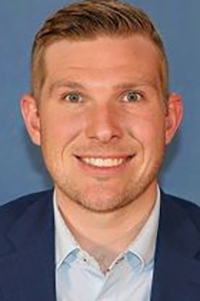
Republican Khyl Powell will take office in the House representing Legislative District 14. Powell describes himself as a lifelong Republican who has lived in Gilbert for more than 25 years, according to his campaign website. Powell worked for the Phoenix Police Department and the FBI, served as the president and owner of a multi-million dollar service company for 24 years and owned an industrial real estate development company in Gilbert for 20 years. In addition, he served on the Town of Gilbert’s Planning Commission and the board for the Gilbert Small Business Alliance. Powell’s primary issues include parental rights and school choice, border security, the First and Second Amendments, the right to life and election integrity. “My goal is to defend our God-given liberties and restore a government that is truly of, by and for the people,” he says on his website. Powell will serve on the Federalism, Military Affairs & Elections, Judiciary and Public Safety & Law Enforcement committees. He did not respond to a request for an interview before deadline. 

Repeal of regressive rental tax could aid housing shortage

The repeal of the regressive rental tax went into effect in dozens of local municipalities across the state on January 1, 2025. Affordable housing remains top-of-mind for many Arizonans and this harmful tax would further decrease housing affordability, especially for lower income families and individuals. The Arizona REALTORS® was adamantly against this tax and fought for its repeal in 2023. Incredibly, only two states, Hawaii and Arizona, still imposed this tax as it is widely recognized that doing so causes more harm than good. There were 75 different municipalities that imposed this tax across the state, meaning renters in more than 80% of Arizona cities suffered from this regressive system. The Arizona REALTORS® is thankful that the Legislature realized the burden of this tax and worked tirelessly for its eventual repeal.

Tim Beaubien

Our state’s housing market has been marked by limited supply and rising prices over the last several years. In August of 2023 when the governor signed the rental tax repeal into law, median rent in the Phoenix metro area had risen $595 from four years prior, according to data from Rent.com.  Varying residential transaction privilege tax rates across the Valley added anywhere from $100-$250 a year on top of that 38% rent increase. For example, the current median rent in the Phoenix metro area is $2,179, potentially costing renters up to an additional $900 a year on residential transaction privilege tax.

While Arizona has done a great job attracting new jobs and companies to the Grand Canyon State, this, too, has created housing challenges. As our population increases because of this economic growth, it is critically important that housing remains affordable to sustain these new workers and families who choose to make Arizona their home.

The obvious solution is increasing supply to match the demand caused by our population increase, but this does not happen overnight. In the meantime, while our state and local government officials work to get more shovels in the ground, we must battle the rising housing costs in other ways. The truth is inflation is hitting all aspects of daily life. Families are spending more money at the grocery store, at the gas pump, and on utilities. The repeal of the rental tax puts dollars back in the pockets of those most hurt by these rising prices. With one less bill to pay and more resources to put into saving, the American dream of homeownership can become reality.

Some city officials have claimed that taxing renters is necessary to fund emergency services. That is simply not true. Research showed in 2023, at the time the repeal was signed into law by Gov. Katie Hobbs, that cities utilizing this tax had budget surpluses in excess of the revenue collected from the rental tax. A delayed effective date was even added to give local government officials over a year to financially plan for the removal of this tax. If the regressive rental tax was necessary to fund city services, wouldn’t every Arizona city have implemented this tax? Cities from across Arizona have opted not to tax renters. Cities like Bullhead City, Flagstaff, Quartzite, Snowflake, Tucson, and Willcox have proven that regardless of budget size, service area or number of constituents, it is possible to thrive without taxing renters.

The rental tax was a logistical nightmare to implement and assess. Feedback from property managers and housing providers consistently said that the collection system for the rental tax was broken and would often not accurately record payments. This caused fines due to incorrect records of non-payment. As a result of these persistent issues, the collection system disincentivized many property owners from considering renting out their affordable housing units, thereby decreasing the housing stock in Arizona.

The Arizona REALTORS® is a nonprofit trade association that supports common sense legislation that protects private property rights, improves housing affordability, and fights for homeownership. The association is proud to have championed this effort to repeal the regressive rental tax in Arizona and will continue to fight for the best interests of Arizonans and the real estate industry moving forward.

Now that the rental tax has been eliminated on long-term rentals, we hope to see an influx of rental units back into the market. This possible increase in supply would further assist the housing affordability issue we are facing in Arizona.

Tim Beaubien is senior director of government affairs for the Arizona REALTORS®. 

Psychiatric bed shortage is a public health emergency

In 2024, the Arizona Mad Moms “took the Capitol by storm,” passing four new Arizona laws relating to Serious Mental Illness (SMI). In one year, we have grown from a few dozen “mothers who are mad” to more than 400 families.

According to our governor, government agencies, and even the ACLU, Arizona has plenty of psychiatric bed capacity. We don’t.

Rachel Streiff
Rachel Streiff

Arizona is overflowing with private psychiatric hospitals for “voluntary” patients needing short-term stays. These individuals are well enough to seek treatment and recognize their illness. Many patients are so-called “treatment-hoppers” effectively utilizing hospitals for housing. Arizona tolerates this problem because of both the affordable housing shortage and the massive influx of federal Medicaid funds we receive for these patients.

Alternatively, Arizona has a severe shortage of beds for dangerous and disabled SMI individuals who require months or years to stabilize on antipsychotic and mood stabilizing medications. This population is treated at the Arizona State Hospital (ASH), Civil Mental Health Court Hospitals (CMHC), Amended Court-Ordered Treatment (ACOT) facilities, or Secure Behavioral Health Residential Facilities (SBHRF). Arizona has the fewest state hospital beds per capita of any state and has a dangerous shortage of CMHC, ACOT, and SBHRF beds. These facts from our experience are either ignored or disputed by our state agencies.

The bed shortage is masked by unacceptably short durations of stays for CMHC and ACOT beds. Our state agencies are looking at hospital wait times and wait lists instead of patient outcomes following discharge. Arizona Mad Moms have witnessed the definition of “stable” currently applied to court-ordered patients continuing to creep backward. This has placed increasingly dangerous burdens on ill-equipped outpatient SMI clinics, law enforcement, and unpaid mothers to provide treatment, housing and support.

However, the biggest problem masking Arizona’s extreme bed shortage is the thousands of SMI individuals incarcerated because of untreated illness. Failure to provide sustained competent SMI treatment and support is causing tragic outcomes, with mothers, law enforcement and taxpayers paying a heavy price.

Arizona Mad Moms have experienced an unacceptable rate of caregiver assaults, even homicide at the hands of untreated SMI individuals. On Feb. 2, 2024, Jim Miller killed his parents after his SMI outpatient clinic failed to enforce or renew his court-ordered treatment. Miller previously assaulted his parents due to extreme paranoid delusions about them. Despite this history, Miller’s clinic allowed him to discontinue his antipsychotic medications.

Lauren Levinson stabbed and injured her parents on June 22, 2024, after her SMI clinic stopped providing services, for unknown reasons. Alejandro Gonzalez decapitated his mother on Sept. 27, 2024, following his release from jail to his mother’s care instead of transferring to a psychiatric hospital. Saul Bal tragically killed a police officer on Sept. 3, 2024. Bal’s disordered social media posts referenced diagnoses of schizophrenia, bipolar disorder, and “hearing voices.”

Seven agencies failed to treat Joshua Fox for schizophrenia before hallucinations of “morse code signals from car engines” instructed him to kill his father, John Fox, in 2021. Arizona Mad Moms was founded following his death in Alhambra prison on Dec. 23, 2023.

Arizona’s psychiatric bed shortage is a public health emergency. In 2025, the Arizona Mad Moms will be testifying on several bills related to treatment, services, and supported housing for the sickest psychiatric patients. We hope you will listen.

Rachel Streiff is a co-founder of Arizona Mad Moms.

Pro-choice groups, Democrats eye dismantling abortion laws – success unlikely

Abortion rights advocates are eyeing the state’s existing statutory scheme next legislative session, with hopes of repealing state laws in conflict with the minted constitutional right to an abortion, but they acknowledge a low likelihood of success given Republican majorities in both chambers. 

A lawsuit is already underway to strike down the state’s 15-week ban, but groups that rallied behind Proposition 139 say provisions hindering or complicating abortion care persist, teeing up legislative battles this session and beyond. 

“I definitely think it’ll be a challenge,” Erika Mach, chief external affairs officer of Planned Parenthood Advocates of Arizona, said. “We’re prepared to make any strides we can when it comes to repealing the 40-plus restrictions we have on the books. Obviously, there’s litigation going on, but at the same time, we want to work with partners, elected officials and the Governor’s Office. Most, if not all, of these restrictions can be repealed sooner rather than later.” 

After Proposition 139 passed, abortion rights advocates portended plans to ensure laws inconsistent with the measure were struck down. Following the state canvass, the ACLU, Planned Parenthood and Center for Reproductive Rights took the first swing and filed a lawsuit challenging the 15-week abortion ban. 

Attorney General Kris Mayes submitted a stipulation in which she agreed the law to be unconstitutional and vowed not to enforce it until 30 days after the resolution of the litigation. A party to defend the 15-week ban has yet to intervene. 

Though the 15-week ban is under active challenge in the courts, the Legislature stands as another arena to push for repeal, but the current make-up of both chambers could serve to stall any immediate legislative efforts.

“I think you’ll see the introduction of bills attempting to bring Arizona law into compliance with the state Constitution and the mandate the voters sent in November,”  Darrell Hill, policy director for the ACLU of Arizona, said. “But whether those efforts have traction, I think, is still up in the air, and I suspect that the conservative majority is unlikely to hear any bill that further reinforces Arizona’s right to abortion.”

Hill said the ACLU of Arizona did not have a set priority list, but said any law that “prohibits access to abortion care in a timely and cost-effective manner” is likely in violation of the state Constitution. 

Mach of Planned Parenthood pointed to some specific statutes, including a law requiring annual reporting on abortions performed in the state. In releasing the 2024 report, Gov. Katie Hobbs deemed it to be “invasive” and called for its repeal. 

Mach also mentioned a law prohibiting providers from prescribing abortion pills via telehealth and another mandating a required 24 hour waiting period.

The overall goal is to dissemble pieces of  state law that “create extensive barriers and unnecessary burdens for patients to be able to access the care they need,” Mach said. She said Planned Parenthood had been working with elected officials, namely Democratic minority leaders Sen. Priya Sundareshan and Rep. Oscar De Los Santos. 

Both Mach and Hill acknowledged the difficulty ahead in getting any abortion repeal or reform past a Republican Legislature, and the possibility anti-abortion groups may lodge their own legislation to try to limit the scope of Prop. 139. 

Cathi Herrod, president of Center for Arizona Policy, previously said the group would “do all we can to limit the anticipated breadth of Proposition 139.” 

As for legislation this session, Herrod said in a text, “We aren’t announcing any plans at this time. Any next steps are still to be determined.” 


Arizona Capitol Times – Jan. 10, 2025

Hobbs needs some legislative victories in 2025 to bolster reelection chances

When the Legislature convenes on Jan. 13, Gov. Katie Hobbs won’t just be thinking about her 2025 legislative priorities. She will also have her eye trained on her 2026 reelection campaign. 

Hobbs is already laying the groundwork for what will likely be a difficult race, with her campaign announcing on Jan. 7 that it raised nearly $6 million since she was first elected in 2022. But Hobbs will have more work to do in the Legislature to help put those funds to good use. 

For an incumbent governor seeking reelection, the legislative sessions leading up to that race are crucial battlegrounds for wins that can be taken to voters as a case for a second term. While many of Arizona’s past governors were able to work alongside a Legislature held by their same party, Democrat Hobbs will be working with even deeper red majorities for the next two years.

Stacy Pearson

Stacy Pearson, a Democratic consultant, said Hobbs’ fundraising is “an unprecedented haul for an incumbent” and “a great place to start.” But she acknowledged that securing wins on education, the border, housing and other bipartisan issues will be important for the governor during the 2025 session.

Some consultants say that means Hobbs will need to lean a bit rightward and work with Republicans on issues like border security and economic development — issues that expanded conservative majorities in Arizona and across the U.S. in the 2024 election.

“There has to be a willingness to negotiate and spend some money and maybe step out of her comfort zone a little bit, maybe do some things that aren’t necessarily Democratic priorities, but clearly are priorities for Arizona,” said Republican public relations consultant Barrett Marson.

He cited the passage of Proposition 314, as evidence of voters’ increased desire for action related to the border. The measure includes several provisions aimed at curbing illegal immigration and fentanyl trafficking. 

Hobbs will not announce her official 2025 legislative priorities until she gives her State of the State Address on Jan. 13, but she has indicated in recent months that the border will be one of them. Hobbs said in November that she would work with President-elect Donald Trump in his second term on border security issues, but drew the line at helping with mass deportations. 

Chuck Coughlin, a Republican-turned-independent and longtime campaign consultant, said Hobbs can signal her support for border security efforts by providing state funds to law enforcement agencies that are already asking for more money in the wake of the Prop. 314 passage.

Chuck Coughlin

“I would expect her to support the funding of those state law enforcement measures, which would assist those local governments, those county governments, in enforcing those,” Coughlin said. “It seems to be the responsible thing to do and it would be good for her, politically, to be able to say that she was helpful in getting that done.”

Marson said he thinks Hobbs has been focused too much on blocking Republican efforts during the last two sessions, rather than working alongside them and negotiating on issues.

“Telling people what you’re against rather than what you’re for is not a winning electoral strategy …” Marson said. “Just vetoing bad Republican bills a good TV ad does not make.” 

Pearson disagreed, saying she thinks Hobbs can “stay the course.”

“What she did was win in a red state that was losing Democrats at the most fundamental level, on the voter rolls,” Pearson said. “So I think she can stay the course. She has continued to prioritize public safety, public education, public infrastructure, and those issues resonate with voters.”

A statement released by Hobbs’ campaign on Jan. 7 did not highlight any specific initiatives or priorities from the past two years to indicate what Hobbs might campaign on.

“Over the last two years, Gov. Hobbs has delivered on her promise to put Arizonans first, tackle the challenges her predecessors ignored, and make life better for middle-class families in our state,” said Nicole DeMont, Hobbs’ political strategist, in a prepared statement. “… As we enter the second half of her first term, Gov. Hobbs will continue proving to Arizonans that she is the right leader to move our state forward.”

The campaign also noted that Hobbs’ likelihood of being reelected is supported by historical trends, which favor incumbents. The last governor to lose reelection in Arizona was Democrat Samuel Pearson Goddard Jr. in 1966, while all seven governors who ran for reelection after him succeeded.

While many of those reelected governors were Republicans, Hobbs’ situation is not unheard of. Former Democratic Gov. Janet Napolitano won reelection in 2006 while also working with Republican majorities in both chambers during her first term. 

Marson cautioned against comparing Hobbs’ chances with those of former governors like Napolitano because of how the state’s political parties have shifted over the years.

Barrett Marson

“While Janet Napolitano faced a Republican Legislature, they were different Republicans,” Marson said. “There were actual, real moderate Republicans during that time … those moderate Republicans do not exist in the Legislature.”

However, Coughlin said he thinks Hobbs could emulate Napolitano’s path to victory by finding Republicans who are willing to work alongside Democrats on big issues like water and housing.

“It’s a different type of Republicans that you have today … but the path is there,” Coughlin said. “Try and find out who are those Republicans that you can work with and cultivate those relationships. That’s the path, and that’s why [Napolitano] got reelected, is because she was able to execute on some of those paths and deliver on programs for Arizona voters.”

He said he knows some Republicans are willing to compromise on issues that will likely be top of mind for Hobbs as well. Both groundwater conservation and affordable housing have been subjects of bipartisan legislation and negotiations in the past two sessions, making them potential areas of success for the governor.

“Smart play would be to encourage Democratic legislators to make inroads with some of those Republicans to try and figure out if you can create a relationship and compromise there,” Coughlin said. “Because you hold one or two Republicans out of the arena, you’ve created an opportunity for compromise.” 

Pearson said she thinks Republicans might be a little bit more likely to work with the Governor’s Office after recent attempts to work around Hobbs did not pan out. Of the 11 referrals lawmakers sent to voters to bypass Hobbs’ veto stamp, only four were approved. 

“The Republicans didn’t win the vast majority of the referrals that they threw down, and so the voters don’t align with some of the priorities that they put forward in defiance of the governor,” Pearson said.

Pearson and Coughlin both identified Proposition 123 as an early opportunity for Hobbs to score points, as the education funding measure will need to be renegotiated by the Legislature so voters can weigh in on it before it expires at the end of this year. If Hobbs can secure a compromise that pleases Republicans, Democrats and teachers, it will be a big win that will help her shape her reelection campaign in its early days.

“She’s got plenty of runway ahead of her to try and shape that environment,” Coughlin said. “I’m pretty sure she will do everything she can to make sure that that environment is the most favorable for her that it possibly can be.” 


Poll: Arizonans continue to support clean energy policies

Arizona voters across the political spectrum continue to view air pollution and climate change as serious threats to their health and well-being, and they want policymakers to take meaningful action to address them, according to a new public-opinion poll by the American Lung Association.

For the fifth consecutive year, the statewide poll, conducted by the Global Strategy Group, revealed that a majority of Arizona voters support a shift away from polluting fossil fuels and toward renewable energy and zero-emission vehicles.

JoAnna Strother

Across the political spectrum, and in all corners of the state, air pollution is considered a serious problem by 81% of Arizona voters. An overwhelming majority of survey respondents (77%) also said climate change is a serious problem. 

As a result, voters endorse clean energy, preferring solar (74%) and wind (56%), to fossil fuels like natural gas (28%) or coal (10%). When presented with a choice about whether to prioritize fossil fuels or advance policies that encourage a transition to clean energy, it isn’t even close — 77% chose clean energy.

The combustion of fossil fuels in our energy and transportation sectors generate unhealthy pollution that exacerbate respiratory and cardiovascular diseases, including increased asthma attacks, worsened COPD, heart attacks and strokes, and in extreme cases, premature death. 

Beyond improving health outcomes and mitigating climate impacts, voters believe a clean energy transition will strengthen the state’s economy and help keep money in the pocketbooks of Arizona’s families (71%).

As we begin 2025 with a new Legislative session – along with important energy decisions facing utility regulators at the Arizona Corporation Commission – the poll continues to underscore that policymakers have an incredible opportunity to align with Arizonans and improve the air we breathe, protect Arizonans’ health and save Arizona families money. 

The poll, released Dec. 17, comes on the heels of another sweltering, record-breaking summer. Ozone pollution is typically a summer phenomenon in Maricopa County, but this year, due to extended 100-plus-degree temperatures, ozone season stretched well into fall. In fact, the county broke federal ozone standards as late as Oct. 12, the first year that has happened since new air quality standards took effect in 2015. 

But it’s not just the hot weather that has many Arizonans concerned about the future. Many worry about the state’s water supplies, and believe a shift to wind and solar power sources will require less water and create less pollution. For example, clean energy like wind and solar is pollution-free and uses approximately 4% of the amount of water that fossil fuel plants do.

The poll also revealed voters’ thoughts about the responsibilities of Arizona’s power producers. Two-thirds call on utility companies to stop spending money on infrastructure expansion of methane gas, and instead to focus on clean energy.

And considering their own carbon footprints, a majority of Arizonans (78%) are enthusiastic about receiving assistance to make improvements to their homes and reduce energy consumption. 

They also support incentives to increase the affordability of electric vehicles, and bolster investments in that sector’s infrastructure. Broadly, many endorse transitioning school buses and other public fleets to pollution-free vehicles.

By any measure, clean energy is a win in Arizona.

JoAnna Strother is senior advocacy director for the American Lung Association.


GOP lawmakers look to help Trump on border, implement Prop. 314

Editor’s note: This story has been revised to correct the year of the Florence prison closure.

With voter approval of Proposition 314 and President-elect Donald Trump’s promise of mass deportations, Arizona Republicans appear primed to introduce more legislation that they say will further secure the border and support the Trump administration’s efforts. 

Senate Republicans released their 2025 Majority Plan on Jan. 8 for the upcoming legislative session, which outlines their priorities for border security and other key issues.

In the plan, Republicans highlighted their intention to support the implementation of Proposition 314 by providing resources to law enforcement, assisting the federal government in enforcing immigration law and increasing penalties for fentanyl trafficking and possession. The Prop. 134 ballot measure makes entering the country anywhere other than a port of entry a crime.

However, the GOP could still face obstacles to accomplishing those goals.

The portion of the proposition targeting those who enter the country illegally won’t take effect unless a similar law in Texas or any other state has been in effect for 60 days. The Texas law, Senate Bill 4, is facing legal challenges in federal court.

State law enforcement officials say they will need more money to properly enforce border laws as many agencies contend with a shortage of officers and deputies, and a potential strain on jail facilities.

And any potential border bill will need the approval of Democratic Gov. Katie Hobbs, who last year vetoed a measure similar to the proposition, which she opposed. Many Democrats and activists also opposed the proposition and will likely speak out against any border legislation they deem inhumane.

“I think it’s a real question of what the public’s reaction is going to be to some of these mass deportation policies,” said Noah Schramm, border policy strategist at the ACLU of Arizona. “I think that may well inform what we’re likely to see at the Legislature. You could imagine a scenario where the Trump administration goes quite far, and starts doing deportations in a way that is extraordinarily inhumane that results in families being separated.”

Sen. John Kavanagh, R-Fountain Hills, said he will introduce several border-related bills in anticipation of Trump’s plan for mass deportations, including legislation that would lease two empty prisons to the federal government for $1 a year.

State officials closed the prisons in Marana and Florence in 2022 as cost-saving measures.

Kavanagh also wants to drop bills requiring all prisons and detention facilities to screen inmates for immigration status upon release and reimbursing law enforcement agencies that send their officers to training that teaches them how to identify those in the country illegally.

“We need to get detention officers all over the state trained to legally determine who’s here illegally, so they can call ICE. I think that’s the number one priority, because getting the criminals out is the most important part of the deportation program,” Kavanagh said.

Law enforcement officials are hoping the state will allocate the money to support agencies as they prepare to enforce any impending border laws.

The Arizona Sheriffs’ Association is requesting about $50 million from the state in the next fiscal year to support local law enforcement agencies’ drug interdiction efforts in border communities.

“Each individual law enforcement agency that’s down along the border will have to make decisions on their own policy and priorities, and a lot of those decisions are going to be informed by the availability of funding,” said Yavapai County Sheriff David Rhodes, who serves as the association’s president. “The cost of the increased staff that it would require to beef up border security, of local law enforcement, the cost of any impact to the local criminal justice system, incarceration, all that stuff. It can’t just fall to the counties or the local jurisdictions. They don’t have the money.”

Kavanagh, who is chair of the Senate Appropriations Committee, said he sent a letter to the association asking for a detailed breakdown of those figures and described the estimate as “grossly inflated.”

“A large part of this request is based upon the assumption that when illegal immigrants are apprehended crossing the border, rather than agree to leave on their own, they decide to go to court and risk going to prison for six months,” he said.

Kavanagh said he believes the situation along the Arizona/Mexico border will improve based on Trump’s presence in office.

“I don’t think, with Trump as president, we’re going to have waves of illegal immigrants stringing across the border that the Border Patrol and our local police have to apprehend,” he said. “There will be far fewer people crossing the border, which will allow us to focus on the long-term goal of securing the border with a wall.” 


You don't have credit card details available. You will be redirected to update payment method page. Click OK to continue.