Sign In
 Free Newsletter

‘The Social Contract in Action’ podcast series dissects founding documents and applies them to today’s civic life
Jordan Gerard, Arizona Capitol Times//December 19, 2025//
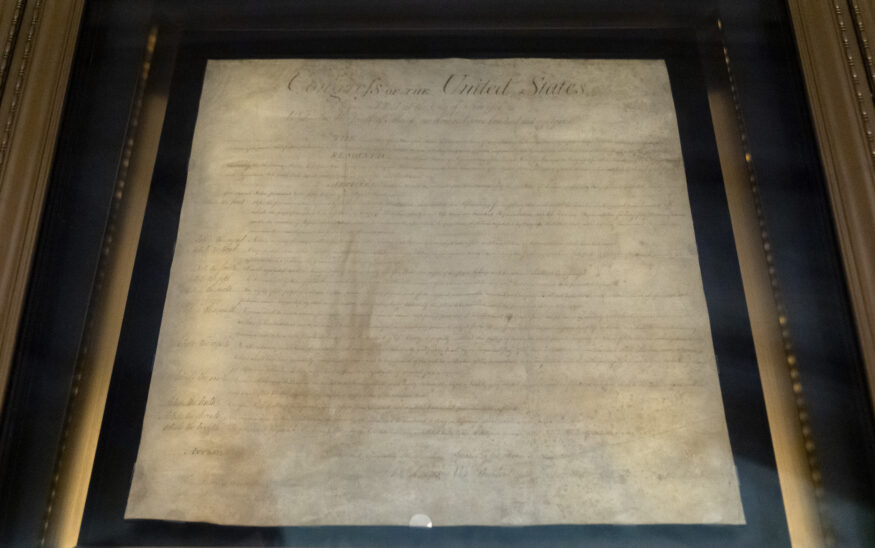
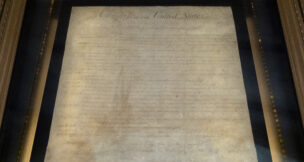
The Bill of Rights is displayed at the National Archives on Tuesday, Sept. 16, 2025, in Washington, as the Archives unveiled a display for the first time of the entire Constitution and all 27 amendments, as part of celebrations for the upcoming 250th anniversary of founding of the United States. (AP Photo/Mark Schiefelbein)
‘The Social Contract in Action’ podcast series dissects founding documents and applies them to today’s civic life
Jordan Gerard, Arizona Capitol Times//December 19, 2025//


Key Highlights:
-
League of Women Voters of AZ launches podcast series on founding documents
-
“The Social Contract in Action” explores Declaration of Independence, Bill of Rights, and Constitution
-
The podcast aims to increase civic literacy amid polarization.
The League of Women Voters of Arizona started a four-part podcast series that deep dives into the country’s founding documents, including the Declaration of Independence, Bill of Rights and the Constitution, and examines how those principles still echo in civic life.
“The Social Contract in Action” might be the first podcast of its kind among league chapters and it’s a homegrown effort by volunteers who are excited to talk about it and passionate about advocacy and civic education, Pinny Sheoran, state advocacy chair, said.
This isn’t the league’s first rodeo with podcasts, as they’ve published others on ballot initiatives, how-tos, early voting and other related topics, but it might be the first series to dissect historical documents, she added.
The first part, a total of eight episodes talking about the grievances in the Declaration of Independence, is completed. The next part, expected in February, will tackle the Bill of Rights. Their goal is to complete the remaining parts in 2026, the 250th anniversary of the Declaration of Independence.
The podcast can be found on YouTube, on the “LWV Arizona” channel or on Spotify under the “Democracy Truth Podcast” by the League of Women Voters of Arizona.
It started with an idea from a panel Sheoran was part of in June and someone had mentioned, “We all started 250 years ago with an expectation of a social contract between the government and us, and that social contract was undergirded by our founding documents and it’s breaking, and the next generation is asking ‘How is that social contract serving us and our futures?’”
Sheoran pulled together several league volunteers and they formulated the idea of digging into a discussion of what that social contract means. Over the summer, they researched and discussed how to structure the episodes and finally in September, started recording. The league received a few grants to help professionally record and release the series, Sheoran said.
The podcast series continues the league’s mission of civic education and keeping people engaged, Emra Muslim, advocacy intern and membership chair, said. She is also studying political science and attending law school at Arizona State University.
“We’ve seen a lot of breakings within our democracy, cracks and tendencies of authoritarianism that have really been sort of alarming to myself and a lot of my student colleagues and people I engage with in the community,” she said.
Starting with the Declaration of Independence lays the foundation for the remainder of the series, Sarabeth Spencer, an advocacy consultant with the League of Women Voters of Metro Phoenix, said.
“I think the Declaration was really that document that developed that idea of the social contract that this whole series is based on,” she said. “It’s all of the reasons why they were breaking, that our country broke away from the British government.”
Another reason for dissecting these historical documents is making them accessible and digestible, Grace Marie Theesfeld said. Theesfeld is an advocacy consultant for the Tucson chapter and voter services chair for the League of Women Voters of Arizona. She is a student at the University of Arizona studying psychology and nutrition.
Theesfeld hosted the first part of the series, accompanied by a panel of college students, including Muslims, and community members. Having younger voices speaking was intentional, Sheoran said.
“We have these vibrant young people who are thoughtful, and who are really paying attention, and we know that the younger people are going to listen to their peers,” she said. The group plans to invite more community leaders and experts to speak as well.
The group didn’t only want to talk about it in the podcast, but they want other people to talk about it too, said Keisha Mohan, an advocacy consultant and a student at ASU who plans to go to law school.
“We wanted to show that this was something that continues into today, and that those are still our founding principles, and we wanted people to be able to look at that and say, ‘OK, I understand how this applies to us now, let me talk about it with people in my life and show them how it’s relevant today,’” she said.
The group’s participation in the podcast has become more than just podcasting, Sheoran said, adding they took ownership of it. They didn’t hesitate when she asked the group about doing this project, she added.
“I think it’s very easy to feel paralyzed by the chaos that’s happening around us, but in my opinion, I think the way out of that chaos is organizing and coming together as a group of people, and I knew that this podcast would be a great way to do that,” Theesfeld said. Connecting with like-minded peers who are also motivated to make quality social change in their communities has been another bonus, she added.
Mohan, who studied history, said she was excited to dig into the documents and help people understand why it’s important to care about “old things.”
“I was so excited when we were doing this, because it really does matter to learn about these historical documents, because that’s where we came from, that’s how this whole thing started, and we have to know where we came from to know where we’re going,” she said. “It’s so important to know the origins of things and how they affect us today, and how we can still live up to those ideals and principles.”
Spencer said as she researched for the episodes, she didn’t really come across a lot of similar projects, and revisiting historical documents felt personally relevant and powerful to her.
Another reason for participating is today’s political climate, Muslim said, adding that people are living in a time of polarization, civic disengagement and more distrust in the government and its institutions. The podcast has been a unique way to increase civil literacy, she said.
“You don’t get to see a lot of young people coming together and community members to talk about what’s on their minds, to have the absolute freedom to say what’s on your heart and on your mind,” she said. “I think that it will resonate across communities and bring people together and talk about what they believe in, what they want to see from democracy and government in general.”
After dissecting the documents that founded this country, what do they want people to take away after listening?
“I think that one of the key takeaways that I hope people come to find from our podcast is that pulling at a thread of injustice helps to unravel the entire cloth. So, whatever small area of civic engagement you find yourself in, you are helping to address larger issues, and I think this podcast is a great kickstart to that,” Theesfeld said.
Another takeaway is that the founding principles are still relevant, that there’s a way to put them into action, and that if people feel those principles are not being upheld, they can do something about it, Mohan said.
“Your voice does matter and that we have to sort of keep our democratic norms and values at heart, and that when we see something that we don’t agree with, that we have the responsibility to stand up for what is right, and for what we believe in,” Muslim said.