Sign In
Upcoming Event
 Free Newsletter

A children’s doctor on the crisis of medical trust
Matthew Abrams, Guest Commentary//January 16, 2026//
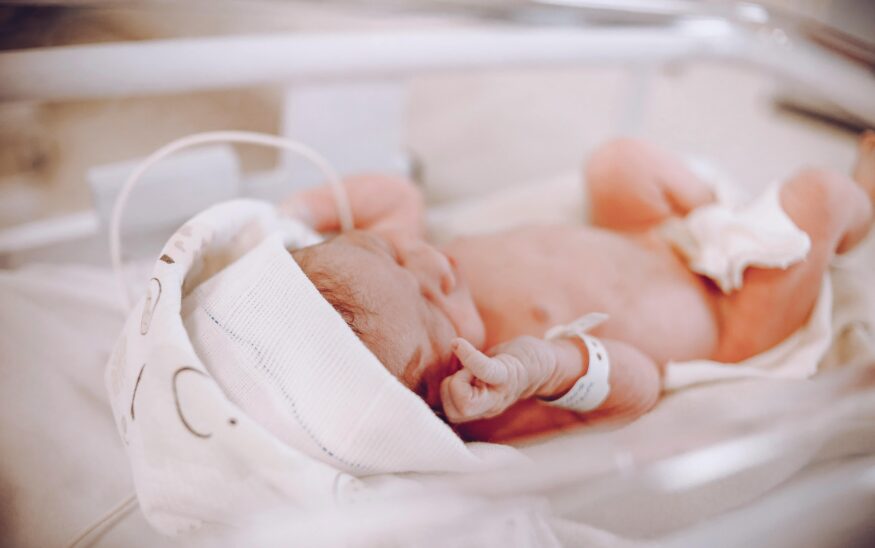
(Vidal Balielo Jr. / Pexels)
A children’s doctor on the crisis of medical trust
Matthew Abrams, Guest Commentary//January 16, 2026//


I have spent most of my adult life preparing for one job: keeping babies alive.
That preparation took years — college, medical school, residency and fellowship — years of studying physiology measured in grams and millimeters, of learning how fragile life can be and how precise medicine must be to protect it. I chose neonatology because the margin between survival and catastrophe in an intensive care unit for infants is razor-thin.
Every decision we make is rooted in evidence. Every intervention is weighed against risk. And every recommendation is guided by the same promise I made on day one of my career: First, do no harm.
That is why the growing rejection of vaccines — by society at large, by Secretary Robert F. Kennedy Jr.’s HHS, and by state legislatures like Arizona’s that repeatedly entertain anti-vaccine bills while doing nothing to improve vaccine uptake — is not just frustrating.
It is shocking. And, frankly, it is heartbreaking.
The paradox of the modern NICU
Consider a baby born at 23 weeks’ gestation.
To survive, this infant requires an extraordinary symphony of modern medicine: umbilical lines threaded into vessels the width of spaghetti strands, endotracheal tubes connected to mechanical ventilators, intravenous nutrition calculated to the decimal point. They receive steroids to mature underdeveloped lungs, caffeine to stimulate breathing, antibiotics to stave off infection, and meticulously fortified milk to support growth.
For months, parents entrust us with every heartbeat and every breath their child takes. They consent — often gratefully — to interventions that would have been unimaginable a generation ago. And yet, a troubling paradox often emerges when that same baby reaches two months of chronological age.
Despite relying completely on neonatal science to get their child through the most perilous period of life, some families suddenly hesitate when we recommend routine childhood vaccines — vaccines that are standard for all infants, regardless of prematurity. The very science that saved their baby is now treated with suspicion.
As a physician and a parent, that moment, which is becoming increasingly frequent, is deeply disorienting.
The erosion of expertise
We are living through a time when medical expertise is no longer treated as the foundation of medical advice.
In delivery rooms across the country, parents increasingly refuse Vitamin K injections, erythromycin eye ointment, and the Hepatitis B vaccine — interventions that prevent devastating but entirely avoidable outcomes. These refusals are rarely rooted in new data. More often, they are fueled by what I think of as digital echoes: social media posts, influencers and viral anecdotes that drown out decades of accumulated medical knowledge.
When parents decline Vitamin K because they heard somewhere that “babies are born perfect,” they are unknowingly ignoring basic human biology. Newborns are born with sterile intestines and lack the bacteria required to synthesize vitamin K, an essential clotting factor. Without supplementation, infants are at risk for Hemorrhagic Disease of the Newborn — unpredictable, catastrophic bleeding that can lead to brain damage or death. This is not theoretical. I have seen it.
The shield of historical amnesia
Vaccines are a victim of their own success, and ironically, this success has become a catalyst for new parents’ modern-day doubt.
Because of vaccines, many parents today have never seen the destruction of a child paralyzed by polio, scarred by smallpox, or killed by a secondary bacterial infection from chickenpox. This historical amnesia has allowed a darker narrative to take hold: That pediatricians are motivated by profit and that vaccine recommendations are influenced by kickbacks.
I can say this without hesitation: that accusation is profoundly false.
The motive is singular — the survival of our children.
When politics undermines public health
What makes this moment especially dangerous is that skepticism is no longer confined to individual choices — it is being legitimized by policy.
When the federal government fails to lead decisively on vaccine confidence, and when state legislatures like Arizona’s repeatedly propose anti-vaccine bills while offering no meaningful strategies to increase immunization rates, it sends a clear message: science is negotiable.
As a physician, watching political ideology chip away at evidence-based medicine is maddening. We now live in a world where unregulated supplements with “proprietary blends” are marketed as safer than rigorously tested vaccines, and where influencers with no clinical training are treated as equals to professionals like me, who have dedicated their lives to pediatric health.
The same science, the same oath
The science I rely on when deciding how much oxygen a premature baby can tolerate without going blind is the same science I rely on when recommending vaccines.
The oath I take to protect a 500-gram infant in an incubator does not expire when that child goes home. It applies when I advise families about immunizations, about prevention, about how to keep a hard-won life safe beyond the NICU walls.
If we continue down this path — allowing misinformation and political cowardice to override evidence and expertise — we will not simply reach a tipping point. We will slide backward into an era of pediatric medicine we fought for decades to escape.
And the ones who will pay the price are the very babies we worked so hard to save.
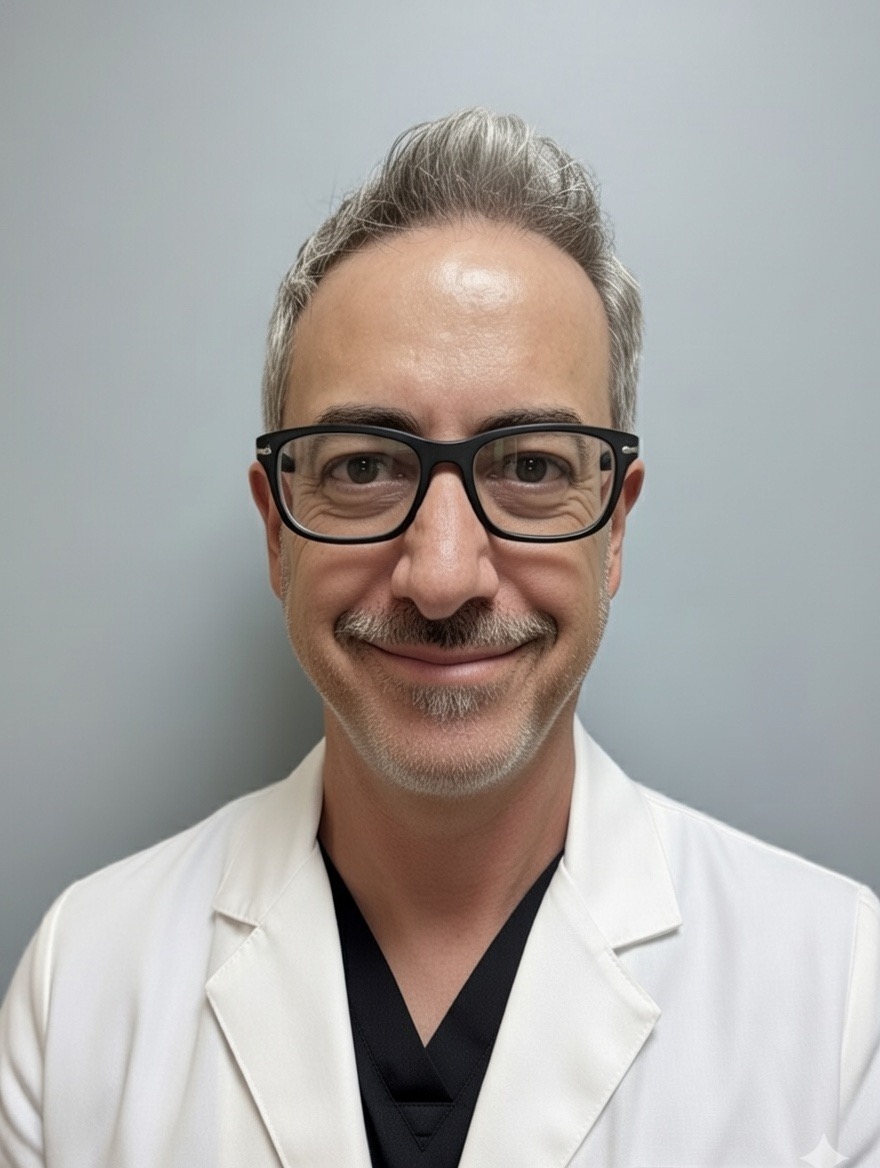
Matthew Abrams completed his pediatric residency, chief residency and neonatology fellowship at Indiana University Riley Children’s Hospital in 2004. He has been a member of Arizona Neonatology/Pediatrix since 2004 in the Phoenix Metro areas. He is a proud husband and father of five.