Sign In
Upcoming Event
 Free Newsletter

Sue Stodola: Finding hope, rebuilding troubled lives
Kiera Riley Arizona Capitol Times//February 8, 2026//
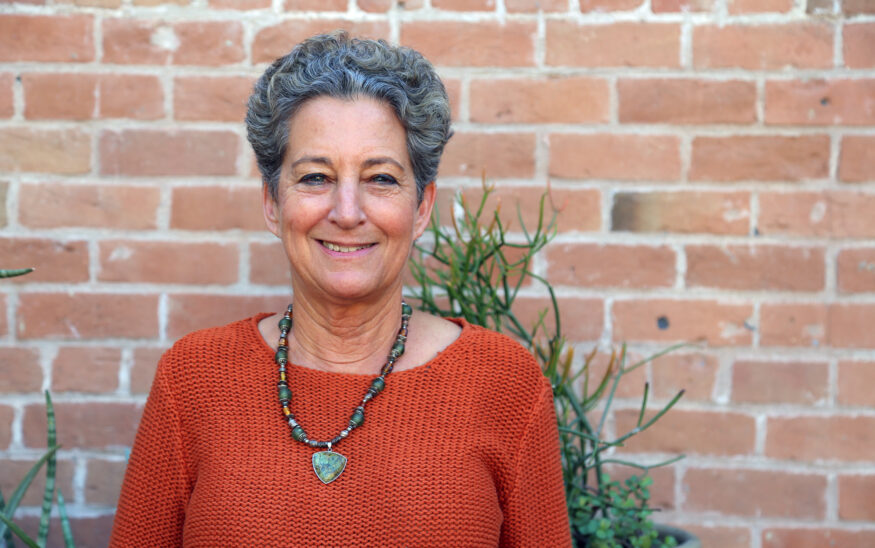
Sue Stodola. (Kiera Riley / Arizona Capitol Times)
Sue Stodola: Finding hope, rebuilding troubled lives
Kiera Riley Arizona Capitol Times//February 8, 2026//


Sue Stodola has worked at every stage of the criminal legal process, ranging from juveniles to criminal defendants in capital cases.
As a volunteer, a probation officer, a capital mitigation specialist, a clemency board member and now a mentor and coach in a reentry program, Stodola has parsed through the small roots and tendrils of many lives, all to piece together full pictures of people and their paths to rehabilitation.
Questions and answers have been lightly edited for clarity.
How did you get started on your career path?
It all started when I was growing up in Milwaukee, and a neighbor that I was friends with, a girl that lived on my street, was working in a little trinkets type store, a gift store, and someone came in, robbed it and killed her. She had just turned 17. I knew her family well. Basically, it just shocked me.
I just couldn’t get over the fact that someone would do that, someone would harm basically a child. And so I got involved with the Wisconsin Correctional Service as a volunteer, and did volunteer work at the boys’ prison outside of Madison and started working with juveniles who had committed a variety of crimes. I grew to better understand that group, like what led to that person to commit a crime? What were the factors that led to it?
After I graduated college, I was living in Rockford, Illinois, and I called the probation department. I really didn’t know much about probation, but I knew it was a job where I’d be able to work with individuals who had committed offenses, and I had no experience and really no training. I just had a filing cabinet with 120 files of all women.
I spent five years there, absolutely loved the job and working with them, and understood what led them to commit crimes. Then, I moved to Phoenix and worked for Maricopa County adult probation for 23 years, most of that time, 20 years as a supervisor of probation officers. I worked hard to provide training and get a better understanding, worked with the families, looking at poverty as often a common factor of what led people to commit crimes, trauma, unresolved grief, unresolved trauma. At the same time, I’m always aware that in many of these crimes, if not all of them, directly or indirectly, there’s a victim. Always being aware that there are victims of crimes, but also trying to understand it more, so that maybe some of these causes related to people’s commission of crimes could be eradicated. There’d be less crime.
What led you to capital mitigation?
I retired many years ago from probation, and some of the other probation officers had come to the public defender’s office and had been mitigation specialists. So I did that, and loved it.
I worked on trial cases. I worked on post-conviction relief, and I also worked on juvenile life without parole cases, and loved all of it again, a real deep dive, especially on all of them, very deep dive into, again, what led the person to commit a crime. Understanding the family, what was going on in the family, interviewing people all over the country that may have known that person, even as a child, as they grew up, and at the same time, realizing that there’s a victim and also understanding what it’s like as much as possible to be a victim, to have your loved one taken from you. Even though, of course, I was working for the defense, that doesn’t take away from the fact that there was a victim in the case.
Having worked in all of these settings, with a wide variety of people, what have you found to be the factors that lead a person to commit a crime? How has it changed?
I have a deeper understanding of trauma than I ever did, and I have a deeper understanding of some of the factors of poverty.
The key components are unresolved trauma that can arise from poverty, and it can arise from other factors as well, and often, because of a lack of mental health services, the person isn’t treated. So they grew up with their own anxieties, depression, mental illness that can extend even beyond depression and feelings of giving up, a lack of hope, a lack of ever feeling like I’m going to make it and have a successful life. And sometimes that leads to the commission of a crime, because a person just doesn’t have the hope or feeling that their life is going to go down a better path.
These are not excuses, they’re explanations. In the end, it doesn’t excuse behavior, but it helps to explain it. We really always need to study that if we want to reduce crime, we need to start increasing or dealing with some of the factors that lead to crime.
We have done that. We certainly have a better understanding of it now than when I started my work back as a volunteer in a boys prison, but we still have a long way to go to better understand it.
What is the process for piecing together a person’s life through capital mitigation?
I’ve spent four or five years working on a case, and there was another case I worked probably eight years. So you don’t jump into asking a person the most personal questions. It’s developing a relationship, which can take quite a while. Every time you’re there, you’re not just talking about the crime or problems in their life. So it’s trying to develop a relationship and it’s also not passing judgment. If it’s a capital crime, the person has been on post-conviction relief, they were convicted of committing the worst crime of all, but not passing judgment, but it’s about just trying to understand.
It can take a long time for a person to open up and talk about their personal life and things that happened to them as a child, if, in fact, things did happen to them as a child or older. Then, it’s developing that person’s personal story, and you don’t just go by the person’s story. There are records that you receive. You fly around the country, depending where they grew up, and interview people who knew them at various stages of their lives. Was there potential illness or not? Was it ever treated? You’re looking generationally. You’re also going back to the grandparents and sometimes past that. You’re looking at, were there pesticides that the mother breathed in while she was pregnant with the child? You’re looking at environmental factors, psychological, brain damage, psychology, psychiatric issues. And then experts would come in. We would hire experts who would do much deeper dives into that, since I’m not any of those things, not a neurologist, not a psychiatrist. I found that a fascinating experience, to put together the person’s life, and at the same time realizing that a crime has been committed.
After capital mitigation, you served on the Board of Executive Clemency. In your work on the board, and in your other positions, what factors have you found influenced people’s ability to positively change?
A support system. Often, it’s family, but not always, because the family can be the ones responsible. It can be failing members with drug problems or other problems for whom family is not necessarily good support. Often, people find a support system through their rehabilitation programs, or reentry programs, whatever it looks like for that person.
I often have said a church or their religion or spiritual belief is really a support, another support system – a group of people that care about them gives them hope.
And hope is my inspiration. Hope is what I say. Hope, to me, is the mechanism that enables a person to have a successful life. If you have no hope, then it doesn’t matter. But hope often comes by having people who care about you.
What are you working on now?
For about the last maybe six to eight weeks, I have been a mentor to a woman who’s actually been out of prison for a while. I’m helping her with various aspects of reentry — primarily looking at seeking employment and transportation. I also just completed a 22-hour program to become a coach and work with mentors who have mentees.
Being a mentor and being a coach to mentors takes me back to my original job as a probation officer, where I’m able to work with people and help them with reentry. Coming out of prison or jail is very difficult. You have myriad issues and problems, often all coming at once, with employment, housing, children — so many issues that have to be dealt with. I consider it an honor to work with the women and help them in any aspect of what they need to put their lives back together.
In all these positions, what has been the through line for you? What have you learned?
It’s about trying to understand a person as a human being other than the worst crime they committed. It’s taught me so much about life and human nature and the resilience of people who have committed a violent crime, and then worked so hard to change their lives, and how resilient people can overcome very negative aspects of their upbringing or things that happen to them and work through them. And for victims, how difficult it is to go on after their loved one has been taken from them and their own journey. So I feel very fortunate to have been able to see and witness this, and grateful to have been able to do this type of work.