Sign In
Upcoming Event
 Free Newsletter

Red states seek to tighten Medicaid, SNAP requirements
Stephanie Akin, Pluribus News //March 7, 2026//
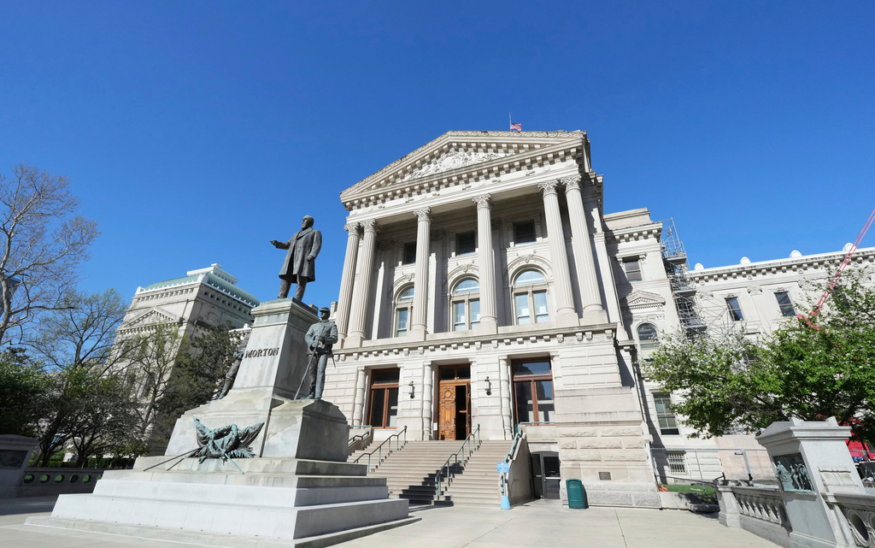
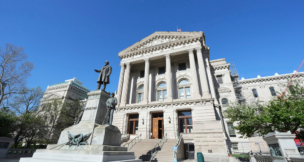
A general exterior view of the Indiana Statehouse in Indianapolis, April 23, 2025. (AP Photo/AJ Mast, File)
Red states seek to tighten Medicaid, SNAP requirements
Stephanie Akin, Pluribus News //March 7, 2026//


Key Points:
-
Lawmakers in at least six states invoking the One Big Beautiful Bill Act to reduce Medicaid and SNAP benefits
-
Proposed changes include stricter eligibility limits, more frequent checks, and tighter restrictions on immigrants
-
Critics argue the changes will lead to rising uninsured rates and coverage losses
Lawmakers in at least half a dozen states are invoking the One Big Beautiful Bill Act as a launching pad for sweeping reductions to Medicaid and SNAP, fast-tracking controversial changes that go beyond the federal law’s mandates.
While the details vary, proposals in Florida, Indiana, Iowa, Kentucky, Utah and West Virginia include provisions such as stricter eligibility limits for government-run health insurance and food aid, more frequent eligibility checks and tighter restrictions on immigrants.
Supporters say the measures are necessary to rein in spending on programs that often represent the largest line items in state budgets and to improve oversight.
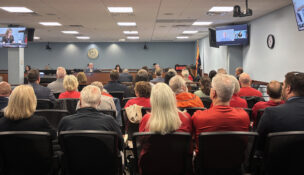
“Some may try to frame this as cutting benefits,” Indiana Sen. Chris Garten, a Republican who sponsored his state’s bill, said at a hearing this month. “Let me be clear. This is about verifying benefits. This is about compassion for our truly needy and about fairness for the taxpayer.”
Kentucky legislators passed a 75-page Medicaid overhaul bill last week that would impose certain copays a year earlier than the federal deadline.
A bill headed to Indiana Gov. Mike Braun would require state officials to report the immigration status of some Medicaid applicants and their household members to the Department of Homeland Security. That provision is also in West Virginia’s bill.
And a bill in Florida, one of 10 states that did not expand Medicaid under the Affordable Care Act, would apply work requirements to its entire Medicaid population. Advocacy groups say that it is explicitly prohibited under federal law, and the Centers for Medicare and Medicaid Services confirmed in December that it cannot be approved even through a waiver.
It remains unclear how many enrollees across the states would ultimately be affected by the new legislation. Many provisions of the bills — particularly work requirements in Florida — require federal approval before taking effect.
Seven states have pending applications at CMS for Section 1115 waivers seeking to implement or expand work requirements, most of which predate the Big Beautiful Bill. And it remains to be seen how the agency will handle proposals that appear to conflict with statutory guardrails written into the federal law.
Indiana began implementing major changes to its Medicaid and SNAP programs under a law enacted last year. Rep. Brad Barrett, a Republican who sponsored the House version of the legislation in the state, framed it in a hearing as “the genesis of HIP 3.0” — the next step in a years-long effort to rein in costs for the state’s Medicaid expansion program, the Healthy Indiana Plan.
Critics counter that the changes proposed in these states will lead to rising uninsured rates and coverage losses driven more by paperwork barriers than by ineligibility.
“They all have similar themes, which consist of trying to make it harder for people to access Medicaid — and often SNAP — not because they are ineligible but because they can’t comply with all the paperwork requirements,” said Joan Alker, the executive director of the Center for Children and Families at the Georgetown University McCourt School of Public Policy. “Red tape is really the strategy.”
The latest wave of bills builds on years of efforts in some Republican-led states to curb Medicaid spending and SNAP participation through restrictions designed to shrink the programs.
Medicaid, which accounted for 30% of total state spending in Fiscal Year 2024, grew by 8.6% in FY 2025 and is expected to grow by 7.9% in FY 2026, driven by provider rate increases, greater enrollee health care needs, and increasing costs for long-term care, pharmacy benefits and behavioral health services. SNAP use jumped during the COVID-19 pandemic and remains elevated, with nearly 1 in 8 Americans receiving benefits.
Public health experts say both programs operate on relatively tight administrative budgets and underpin the economic stability of many communities, making deep cuts difficult without unintended consequences.
Conservative advocacy groups say the programs foster dependency, have strayed from their original purpose, and have grown vulnerable to fraud, waste and improper payments — a message the Trump administration amplified in recent weeks.
Groups including the Florida-based Foundation for Government Accountability, the Heritage Foundation and the American Legislative Exchange Council have for years encouraged state and federal policymakers to adopt work requirements and tighter eligibility verifications for both Medicaid and SNAP.
Many of those ideas were incorporated into the Big Beautiful Bill, which is estimated to account for over $1 trillion in federal Medicaid and SNAP spending cuts over the next decade. While some savings stem from reduced enrollment, the law also shifts a greater share of administrative and compliance costs to states.
The Foundation for Government Accountability has encouraged state lawmakers to see the law as a starting point, calling it a “window of opportunity for major reform” in its latest annual report.
The group hosted lawmakers at a fall conference, promising attendees they would walk away with “a full toolkit, state-specific todo lists, model legislation, and sharpened messaging” about how to pass changes, according to an agenda.
Jonathan Ingram, the Foundation for Government Accountability’s vice president of policy and research, provided almost half an hour of detailed analysis when Indiana lawmakers advanced their bill out of a committee in February, framing the measure as pragmatic rather than ideological.
“At its core, SB1 brings Indiana into compliance with that new federal law and protects the state budget from new penalties tied to improper payments,” he said.
Under questioning, he acknowledged that the proposal goes beyond what federal law requires.
Indiana’s bill would require quarterly eligibility checks and apply a three-month look-back period for applicants — both at the stricter end of what federal law permits. It would also narrow the “medically frail” exemption from work requirements and eliminate broad-based categorical eligibility, a policy used in more than 40 states that allows SNAP applicants who receive certain Temporary Assistance for Needy Families–funded services to bypass some asset and income tests.
Ingram described the practice as “eligibility laundering.”
Democrats on the committee pressed him on why the legislation focused heavily on recipient eligibility while doing less to address improper Medicaid payments tied to provider billing errors or fraud, which federal audits have found account for a substantial share of payment mistakes. Supporters responded that eligibility errors are more directly within state control.
In Kentucky, bill sponsors described similar provisions as necessary to maintain “program integrity.”
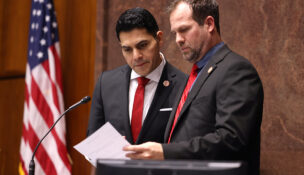
“We have an obligation to care for the most vulnerable, and we must ensure the Medicaid program is sustainable for years to come,” Republican Rep. Ken Fleming, the primary bill sponsor, said on the floor. “This bill does just that.”
Opponents said the areas in which the bill departs from federal law — paperwork, redeterminations, copays — are precisely the type of administrative hurdles that historically have led eligible people to lose coverage.
“It would make sense to me when we’re talking about the health of Kentuckians to take principled and slow action — to start with what’s required, measure, and then decide if we need to go further,” Democratic Rep. Lindsey Burke said on the floor.
A similar dynamic played out in Kansas, where a Senate committee considered legislation backed by the Foundation for Government Accountability that would have imposed stricter verification requirements and expanded work requirements for Medicaid and SNAP beyond federal mandates.
A fiscal note estimated the additional requirements would cost the state $18.5 million in 2027 and $17 million in 2028 and require hundreds of new state employees. More than 40 people testified in opposition, and the bill failed to advance before the crossover deadline this month.