Sign In


Upcoming Event
 Free Newsletter

Biggs, Schweikert skip the fireworks in tame GOP governor debate
Reagan Priest, Arizona Capitol Times//June 18, 2026//
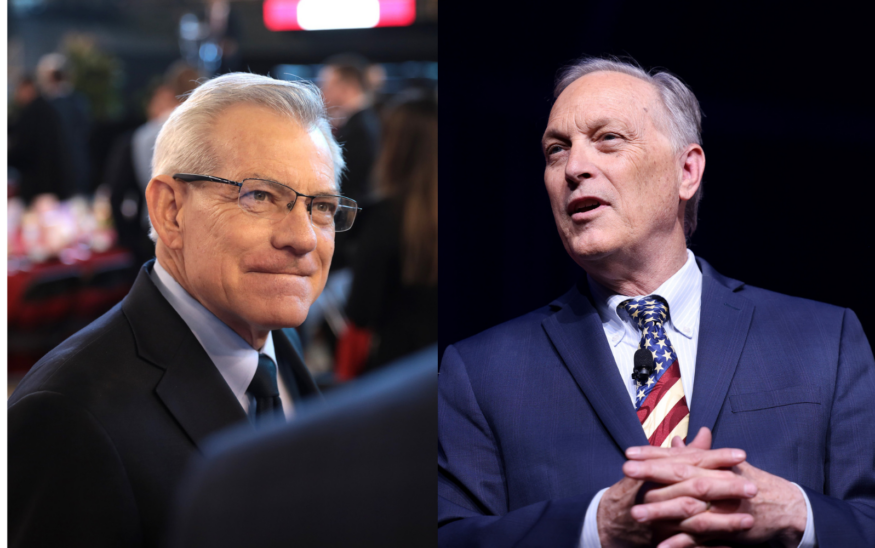
This combination photo features U.S. Rep. David Schweikert, left, and U.S. Rep. Andy Biggs. (Gage Skidmore / Flickr)
Biggs, Schweikert skip the fireworks in tame GOP governor debate
Reagan Priest, Arizona Capitol Times//June 18, 2026//


Key Points:
-
Two Republican frontrunners largely avoided attacking each other on the debate stage
-
Congressman Andy Biggs is the clear GOP favorite and emerged unscathed
-
Congressman David Schweikert maintains he’s the stronger general election candidate
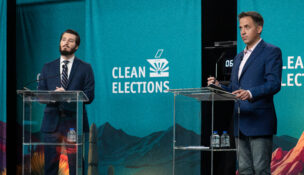
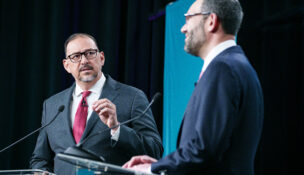
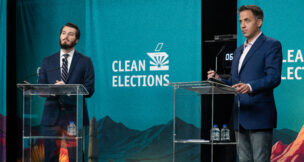
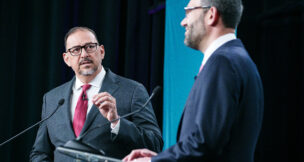
Those tuning in to the Republican gubernatorial primary debate on June 17 expecting to see two frontrunners at each other’s throats likely left disappointed.
Instead, Congressmen Andy Biggs and David Schweikert shared their allotted time courting independent voters, “geeking out” on state budget math and taking shots at incumbent Democratic Gov. Katie Hobbs.
Biggs, who entered the race in early 2025, is expected by many to handily defeat Schweikert in the July 21 Republican primary. Polling numbers, political donations and local endorsements have all leaned in Biggs’ favor, and he also nabbed the coveted blessing from President Donald Trump.
Political consultants told the Arizona Capitol Times in a post-debate briefing that Schweikert did not do much to shift those tailwinds in his direction.
“Schweikert seems to be content with second place,” said GOP public relations consultant Barrett Marson.
Schweikert continues to run a campaign that vexes political consultants and dedicated GOP voters. Despite polls suggesting otherwise, the congressman maintains that he is the only Republican in the race who can defeat Hobbs in the Nov. 3 general election, even when pressed on the issue by reporters after the debate.
“I do pretty darn well with independents in one of the toughest congressional districts in America, and have election after election after election,” Schweikert said, referring to the 1st Congressional District in northeast Phoenix and Scottsdale.
Schweikert has lobbed an occasional attack against Biggs, criticizing his relationships with far-right groups and personalities. But he did not come out swinging on the debate the way many expected he might.
“He didn’t swing at all,” Marson said. “Going in, I thought it was going to be a heavyweight bout, I thought it was going to be a little scrappy MMA fight between Schweikert and Biggs, and it wasn’t.”
Schweikert saved his criticism for the end of the debate, instead focusing more on the negative impact of Turning Point USA on Republican politics in Arizona. In contrast, Biggs frequently touts the endorsement of late TPUSA founder Charlie Kirk, and the group’s political action committee has already spent nearly $500,000 to bolster his campaign.
“When you’re wholly owned by Turning Point, and you’ve lost election and lost election and lost election, it puts everything in our future at risk,” Schweikert said in his closing remarks.
After the debate, Biggs told reporters that “TPUSA and I are not what I would call bedfellows,” but acknowledged that they are significant backers of his bid for the Ninth Floor.
Biggs has largely avoided going on the attack against Schweikert, with the exception of the occasional quip teasing his fellow congressman for not having a direct line to the president. During the June 17 debate, Biggs spent more time name-dropping Democrats he has worked alongside in Congress than he did his Republican opponent.
“The fact that Biggs is trying to present himself as a bipartisan moderate means he’s that confident he’s getting out of the primary,” said Democratic consultant Stacy Pearson. “He name-checked (U.S. Rep.) Greg Stanton, (former U.S. Sen.) Kyrsten Sinema, (U.S. Rep.) Hakeem Jeffries. I mean, he went through the who’s who of Democrats.”
Biggs also shed more light on his policy goals, some of which were slightly surprising. He pledged to eliminate tax incentives for data centers, expand Arizona’s already-universal school voucher program and use the state land trust to fund education.
Hobbs secured a three-year moratorium on new data center tax incentives, a compromise that Biggs attributed to legislative Republicans. However, GOP members of the Legislature fought back against repealing the data center tax incentive entirely, arguing it would send the wrong message to investors eyeing the state for development.
All of the candidates on the debate stage, including long-shot contenders Scott Neely and Ken Miceli, expressed uncertainty about the security and efficacy of Arizona’s mail-in voting system. Biggs pledged to sign the “Florida-style” election reform bill introduced by GOP state lawmakers, while Schweikert claimed his deceased mother received ballots in the mail for several years after her death.
Marson and Pearson criticized Citizens Clean Elections’ debate moderators for not asking the candidates about the results of the 2020 elections. In 2021, Biggs voted against certifying Arizona’s election results, which helped elect former President Joe Biden, while Schweikert voted against certifying Pennsylvania’s election results.
Hobbs has not yet committed to debating her eventual Republican opponent after skipping the 2022 debate with then-GOP nominee Kari Lake, citing Lake’s promotion of conspiracy theories surrounding the 2020 election. Pearson said Hobbs should skip a debate with Biggs unless he can acknowledge that Biden won in 2020.
“She owes the voters (an) appearance in front of the voters, she doesn’t owe (participation in) a format that allows for him to sidestep questions,” Pearson said. “They weren’t even asked about the (January 6th) insurrection, which I thought was slightly terrifying.”
Marson argued Hobbs would only stand to lose from participating in a debate with Biggs because he would “destroy” her, which is why she likely won’t agree to face off against him.
Mail-in ballots for the July 21 primary election are set to go out to voters on June 24.