Sign In


 Free Newsletter

In GOP-controlled states, the midterms are battlegrounds for ballot initiatives
Reid Wilson, Pluribus News//August 6, 2026//
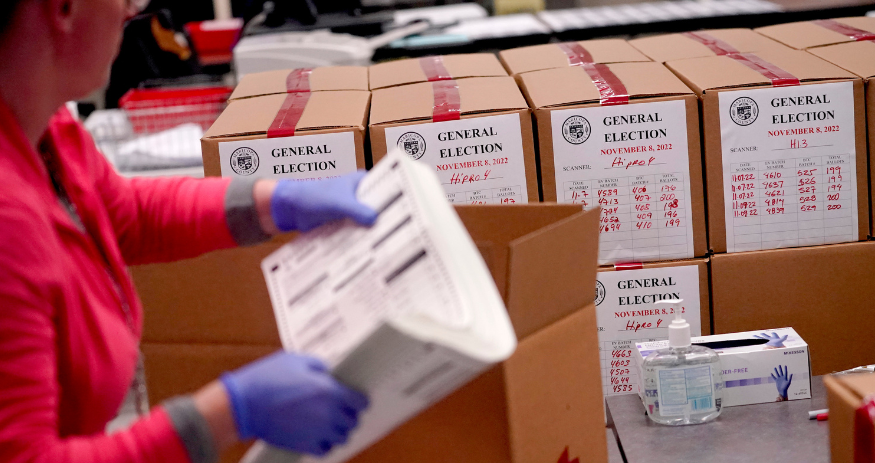
An election worker boxes tabulated ballots inside the Maricopa County Recorder's Office on Nov. 9, 2022, in Phoenix.(AP Photo/Matt York, File)
In GOP-controlled states, the midterms are battlegrounds for ballot initiatives
Reid Wilson, Pluribus News//August 6, 2026//


There may be no more boring and arcane argument in American politics than the debate over process. But this year’s midterm elections feature a host of initiatives seeking to tweak the obscure rules by which those measures qualify for state ballots — the consequences of which will reverberate through the public policy sphere for decades to come.
Proposals to change rules and procedures around ballot measures will be on the ballot in as many as nine states this year. Those measures fall into two broad categories: Some seeking to tighten or limit citizen initiatives have been referred to voters by Republican-led legislatures; others seeking to protect or expand the initiative process are backed by progressive groups in red states where ballot measures have come under attack in recent years.
That the fight over the ballot initiative process is taking place entirely in Republican-controlled states is no accident. Shut out of power in legislative chambers, progressive advocates have used the ballot initiative process to advance their own causes, from protecting abortion rights to raising the minimum wage.
That has frustrated Republican legislators, who see the ballot measure as a usurpation of their power.
“These are all states that are traditionally seen as conservative states but where we have been able to pass progressive policy,” said Chris Melody Fields Figueredo, executive director of the progressive Ballot Initiative Strategy Center. “The lawmakers can’t win fairly, so they’re continuing to change the rules and move goalposts.”
Voters in Missouri were the first to weigh in on Tuesday, when they faced Amendment 4, a measure that would have required future ballot measures to win majorities in all of the state’s eight congressional districts to pass. The measure, proponents of ballot initiatives say, would have made it virtually impossible for any future initiative to win passage.
Even in a very conservative state, more than 80% of voters rejected the measure.
Come November, voters in North Dakota, South Dakota and Utah will get their own chance to raise the threshold by which ballot measures pass.
Legislators in all three states, where Republicans hold control, have asked voters to require future constitutional amendments to win 60% of the vote to be adopted, rather than the current simple majority requirement. Utah’s measure specifically applies to initiatives that would impose new taxes or raise existing taxes.
“Our constitution should be very hard to change,” North Dakota House Speaker Robin Weisz, the measure’s lead sponsor, told fellow lawmakers at an April hearing. “If we had the same rules in place nationally as we do here in North Dakota, I think most of us would have a stroke on what would be proposed and most likely what would pass.
“The purpose of our constitution is to protect the minority, really. It’s to set a a framework that protects the liberty and the rights of people, and it shouldn’t just be able to be changed at the whim of, say, the majority of the populace.”
In Idaho, lawmakers have asked voters to prohibit future ballot initiatives relating to three specific issues: The legalization of marijuana, narcotics or psychoactive substances.
On the other side of the ledger, advocates are collecting signatures for measures that would enshrine the fundamental right to the ballot initiative process in state constitutions.
In Arkansas, a proposed measure would prohibit the Legislature from amending or repealing amendments approved by voters; require voter approval for laws that impact the initiative and referendum process; and place a stricter time limit on the state attorney general’s decision to accept or reject ballot titles and language.
In Montana, Ballot Issue 8 would require an impartial, predictable and timely process for approving petitions and ballot statements, verifying signatures and resolving legal challenges. The measure would also prohibit disqualifying petitions based on minor or technical issues.
A measure circulating in Nebraska would require a four-fifths vote of the Legislature — ostensibly nonpartisan, but functionally controlled by Republicans — to change, impair or repeal an approved ballot initiative.
A more neutral measure in Colorado would require future ballot measures to be written at an 8th grade reading level to ensure voters can comprehend what they are reading.
While lawmaker efforts to curtail the ballot initiative is a strategy that has played out over years, what’s new is the defenders of ballot initiatives taking up arms themselves, Figueredo said.
“Advocates in these states have seen what is happening in their states and how anti-initiative their state elected officials are, so they’re using their own power and going into their communities to change the playing field,” Figueredo said. “They trust this process, they trust themselves more because of how hyper-partisan and ideological state government has become.”