Sign In


 Free Newsletter

Arizona exploring long-term water importation options
Jakob Thorington, Arizona Capitol Times//October 7, 2026//
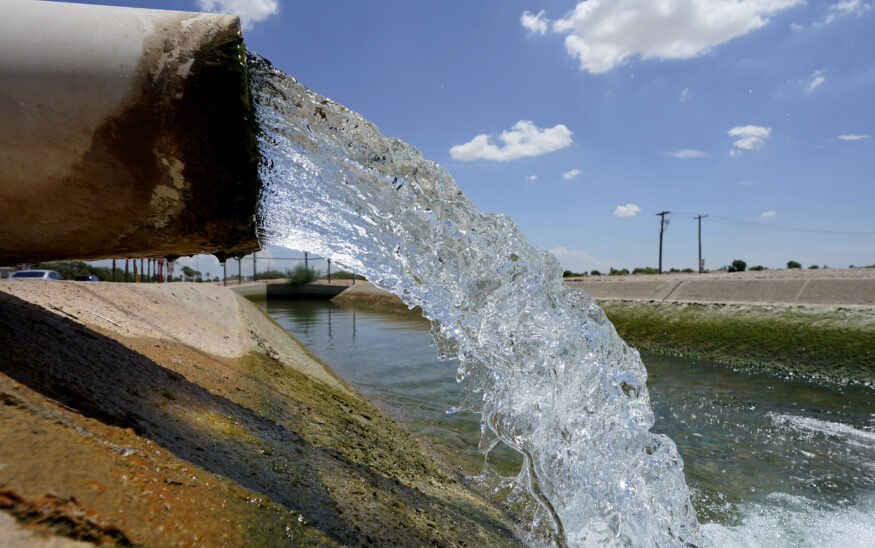
Water from the Colorado River diverted through the Central Arizona Project fills an irrigation canal on Aug. 18, 2022, in Maricopa, Ariz. (AP Photo/Matt York, File)
Arizona exploring long-term water importation options
Jakob Thorington, Arizona Capitol Times//October 7, 2026//


Key Points:
-
The Water Infrastructure Finance Authority of Arizona is appraising five water importation projects that could help offset the state’s reduction in Colorado River water
-
No project has entered a construction phase yet
-
Some state leaders are calling for a long-term fund for water importation
Arizona is studying five projects that could eventually bring hundreds of thousands of acre-feet of new water to the state, but the projects face a major hurdle: The state lacks long-term funding sources to pay for them.
The Water Infrastructure Finance Authority of Arizona’s Board of Directors approved two projects for appraisal studies on Monday, bringing the number of projects in the appraisal phase to five. Early estimates suggest they could produce nearly 1 million acre-feet of water each year, though more conservative estimates put their combined yield at about 361,000 acre-feet.
The state’s expected reduction in its Colorado River supply is about 760,000 acre-feet annually, underscoring the scale of the challenge facing state water officials.
State lawmakers have given WIFA about $386 million to pursue long-term water augmentation projects. Appraising the five projects will cost about $27 million. One proposed project — a Mexico-based desalination plant — could cost billions of dollars.
“Water needs a holistic approach,” WIFA Director Chelsea McGuire said in an August interview with the Arizona Capitol Times. “[WIFA] is trying to keep our options open and keep that diverse menu of water projects available.”
The two projects approved Monday were proposed by the Acciona-Fengate Water Augmentation Alliance, a partnership between Spanish firm Acciona and investment firm Fengate. One proposal calls for building a desalination plant in Mexico near the Gulf of California. The other would recover, treat and reuse reclaimed water from Mexico to increase Arizona’s water supply.
The appraisal phase will allow WIFA and developers to further assess each project. Future funding requests to pursue construction will be based on the study results.
The board tabled another two projects proposed by the Acciona-Fengate alliance because some members had to leave the Oct. 5 meeting early. One would modernize irrigation infrastructure in the Southwest to reduce water losses. The other is another desalination plant proposed for California’s Pacific coast.
“Advancing two additional projects into appraisal studies while refining the study scopes for two others reflects our commitment to carefully evaluating potential water supplies,” said Ted Cooke, WIFA’s Long-Term Water Augmentation Committee chairman, in a statement. “This initial work will provide valuable information about project feasibility, costs, opportunities and risks, helping ensure future decisions are informed, transparent and grounded in sound stewardship of public resources and to enhance Arizona and the region’s long-term water security.”
Other long-term importation projects already being appraised include yet another proposed desalination plant in the northern Gulf of California and water reclamation projects in Mexico and California in exchange for a portion of both entities’ Colorado River allocation.
No long-term water funding
Josh Heywood, the co-founder and executive director of Project 48, an Arizona-based research and public education organization, said Tuesday that he believes WIFA’s long-term water augmentation work is a good step. But he said Arizona lacks a stable, long-term funding mechanism to actually build the projects.
The state Legislature appropriated $1 billion to WIFA in 2022 for long-term water augmentation and importation, but lawmakers have since swept back about two-thirds of that funding to help address budget shortfalls.
Heywood and Project 48’s other cofounder, former Republican Maricopa County Recorder Stephen Richer, have called for directing a portion of new sales tax revenue into a water fund, similar to Texas’ Proposition 4 from 2025, to fund up to $1 billion annually for 20 years for water infrastructure projects.
“Let’s start maybe a little bit smaller,” Heywood said. “Let’s do maybe $200 million a year, that way we don’t take funding away from other priorities. We don’t raise taxes, but we can at least start by having long-term stable funding for water.”
The Arizona Municipal Water Users Association also called on lawmakers in May to establish a dedicated revenue source for new water supplies.
Public polls: Arizona isn’t doing enough
A recent poll from the Center for the Future of Arizona’s Arizona Voters’ Agenda found nearly two-thirds of voters were not confident that Arizona leaders were taking the necessary steps to ensure its water future, including 68% of Republicans and 61% of Democrats and unaffiliated voters.
About 70% of voters don’t think the state has enough water to support residents, agriculture and future economic growth, and 93% of voters said elected leaders must make long-term investments to find new water supplies, including dedicating more state funding for water.
Rep. Chris Mathis, D-Tucson, told the Arizona Capitol Times in a September interview that he intends to introduce legislation next session to increase the Legislature’s role in finding new water supplies.
Since the new Colorado River agreement will be renegotiated after two years, Mathis — the ranking Democrat on the House Natural Resources, Energy and Water Committee — said lawmakers should be prepared for even more cuts to Arizona’s Colorado River allocation. He also said Arizona should explore a funding solution similar to Texas’ Prop 4.
“It’s something that needs to be on a scale like [Texas] in my view,” Mathis said. “The sooner we start, the less expensive all of it will be.”