Sign In



 Free Newsletter


Democrats eye expanding rural groundwater protections
Jakob Thorington, Arizona Capitol Times//November 16, 2026//
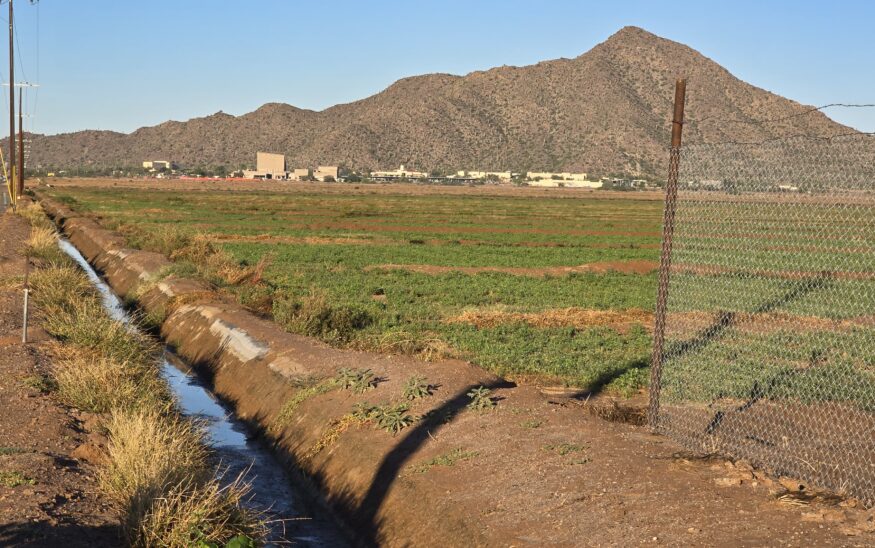
Water flows along a farm near Central Arizona College in Coolidge. (Joey Chenoweth/Arizona Capitol Times)
Democrats eye expanding rural groundwater protections
Jakob Thorington, Arizona Capitol Times//November 16, 2026//


Key Points:
-
Democrats have signaled they’re seeking to advance the Rural Groundwater Management Act in the upcoming session
-
With a Democratic trifecta, legislative leaders are considering expanding on the bill
-
Several Republicans also support the bill
As Democrats prepare to take control of both chambers of the Arizona Legislature in 2027, rural communities could be closer to gaining new groundwater conservation protections under a proposal that has drawn bipartisan support for years.
Gov. Katie Hobbs made rural groundwater management a priority during her first term, but Republican legislative majorities repeatedly declined to send her a measure that reflected recommendations from her bipartisan water policy council.
With Democrats having won a legislative trifecta, leaders are considering reviving and potentially expanding the Rural Groundwater Management Act. Incoming Senate President Priya Sundareshan, D-Tucson, who sponsored that Senate Bill 1742, said Thursday the original bill was written as a compromise measure for a Republican-majority Legislature.
Now, Democrats are reassessing what the legislation could accomplish with majorities in both chambers.
“We also do want to make sure that we are checking in with the local [elected officials] who have helped to support that bill,” Sundareshan said.”Because at the end of the day, the purpose of that bill was really to be tied into local issues and allow the locals in each of these areas the ability to control what their economy looks like, while at the same time, protecting groundwater.”
Expanding a middle-ground plan
The bill would provide applicable rural areas with more regulatory options under a groundwater management area designation. Currently, such tools are offered for areas designated as active management areas or irrigation non-expansion areas.
Active management areas impose stricter groundwater regulations, including limits on withdrawals and requirements tied to management and conservation goals. Irrigation non-expansion areas, meanwhile, prohibit irrigation of new agricultural acreage within designated groundwater basins.
SB1742 would offer a middle ground solution between the two approaches. It would allow the governor and legislative leaders from both parties to appoint a local council in communities seeking the new designation. Those councils would determine the conservation measures needed to address local groundwater conditions and community needs.
The proposal has attracted support from Democratic lawmakers and Republican officials in rural counties, even as Republican legislative leaders did not advance it while they held the majority.
Efforts to establish a rural groundwater management framework predate Hobbs’ administration. Former Kingman Republican Rep. Regina Cobb introduced similar legislation in multiple sessions between 2019 and 2022.
La Paz County Supervisor Holly Irwin has been among the measure’s Republican supporters.
“This is something that I’ve hoped for the past 10 years,” Irwin said. “I’m really hopeful that we can get both parties to the table with willingness to work towards constructing a bipartisan bill that we can get passed.”
A need for conservation
Other state leaders say groundwater conservation is crucial as the state looks for alternative water sources to offset reductions in Colorado River supplies.
Terry Goddard, president of the Central Arizona Water Conservation District within the Central Arizona Project, said water providers outside the state want to see Arizona conserve its existing water supplies.
“If we’re looking at outside investment, which I think we always have to, the way to attract outside investment is not to say that we’re now eating our seed corn,” Goddard said. “There’s a lot of support for protecting rural Arizona from overpumping.”
Sandy Bahr, director of the Sierra Club’s Grand Canyon chapter, said she supports expanding the rural groundwater management act lawmakers drafted to make more areas of the state eligible.
She said proposals have called for placing the entire state within an active management area because creating boundaries has often increased groundwater pumping in areas just outside protected zones.
“Sen. Sundareshan has certainly shown that she understands what the problems are,” Bahr said. “She’s ready to dig in and do the hard work of moving things through, and with them in the majority, they can actually get something stronger through.”
Sundareshan said the groundwater bill may not be ready at the start of the legislative session, since Democrats are revisiting discussions now that they’re in the majority. But the bill is a priority for both House and Senate Democrats, as their candidates often heard it mentioned on the campaign trail.
“Water was one of the top three to five issues across the state that kept coming up,” Sundareshan said. “We are very committed to delivering what the voters were telling us they wanted to see.”