Sign In


 Free Newsletter

The art of organizing a delegation between Arizona and Massachusetts
By Carlos Alfaro, Guest Commentary//September 30, 2026//
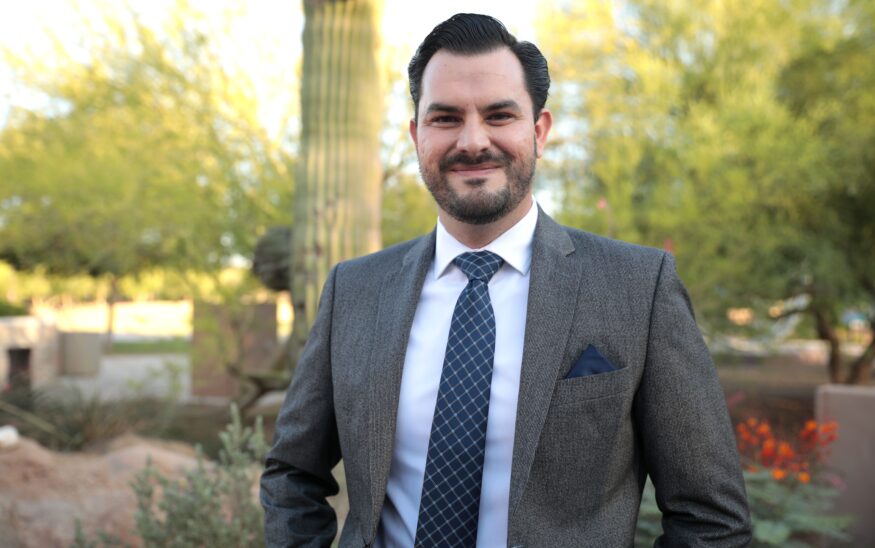
Carlos Alfaro
The art of organizing a delegation between Arizona and Massachusetts
By Carlos Alfaro, Guest Commentary//September 30, 2026//


There is a certain kind of frustration that comes from living in a country that cannot seem to be able to get along. It shows up in the way people talk about politics today, like disagreement is the whole story, like the average person has no real say in any of it, like the only two options left are pick a side or check out entirely.
We do not believe that. So we built a delegation instead.
We chose to go to Boston for the same reason we started Arizona Talks in the first place. Not simply because we love dialogue, but because we reject a specific idea that has taken hold in a lot of people, more of an emotional reaction than a real argument: that individuals cannot actually change anything anymore. That government is too big, the divide too wide, the other side too far gone, so why bother.
John F. Kennedy said something at his own inauguration that reads less like a historical artifact and more like a direct challenge:
“In the long history of the world, only a few generations have been granted the role of defending freedom in its hour of maximum danger… I welcome it.”
He was not describing an easy moment. He was describing a hard one, and choosing to meet it instead of retreating from it.
That is the whole philosophy behind Arizona Talks in one sentence. Things can look bleak, difficult and genuinely unfair, and the answer is still to engage, not to react with anger and contempt and retreat to our corners.
That belief is why we organize delegations the way we do. You do not build trust between two states, or between two people who see the world differently, from a podium or a press release. You build it in person, in hallways and hotel lobbies, over shared meals after hard conversations.
So we flew 25 Arizonans across the country, most of whom had never met each other before that week, and put them in rooms with Massachusetts leaders whose politics did not always match their own.
We walked the Freedom Trail, sat with biotech leaders in Kendall Square, talked with journalists at WBUR about the current threats to a free press, and spent an evening at the Harvard Kennedy School with three Arizonans, Justice Clint Bolick, Stephen Richer, and former Governor Doug Ducey, each with real ties to that institution, discussing what leadership costs when it is inconvenient and unpopular.
None of that was the point by itself. The point was what happened in between all of it, people who disagreed, staying in the room together anyway.
The point is that the false choice of left or right, us or them, does not actually describe most of the work that has to be done. It describes a fight. It does not describe a country. Somewhere underneath the fight, people are still trying to solve real problems, and most of them are willing to sit across a table and hear each other out.
That is something we don’t hear enough, and something the loudest voices in politics today seem determined to ignore.
We found that out again in Boston. It’s always easier to write off the people you disagree with as unreachable. It is harder, and more honest, to sit across from them and find out you are wrong.
We ended our week at the JFK Presidential Library, standing in front of his actual handwriting, the paper this country’s memory is made of. Kennedy had another line from that same speech that has stayed with a lot of us since:
“All this will not be finished in the first one hundred days. Nor will it be finished in the first one thousand days, nor in the life of this Administration, nor even perhaps in our lifetime on this planet. But let us begin.”
That line is not a consolation prize for people who could not finish the job. It is an argument for starting anyway, knowing full well you will not see it through. A more perfect union was never meant to be finished in one lifetime. It was always a direction, something every generation has to choose to walk toward again, usually without the comfort of knowing whether it will get there.
So here is the actual question, and it is not rhetorical. You will meet people who believe things you find wrong, maybe even contemptible. Everyone does. What will you do with that? Add to the noise, write them off, retreat to the people who already agree with you? Or do the harder, wiser, more American thing: sit down, stay in the room, and build something anyway.
We know which one we are choosing. Relationships exist now that did not exist a few days ago, and conversations between our two states are happening that were not happening before. None of it is finished. That was never the goal.
Let us begin.
Carlos Alfaro is Founder and Board Chairman of Arizona Talks Foundation.