Please ensure Javascript is enabled for purposes of website accessibility

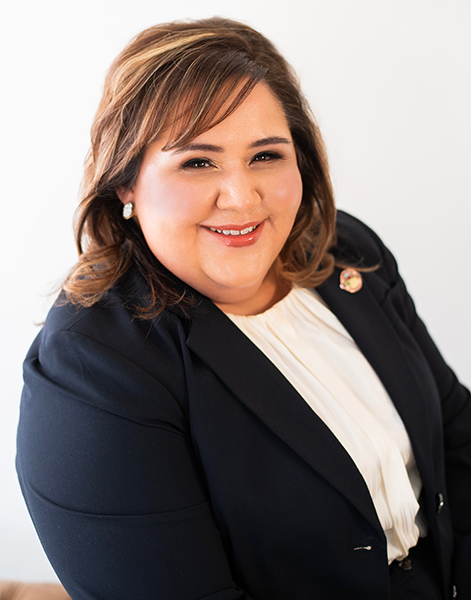
Joanne MacDonnell: pride, service and the Arizona Ombudsman’s Office

If there’s one state agency that guides people through the jungle of state government, it’s the Arizona Ombudsman Citizens Aide Office. And if there’s one person at that office who’s taken the responsibility as a point of personal pride, it’s Joane MacDonnell. 

Macdonell has served as the state’s ombudsman, an appointed role with a five-year duration, since her selection by Gov. Doug Ducey in 2022. As a fourth-generation Phoenician, she is no stranger to state government. 

She watched her dad serve as a state senator and representative and even helped him as a campaign manager in 1981. Her mom was a teacher and MacDonnell has those characteristics instilled in her as well. 

Barry Goldwater appointed her as a page at the Republican National Convention, and she helped Carl Kunasek when he ran for Senate President and eventually for the Arizona Corporation Commission. Later, she went to work as the Director of Corporations at the commission, shortly after it had just received a “horrible” rating from an audit. With her direction, the commission won “Agency Turnaround of the Year” in 1998

After her time at the commission, she joined the Ombudsman Office as Deputy Ombudsman in 2005 and worked under the first two ombudsmans. The Ombudsman Office is the smallest state agency with just 12 employees and two interns. Requesting help from the Ombudsman Office is free.

MacDonnell and her husband Phil live in Phoenix and have two grown children and one grandchild. 

This interview has been lightly edited for style and clarity.

What does the Ombudsman do?

We’re kind of like the scout team for the Legislature. We’re out there seeing what’s going on in government, that might be something they need to know about, because maybe the law says x and y, but it creates some unintended bad consequences, so we have to tell the citizen, “Well, it’s the law,” but then we can tell them (the Legislature) in our summaries that this is creating an unfortunate situation.

We classify it into three different areas. Everything starts as coaching. That’s what I meant about the librarian and air traffic control.
Sometimes that’s just guiding people, sometimes they haven’t been to the Ombudsman Office and we’ll load them up. We’ve got a huge resource page.

We’ll help you so you can have an effective conversation with (a state) agency. We have a whole written guide on our website about how to file effective complaints. It never helps to use all caps and an exclamation point.

Assistance is when we know something’s off track. Other times it’s investigations. We can do an investigation informally, depending on the topic, sometimes within hours, depending on what agency it is, how fast we can get things turned around, how fast we can get critical information to us. We try to do it informally when we can, and work with the agencies.

The other way is when we decide the complainant’s allegations or part of their allegations, some aspects are true, and then we go to the agency and we go, “We think this, this, this, that, that, are accurate, what they’re alleging. We have some recommendations to fix this. Do you want to handle it and fix it with them and try and make it right?” Ninety-nine percent of the time, the agencies go “Okay, yeah, we’ll make it right.
We’ll make it as right as we can.” 

But sometimes they dig in, and those are usually the cases where they’re saying “No, we think we’re right because of this, and this and this. And we disagree because of this and this and this.”
That’s when we’re backed into the corner of writing the formal reports. 

How does your office function in a divided state government? 

We’re strictly bipartisan, no politics, so we never work on campaigns. We’re kind of a safe place for every political persuasion because we don’t do politics. We help all the legislators with their constituents. If they’ve got a constituent that’s having trouble in government, it lets the legislators have some professional distance so they’re not appearing to poke around an agency and lean on an agency, but it gives (them) an independent group that can go in and take a look. They know that we’re just calling balls and strikes like an umpire.

I have never, ever had a legislator ask me to lean on an agency.
It’s supposed to be just independent, sift through the facts, and not care who’s best friend was with who or which agency.

What is the best part of your job? 

Helping people. Having a little bit of a counterweight to the very intimidating 800-pound gorilla that people are afraid of, which is the government. They often feel like, “Oh, I have to be a lawyer. I’ve got to be a lobbyist or I’ve got to be some big business person or some big nonprofit to be able to affect it.” You really don’t. You just have a good point and are on the right side. That I think is the best.

What is the most challenging aspect of your job or office? 

If you ask me in a couple of years, I might say AI, but then I might love it too, so I’m not sure. 

There’s a small group of anti-social people in the past year, we’ve had to contact police and the Department of Public Safety. Sometimes we’ve seen things of violent nature, sexual nature, totally antisocial, slurs, disparaging things, and not beyond the pale — we’ve been cussed out with the best of them. But just people who are really not good at what they’re sending and wanting to shock or behaving in such an antisocial way. That’s tough, especially if they go after one of your staff. 

The second worst is the folks that just want what they want, and kind of “damn the torpedoes” and whether they’re in compliance with the law, whether they’re being reasonable, they don’t care, and they behave badly while doing it. 

Your office serves as the middleman between state agencies and the public. What do you wish state agencies did better? 

Everyone, including the agencies, could have a very discernible, “What to do with a dispute in our agency.” It would also be helpful if people looked at our website. We’ve got all these suggestions about how to be a more effective complainant, because if you’re taking the time to express your unhappiness, you want to be heard, and you want the highest likelihood of prevailing, if the facts are on your side. 

Every agency should have its own diagnostic process and hopefully part of that is the internal ombudsman office. It should be on the same floor or very near to where the director is, because if they’re doing their job right, they should be spotting the issues as they arise. 

I think it would be very helpful for the agencies if they look at their internal ombudsman as an opportunity to reverse engineer, “How did we get here?” I’m a firm believer in educating people. Most folks, if you extend them the kindness of a full explanation, they don’t have to guess. 

My last recommendation would be, “Don’t live with a bad law.” That’s one of our jobs, to point out when you’re acting contrary to law, but you don’t have to live with it.

2 GOP lawmakers propose scrapping sales tax on electricity to benefit customers

Key Points:
  • Bill targets $2.3 billion in taxation that some lawmakers consider overcharges 
  • If approved, the state would lose $687 million in tax revenue
  • Attorney general calls the plan “a scam”

Saying electric customers paid too much for years, two Republican lawmakers have a plan to pay it back — sort of — over the next 20 years.

But the $2.3 billion that Reps. David Marshall of Snowflake and Ralph Heap of Mesa want to recover would not come from the utilities that collected the money. Instead, it would come out of the money the state would have otherwise collected in sales taxes on customer bills — a move that could cut state revenue by more than $687 million.

Heap defended the plan.

“We want to do things to help the ratepayers,” he told Capitol Media Services.

“I think that’s one of the chief responsibilities of the corporation commissioners,” Heap continued, saying ratepayers “have had little defense over the past couple of years.”

But there’s a political component to all of this.

Marshall and Heap are running this year to be the GOP nominees for the two seats up for grabs at the five-member Arizona Corporation Commission, the public body responsible for setting utility rates. Recruited by Sen. Jake Hoffman, the chair of the Arizona Freedom Caucus, the two are trying to oust incumbents Kevin Thompson and Nick Myers, both Republicans.

Central to the claim of overcharging are rules adopted two decades ago. They set a target for utilities to obtain 15% of their power from renewable sources by 2025.

Utilities had separate requirements to meet energy efficiency standards.

More recently, the current commissioners — including Thompson and Myers — voted to scrap the standards, noting that most utilities already had met them.

By that time, commissioners said that the surcharges that utilities were allowed to collect to meet the renewable energy standards had reached $2.3 billion. And that is the money that House Bill 2269, proposed by Marshall and Heap, seeks to recover for consumers.

The method they have chosen is to eliminate the state sales tax paid by customers — added automatically to their utility bills — until as they say, the $2.3 billion — has been “paid back to Arizona residents,” or the end of 2046, whichever occurs first.

But it’s not exactly a refund.

Many of the customers who paid the extra cash utilities were allowed to collect are no longer here. Instead, the beneficiaries would be current and future customers.

“While we’re unsure of any legal way to get ratepayers’ money back, there are things we can do to help reduce costs today,” Marshall said in a prepared statement. “In my opinion, the next best thing we can do is to provide justice by eliminating taxes on electric and gas going forward.”

But here, too, there’s a political element.

Heap blames Kris Mayes, currently the Democratic attorney general and up for reelection this year, for the extra charges. Mayes, then a Republican, served on the commission and helped create the renewable energy and energy efficiency standards.

“Kris Mayes catered to outside special interests and adopted expensive renewable energy surcharges that cost ratepayers more than $2.3 billion over the last 20 years,” Heap said. What that created, he said, was a “special interest slush fund (which) also led to foreign-owned boondoggles like the Solana Generating Station.”

The plant, built by a Spanish company and opened in 2014, was designed to use sunlight to heat molten salt, providing electricity for several hours after sunset. While still online and delivering power to Arizona Public Service, it was beset by problems, including failing to deliver the promised power and various air quality violations.

Eliminating the sales tax could prove politically difficult: In the most recent fiscal year, utilities generated more than $687 million according to the Arizona Department of Revenue.

That point did not go unnoticed by Mayes.

In a statement of her own, the attorney general pointed out she is interceding in current rate hike requests by both Arizona Public Service and Tucson Electric Power, saying, “it would squeeze hundreds more out of Arizona families.

“Reps. Marshall and Heap are pushing a bill that would blow a hole in the state budget,” Mayes said. “That’s not relief, it’s a scam.”

And Mayes defended the renewable energy standards, pointing out it was an all-Republican commission that approved them. She called them “common-sense energy policies that cut pollution and created tens of thousands of high-paying jobs.”

The $687 million price tag, however, is the biggest barrier to the proposal.

Republican lawmakers already are advancing their own tax cut plan, one modeled after the “Big Beautiful Bill” approved last year by Congress. It has an annual price tag in the $440 million range.

But Marshall said that eliminating the sales tax on utilities — regardless of what happened in the past — is good public policy.

“Taxing electric and gas utilities creates a perverse incentive for the government to support increased rate hikes,” he said.

“If rates go up, the state gets more money,” Marshall said in his statement. “That leads some to view rate increases as a source of potential funds for their liberal pet projects.”

But Marshall did not immediately respond to questions about that claim, particularly as the commission approves rate increases without legislative input.

The legislation is set up so that when the sales tax exemption ends — either when the $2.3 billion has been reached or in 2046 — the levy would return automatically. At that point, Marshall said it would be up to the then-current lawmakers to decide whether to keep the exemption.

This Republican wants Arizona’s residential utility agency to focus on rural customers, not large utilities

Key Points:
  • Rep. Teresa Martinez wants the Residential Utility Consumer Office to reprioritize
  • RUCO declined to intervene in a rural water rate case at the Arizona Corporation Commission
  • Martinez says the agency needs to focus on small utility customers, not large ones like Arizona Public Service

A Republican lawmaker wants the state agency tasked with advocating for residential utility customers to reprioritize after it declined to assist the customers of a rural water utility. 

Rep. Teresa Martinez, R-Casa Grande, introduced House Bill 2113 to require the Residential Utility Consumer Office to intervene in rate cases at the Arizona Corporation Commission if a utility company attempts to increase rates by 100% or more. Martinez’s bill comes after RUCO was unable to intervene in the Picacho Water and Sewer Company rate case, which originally proposed a 125% increase in water rates and a 188% increase in sewer rates.

Martinez sent a letter to RUCO Director Cynthia Zwick in September regarding the rate case, after hearing from constituents that the agency had declined to intervene. Since then, Zwick said she has met with Martinez to discuss RUCO’s caseload and resource constraints, but Martinez still believes the agency should refocus its efforts. 

“RUCO is prioritizing the number of people rather than the amount of the proposed rate hike, leaving rural Arizona behind,” Martinez said in a statement. “Instead of fighting for the little guy facing 200 or 300 percent rate hikes, RUCO is concentrating its attention on larger population centers where proposed increases average around 15-20 percent. This is a fairness issue.”

Zwick told Martinez in an October letter that RUCO has the resources to intervene only in the largest utility rate cases that affect the most utility customers in the state, such as those for Arizona Public Service and Tucson Electric Power. After reviewing the Picacho cases, Zwick decided the agency did not have the bandwidth to get involved.

“It’s kind of been historic, but it’s certainly a decision that I’ve made independently and continue to support, which is we need to look at the large cases that have the most impact on the most customers,” Zwick told the Arizona Capitol Times. “(Those cases) require an incredible amount of time and attention.” 

A spokesperson for House Republicans said Martinez was not available for an interview, but in an October letter to Zwick, she criticized the agency’s decision to only take on large utility rate cases.

“If you did not prioritize rate cases by utility class alone, then your agency might have some additional time and resources available to dedicate to other, smaller utilities which may not require as many pages of testimony, as many days of hearings, or as many billable hours from consultants,” Martinez wrote.

RUCO has also received criticism from the Robson Ranch Task Force, created by the residents of the Robson Ranch retirement community in Eloy to oppose the Picacho Water and Sewer rate increases. Its leader, Raul Salmon, told the Arizona Capitol Times in December that he and other residents struggled to reach RUCO staff and were disappointed by the agency’s response.

“They go, ‘Well, you’re 1,800 houses this is small fry,’ but it’s not small fry to us,” Salmon said. “They’re going to double our rates and you’re looking at us like ‘What?’” 

The Robson Ranch Task Force instead pooled money to hire a Phoenix-based attorney to represent them in the rate case, which is still ongoing at the Corporation Commission. Small water and sewer companies often come into the commission asking for triple-digit rate increases, an issue that commissioners have been working to combat for decades. 

RUCO is not typically an intervenor in smaller water and sewer cases; instead, it intervenes in rate cases for larger companies like EPCOR and Global Water. Currently, RUCO is a party in five ongoing rate cases and anticipates intervening in two more this year, according to documents provided to Martinez. 

Zwick said RUCO would not be able to manage the workload created by Martinez’s bill, but she and her staff are still evaluating its impact on the agency. RUCO currently has nine employees and operates on a budget of nearly $1.6 million. 

“We would love to be able to enter into every case and represent every residential customer, but the reality is, we’re just simply unable to do that,” Zwick said. 

Arizona ratepayers aren’t paying for water — they’re paying for global investment capital

Scott McBeth

Recent coverage of proposed water and sewer rate increases for customers of Picacho water and wastewater utilities in Pinal County has framed them as “long-overdue” and as an inevitable correction after years without rate adjustments. 

That narrative oversimplifies the situation and misses the real story. 

What residents are being asked to pay for today is not aging pipes or overdue maintenance. It is a new ownership and financing model imposed after the acquisition of the local utilities by JW Water Holdings, backed by the international infrastructure investment firm CVC DIF. 

Same system. Very different economics. 

The water and sewer systems serving our community did not suddenly change overnight. The same pipes deliver the same water to the same customers. Service levels have not dramatically expanded. 

What has changed is the cost structure. 

Following the acquisition of Picacho utilities, projected operating expenses are set to increase by approximately $1.4 million, a 57% jump. This increase is not driven by new treatment plants, major system expansions, or emergency infrastructure failures. It reflects new layers of corporate overhead, management costs, and financing requirements associated with private-equity ownership. 

At the same time, the proposed financial model extracts nearly $2 million annually in operating profit, resulting in an operating margin of roughly 35%. 

Those numbers matter because they tell a very different story than “long-overdue rate adjustment.” 

Customers are underwriting investor returns 

Water utilities are regulated monopolies. Customers cannot choose a competitor. Revenues are stabilized by regulation, and financial risk is limited. That is precisely why utilities are regulated in the first place. 

When such a monopoly is acquired by a global investment fund, the economic priorities change. The utility must now support: 

  • Investor return targets 
  • Corporate and advisory fees 
  • Financing structures designed for international capital markets

None of these costs improve water quality, reliability, or public safety. Yet under the proposed rates, local households are being asked to absorb them. 

Simply put, the utility did not become more expensive to operate. The utility simply became more expensive to own. 

Calling this increase “long-overdue” implies that residents somehow failed to pay their fair share in the past. In reality, utility rates were largely sufficient for many years under the prior ownership model. Modest, fair and reasonable rate increases to cover increased operating expenses could and should be expected. The “rate shock” appears only after the acquisition and resulting capital structures which may prioritize international investor interests over Arizona consumers. 

This is not what regulation is meant to do 

Arizona’s regulatory system exists to balance two interests: ensuring utilities can recover reasonable and prudent costs, while protecting customers from monopoly abuse. 

The Arizona Corporation Commission has long recognized that ratepayers are not obligated to guarantee private investment strategies or subsidize acquisition-driven cost increases that primarily benefit investors. 

Ratepayers should not be financing: 

  • Acquisition premiums 
  • Elevated private-equity margins 
  • Returns flowing to international investment funds 

Especially when those costs did not exist before the ownership change and do not correspond to improved service. 

A broader question for Arizona 

This issue extends beyond one community or one rate case. As private-equity and infrastructure funds acquire more essential utilities, Arizonans should be asking a basic question: 

When water systems are owned by global investment firms, who is the utility really serving, the community, or the capital markets? 

Water is not a luxury good. It is not a speculative asset. It is a necessity of life and a foundation of Arizona’s future. 

Residents deserve honest coverage and thoughtful regulatory scrutiny that distinguish between legitimate infrastructure needs and financial models designed to extract value from captive customers. 

Framing these increases as “long-overdue” avoids that distinction. Arizona can and should do better.

Scott McBeth is a Pinal County resident with a career background in technology and business operations. He is currently a registered intervener in an Arizona Corporation Commission rate proceeding and focuses on analyzing utility cost structures, ownership models and regulatory impacts on ratepayers.

All financial figures cited are derived from publicly available filings in the Arizona Corporation Commission rate case. This commentary is offered as public policy discussion and is not intended to supplement the evidentiary record in any pending ACC proceeding.

Creating a Superior energy future

Mila Besich

For 150 years, the people of Superior built this town with their bare hands.

Our rural community was carved from the Superstition Mountains like the silver and copper mines that dot this area — an indelible link to both our past and future.

Now, as Superior experiences an economic resurgence brought about by industries old and new, our town continues to envision and chart its own path. This time, with energy.

Like water, access to reliable and affordable energy is essential to every Arizona community. Superior is growing. We remain a small town of roughly 2,500 residents, but our downtown district is buzzing. A new generation of travelers and tourists is discovering Superior and our unique shops, restaurants and beautiful natural surroundings — all less than an hour from metro Phoenix.

Mining is also a big part of our story, of course. Resolution Copper is prepared to create thousands of local jobs as it pulls enough copper out of the ground to supply an estimated 25% of North Americas copper demand. We are working hard to keenly target the development of affordable housing and recruitment of quality employers so there are more places to live and work for Superior families.

None of this is possible without affordable, reliable power.

To help provide the energy Superior needs to thrive, we have proposed to the Salt River Project a local parcel for the construction of a Battery Electric Storage System (BESS). The facility, when completed, will be capable of producing 100-150 MW for four hours at a time — enough to power more than 25,000 homes during peak demand on summer evenings. This energy will not only support Superior but also the surrounding areas that are growing in the East Valley and Copper Corridor. 

The beauty of a battery storage system like this is that it can be charged when demand is low (and power is less expensive) and utilized when demand and energy costs are high. That improves reliability and saves money on the power homes and businesses need.

Arizona has nearly 3,900 MW of operational battery storage, with plans to nearly double that portfolio by 2026. Already, Arizona is among the top three states in the nation in terms of deployed, utility-scale battery storage.

For Superior, battery storage means emission-free energy, construction jobs and millions of dollars in lease revenue over the life of the project. But SRPs broader network of customers will also benefit since the battery power is more than enough for Superiors current needs and will flow to the grid.

The need for more energy in our state is growing. Arizonas major utilities — SRP, Arizona Public Service and Tucson Electric Power — all broke records this past summer for peak demand. Energy consumption is forecast to keep climbing as our state grows and the economy demands more energy for manufacturing, data processing and other key industries. Rural Arizona must look at these energy opportunities, not only to serve its own residents but also to be actively engaged and leading to ensure the power grid is sustainable statewide. 

There is no one-size-fits-all plan to meet Arizona’s energy demand. We need coal, natural gas, nuclear power, renewables and other new technologies. Utility-scale battery storage is a critical part of the equation.

As Vice Chairman Nick Myers of the Arizona Corporation Commission said: Battery storage not only supports grid stability, it ensures that renewable energy is available into the evening when the sun isnt shining. Adding significant storage capacity is critical to maintaining a reliable and resilient grid.”

Its fitting, and Im proud that the people of Superior are helping lead the way by taking control of our own energy future.

Mila Besich was elected mayor of the Town of Superior in 2016, and re-elected in 2018 and 2022.

Southern Arizona to get new area code due to cell phone and robocall proliferation

Key Points:
  • Southern Arizona residents may get a new area code in five years
  • The 520 area code is running out of available phone numbers
  • Arizona’s Phoenix metro area may not need a new area code until 2047

Sometime in the next five years or so, some southern Arizona residents will find out that their new neighbors have a different area code.

But no current customer will get a new number.

All this is occurring because, mathematically speaking, the number of numbers available will run out in 2030 in the area that covers everything from Casa Grande and Florence through Tucson, west to the Pima County line and then south and east through Nogales, Sierra Vista and Douglas to the state line.

So the North American Numbering Plan Administrator will have to assign a new code.

The “why” of all is more complex.

“I think you’ve just seen technology explode and the ability to communicate with cell phones,” said Doug Clark. He’s the executive director of the Arizona Corporation Commission which is involved in ensuring there are sufficient phone numbers available in the state.

“A lot of children above the age of 10 have a cell phone,” Clark said, each with its own unique number. “My family has six cell phones.”

But that, he said, is just part of the problem. And the rest? Robocallers and spam callers.

“They can request a large pot of numbers so they can, for lack of a better word, disguise that they’re calling from Apache Junction or Casa Grande or some other location other than this is an 888 number, so it’s a spam call,” Clark said.

The only thing is, it isn’t just spammers who are doing this.

There are legitimate VoIP (voice over internet protocol) services that provide services to legitimate companies, including some of their business clients. Regardless of where they are located, they want caller IDs to show up as local numbers to appeal to local customers.

And often these VoIP carriers will get large blocks of numbers, perhaps 10,000 at a time.

Clark said his staff is working to separate the two.

“They’ve tried to be very aggressive with these companies that are requesting these large blocks of numbers,” he said. 

“We can’t deny them,” Clark said.

But he said his staff can discourage them.

“Some of it is by asking questions, ‘What are you using all these numbers for?’ and ‘Why do you need 5,000 numbers?’ and ‘Is this a spam calling operation, is this a robocalling operation?’ ” Clark said. “The legitimate folks who aren’t trying to scam anyone would say, ‘Yeah, I run a legitimate phone solicitation business and I use these phone numbers for that.’ ”

And then, he said, there are “nefarious organizations out there that want this as kind of an arm’s length between them and the customer,” individuals and companies who want to scam someone and then just move on.

So, how to separate them?

Clark said it starts with his staff asking those questions.

“Once you start asking those harder questions, some of the folks go, ‘Ah, these people are asking questions that I really don’t want to answer. I’ll go to another state or another area and try to get my numbers there, and that way I won’t have to answer some of these questions,’ ” he explained.

“It’s only us being nosy and a little persistent.”

It’s had some effect.

Clark said before that work began, it was estimated that the 520 area would run out of numbers in 2027. What this has done is buy the area three more years.

All this is a simple matter of math.

Theoretically, a 10-digit number should allow for 10 million possible individual numbers.

But many of these numbers can’t be used.

For example, you won’t find a phone number in an area that begins with 555. No phone number starts with 0 or 1. And the phone company reserves special services for others.

What that leaves, according to commission staff, are 792 prefixes, or potentially 7,920,000 numbers within any area code. And that’s the number that a split is designed to avoid hitting.

This is actually the second split for the 520 area.

The first split from the state’s original — and only — 602 area code came in 1995 when everything outside the Phoenix metro area got the new designation. But that lasted only until 2001, when residents and businesses in the northern and western parts of the state were moved again, at least electronically, into the new 928 area.

There is, however, one big difference in how the newest area code will be created in 2030, one that should make the shift less traumatic.

This time there will be no geographic split.

Instead, everyone who already has a 520 area code will get to keep it. But new customers will find themselves with a different area code — one not yet determined — regardless of where they live.

That means that, unlike prior splits, no group of current residents will need to notify family, friends and customers of a new phone number. But what it does mean is that homes and businesses that may be right next door to each other will have different prefixes for their calls.

The concept is not unique.

Los Angeles originally was all within the 213 area code. Now, residents and businesses in the downtown area and inner suburbs also have numbers beginning with 323 and 738.

The same is true in the Dallas area, where the original 214 area code now coexists with 469, 972 and 945 prefixes.

While 520 is the first part of Arizona getting an overlay, it won’t be the last.

Commission staffers figure that the 928 area code — the one in western and northern Arizona — is expected to run out of numbers in late 2037.

The Phoenix metro area is a different beast.

The 602 area code, left after 1995, eventually split into three parts: 480 for the Mesa, Tempe, Scottsdale and Chandler areas, and 623 for the West Valley, including Glendale, Peoria, and parts of Phoenix.

But since 2023, new phones in the area have been assigned numbers with any of those three codes, regardless of geography. And that has provided a bit of breathing room, with commission staff estimating the area won’t need another area code until late 2047.

Arizona’s small utility companies are decades behind on rate increases

Key Points:
  • A retirement community is fighting rate increases of 128% and 188% at the Arizona Corporation Commission
  • Rates for water and sewer service in the community have not been adjusted in more than 20 years
  • About 50 small water utility companies around the state have also not adjusted rates in over 20 years

In May, residents of the retirement community Robson Ranch near Eloy opened their water and sewer bills to find a notice that their utility rates would increase by well over 100% in the next year. For the community residents, the sudden increase was a shock. 

The company serving Robson Ranch, Picacho Water and Sewer, had been acquired by JW Water in 2024. Raul Salmon, a Robson Ranch resident, said a letter from the new owner promised not much would change.

“You open up the bill and there’s the little snake that’s going to bite you,” Salmon said of the proposed rate increases. 

JW Water told Robson Ranch residents that the large rate increases were necessary because Robson Ranch Communities, the previous owner of Picacho Water and Sewer, had not increased rates since both utilities were authorized by the Arizona Corporation Commission to serve the community in 1998 and 1999. 

Salmon said he and his fellow residents had no idea Robson Ranch Communities planned to sell the utilities and did not realize their rates hadn’t been raised in decades.

But the situation in Robson Ranch is not an uncommon one for the Corporation Commission, which regulates all public service utility companies in Arizona. In fact, 54 small water and sewer utility companies in Arizona have also not adjusted their rates in over 20 years, according to data provided by commission staff. 

When utilities delay rate cases for decades before asking the commission to adjust their rates, their customers ultimately bear the brunt of inflation, unrecovered costs and neglected utility infrastructure. The commission often has few mechanisms to protect customers from that rate shock, as public service corporations are legally guaranteed a fair return on their capital investments. 

How small water utilities work

In Arizona, small water utilities are generally defined as any utility company that earns less than $1 million per year, with some earning as little as $250,000 per year.

Water utilities are regulated by multiple entities in Arizona, including the commission, which oversees the business and rate setting aspects of companies that provide water and wastewater services. Over 400 water systems operated by nearly 350 companies are regulated by the commission, according to its website. 

Small water utilities are often owned by individuals or families in rural or less populated areas of Arizona, and some have as few as eight or as many as 1,500 customers. 

Utility companies in Arizona file rate cases to recover the cost of serving customers and establish a rate of return on investments. The commission recommends water utilities file rate cases every five to seven years to ensure rates accurately reflect the cost of service.

“When small utilities do not file rate cases for extremely long periods of time they will almost inevitably end up in a situation where their expenses and capital needs are difficult or impossible to meet,” a 2016 commission decision stated. 

Despite the commission’s recommendation, 92 water utility companies have not filed a rate case application in the last decade. Seventy small water utilities have filed in the last five years, while 64 have filed in the last five to ten years.

Why small water utilities avoid rate cases

For some utility owners, rate cases can be cost prohibitive. An average rate case usually requires a company to provide detailed information on its customers and assets, hire attorneys to represent it at commission hearings, and consult analysts and experts to determine what rates it can reasonably charge. 

Additionally, many small water utilities were created by individuals sometime between the 1950s and 1970s and the ownership was passed on to the next generation as those individuals retired or passed away. Often, the new owners have no knowledge or experience in running a utility company.

Briton Baxter, the current small water ombudsman and director of the commission’s utilities division, gave commissioners an even simpler answer during a hearing on Nov. 6.

“They are afraid of the commission, they don’t want to come to the commission,” Baxter said. 

Commissioner Lea Márquez Peterson said she has made it her mission to ensure the owners of the small water utilities understand that the commission truly is there to support them through rate cases, no matter how long it has been since their last rate adjustment.

“It’s very challenging for single operators or volunteers to operate a water utility in today’s regulatory environment,” Marquez Peterson said. “I have been a proponent of seeing either utilities come in (for a rate case) and … work with our small water ombudsman to repair the utilities or to sell their utilities, whatever it takes.”

The number of water utilities that haven’t filed rate cases in over 20 years has decreased since Marquez Peterson’s 2020 workshop — from 73 to 54. Additionally, data from commission staff indicates that eight companies are currently working with the small water ombudsman on rate cases.

The small water ombudsman has helped complete 42 rate cases since 2016, but Márquez Peterson and commission staff have noted that the commission lacks the resources to require every utility to file a rate case at once.

The customer impact

Picacho Water and Sewer Company was on the list of 73 utility companies that the commission identified in 2020 as being behind on rate adjustments by over 20 years. Now, the new owner is attempting to bring its rates into the 21st century.

According to filings from JW Water, an average customer’s water bill would rise from $33 per month to $67.83, while an average sewer bill would rise from $42 per month to $120.96. The rate case is currently ongoing, and the rates JW Water is differ from those ultimately approved by the commission.

JW Water says the increase is necessary to reflect the actual cost of serving Robson Ranch residents, investments needed to expand its water plant, and a fair rate of return. The company says its current rate of return on Picacho Water and Sewer is -2.15%

Salmon and a group of his neighbors formed the Robson Ranch Task Force to oppose the rate increase at the commission. He said the group is hoping the commission can phase in the increase over time and lower the required revenue the company is allowed to collect, among other things, to prevent rate shock. 

“There’s thing after thing that can bring that rate down for us and, as far as I know, (JW Water) is just not even willing,” Salmon said. “They have to have this money, which is ours, but they want our money because they’re entitled.” 

ACC greenlights energy agreement for TEP to power Project Blue data center

Key Points:
  • The Arizona Corporation Commission approved an energy supply agreement between Tucson Electric Power and the developers of a controversial data center
  • Developers of the data center have been scrutinized for the project’s secrecy
  • The vote comes after Tucson City Council rejected the project earlier this year

The Arizona Corporation Commission voted on Dec. 3 to approve an energy supply agreement between Tucson Electric Power and the developers behind a controversial proposed data center dubbed “Project Blue.” 

The data center is planned for development on unincorporated land in Pima County by Beale Infrastructure and Humphrey’s Peak Power. It has been the center of controversy in southern Arizona for most of 2025 in part due to the developers’ secrecy, their attempts to use water from the city of Tucson and Amazon Web Services’ recent exit from the project. 

After more than three hours of discussion and nearly two dozen members of the public urging a no vote during a Dec. 3 meeting, four of the five commissioners voted in favor of the energy supply agreement, which will allow TEP to provide electricity to the data center starting in 2027.

However, Commissioner Lea Márquez Peterson — the only commissioner who lives in southern Arizona — and Commissioner Rachel Walden both raised questions about Project Blue and TEP’s plans to protect residential utility customers from costs. Márquez Peterson ultimately voted in favor of the agreement alongside Commissioners Kevin Thompson, Nick Myers and René Lopez, while Walden was the lone vote against it. 

“I’m still wary about whether or not there is a data center at the end of this,” Walden said during the meeting. 

Given the immense public interest in the issue, commissioners noted that their vote was not on Project Blue as a whole, but on whether TEP is permitted to provide the data center with the electric generation it will require. At one point, Commissioner René Lopez seemed to scold members of the public in attendance for being wholly against data centers.

“Data centers are not the enemy,” Lopez said. “I know that they’ve become a pariah recently, but data centers are used by all of us.”

Thompson and other commissioners said they believe TEP has crafted adequate guardrails to protect residential customers in the event that the project does not come to fruition, and pledged to hold the company accountable if it attempts to pass costs on to those ratepayers.

“I will be the first one to cry foul in the event that that happens,” Thompson said.

According to an Aug. 25 filing from TEP, the data center is expected to come online in May 2027 and use 286 megawatts of energy daily by 2028. One megawatt is enough energy to power around 225 homes in Arizona, according to local utility companies.

Prior to the Dec. 3 vote, Walden, Márquez Peterson and Myers sent three letters to TEP requesting clarification on how the company would power the data center while ensuring costs are not passed on to residential utility customers. Staff for TEP wrote that the data center will be billed as a “high-load factor customer,” with special provisions outlined in the energy supply agreement that will protect residential customers.

Those include minimum billing requirements regardless of energy usage, a contract termination fee and a capacity ramp-up schedule. Beale Infrastructure has also pledged to pay for two new transmission lines that will be needed to provide electricity to the data center.

TEP executives said during the Dec. 3 meeting that the data center customer will ultimately decrease rates for other customers because it will “make a larger revenue contribution than the actual cost of the project.”

“We believe that we’ve got the gold standard special contract for a data center with existing resources and existing capacity that’s available,” said Erik Bakken, senior vice president and chief administrative officer at TEP.

TEP asked the ACC to approve the energy supply agreement just weeks after the Tucson City Council voted against annexing the land purchased by Beale Infrastructure for development of the data center. Tucson residents rallied against the annexation, which would have allowed the data center to use the city’s water supply to cool the building and equipment.

Before the annexation vote reached the Tucson City Council, the developers of the data center were criticized for attempting to move the project forward in secrecy. Project Blue discussions between Pima County and the developers have been ongoing since 2023, and the county has been under a non-disclosure agreement since 2024.

Part of that non-disclosure agreement meant members of the Pima County Board of Supervisors could not publicly say which company would ultimately use the data center. Public records first obtained by Arizona Luminaria revealed in July that Amazon Web Services was behind Project Blue. 

However, Amazon Web Services will no longer use the data center after the project switched to air-cooling rather than water-cooling, following the Tucson City Council vote. Representatives for Beale Infrastructure told commissioners they are confident they will find a user by the time the data center goes online in 2027.

The project does have some supporters, including the Arizona Commerce Authority, the Arizona Chamber of Commerce and Industry, and the Chamber of Southern Arizona. Those groups say the approval of Project Blue will create jobs and attract more businesses — and data centers — to the state. 

If the data center expands in the future, which developers say is not out of the realm of possibility, TEP and any eventual customer will need to come before the commission for a new energy supply agreement.

Barry Aarons: Legendary lobbyist tells all

With 55 years of experience lobbying at the state Capitol, Barry Aarons, with his signature bow tie, is one of the most recognizable lobbyists in Arizona. From starting as a page after graduating from Arizona State University, to working for the Arizona Corporation Commission to former Gov. Fife Symington’s office and finally starting his own lobbying firm, Aarons’ impact on Arizona history and intimate knowledge of public policy make him distinct among the state’s highest ranking politicos. 

The questions and answers have been edited lightly for style and clarity.

Take me back to when you first started working in this field. What got you interested in it?

You know, nobody says “I want to be a lobbyist” when I grow up. When I came out of college, I had worked for the Republican legislative campaign committee, and I remember after I was about to graduate from college — I was just short of my 20th birthday — and I went to the fellow who would become the Arizona speaker of the House, a fellow named Tim Barrow, and said, “I need a job.” He said, “Well, I can make you a page in the House.” They paid me $102.49 a week and I thought I’d died and gone to heaven. I was actually going to be paid to be in the center of politics. I had been a page and then the legislative liaison for a couple of agencies, and I had gotten to know the people at what was then Mountain Bell Telephone, which was before the breakup of the Bell system. And they hired me, sent me up to Colorado, where I had all eight states that we had in the old Mountain Bell company. I was there for about a year and a half, and then the fellow who had been the lobbyist for Mountain Bell retired. Shortly thereafter, they asked me to come back and be the “Number Two” here in Arizona, and I’ve been doing it ever since. So I’ve been doing this for 55 years.

You’ve spoken before about growing up in the Bronx and your father. What did your dad do when you were a kid?

He graduated from Harvard Law School in 1932, and he went to work for Warner Brothers Pictures, where he handled negotiations and contracts with the movie stars. They dragged him out of his office kicking and screaming at age 75. I’ll be 75 next month. There’s a message there. He was always interested in politics. We were the kind of family that all sat around the dinner table and he would talk about politics and he’d make me read at least one story from the front page of The New York Times before I could read the sports pages. New York Times front page stories go on forever. 

Who is the biggest star your dad worked with? 

He signed Humphrey Bogart to his Warner Brothers contract. He signed the Three Stooges to their Warner Brothers’ contract. There was a rule in the contract that they all had to be present and sign at the same time, so they got on a train from New York to Chicago and they played (with) him overnight. They’d get two of them in a compartment. You go out to find the third one, you bring him back and one was missing. He said, “I’m going to get fired. I couldn’t get them all in the room.” He trudged back to the compartment about an hour before they were supposed to get into Chicago station, and he opens the door and they’re all there.

What was it like working as Gov. Symington’s legislative director?

Oh, a lot of highlights and then a lot of lowlights, too. For somebody in my position as a lobbyist and relatively young at the time, it was great. You always want to be able to work at the seat of power. You get in the morning at 7:00-7:30, and there’s a pile of stuff waiting for you. Everybody’s always your best friend when you’re on the Ninth Floor. And, at the end of the day, the pile is still there and you don’t know where the day went. You know, and it’s 7:30-8:00 at night, you’re saying, “Jesus Christ, what did I get done today?” I mean, I was busy the whole day running, running, running. He had a very successful legislative program and got charter schools passed. We were one of the first states to do charter schools. He was very proud of that. He made reductions in the personal income tax. He would have liked to have eliminated it completely, but every year we got a little bit. Of course, we had the luxury of having, except for that first session, really solid Republican majorities with really strong young people in leadership. And because of that, you’re able to work with them and negotiate with them, and everybody gets what they want and so on. 

Do you have a particular legislative session that stands out to you as a lobbyist?

Back in 1983, we did not have statewide 911. You were risking your life if you were in a place that didn’t have 911. Mountain Bell had some money at the Corporation Commission that was left over from a refund — about $25 million. So we decided that if we got that $25 million and could get it away from the commission’s hands, we could use it to develop the system. And then, if we had an ongoing revenue stream, we’d be able to keep it going forever. We decided the best thing to do was to put a small tax — I think we put a nickel on every local exchange line. I’ll never forget we decided we were going to do a little survey research to see how the public would react to having to pay an extra nickel so they could have 911 and what we found was the public was overwhelmingly supportive of paying an extra nickel for statewide 911. 

What’s something you think people don’t realize about lobbying?

I don’t think people realize how much goes into building relationships with legislators. Some people believe that lobbying is all about wining and dining. When I was at Mountain Bell, they kind of discouraged “overdoing it,” so we say. They would say, “Look, the rule is, if you can’t write his name down, don’t take him to lunch.” In other words, we are going to report anything. I’ll never forget I went to a state chamber for golf tournaments and the drink cart came around and I bought a member of the House a beer for $4. I reported it, and one of you guys called and said, “Hey, did you really report this?” I said yeah, we have a rule that if I spend money, then I’m required to report it. So, because of that we were kind of disincentivized to do a lot of heavy duty wining and dining, if you will.

What’s the most rewarding part of the job for you?

There’s obviously this good feeling that you get when a bill is passed and you see the governor signs it. You can say, “We did that.” It’s also a rewarding part when we’re fighting like hell against something and we finally see it defeated. But I think the most rewarding thing is when a group of people who have disparate interests are able to come around a table and talk about what their wants and needs are and they throw out ideas for each other and they do one of three things. The things that we know we’re never going to agree with, we throw them out. The things that we know we’re going to agree on, we say, OK, we’re all going to agree with that. The stuff that’s in the middle, we negotiate out. And there’s much more legislation that happens that way than gets rammed through by a powerful lobbying organization against an underrepresented organization. 

What advice do you have for lawmakers this upcoming session as they face a tight money outlook?

Well, the money issue is relatively simple. Life is easier when you don’t have any money because then it’s just easier to just say no to everybody. It means you’ll have to make some tough decisions. It means that they’re going to have to maybe find some new revenue sources. I’m not advocating for a tax increase or anything like that, but they’ve got to start thinking about how they grapple with some of the issues that are taking more money. This year’s going to be a challenge. I think with water it’s going to be a challenge. Every year is different. The scariest years I’ve ever seen were the COVID years. From a standpoint of being a lobbyist and trying to get anything done, it was horrible. And then in ‘21, we did it all over again, but they had these rules. You waited outside, you got ushered in so you could speak, and then you got ushered out of the building — the craziness that went on that year. 

I want to ask about the bowtie, your signature look. What do you like about it?

There’s three reasons to wear a bow tie. Number one, I’m asthmatic. You don’t have to tie a bow tie as tight around your neck. Number two, you never spill soup on a bowtie. You can wash your shirt but once you spill on a tie, it’s gone. You can dry clean it, but it’ll never look the same. The third reason is it has become my signature, and I kind of like it.

Energy efficiency programs save ratepayers money

Diane E. Brown

When family and friends gather over the holiday season, energy efficiency isn’t typically a hot topic. Perhaps this year it should be.

With conversations likely to include affordability, notably the increased cost of groceries, gas and everyday products, energy efficiency provides more than talk. Energy efficiency programs via utility offerings, such as smart thermostats and more efficient A/C units, help combat rising electricity costs and reduce the need to build capital-intensive power plants — saving ratepayers energy and money, year after year after year.

Whether the energy and cost-saving programs continue to provide substantial financial benefits for ratepayers is in the hands of the Arizona Corporation Commission. In early December, the commissioners will be faced with deciding whether to support the APS proposed energy and cost-saving programs. And soon after, action is expected on Arizona’s very successful Energy Efficiency Resource Standard. The commission should extend and expand Arizona’s Energy Efficiency Standard and approve the APS Demand-Side Management Plan, which incorporates energy efficiency and demand response programs.

Arizona’s Energy Efficiency Standard

Since the inception of Arizona’s Energy Efficiency Standard, over 2,000 MWs in cumulative peak demand energy savings by APS, TEP, and UNSE customers have contributed to the capacity and reliability of the grid. As such, Arizona’s Energy Efficiency Standard has reduced the need for costly expenditures on additional generation, resulting in lower bills for ratepayers and more than $1.7 billion in net economic benefits.

Prepared at the commission’s request, Elliott D. Pollack & Company’s Economic, Small Business and Consumer Impact Statement (EIS) largely makes the case for extending and expanding Arizona’s Energy Efficiency Standard. Pollack & Company concluded that without it “residential customers may face higher consumption and long-term utility bill increases”; “low-and moderate-income households – especially in rural areas could be disproportionately affected”; “higher peak demand may require additional infrastructure investment”; and “the loss of regulatory guidance may create uncertainty around how energy efficiency is treated in resource planning and cost recovery proceedings.”

Arizona’s Energy Efficiency Standard not only contributes to reliability and economic benefits, including for ratepayers, it also provides regulatory certainty, peak energy load reduction, job creation, benefits to local economies, transparency, and meaningful opportunities for public participation.

APS Demand-Side Management Plan

Over the years, APS has developed and implemented programs proven to save energy and money for its customers. Through publicly accessible plans and compliance reports, as required by the commission, APS ensures that specific information on programs, energy savings, expenditures, and other key data points can be scrutinized. Along the way, measures have been updated and/or changed as necessary to accommodate grid impacts, new technology, and ratepayer interest.

At a time when too many Arizonans are struggling to pay their monthly bills, and another significant rate increase is being considered, APS’s energy efficiency offerings can provide relief for all its ratepayers through avoiding additional strain on an increasingly overstretched and expensive grid. The utility’s latest proposed energy and cost-saving programs have been vetted by stakeholders and established as cost-effective by commission staff.

Commissioners are often faced with difficult choices. Fortunately for them, saving money for ratepayers by extending and expanding Arizona’s Energy Efficiency Standard and approving the APS Demand-Side Management Plan should be no-brainers.

Diane E. Brown is executive director of the Arizona PIRG (Arizona Public Interest Research Group) Education Fund. She also serves as a consumer advocate on APS, SRP and TEP stakeholder groups.

Arizona court blocks proposed utility rate pricing process

Key Points:
  • Arizona Court of Appeals blocks expedited rate hike requests by utilities
  • The court requires the Residential Utility Consumer Office to legally prove the rate hike process is a formal rule
  • Investor-owned utilities have a monopoly, requiring commission approval for rate hikes

The state Court of Appeals has thrown a hurdle into the Arizona Corporation Commission’s efforts to expedite rate hike requests.

In a unanimous decision, the judges said the Residential Utility Consumer Office should be given the chance to prove that the process for reviewing rate increases adopted by the all-Republican commission last year is a formal rule.

What makes that important is that the three-judge panel refused to accept the commissioners’ argument that what they had done was a mere change in policy — something they were free to do without the extensive hearings and public input required for a new rule.

More to the point, the ruling means that pending rate hikes cannot use the commission-adopted truncated process until there is a final decision on whether it acted illegally.

All that is a win for the Residential Utility Consumer Office.

Cynthia Zwick, the agency’s director, said the evidence shows that the process adopted by the commission — and pushed by utilities — could result in higher rates for customers, all without the opportunities they now have to object. The new ruling gives her attorneys a chance to keep that new process from being implemented.

But this may not be the last word.

“The ruling of the court is being studied,” said Thomas Van Flein, the commission’s general counsel. He said that it could “allow challenges to rate decisions and commission orders outside of the legislatively established strict appellate timelines.”

“Accordingly, review from the Arizona Supreme Court may be sought,” Van Flein said.

Central to all this is that investor-owned utilities have a monopoly. They get to provide their services — mainly electricity and gas and, in some cases, water and sewer — without competition.

The trade-off is they have to get commission approval for their rates.

That has traditionally been done by utilities submitting data of costs and investments from a prior “test year.” The commission reviews those expenses to ensure their accuracy and ultimately allows new rates based on a reasonable return on their investment.

More to the point, each rate hike has to go through the same, often lengthy process — one that is designed to allow those who object to be heard, review corporate books and even cross-examine the company’s witnesses.

Last year, however, the commission adopted “formula rate plans,” allowing for annual adjustments based on a pre-established formula. Commissioners argued that this new system allows utilities to recover their costs more promptly while passing along any savings or benefits directly to consumers.

Nick Myers, vice chair of the five-member panel, said all this can benefit consumers.

“We listened to our constituents when they said they did not like the large bill increases every four to five years,” he said, saying they were more interested in something that tracks with inflation.

Myers also pointed out that regulators examine rates only when utilities seek higher rates. He said this system of annual adjustments, “affords the opportunity, but certainly not the guarantee, that on some years the rate could actually go down.”

And he said there are benefits for ratepayers because utilities can recover their costs quickly, with the protection of “annual true-ups” to reflect actual costs. Reducing the lag between rate requests, the regulators argue, can lower financing costs which should be passed on to consumers.

Zwick said her office isn’t buying it.

“Based on the information that we have, over time the customer will ultimately pay more than if we were operating under the traditional method,” she told Capitol Media Services.

“The whole ‘gradualism’ argument really doesn’t hold a lot of water with us,” Zwick said. “And it’s not holding a lot of water with residents either.”

The more immediate question — and the one before the courts — is whether the commission should be able to unilaterally change the process of how rates are set without going through the formal rule-making process. 

“The implementation of formula rates and the ability of the utilities to request this kind of mechanism, it is a sea-change in terms of how regulation has been done by the Corporation Commission for about 100 or so years,” said Sarah Cool, an attorney for RUCO. And that process, she said, should not be easily scrapped.

Until now, when a utility wanted to increase its rates it would file an application with the commission. That, said Cool, led to a process where interested parties — including customers and RUCO — could intervene. That meant not just an opportunity to be heard, but also to intervene and question witnesses and the company itself about its claim for needed rate relief.

By contrast, she said, “formula” rates do require the utilities to meet certain conditions.

“But that rate increase could occur without a full rate case,” she said, on a shortened timetable, based on limited information.

“They change just not how quickly the commission is reaching a decision but how it’s reaching a decision,” Cool said. “We find those to be very meaningful.”

She also said it throws hurdles in the path of consumers — and even RUCO — who would have to keep an eye on these annual adjustments — adjustments she said would be based on data supplied by the utility, “but not necessarily supported by written testimony.”

Cool said that, given the shortened timeframes and limited information, it will be more difficult to research a company’s claim, obtain access to corporate records, and argue that a utility’s annual adjustment is unjustified.

And there’s something else: Having to review every utility’s proposed adjustment every year could overwhelm the ability of even her office to do its job and ensure that residential customers are being protected.

None of this process the commission wants to impose, Zwick said, is good for ratepayers.

“We’re pretty sure that, every year, customers are going to see a rate increase,” she said. And not just for electric and gas, but also for water and wastewater, for those individuals served by privately owned utilities.

Nothing in the new ruling necessarily means the commission won’t eventually be able to implement its “formula rate plan,” the one RUCO finds objectionable and contrary to consumer interests.

But it does give RUCO the chance to argue the regulators should not be allowed to do that without going through the formal rule-making process. And that process, said commission attorney Dan Pozefsky, is important to ensure that anything the commission adopts includes details on how the process would work, filing requirements — and that there is more public input on all of that.

Arizona Corporation Commission not exempt from agency rulemaking statutes, court rules

Key Points:
  • The Arizona Court of Appeals ruled the Arizona Corporation Commission is not exempt from the Administrative Procedures Act
  • The APA outlines state agency rulemaking processes, and attorneys for the commission argued the statutes did not apply
  • The case stems from a 2024 policy statement that opponents argued violated the APA and challenged in court

The Arizona Corporation Commission is not exempt from the Administrative Procedures Act, according to a ruling from the Arizona Court of Appeals. 

Attorneys for the commission have argued that the regulatory body does not have to engage in a rulemaking process to implement a formula rate recovery mechanism for utility companies because it is exempt from certain portions of the APA. The APA is a set of state statutes that outline how state agencies can create rules and enforce policies. 

Three Court of Appeals judges disagreed with attorneys for the commission in a Nov. 21 ruling.

“…exempting the Commission from one article of the APA does not indicate the legislature intended to exempt it from the APA broadly,” Judge Michael J. Brown wrote. “Indeed, if the Commission was already exempt from the APA, specific exemptions … would be meaningless.”

The director of the Residential Utility Consumer Office, one of the plaintiffs in the case, celebrated the decision in a statement provided to the Arizona Capitol Times.

“We are thrilled with the opinion of the Court of Appeals,” Cynthia Zwick said. “RUCO believes it is in the best interest of all utility customers that the commission is not exempt from the Administrative Procedures Act and RUCO can bring this claim. We look forward to further proceedings in superior court.”

The ruling stems from a lawsuit over a December 2024 policy statement that would allow utilities to apply for formula rate plans, bypassing the traditional rate case hearing process that utilities go through to implement rate changes. According to the Nov. 21 ruling, at least eight utility companies have already requested formula rates. 

State entities, including the Attorney General’s Office and the Residential Utility Consumer Office, alongside other stakeholder groups, criticized commissioners for adopting the change through a policy statement rather than a formal rulemaking process. A rulemaking would require stakeholder input, economic impact studies and a public comment process, while a policy statement requires only a vote of the commissioners. 

Additionally, opponents of the policy statement argued it would allow utilities to obtain rate increases with little oversight from commissioners or commission staff to ensure utility customers are protected. 

After the commission rejected RUCO’s request for a rehearing on the policy statement, the agency appealed the decision to the Maricopa County Superior Court. Judge Susan Pineda dismissed the case in June, writing that RUCO’s case was based on “the erroneous premise that the Commission’s actions are subject to the APA.”

RUCO filed a special action to the Court of Appeals in July, arguing the commission was “weaponizing” the superior court ruling to defend other controversial policy statements, like one related to transmission undergrounding that was challenged at the Governor’s Regulatory Review Council. 

The Court of Appeals did not weigh in on whether or not the policy statement should be considered a rule and instead sent that question back to the Maricopa County Superior Court for consideration. The appeals court also dismissed arguments from the commission and APS that RUCO’s filing was not timely because no utilities had been granted formula rates, and that the agency lacked standing because it was not a party to the docket under which the statement was approved. 

In a statement to the Arizona Capitol Times, the commission’s general counsel, Thomas Van Flein, said an appeal of the Nov. 21 decision may be on the table in light of the conclusions about the timeliness of RUCO’s lawsuit.

“The ruling of the court is being studied, but at this time it appears the practical impact of this ruling could be to allow challenges to rate decisions and commission orders outside of the legislatively established strict appellate timelines,” Van Flein said. “Accordingly, review from the Arizona Supreme Court may be sought.”

You don't have credit card details available. You will be redirected to update payment method page. Click OK to continue.