Please ensure Javascript is enabled for purposes of website accessibility

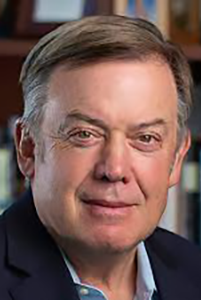
Gregg Leslie: A lifelong fight for the First Amendment

As the executive director of Arizona State University’s First Amendment Clinic, law professor Gregg Leslie has helped journalists navigate legal battles for decades. The clinic started in 2018, but Leslie’s work in practicing First Amendment Law dates back to 1994. Leslie, now at ASU, met with the Arizona Capitol Times to talk about his work and how he’s helping law students carry the torch. 

The questions and answers have been lightly edited for style and clarity. 

Tell me a little about your professional background?

After college and before law school, I was working as a journalist and I always knew I wanted to go to law school. In fact, I had deferred admission for one year while I kept working as a journalist, and I think that was a great experience because that just increased my interest in First Amendment Law. And so I went to work pretty quickly after law school for a nonprofit called the Reporters Committee for Freedom of the Press, which just does media law. We’d just sit there and answer a hotline that helps journalists who have legal problems. I did that for a long time and became the legal defense director of that organization and stayed there for 20 some years and really enjoyed it. Then, about the time I was thinking maybe it was time to look for a new challenge, I heard someone say that ASU was thinking of starting the First Amendment Clinic, and I said I’d love to do that. It’s very similar to what I had done before but a new approach to it, educating students to be the next ones to do the same thing.

Tell me about the First Amendment Clinic. What’s the scope of your work?

It’s such a broad topic because the First Amendment can affect so much. Every semester is a little different. Sometimes, we’re taking on civil rights cases like a guy who was crossing the street and for some reason had to flip off a police officer driving by on a motorcycle. That’s not necessarily behavior that has to be encouraged, but at the same time, it’s probably something you shouldn’t be arrested for. Was he arrested in retaliation for doing that or because he was jaywalking? Regardless of the topic, we reach out to the small communities and help those journalists who may just be blogging or writing for a Substack or even tweeting about local affairs – and they’re finding legal impediments to getting their job done. 

What were some of the interesting cases you worked on?

There was a period where a lot of journalists were being threatened with arrest and were actually arrested. Judith Miller from The New York Times spent a long time in jail to protect her sources and we were very involved in that case. There was a young reporter from Fox News who also was facing jail and we helped with her defense and she was so thankful that we had done that. I’m still in touch with her all the time. And there’s another young reporter named Vanessa Leggett who couldn’t prove she was a reporter so she wasn’t getting any deference from prosecutors or anyone, but she interviewed a prisoner just to write a story about it. We’re happy to say she’s a journalist. We were never big on saying you have to have a full-time job or you have to have some credential to be called a journalist. But some of the more controversial cases are always the most fun, too. Since I started here, we have represented Kari Lake in an Anti-SLAPP motion when she was sued for libel by Stephen Richer, the former Maricopa County recorder. Her comments were just that these two known problems on Election Day, she thinks they did purposely. If you disclose the facts you’re basing an opinion on, you shouldn’t be sued for libel and for a political discussion, I think you have to have that kind of leeway to discuss those issues. If everything that looks like a false fact can be the subject of a libel suit, you’re really going to put a chill on political speech. 

What makes the First Amendment so interesting?

It’s a standard to apply to everything. If you’re doing something to inform the public, it affects every other law that may be an impediment to doing that. There are questions all the time about whether a reporter should be charged with trespassing or failure to obey an order of police when they’re just trying to cover a protest. There’s an important public interest at stake in how those kinds of activities are covered and reporters need a lot of leeway. So you’re going in and saying, yes, there is an obligation to listen to police, but if you’re there to exercise your First Amendment rights, there has to be some allowance for the fact that the other side should have a greater burden to show that you were interfering with something. It really becomes a tool in a lot of cases and it’s just such an important tool. It kind of changes the presumption so that you’re not presumed to be doing something illegal. You’re presumed to be doing something to report to the public. 

What do you enjoy about teaching?

After a while, you feel like you’re doing a lot of things over and over, so you want to include more people and pass on the information you’ve gained. It’s always fun to talk to people who are just considering these issues for the first time and see the excitement build in their faces. It just becomes a more interesting way of going over the same material. 

What are the greatest challenges to the First Amendment in Arizona?

The funny thing is I think they’re the timeless challenges we’ve seen where people want their message to get across and they resent other people getting their message across. So, there’s a constant battle and we will always see things like a fight over who should prevail politically turning into a libel suit. That just doesn’t help anybody. Access is always a concern. There’s this tendency of judges sometimes to say, Oh, OK. Well, this part we don’t want to let the media report to the public so I’m going to close this part of the proceedings or something. Right now, like everywhere in the country, we’re seeing protests really become a big concern because in some ways, we always thought the law of protest was pretty well settled. But every protest has that bit that offends somebody enough to say, oh, those people should be arrested. Every 10 years, there’s some major movement that suddenly exceeds what other people think are the proper bounds of a protest, so we end up getting arrested and we end up getting these big fights that break out on the streets – and I’ve covered so many of those over the years. When I was on the reporters’ committee, every four years I went to the Republican and Democratic conventions because we knew there would be big protests and heated arguments. We’re just seeing that again more and more, rising up with the ICE demonstrations. The idea that you can’t protest the way the government is arresting people is really shocking. There are people who say you shouldn’t be able to protest because the act of protesting interferes with the arrest, and that’s just not the right way to look at it. You always have a right to protest.

Any final thoughts?

The First Amendment Clinic is different for us every semester, but we like to think we’re doing important work. I’d like people to remember that we’re here in case any concerns come up. If they see that there’s speech that is being restrained by the government, we’re here to fight that.

A good election features accuracy of results, Arizonans say in survey

Key Points:
  • A survey shows a majority of Arizonans value accuracy over speed in election results
  • Panelists encouraged people and candidates to learn about the election process to understand why results take longer
  • Some Arizonans said they’re willing to pay a little more in taxes to have a sound election system

Voters will head to the polls for the 2026 midterm elections, but what makes a good election? 

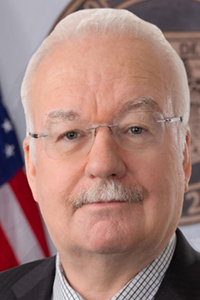
The question was part of the Arizona Capitol TimesMorning Scoop conversation. Sybil Francis, chair, president and CEO of the Center for the Future of Arizona, and Bill Gates, executive director of the Arizona State University Mechanics of Democracy Lab, said education and voters’ priorities are key to a good election. Steve Goldstein moderated the conversation. 

“I think the take away really is to look at the data, look at what Arizonans care about and let’s find a way to make sure that we’re able to act on those priorities,” Francis said. “To listen to the kind of more partisan, politicized conversation is maybe one part of reality, but I think another really important reality, is what actually, Arizonans care about and what do they consider to be a good election?”

The most important core principle for Arizonans is accuracy, according to a survey by the Center for the Future of Arizona. About 96% of respondents said every ballot counted and counted accurately is essential. 

“Accuracy is what matters, and there are certain things that we have to do to achieve accuracy,” Gates said. “That means that we may have to downplay other things such as speed or even convenience.”

To put it another way, 69% of Arizonans surveyed said voting should be easy and convenient for eligible citizens to vote early, by mail and on Election Day and agreed it was worth it to ensure every voter has a chance to vote, even if it means waiting longer for final results. 

In contrast, only 31% said election results should come sooner, even if it means limiting convenient voting options, such as ending ballot drop off a few days before Election Day to speed up results. 

The question shows that people like the convenience of the current system, even if it takes longer for results to be called, Gates said. It also raises the point that elections, like many things in politics, involve trade-offs, he added. 

A viewer asked if media coverage has unintentionally trained voters to expect results on Election Night and if that expectation contributes to distrust when counting takes longer. Gates said people need to be educated about the process and election workers have to be trusted. 

“Unfortunately, we’ve had some candidates over the past few cycles who have said that this must be a sign of some sort of incompetence by our election officials perhaps, or some sort of fraud that’s going on,” he said. “I look to our candidates as much as I look to the media to be more responsible on this and to come meet with the election officials. Find out what the timeline looks like as opposed to frankly speaking about things that maybe they don’t fully understand.”

One “stunning” result from the survey was that 87% of respondents would support increased funding to improve how Arizona elections are run. While Arizonans often hear a lot about cutting taxes, people are willing to pay a little bit more in taxes for things they care about, Francis said. 

Gates agreed, adding that they’re willing to invest in great elections and that it would also lead to an improved voter experience. 

“Of all the people who work in counties, people in elections are some of the lowest paid. And I know I’m biased here working in the field, but that’s just wrong,” he said. Gates is a former Maricopa County supervisor. “Let’s start paying people who are in elections the money that they deserve for a tough job, that is critical to our democracy.”

A $25 minimum wage for Phoenix airport service workers is a win for Arizona

U.S. Rep. Yassamin Ansari

The cost of living crisis isn’t letting up and hardworking Arizonans tell me they’re scared. I get it. Rent is soaring. Groceries cost more than ever. People are worried about how they will get through each week. All because of a broken system that is rigged against them —- where the rich get richer by pushing costs up and wages down for the rest of us. Our friends, neighbors and communities are struggling so billionaires and corporations can keep lining their pockets.

Nowhere is that more clear than at Phoenix Sky Harbor International Airport. 

As the representative from Arizona’s 3rd district — home to Sky Harbor — I know our airport very well. It connects Arizonans to the world. It bustles with baseball fans in the spring. It’s the first place snowbirds escaping the bitter cold can feel the warm air. It’s the gateway for tourists heading off to explore the Grand Canyon and everything our beautiful state has to offer.

Arizona is a dream destination and our airport is thriving. It’s one of the busiest in the country and helps fuel the major airlines’ record revenues. But behind the scenes, that dream is becoming a nightmare for the majority Black, brown and immigrant airport service workforce who are paid poverty wages and fighting to survive.

While airline CEOs make millions, most airport service workers make just $14.70 an hour. Try living off of $14.70 an hour — you can’t. 

I’ve gotten to know many incredible airport workers over the years. 

Charles Adams, for example, has dedicated 35 years to helping passengers. He only makes the minimum wage. Let me repeat that. After 35 years, he is still only paid the minimum wage of $14.70. He’s made air travel possible for thousands who use wheelchairs and has been recognized by the City of Phoenix for his outstanding service. But a pin on his lanyard doesn’t pay the rent or electric bill. He lives paycheck to paycheck and has to decide between paying to keep his home cool or his health care. 

Charles is not alone. He is part of a broken system that puts greedy corporations over people. Workers servicing billion dollar airlines should not be homeless or go hungry. Airlines like American have failed to ensure that the airport workers who they depend on are paid what they deserve. The Phoenix City Council needs to take action to keep our airport safe by supporting a $25 minimum wage to ensure these essential workers can put food on the table and keep a roof over their head. 

I was angered to learn from a recent survey that 24% of workers at Sky Harbor fear housing loss and 16% experience homelessness. That is unacceptable. These workers are essential members of our community. They deserve a living wage of $25 an hour —- what it takes for a single adult with no children to live comfortably in the Phoenix metro area in 2025, according to the Massachusetts Institute of Technology’s Living Wage Calculator

This isn’t just the right thing to do. It’s also smart economic policy.  A new study from Arizona State University found that establishing a $25 wage floor at the airport would inject millions of dollars into our local and state economy, and transform thousands of essential airport service jobs into good-paying ones.

Airport workers are struggling to pay rent, keep the AC on, and afford everyday goods and services, because profits and CEO compensation are more important to the major airlines.

It’s time workers got their fair share of the profits they help create.

A $25 wage floor would give workers a fair shot at a decent life, where they can afford food and rent, and better support their families. It would help create stable jobs, keep our airport safe and make travel easier for passengers. 

That is a win for workers, our airport, and our beautiful state.

If airlines won’t pay their fair share, then the Phoenix City Council must act to keep our airport safe by raising the standards and supporting a $25 an hour minimum wage, like cities have done in the majority of American Airlines’ hubs. Airlines need to support the workers who help them make billions by making sure they’re paid what they deserve. This is our chance to hold airlines, and all airport employers, accountable to the people of Arizona and drive economic growth for our city.

Before being elected to Congress, I served on the Phoenix City Council. I supported airport service workers in their fight for protection from the extreme heat. I will continue to fight to ensure they are paid living wages and are safe on the job.

Yassamin Ansari is the Democratic U.S. Representative for Arizona’s 3rd Congressional District, serving since January 2025.

Charli Turner Thorne: A lifelong learner and teacher

As the winningest coach in Arizona State University’s women’s basketball history, Charli Turner Thorne has nothing to prove. After working as a head coach for 25 years, Turner Thorne retired in 2022 but remains active in the basketball community. Now, as a scout for the Phoenix Mercury and an ASU professor, Turner Thorne has wisdom to shed on how to be an adaptable coach for players and how to win. 

Answers have been lightly edited for clarity. 

What makes a good coach?

Coaching is a very interesting profession. You don’t go to school for it; there are no qualifications. That’s why, when you talk to people who have played either in high school or sometimes in college, sometimes they’ve had some really bad experiences because we don’t have to get certified. Almost anybody can coach. 

Coaching – it’s who you played for, who you’ve worked with, and your own self education. That pretty much dictates how good you are. 

Being able to have high EQ, to motivate at individual and team levels makes a really effective teacher. Those are kind of the things that define the most successful coaches, just emotional resiliency and a level of toughness, where you can work every day, and be there for people.

What do you like about coaching? 

It’s a pretty cool profession in terms of all the hats you wear. Not only do you have to have a lot of different skills – hard and soft – but you also have to continually grow and adapt. The game continues to change. 

When you coached, what was a common goal for you? 

My goal as a coach was to just kind of grow our women into strong, caring leaders and just be prepared to do anything that they want to in life. That was our biggest objective. And yes, we won it. We had to win games. We were very blessed in that way. We had good people and good staff, and we won plenty. Then we got to really impact these young women, which was the thing that was by far the most gratifying.

Why is it important to empower young players as a team? 

It is important because when you look at our society right now – all the hatred, not being for other people and people not even being able to vote for the greater good – it’s brutal. Maybe we have too many people playing individual sports, or not playing at all. But sports does that. It teaches you the power of a team. It teaches you how to give yourself over to the greater good and it’s unbelievable.

How do you manage leading your team on and off the court?

If you don’t care about your people. If you’re not leading them as people first, when it’s on the court, you can’t squeeze them. So I thought we really did a good job through our 25 years, my coaching staff and different people just doing that – running our program, having that culture where people generally cared about each other and had each other’s back no matter what and trusted each other. Then, we had fun.

How did you navigate assisting your players with the mental health challenges that may come with being a student athlete?

As coaches, we still have to coach mindset. We have longer term daily relationships with (the players). Obviously, we had to be there every day to support them, but I think having a life coach helped. I guess one of my strengths is that I’m pretty good at being in tune with my own people. I can walk into the gym and just notice when someone’s energy is off for something.

As a coach, it’s a lifestyle. It’s not a job. You work every day of your life. It’s kind of like a parent, but you don’t have three kids, you have 13, and you have all your staff. It’s really stressful, and it’s exhausting.

What about coaching women’s basketball at ASU is different from other schools?

We’re never going to be one of the most funded programs in our conference. We’re a very saturated sports town, with gorgeous weather during our season. So our competition for fans is brutal. That’s the footprint of all the top women’s basketball programs in the nation: a great fan base.”

Sports brought you into this world of prestige. Can you speak on that? Or what has basketball done for you?

I mean, I am so indebted because I would never have been able to go to Stanford. We didn’t have any money for me to go to college. I would have been just taking out student loans and having a job. It allowed me to go to my dream school. From there, I went to the University of Washington, and I was a graduate assistant coach, and they paid for my grad. I got my master’s in educational psychology and was kind of testing the waters in academia and coaching. Then I got offered a job.

And then I’ve traveled all over the world. My kids have traveled all over the world. I always say travel is kind of an education unto itself. That was something that basketball afforded me, but it also afforded my players and my own kids.

Is learning a big theme in your life?

I am a life learner. Yeah, I love to learn. I love to read. I have to admit, I get a little down the rabbit hole with coaching, because you just start grinding constantly, recruiting and preparing, and taking care of all your players. But yes, I had a phenomenal career in terms of just being able to experience a lot of different things.

Who is someone you learned from throughout your career? 

I played for Tara VanDerveer, who is one of the all-time great college women’s coaches ever. Tara was very visionary, like she just saw where the game was going, and she kept adapting. That was her superpower, in terms of just always being ahead of the curve.

I took a number of things from Tara in terms of her overall organization, the different goal sheets that we had and the structure that we had.

Where did you grow up?

I grew up in Southern California, so the San Fernando Valley. I lived in Missouri for three years while my father was getting his doctorate at the University of Missouri, and then we moved back because he actually got a position at UCLA. So, I was born in Orange County and grew up in the San Fernando Valley. Tragically, I’m a Valley Girl.

How did you find your love for athletics when you were growing up? 

Back then, there weren’t opportunities for girls, so (my parents) did not push me into sports at all. I had an older sister, and then my brother, and then me. I tended to hang more with my brother. I was a latchkey kid, and he had baseball practice, so I just had to go practice one day. They put me out there, and then they called my mom. They said, “Hey, would your daughter like to play?” So, I just kind of found myself there because there weren’t as many girls’ leagues and stuff like that. So I did play with the boys.

Where did you go to school? 

When I was growing up, they were trying to integrate schools, so they were going to cut girls’ sports to fund schools. I love sports, and I really wanted to play high school sports. So I asked my mom if I could go to a private school so that I could make sure sports were there. We looked into it and found that Alameda High School had really good girls’ sports. It was a Catholic high school, and I was not raised Catholic, but it was good for me. We had really good sports teams. I was recruited to play women’s basketball at Stanford, and I received a full scholarship.

Did you encourage your kids to play sports when they were young? 

Yes, I did. We were into it with sports, but not just because I thought they were going to be professional athletes. I just value what sport does. You get friends and learn all the life skills.

Was it difficult to balance family and coaching? 

It was very hard to balance; it was hard to be present, I was there, and I did my best. Truthfully, I probably wasn’t as present as I wanted to be at times, and then just didn’t have as much time. So I was a big advocate for quality time over quantity because that was my life.

What is life for you now, after coaching for ASU?

I’m living my best life right now because I’m doing gigs. I have all these gigs that I really enjoy. I’m learning new skills. I scout for the Mercury, so I travel all over the country, watch practices and games, and write reports for them. I also do some pro scouting for them as well. Then I teach, I’m just teaching one class a semester.


Barry Aarons: Legendary lobbyist tells all

With 55 years of experience lobbying at the state Capitol, Barry Aarons, with his signature bow tie, is one of the most recognizable lobbyists in Arizona. From starting as a page after graduating from Arizona State University, to working for the Arizona Corporation Commission to former Gov. Fife Symington’s office and finally starting his own lobbying firm, Aarons’ impact on Arizona history and intimate knowledge of public policy make him distinct among the state’s highest ranking politicos. 

The questions and answers have been edited lightly for style and clarity.

Take me back to when you first started working in this field. What got you interested in it?

You know, nobody says “I want to be a lobbyist” when I grow up. When I came out of college, I had worked for the Republican legislative campaign committee, and I remember after I was about to graduate from college — I was just short of my 20th birthday — and I went to the fellow who would become the Arizona speaker of the House, a fellow named Tim Barrow, and said, “I need a job.” He said, “Well, I can make you a page in the House.” They paid me $102.49 a week and I thought I’d died and gone to heaven. I was actually going to be paid to be in the center of politics. I had been a page and then the legislative liaison for a couple of agencies, and I had gotten to know the people at what was then Mountain Bell Telephone, which was before the breakup of the Bell system. And they hired me, sent me up to Colorado, where I had all eight states that we had in the old Mountain Bell company. I was there for about a year and a half, and then the fellow who had been the lobbyist for Mountain Bell retired. Shortly thereafter, they asked me to come back and be the “Number Two” here in Arizona, and I’ve been doing it ever since. So I’ve been doing this for 55 years.

You’ve spoken before about growing up in the Bronx and your father. What did your dad do when you were a kid?

He graduated from Harvard Law School in 1932, and he went to work for Warner Brothers Pictures, where he handled negotiations and contracts with the movie stars. They dragged him out of his office kicking and screaming at age 75. I’ll be 75 next month. There’s a message there. He was always interested in politics. We were the kind of family that all sat around the dinner table and he would talk about politics and he’d make me read at least one story from the front page of The New York Times before I could read the sports pages. New York Times front page stories go on forever. 

Who is the biggest star your dad worked with? 

He signed Humphrey Bogart to his Warner Brothers contract. He signed the Three Stooges to their Warner Brothers’ contract. There was a rule in the contract that they all had to be present and sign at the same time, so they got on a train from New York to Chicago and they played (with) him overnight. They’d get two of them in a compartment. You go out to find the third one, you bring him back and one was missing. He said, “I’m going to get fired. I couldn’t get them all in the room.” He trudged back to the compartment about an hour before they were supposed to get into Chicago station, and he opens the door and they’re all there.

What was it like working as Gov. Symington’s legislative director?

Oh, a lot of highlights and then a lot of lowlights, too. For somebody in my position as a lobbyist and relatively young at the time, it was great. You always want to be able to work at the seat of power. You get in the morning at 7:00-7:30, and there’s a pile of stuff waiting for you. Everybody’s always your best friend when you’re on the Ninth Floor. And, at the end of the day, the pile is still there and you don’t know where the day went. You know, and it’s 7:30-8:00 at night, you’re saying, “Jesus Christ, what did I get done today?” I mean, I was busy the whole day running, running, running. He had a very successful legislative program and got charter schools passed. We were one of the first states to do charter schools. He was very proud of that. He made reductions in the personal income tax. He would have liked to have eliminated it completely, but every year we got a little bit. Of course, we had the luxury of having, except for that first session, really solid Republican majorities with really strong young people in leadership. And because of that, you’re able to work with them and negotiate with them, and everybody gets what they want and so on. 

Do you have a particular legislative session that stands out to you as a lobbyist?

Back in 1983, we did not have statewide 911. You were risking your life if you were in a place that didn’t have 911. Mountain Bell had some money at the Corporation Commission that was left over from a refund — about $25 million. So we decided that if we got that $25 million and could get it away from the commission’s hands, we could use it to develop the system. And then, if we had an ongoing revenue stream, we’d be able to keep it going forever. We decided the best thing to do was to put a small tax — I think we put a nickel on every local exchange line. I’ll never forget we decided we were going to do a little survey research to see how the public would react to having to pay an extra nickel so they could have 911 and what we found was the public was overwhelmingly supportive of paying an extra nickel for statewide 911. 

What’s something you think people don’t realize about lobbying?

I don’t think people realize how much goes into building relationships with legislators. Some people believe that lobbying is all about wining and dining. When I was at Mountain Bell, they kind of discouraged “overdoing it,” so we say. They would say, “Look, the rule is, if you can’t write his name down, don’t take him to lunch.” In other words, we are going to report anything. I’ll never forget I went to a state chamber for golf tournaments and the drink cart came around and I bought a member of the House a beer for $4. I reported it, and one of you guys called and said, “Hey, did you really report this?” I said yeah, we have a rule that if I spend money, then I’m required to report it. So, because of that we were kind of disincentivized to do a lot of heavy duty wining and dining, if you will.

What’s the most rewarding part of the job for you?

There’s obviously this good feeling that you get when a bill is passed and you see the governor signs it. You can say, “We did that.” It’s also a rewarding part when we’re fighting like hell against something and we finally see it defeated. But I think the most rewarding thing is when a group of people who have disparate interests are able to come around a table and talk about what their wants and needs are and they throw out ideas for each other and they do one of three things. The things that we know we’re never going to agree with, we throw them out. The things that we know we’re going to agree on, we say, OK, we’re all going to agree with that. The stuff that’s in the middle, we negotiate out. And there’s much more legislation that happens that way than gets rammed through by a powerful lobbying organization against an underrepresented organization. 

What advice do you have for lawmakers this upcoming session as they face a tight money outlook?

Well, the money issue is relatively simple. Life is easier when you don’t have any money because then it’s just easier to just say no to everybody. It means you’ll have to make some tough decisions. It means that they’re going to have to maybe find some new revenue sources. I’m not advocating for a tax increase or anything like that, but they’ve got to start thinking about how they grapple with some of the issues that are taking more money. This year’s going to be a challenge. I think with water it’s going to be a challenge. Every year is different. The scariest years I’ve ever seen were the COVID years. From a standpoint of being a lobbyist and trying to get anything done, it was horrible. And then in ‘21, we did it all over again, but they had these rules. You waited outside, you got ushered in so you could speak, and then you got ushered out of the building — the craziness that went on that year. 

I want to ask about the bowtie, your signature look. What do you like about it?

There’s three reasons to wear a bow tie. Number one, I’m asthmatic. You don’t have to tie a bow tie as tight around your neck. Number two, you never spill soup on a bowtie. You can wash your shirt but once you spill on a tie, it’s gone. You can dry clean it, but it’ll never look the same. The third reason is it has become my signature, and I kind of like it.

New law prohibits overnight protests and encampments on Arizona campuses

Key Points:
  • New law bans overnight encampments on campus
  • Law was introduced in response to pro-Palestinian and anti-Israel protests last year
  • State university officials say current campus use policies align with the law

Activists and students who want to protest on campus will no longer be able to set up encampments and stay overnight.

A new law outlaws unauthorized encampments and directs university and community college presidents to immediately call for the dismantling of temporary shelters and to contact law enforcement if protesters don’t comply. 

Failure to comply could result in a charge of criminal trespass.

The law also applies to encampments that remain in place for a prolonged period.

The legislation was introduced last session by Rep. Alma Hernandez, D-Tucson, as House Bill 2880 and signed into law by Democratic Gov. Katie Hobbs despite opposition from fellow Democrats.

Hernandez previously said she introduced the bill in response to the pro-Palestinian and anti-Israel protests last year, and talked about Jewish students facing harassment while on campus. 

Democrats who opposed the measure pointed to examples of pro-Palestine protestors across the country receiving harassment, including those who’ve had their visas revoked for participating in protests.

Critics of the law argued that it could violate protesters’ First Amendment rights and expose them to targeted harassment based on their political beliefs.

“It really just feels like another form of weaponization and militarization on campus,” said Alberto Plantillas, central regional director for the Arizona Students’ Association and a graduate student at Arizona State University.

The majority of Republicans in the House and Senate supported the bill when it passed through the Legislature, although some expressed concern that conservative groups could be targeted under the law.

However, the legislators who supported the law said it was needed to protect Jewish students during what they viewed as a time of increased antisemitism.

Current state laws allow students and faculty to protest “within the limits of reasonable viewpoint and content-neutral restrictions on time, place and manner of expression.” Campus protesters are already prohibited from engaging in “unlawful” activities that disrupt the functioning of a university or college.

Spokespeople for the state’s three public universities highlighted existing campus policies that already aligned with the law.

The campus use policies for the three universities already ban encampments and offer guidelines for using public forums and outdoor activity space, erecting temporary structures, posting flyers, using campus spaces at night, and complying with university officials and law enforcement.

The University of Arizona’s campus use policy serves as a “mechanism” to support First Amendment rights, said university spokesman Mitch Zak.

“Our approach is that the dean of students office addresses any violations first and (the University of Arizona Police Department) is kind of a support should things escalate,” Zak said.

Zak said the university’s dean of students office aims to be proactive in preserving student First Amendment rights, and looks to work with student groups to make sure they don’t violate campus policies when they protest.

He recalled protests that occurred last year without any encampment issues.

“We’re constantly engaged saying we want to help you exercise your free speech on campus and the campus use policy is designed to do that,” he said. “That connectivity is critical so hopefully we’re not in a position where we have to enforce the campus use policy but … the campus use policy helps enforce opportunities for free speech.”

Plantillas said officials at the state’s universities haven’t appeared to be receptive to student input regarding protest policies and free speech issues.

“It seems like they continue isolating themselves from any student input on this,” he said.

Plantillas said he believes the crackdowns on campus protests and First Amendment violations will only continue to worsen.

“I think the students are just seeing this as a normalization process, but a lot of them have already seen the worst on campus,” he said. “I think that’s something that’s very disgraceful.”

Spring cleaning: Arizona’s big 3 universities announce renovations

Key Points: 
  • All three Arizona public universities provided updates for projects across their campuses.
  • ASU plans to spend $676 million on seven projects, UofA is spending $335 million on four projects and NAU has a $98 million budget for two projects. 
  • The Arizona Board of Regents has approved the Annual Capital Plans for each Arizona public university. 

Arizona State University, the University of Arizona and Northern Arizona University disclosed their annual capital plans for the 2026 fiscal year on Sept. 11, revealing plans for deferred maintenance and renovations across all three campuses. 

The three public universities presented their 2026 financial budgets to the Arizona Board of Regents during a University Governance & Operations Committee meeting, where updates on thirteen various projects were approved. 

“House cleaning is never fun, and ABOR is cleaning out its attic,” Doug Goodyear, the chair of ABOR, said. “It’s all for the greater good and will make us a more modern and better institution.”

ASU’s fiscal plan stood as the largest physically and monetarily with seven projects totaling $676 million:

  • The ASU Health Building will cost $200 million and will be 200,000 gross square feet. The building will serve as a headquarters for ASU Health at the Downtown Phoenix campus. The plans for the building were previously brought up to ABOR in September 2024 and were approved. It’s expected the building will be finished in June 2028. The project will be debt-financed with speed bonds and system revenue bonds. 
  • The McCain Center is expected to be a $187 million project, financed through federal grants and university funds. The center will be 68,000 gross square feet, situated on top of the site where the ASU Community Service building is located, next to Papago Park. The building will have a museum, library and academic spaces. The building is scheduled to be completed in January 2028.
  • The PSH Research Laboratory Complex Modernization has a $115 million budget and will renovate the Bateman Physical Sciences Center on the ASU Tempe Campus. The project will focus on renovating labs and office spaces inside the building. Planning for the project began in 2024, with construction projected to start in December 2025. ABOR originally approved the project in September 2024.
  • ASU’s Polytechnic Student Union Expansion is projected to cost $66 million and will go toward renovating and expanding the Student Union on the Polytechnic campus. Planning for the project began in August 2023, and construction is expected to start in May 2026. ABOR originally approved the project in September 2024 and will be debt-financed. 
  • Costing $51 million, the East Athletic Village Tennis and Track and Field Facilities will focus on moving the Tennis and Track and Field facilities to the ASU Athletic Village in Tempe. The project was submitted to ABOR in 2024, and is expected to be completed in June 2027. The project will be debt-financed with system revenue bonds. 
  • MTW Partnership Renovations is a $42 million project meant to renovate equipment and lab spaces at MacroTechnology Works at the ASU Research Park in Tempe. This project was not previously pitched to ABOR. The project will be debt financed with system revenue bonds and is projected to be completed in December 2028. 
  • The Central Plant Transformer and Switchgear has a budget of $15 million. The project will replace five 12,700-volt substation transformers inside the central plant at the Tempe campus. The project was approved in September 2024 and will be debt-financed. Construction is expected to begin in May 2026 and will be finished in December 2029. 

“We’re the largest producer of STEM majors in the United States,” Michael Crow, ASU president, said in the meeting. “So this is a critical contribution that we’re making to the Arizona economy.”

For the UA, its Annual Capital Plan consisted of four projects, totaling over $335 million: 

  • The Center for Advanced Molecular and Immunological Therapies project was presented to the board in both 2023 and 2024, costing $232 million. The project serves as an expansion of the Phoenix Bioscience Core. It will consist of a 205,000 gross square foot facility housing the Center for Molecular and Immunological Therapies and other laboratory support services. The building will be in Downtown Phoenix. Construction for the building started in 2024 and is projected to finish in May 2027. The project will be funded using system revenue bonds, ARPA funds, gifts to finance and tuition. 
  • The UofA introduced the Athletics Deferred Maintenance and Infrastructure Upgrades project to the board for the first time, revealing a total cost of $50 million. The project will invest in upgrading UofA sports facilities and is expected to be finished by June 2026. The project’s budget will be financed through SPEED revenue bonds. 
  • At $33.5 million, the Deferred Maintenance project will be responsible for campus-wide repairs and updates. It is expected to be finished by June 2026. $30 million of the project will be financed through system revenue bonds, with $3.5 million funded through institutional sources. 
  • The Student Experience and Student Union Deferred Maintenance has a $20 million budget and had no prior action from ABOR. The money will go toward modernizing the building and promoting sustainability. Like the other deferred maintenance project from UofA, the project is projected to be finished in June 2026. The project will be funded using SPEED revenue bonds. 

“Our Student Union was constructed in 2001, which was the last time it had major systems upgrades,” said Josh Wright, the chief facilities and planning officer at the UofA. “We’re interested in looking both within the union as well as campus wide and places that our students can gather, … share experiences and really build that campus culture that we are seeking.”

Northern Arizona University, being the smallest school of the three, had two major projects to fund, totaling $98 million: 

  • The New Nursing Building project will cost $50 million. The project was previously proposed to ABOR. Located at the North campus science corridor, the building will be the new location for the College of Nursing and will serve to assist NAU’s expansion into health care. The project will be debt-financed through system revenue bonds and is expected to be completed by August 2029. 
  • The Cline Library project will cost $48 million, addressing critical maintenance needs and upgrades. The project was previously brought up to the board and will be finished by December 2028. The project will be debt-financed with system revenue bonds. 

“We would better optimize the space within the Cline Library and relocate from the Babbitt academic building, which would be demolished into this building,” said Bjorn Karlen Flugstad, the senior vice president and CFO of NAU. “Cline Library would be open throughout this entire process.”

University representatives at the ABOR meeting reported how federal policies have affected student enrollment and grant money. 

The three universities are facing challenges in recruiting out-of-state students for the upcoming year due to government stressors. 

“Our biggest disruption in the process is disruption of the visas because of political changes,” Crow said. “We’ll work our way through those. Those will eventually be solved.”

Correction: This story has been updated with the correct figures for the projected costs of the ASU Health Building and the Center for Advanced Molecular and Immunological Therapies.

Feds outline ‘necessary steps’ for Colorado River agreement by 2026 but no recommendation yet

Federal water officials made public on Wednesday what they called “necessary steps” for seven states and multiple tribes that use Colorado River water and hydropower to meet an August 2026 deadline for deciding how to manage the waterway in the future.

“Today we show our collective work,” Bureau of Reclamation Commissioner Camille Calimlim Touton said as she outlined four proposals for action and one “no action” alternative that she and Biden’s government will leave for the incoming Trump Administration — with formal environmental assessments still to come and just 20 months to act.

The announcement offered no recommendation or decision about how to divvy up water from the river, which provides electricity to millions of homes and businesses, irrigates vast stretches of desert farmland and reaches kitchen faucets in cities including Denver, Salt Lake City, Albuquerque, Las Vegas, Phoenix and Los Angeles.

Instead it provided a bullet-point sample of elements from competing proposals submitted last March by three key river stakeholders: Upper Basin states Colorado, Utah, New Mexico and Wyoming, where most of the water originates; Lower Basin states California, Arizona and Nevada, which rely most on water captured by dams at lakes Powell and Mead; and more than two dozen Native American tribes with rights to river water.

“They’re not going to take the any of the proposals,” said Sarah Porter, director of the Kyl Center for Water Policy at Arizona State University. “The federal government put the components together in a different way … and modeled them to provide near-maximum flexibility for negotiations to continue.”

One alternative would have the government act to “protect critical infrastructure” including dams and oversee how much river water is delivered, relying on existing agreements during periods when demand outstrips supply. “But there would be no new delivery and storage mechanisms,” the announcement said.

A second option would add delivery and storage for Lake Powell and Lake Mead, along with “federal and non-federal storage” to boost system sustainability and flexibility “through a new approach to distributing” water during shortages.

The third, dubbed “cooperative conservation,” cited a proposal from advocates aimed at managing and gauging water releases from Lake Powell amid “shared contributions to sustain system integrity.”

And a fourth, hybrid proposal includes parts of Upper and Lower Basin and Tribal Nations plans, the announcement said. It would add delivery and storage for Powell and Mead, encourage conservation and agreements for water use among customers and “afford the Tribal and non-Tribal entities the same ability to use these mechanisms.”

The “no action” option does not meet the purpose of study but was included because it is required under the National Environmental Policy Act, the announcement said.

In 2026, legal agreements that apportion the river will expire. That means that amid the effects of climate change and more than 20 years of drought, river stakeholders and the federal government have just months to agree what to do.

“We still have a pretty wide gap between us,” Tom Buschatzke, Arizona’s main negotiator on the Colorado River, said in a conference call with reporters. He referred to positions of Upper Basin and Lower Basin states. Tribes including the Gila River Indian Community in Arizona have also been flexing their long-held water rights.

Buschatzke said he saw “some really positive elements” in the alternatives but needed time to review them in detail. “I think anything that could be done to move things forward on a faster track is a good thing,” he said.

Democratic U.S. Sen. John Hickenlooper of Colorado said in a statement the alternatives “underscore how serious a situation we’re facing on the Colorado River.”

“The only path forward is a collaborative, seven-state plan to solve the Colorado River crisis without taking this to court,” he said. “Otherwise, we’ll watch the river run dry while we sue each other.”

Wednesday’s announcement came two weeks after Democratic Vice President Kamala Harris lost the election to Republican former President Donald Trump, and two weeks ahead of a key meeting of the involved parties at Colorado River Water Users Association meetings in Las Vegas.

Kyle Roerink, executive director of the Great Basin Water Network advocacy group, said “snapshots” offered in the announcement “underscore the uncertainty that is swirling around future river management as a new administration prepares to take office.”

“The river needs basin-wide curtailments, agreements to make tribes whole, a moratorium on new dams and diversions, commitments for endangered species and new thinking about outdated infrastructure,” he said.

Buschatzke declined to speculate about whether Trump administration officials will pick up where Biden’s leaves off. But Porter, at the Kyl Center, said the announcement “shows an expectation of continuity.”

“The leadership is going to change, but there are a lot of people who have been working on this for a long time who will still be involved in the negotiations and modeling,” she said.

___

Associated Press writer Amy Taxin in Santa Ana, California, contributed.

Students picking up more of the state university funding

A bid by the Board of Regents for another $732 million to finance state universities is rekindling a decades old fight about the financial responsibility of state taxpayers versus how much of the cost should be borne by students.

In their new request, the board says the money is necessary to maintain programs in the face of prior funding cuts

More to the point, they want all of that to come from taxpayers versus students. And that is a 75% increase from current state funding.

The chairman of the Senate Appropriations Committee said that’s not going to happen. Sen. John Kavanagh said the estimates of tax collections for the coming fiscal year suggests that no one – including the universities – are going to be able to get additional funding.

John Kavanagh
Sen. John Kavanagh

But regardless of the state’s overall financial situation, the Fountain Hills Republican who has been in the Legislature since 2007, said he thinks the university system is getting what it needs from state taxpayers. And he said that for a large share of Arizonans, higher education remains quite affordable and free for many.

That affordability, however, is not due to state aid, which has been decreasing for decades.

Instead, universities, facing years of cuts in public dollars, are making up the difference by recruiting more out-of-state students who pay three times as much as Arizona residents. And they now make up 51% of those enrolled, double what it was two decades ago.

Regent Fred DuVal said that a $732 million increase is necessary because of cuts that universities already have had to make in critical programs like the Arizona Teachers Academy. That covers tuition and mandatory fees for each year that a student commits to teaching in an Arizona school.

Also cut this year, DuVal said, was funding for the Arizona Promise Program, a guaranteed scholarship program for eligible Arizona residents to ensure all tuition and fees are covered at the state’s public universities.

Some of that can be attributed to the fact that pretty much all state agencies had to take a 3.5% year-over-year funding cut to balance the state budget.

But for universities, the actual dollar cut was bigger: State funds went from $1.1 billion two years ago to a bit more than $1 billion last school year, to the current $970 million figure.

Arizona State University President Michael Crow, who says his school lost $24 million this fiscal year as what he called a direct result of “recent budget cuts passed by the state Legislature and signed by the governor,” is not mincing words.

Last week he said the cuts are leading to new spending reductions and even a $350 surcharge this spring for on-campus students. And ASU will close its Lake Havasu Center next summer.

“These necessary actions reflect the continuing lack of public investment from state government for higher education in Arizona,” Crow said in a written statement. “ASU simply cannot be asked to fund the expansion of higher education across the state without state investment as a part of the financial structure to do so.”

Gov. Katie Hobbs, who signed the budget, does not dispute the numbers.

“Facing a $1.8 billion deficit that was largely inherited, I brought together a bipartisan coalition to pass a balanced budget, protect Arizonans from egregious cuts, and still make some new investments,” she told Capitol Media Services. But that also meant using the funds she had for her other priorities like money for housing and helping the homeless.

All that, however, relates directly to how much of the financial burden of running a state university system should be borne by students versus taxpayers.

Consider the trend.

This year the general fund put in $970 million against $3.4 billion paid by students in tuition and fees.

Put another way, in that 2007-2008 school year, the general fund paid for 33% of the operating budgets of the state universities. That includes not just tuition and general funds but other federal grants and dollars.

This year that’s down to 12%.

Fred DuVal

On the other side of the equation, tuition and fees made up 23% of university operating budgets in 207-2008. Now that’s up to 43%.

The balance comes from federal dollars, much of it in dedicated research grants, that currently make up more than 40% of total funding.

There’s another way of looking at it.

According to the regents, state aid on a per-student basis during the 2007-2008 school year was $9,439. For the current year that figure in actual dollars is estimated to be at $4,174. And that’s not taking into account how inflation has affected the value of those dollars.

But the trend and, in particular, the shift in the burden from taxpayers to students raises the question of at what point, with students absorbing more and more of the costs, why have a state university system.

“That’s part of why I’m working to build governing majorities in the Legislature, governing majorities that support higher education,” Hobbs said. And the governor has made no secret that she is raising money now in a year when she is not up for reelection to help gain seats for fellow Democrats and end the control of Republicans.

But Hobbs balked at whether that definitely means more higher education funding if Democrats take over.

“I cannot guarantee that,” she said. “I can guarantee that we will work to fund them equitably.”

As to relief for students, their only hope is that the Legislature and the governor step in.

Kavanagh acknowledged that tuition for Arizona students has increased.

In the 2010-2011 school year, for example, tuition and mandatory fees at the University of Arizona were $8,237. The current figure is $13,900.

But that, said Kavanagh, is misleading.

“Look at the walk-out-the-door price,” he said, saying the figures he has seen over the years in his role of having purview over university budgets show that close to half of all in-state students pay nothing in tuition after various scholarships and grants are factored in.

The actual figures across the university system according to the Board of Regents is 42.8% for first-time, full-time students and 37.8% for all full-time undergraduates. But the point remains.

“The next one third might have paid 25% of the tuition,” Kavanagh continued. “The only people who are paying full freight are people from wealthy families. And they can afford it.”

DuVal does not dispute that most in-state students aren’t paying the sticker price. But he said that can happen in an age of decreasing state support only because the universities are making up the difference by actively recruiting students from other states and countries.

That also makes up for the reduced state funding. But he’s not sure that’s been a good move.

“Decades ago, we capped those (out-of-state) students at 30%,” DuVal said. It’s now about half.

“Conversely, Arizona degree attainment is flat.” he said. “But educating Arizona students is our principal assignment.”

And those students from other states or other countries, said DuVal, return home after graduation.

“Arizona employers are saying their Number One issue is workforce,” he said. “And they see the universities as essential to fulfilling that need.”

But Kavanagh said he sees the number of students from elsewhere as a good thing. And he said it hasn’t come at the expense of quality.

Consider Arizona State University.

“When I came here in 1993, the reputation was a party school,” he said.

“The reputation now is top-tier, four-year public research institution” said Kavanagh. “I applaud the universities, especially (Michael) Crow, for creating a good brand that out-of-state people are willing to pay a premium price for,” Kavanagh said.

Nor does he see out-of-state students pushing out Arizona residents.

ASU, for example, saw its undergraduate headcount go from 58,404 in 2012 to 112,171 in 2023. 

The growth at U of A was not as remarkable, going from 30,665 to 38,751 during the same period.


ASU tuition surcharge, cuts in response to state budget reflect lower Arizona higher education spending

Arizona State University announced measures on Monday to deal with higher education budget cuts passed by the state Legislature. They include a tuition surcharge, cuts to programs such as the Arizona Teachers Academy and the Arizona Promise Program and the closing of its Lake Havasu center. Thousands of students and employees are expected to be affected.

The tuition surcharge is a $350 additional payment for full-time on-campus students in spring 2025. Part-time on-campus students will pay a proportional charge.

The Arizona Teachers Academy, which covers tuition and fees for students who commit to teaching in Arizona public schools, will serve 800 fewer new students. The Arizona Promise Program, which helps in-state, low-income students, will see a decrease of $10.9 million in funding, affecting potentially more than 2,600 students.

ASU President Michael Crow released a statement on the cuts.

“These necessary actions reflect the continuing lack of public investment from state government for higher education in Arizona,’’ Crow said. “ASU simply cannot be asked to fund the expansion of higher education across the state without state investment as a part of the financial structure to do so. These budget cuts put the state of Arizona even further behind in ensuring that Arizona has the talent and workforce necessary to advance its economy.”

Arizona spent the third-lowest amount in the country per capita on higher education ($183) in fiscal year 2024. Republican-controlled states, including Texas ($452), Louisiana ($360), Idaho ($333) and Florida ($317) each spent more, according to a report by the State Higher Education Executive Officers Association.

Between fiscal years 2009 and 2022, higher education revenue from state and local government appropriations in Arizona decreased 23 percentage points as compared to the national average, which fell 4 percentage points, according to a report from ASU’s W.P. Carey School of Business.

“As a transfer student, I’m already paying $40,000 a year. So the extra money is going to be hard to pay off,” said Taina Fonseca, a sophomore studying journalism at ASU.

Fonseca said she thinks the surcharge will affect a lot of people.

“I feel like a lot of people are just going to be in debt because they’re taking out a lot of loans, so this is just going to be an extra expense on top of it,” Fonseca said.

Alberto Plantillas, the central regional director for the Arizona Students’ Association and a graduate student at ASU, said it’s “very embarrassing for the government to just keep cutting education and then saying that they care so much about education.”

State senators from both the Republican and Democratic parties said the cuts were not ideal.

“I think it’s a real shame. We know that higher education is a phenomenal economic driver for the state, and yet we are not appropriately investing in higher education,” said Sen. Christine Marsh, D-Phoenix.

Marsh said she has seen “an antagonistic attitude toward higher education” from the “majority party down at the Legislature.”

When asked about Democratic responsibility for the changes, she said, “I think there probably is. But, I know behind the scenes that Gov. (Katie) Hobbs really fought hard for higher education.” Later, Marsh said, “I don’t know if I’d call it fault (with the Democratic Party), but through the negotiating process, you’re not going to get everything you want.”

The Arizona state budget passed in June after weeks of negotiations between Arizona Democrats and Republicans.

Sen. Ken Bennett, R-Prescott, said it was “unfortunate the way the budget turned out for universities.” He said he doesn’t think “you can identify one person or one group as to blame. It’s just kind of a collection of factors. Inflation has been very difficult the last couple of years. … The public is not really ready for tax increases or anything like that.”

The senators spoke about how the Arizona Legislature prioritizes higher education spending.

“I think it comes back to intentional choices and the priorities of the legislative body as a whole, which, of course, I disagree with some of those priorities,” Marsh said.

Bennett said there was not an intentional decision to have lower per-capita funding for higher education than other states.

“I think that the other pressures on the state budget only allow certain amounts, first of all, because of those formulas in other parts of the state budget, those kind of get funded first, and the universities are left amongst a few other parts of state government to live with what’s left,” Bennett said.

Plantillas said ASU and its students are absorbing that burden.

“It’s just a constant trend of cutting education funding and saying that, ‘Oh, you know, the system is flawed and this and that,’ but the truth is they’re cutting funding,” Plantillas said.

2 justices won’t rule in retention case

Two Supreme Court justices who would be most immediately affected by a proposed ballot measure will not participate in deciding its legal fate.

But the other justices who would be affected by the outcome of Proposition 137 – eventually – will not step away from the case.

A new scheduling order from the court shows that Justices Clint Bolick and Kathryn King have recused themselves from hearing a challenge by Progress Arizona to changes in the system proposed by Republican lawmakers by which sitting judges stand for reelection. Neither provided a reason.

But what is clear is that if the court allows Proposition 137 to be on the ballot and it passes, it would allow both to get new six-year terms – even if voters were to separately decide to remove them from the bench. And that gives them a more immediate stake in the case.

The other five justices also have a stake if they, too, want new terms when their current ones end in 2026 or 2028.

At this point, however, all will decide the case.

Chief Justice Ann Scott Timmer did not immediately respond to a request for an interview.

But Paul Bender, a professor at the Arizona State University College of Law, told Capitol Media Services it is a “serious question” of whether they also should recuse themselves given how it would affect their own future elections.

That, however, still leaves the question: If not the current Supreme Court justices, then who?

One option, said Bender who is a former dean at the college, could be retired justices who would have no stake in the case.

There actually are rules for that. In fact, Timmer tapped retired Justice John Pelander to sit in in an upcoming hearing on a dispute over the use of the wording “unborn human being” by lawmakers to describe Proposition 139 dealing with the right to abortion. That is because Bolick stepped away as his wife, Sen. Shawnna Bolick, sits on the legislative panel that approved the controversial wording and also is a defendant in that case.

Replacing all the justices in this case, however, is not going to occur. Nor is there even a request they do so from Jim Barton who is representing challengers to Prop 137.

“We are not going to ask for a fresh panel of justices like was evidently done in the past when a matter related to their pensions was before them,” he said.

That refers to a case years ago involving legislative changes to the pension system for judges.

All but one of the justices on the high court were replaced, at least temporarily, by other lower-court judges who were not affected. Only Justice Bolick got to remain because he was not on the bench at the time the challenged pension changes were approved.

Hanging in the balance in this case are what Barton says are two significant changes in the judicial election process.

Strictly speaking, judges on the Supreme Court, Court of Appeals and superior courts in Pima, Pinal, Maricopa and Coconino counties are not elected. They are named by the governor who has to choose from nominees submitted by special screening committees.

Under the current system, however, superior court judges from the affected counties have to face voters every four years on a retain-or-reject system. Those who fail to get enough votes lose their jobs and the selection process begins again.

At the Supreme Court and Court of Appeals, the terms are six years. But the process is the same.

Prop 137, if approved by voters, would change that to say that judges can remain on the bench as long as they want, at least until mandatory retirement at 70, if they don’t get into trouble. That is defined in the proposal as things like a felony conviction, personal bankruptcy or their performance on the bench being found lacking by the Judicial Performance Review Commission.

Only then would they have to face voters.

Barton said there’s no problem with that, at least from a legal perspective. He said it’s a policy question for voters whether they want to give up their right to vote on each judge and justice.

But he said Prop 137 also includes a provision which for the first time would let the majority party in the House and Senate to select members for the Judicial Performance Review Commission. And it would also allow any of the 90 legislators to force the commission to investigate any allegation of “a pattern of malfeasance in office.”

In his new pleadings, Barton told the justices that lawmakers are free to put a measure on the ballot asking voters to make that change. But what they can’t do, he said, is put it into a single take-it-or-leave-it ballot measure with the proposed changes in the retention system.

“A voter who wants greater judicial independence by creating a system wherein there are on for-cause retention elections cannot vote for this system without also accepting a new avenue for interference with the judiciary by the legislative branch,” he wrote.

“The court should not ignore the dilemma this creates for voters,” Barton said. “Altering the makeup of the JPRC is not related to holding judicial retention elections.”

Where King and Bolick specifically fit in has to do with something else the Republican-controlled Legislature added to Prop 137: a retroactivity clause.

The election will be on Nov. 5. But proponents crafted it in a way to say that if it is approved it applies retroactively, to Oct. 31.

And if that’s not clear, the measure spells out that the results of this year’s retention elections, the one including King and Bolick, would not be formally recognized if Prop 137 passes even if voters turn both out of office.

That, too, is part of the all-or-nothing package that the measure would present to voters.

While not part of the legal dispute before the Supreme Court, the whole issue has political implications.

If either justices is turned out of office, that would allow Democratic Gov. Katie Hobbs to replace the pair who had been tapped for the court by her predecessor, Republican Doug Ducey. And that possibility already has resulted in conservative political activist Randy Kendrick, wife of Diamondbacks owner Ken Kendrick, to set up and fund a committee to try to convince voters to retain the two Ducey picks.

ASU students gathering news at state Capitol, D.C

From the Arizona statehouse to the nation’s capital, Arizona State University students are reporting on the issues that matter to their readers. Arizona State University has offered journalism classes since...

Get 24/7 political news coverage and access to events honoring top political professionals

You don't have credit card details available. You will be redirected to update payment method page. Click OK to continue.