Sign In
Upcoming Event
 Free Newsletter

Gregg Leslie: A lifelong fight for the First Amendment
Jakob Thorington, Arizona Capitol Times//February 22, 2026//
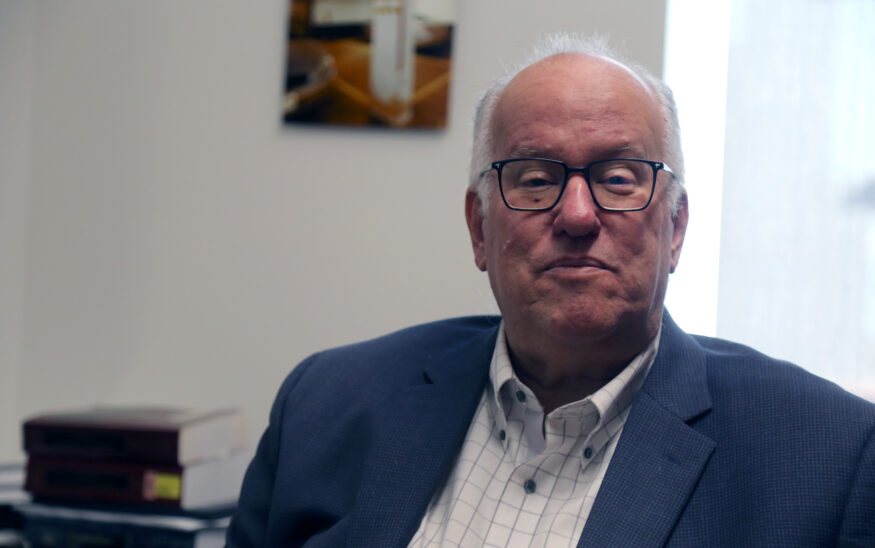
Gregg Leslie
Gregg Leslie: A lifelong fight for the First Amendment
Jakob Thorington, Arizona Capitol Times//February 22, 2026//


As the executive director of Arizona State University’s First Amendment Clinic, law professor Gregg Leslie has helped journalists navigate legal battles for decades. The clinic started in 2018, but Leslie’s work in practicing First Amendment Law dates back to 1994. Leslie, now at ASU, met with the Arizona Capitol Times to talk about his work and how he’s helping law students carry the torch.
The questions and answers have been lightly edited for style and clarity.
Tell me a little about your professional background?
After college and before law school, I was working as a journalist and I always knew I wanted to go to law school. In fact, I had deferred admission for one year while I kept working as a journalist, and I think that was a great experience because that just increased my interest in First Amendment Law. And so I went to work pretty quickly after law school for a nonprofit called the Reporters Committee for Freedom of the Press, which just does media law. We’d just sit there and answer a hotline that helps journalists who have legal problems. I did that for a long time and became the legal defense director of that organization and stayed there for 20 some years and really enjoyed it. Then, about the time I was thinking maybe it was time to look for a new challenge, I heard someone say that ASU was thinking of starting the First Amendment Clinic, and I said I’d love to do that. It’s very similar to what I had done before but a new approach to it, educating students to be the next ones to do the same thing.
Tell me about the First Amendment Clinic. What’s the scope of your work?
It’s such a broad topic because the First Amendment can affect so much. Every semester is a little different. Sometimes, we’re taking on civil rights cases like a guy who was crossing the street and for some reason had to flip off a police officer driving by on a motorcycle. That’s not necessarily behavior that has to be encouraged, but at the same time, it’s probably something you shouldn’t be arrested for. Was he arrested in retaliation for doing that or because he was jaywalking? Regardless of the topic, we reach out to the small communities and help those journalists who may just be blogging or writing for a Substack or even tweeting about local affairs – and they’re finding legal impediments to getting their job done.
What were some of the interesting cases you worked on?
There was a period where a lot of journalists were being threatened with arrest and were actually arrested. Judith Miller from The New York Times spent a long time in jail to protect her sources and we were very involved in that case. There was a young reporter from Fox News who also was facing jail and we helped with her defense and she was so thankful that we had done that. I’m still in touch with her all the time. And there’s another young reporter named Vanessa Leggett who couldn’t prove she was a reporter so she wasn’t getting any deference from prosecutors or anyone, but she interviewed a prisoner just to write a story about it. We’re happy to say she’s a journalist. We were never big on saying you have to have a full-time job or you have to have some credential to be called a journalist. But some of the more controversial cases are always the most fun, too. Since I started here, we have represented Kari Lake in an Anti-SLAPP motion when she was sued for libel by Stephen Richer, the former Maricopa County recorder. Her comments were just that these two known problems on Election Day, she thinks they did purposely. If you disclose the facts you’re basing an opinion on, you shouldn’t be sued for libel and for a political discussion, I think you have to have that kind of leeway to discuss those issues. If everything that looks like a false fact can be the subject of a libel suit, you’re really going to put a chill on political speech.
What makes the First Amendment so interesting?
It’s a standard to apply to everything. If you’re doing something to inform the public, it affects every other law that may be an impediment to doing that. There are questions all the time about whether a reporter should be charged with trespassing or failure to obey an order of police when they’re just trying to cover a protest. There’s an important public interest at stake in how those kinds of activities are covered and reporters need a lot of leeway. So you’re going in and saying, yes, there is an obligation to listen to police, but if you’re there to exercise your First Amendment rights, there has to be some allowance for the fact that the other side should have a greater burden to show that you were interfering with something. It really becomes a tool in a lot of cases and it’s just such an important tool. It kind of changes the presumption so that you’re not presumed to be doing something illegal. You’re presumed to be doing something to report to the public.
What do you enjoy about teaching?
After a while, you feel like you’re doing a lot of things over and over, so you want to include more people and pass on the information you’ve gained. It’s always fun to talk to people who are just considering these issues for the first time and see the excitement build in their faces. It just becomes a more interesting way of going over the same material.
What are the greatest challenges to the First Amendment in Arizona?
The funny thing is I think they’re the timeless challenges we’ve seen where people want their message to get across and they resent other people getting their message across. So, there’s a constant battle and we will always see things like a fight over who should prevail politically turning into a libel suit. That just doesn’t help anybody. Access is always a concern. There’s this tendency of judges sometimes to say, Oh, OK. Well, this part we don’t want to let the media report to the public so I’m going to close this part of the proceedings or something. Right now, like everywhere in the country, we’re seeing protests really become a big concern because in some ways, we always thought the law of protest was pretty well settled. But every protest has that bit that offends somebody enough to say, oh, those people should be arrested. Every 10 years, there’s some major movement that suddenly exceeds what other people think are the proper bounds of a protest, so we end up getting arrested and we end up getting these big fights that break out on the streets – and I’ve covered so many of those over the years. When I was on the reporters’ committee, every four years I went to the Republican and Democratic conventions because we knew there would be big protests and heated arguments. We’re just seeing that again more and more, rising up with the ICE demonstrations. The idea that you can’t protest the way the government is arresting people is really shocking. There are people who say you shouldn’t be able to protest because the act of protesting interferes with the arrest, and that’s just not the right way to look at it. You always have a right to protest.
Any final thoughts?
The First Amendment Clinic is different for us every semester, but we like to think we’re doing important work. I’d like people to remember that we’re here in case any concerns come up. If they see that there’s speech that is being restrained by the government, we’re here to fight that.