Please ensure Javascript is enabled for purposes of website accessibility

Let’s work together to keep Maricopa’s elections secure

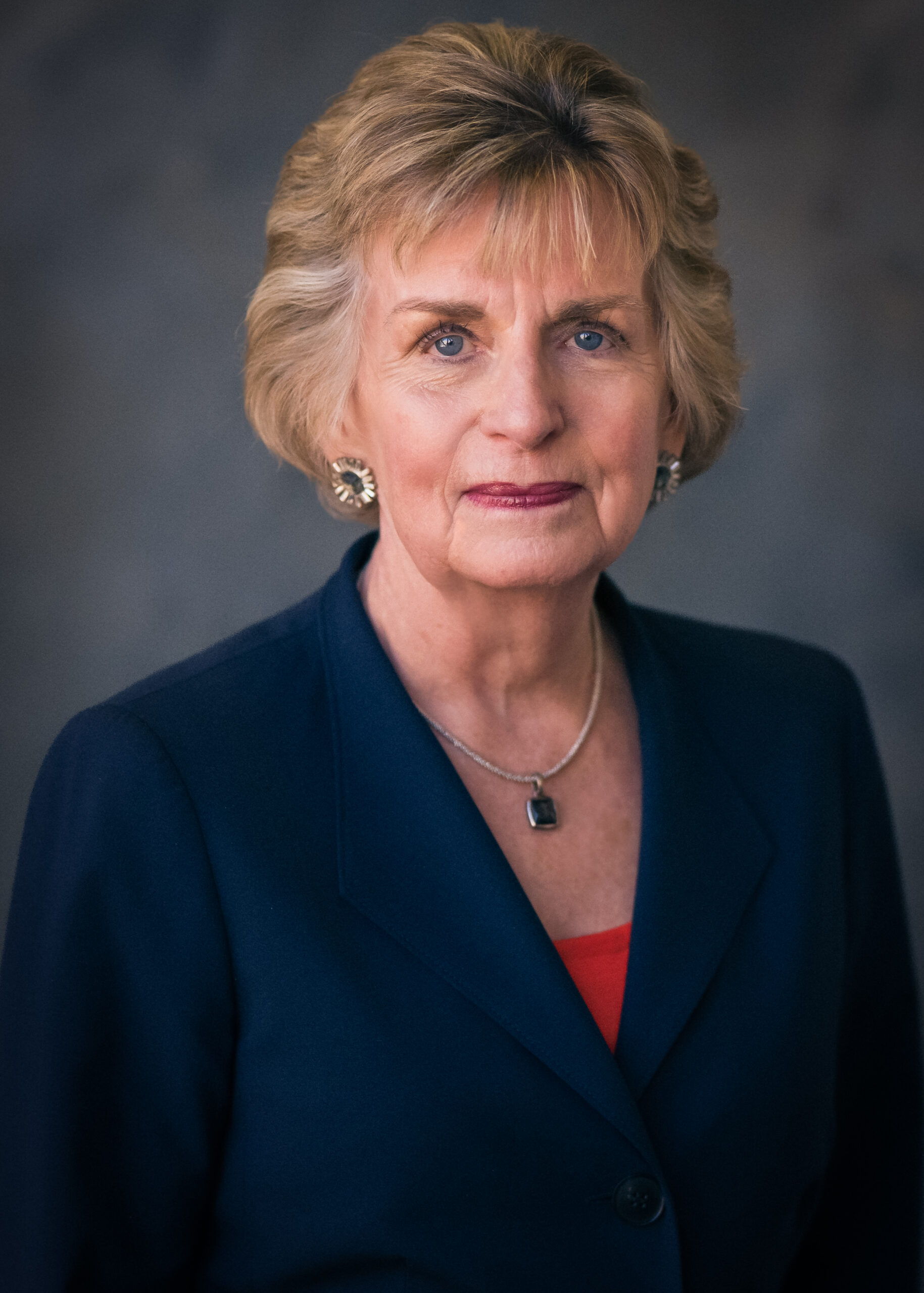
Kate Brophy-McGee

It’s an important week for Maricopa County elections and the partnership that will empower you to vote confidently in 2026. In the courtroom and in the boardroom, we will be fighting for you.

Voting is personal

When you cast your ballot, you are making a powerful and personal statement about the issues that matter most to you; what you want to see in your community, state, and country; and who will help lead the way to the brighter future you imagine. 

As someone who has won and lost close races of my own, I know that trust in the system is paramount. That is why I have spent years learning how elections are actually run in Maricopa County — and why I remain confident in the integrity, professionalism and dedication of the people who do this work every day.

Our Elections Department is nonpartisan. The people running our elections are your friends and neighbors. They vote too. And they care for your ballot as if it were their own.

As county leaders, we demonstrate our care for voters through deliberate choices and sustained investment focused on three core priorities: transparency, efficiency and continuous improvement.

Transparency and improvement build confidence

I believe in a “show” not a “tell” method for voter education. I’ve heard over and over: people don’t want to feel like they are being told or simply expected to trust our election system; they want to see how it works for themselves so that trust becomes earned.

That is why Maricopa County has expanded public tours, opened observation opportunities, and increased live video feeds of our election facilities. Transparency is one of democracy’s strongest safeguards. When people can see the process for themselves, confidence grows.

Early in 2025, the Board of Supervisors commissioned a comprehensive, independent review of our election processes, including the security of your ballots and the machines used to tabulate them. That work is nearly complete, and we will share the findings publicly in the coming months. Where auditors identify opportunities to do better, we will act — swiftly and openly.

Continuous improvement is not a sign of weakness; it is a commitment to excellence.

Efficiency matters

Voters also deserve timely results.

Election night is not just about who wins, it’s about public confidence that accurate results are being delivered in a timely manner. That is why I am committed to putting the resources behind our Elections Department to count ballots faster, without sacrificing accuracy, security, or transparency. That means staffing and planning well ahead of Election Day.

But efficiency does not exist in a vacuum.

Working together is not optional

Arizona law intentionally divides election responsibilities between the county recorder and the board of supervisors. That structure requires cooperation. It always has.

Unfortunately, the current county recorder has suggested he can “go it alone” and has sued the board to gain power. A hearing in Heap v. Galvin is scheduled for Jan. 26. The lawsuit is an unnecessary and costly distraction from the people’s business, in my opinion.

The current board and recorder have run four smooth, lawful elections together under our normal division of responsibility. We are only in court because the recorder does not like how the law requires us to work together to run them.

That disagreement does not serve voters.

At the end of January, the recorder will present his proposed budget to the board. To plan responsibly for 2026, we need this budget request to provide clarity and understanding, specifically when it comes to the recorder’s new plan for signature verification. If we know the rate of verification, we can plan to staff double shifts and commit to reporting results faster than ever before. However, without coordination between our offices, we cannot accurately staff up, budget or design systems to meet voter demand — no matter how many resources the County commits.

A call to partnership

Litigation may continue. But it does not excuse a failure to collaborate.

In the words of Helen Purcell, Maricopa County’s longest-serving elections official: elections work best when professionals work together. That wisdom still applies.

My message to Maricopa County Recorder Justin Heap is simple: let’s make the 2026 elections about our voters. Let’s work together. The public deserves nothing less, and our democracy demands it.

Elections are not about titles, turf, or personalities of elected officials. They are about honoring our voters and creating a trustworthy, efficient system that empowers them to vote confidently.  Instilling that confidence is our joint responsibility. As chair of the Maricopa County Board of Supervisors, I, along with my fellow board members will work every day to earn that confidence.

Kate Brophy-McGee is the Chair of the Maricopa County Board of Supervisors.
County supervisor asks AG to investigate recorder

Key Points:
  • Heap is accused of violating open meeting law
  • Gallardo says recorder lied about him in a text to other supervisors
  • Heap sued supervisors over shared services agreement 

A member of the Maricopa County Board of Supervisors has requested the state’s attorney to investigate Maricopa County Recorder Justin Heap for alleged public corruption.

Steve Gallardo, the only Democrat on the board, sent a letter to Attorney General Kris Mayes on Aug. 6 officially requesting an investigation into the Recorder’s Office after a July 30 Votebeat article reported that Heap tried to lobby members of the board via text messages for more election responsibilities through a shared services agreement between the board and Recorder’s Office. 

The request from Gallardo comes after he released a statement disputing a text message where Heap told other Republican members of the board that he convinced Gallardo to support his shared services agreement proposal through “backchanneling and arm twisting.”

“Justin Heap is lying about me, and going forward, he better keep my name out of his lying mouth,” Gallardo said in his statement. 

In his letter to Mayes, Gallardo also accused Heap of violating the state’s open meeting law since Heap had reportedly discussed the shared services agreement with three other supervisors outside of one of the board’s public meetings. 

The Arizona Ombudsman clarifies that text messages are a form of electronic communications and can violate open meeting laws if legal action is proposed within the messages. State law says a one-way electronic communication by one member of a public body that is sent to a quorum of the members of a public body and that proposes legal action qualifies as a meeting.

Gallardo accused Heap of trying to skirt Arizona’s open meeting law by trying to arrange a board vote in a “secret plot” instead of an open, public meeting. 

“The integrity of the Maricopa County Board of Supervisors has been called into question by Mr. Heap’s words,” Gallardo wrote to Mayes. “If this request for an investigation is considered self-reporting, so be it. The public has a right to know the facts and the truth where their elected Maricopa County Recorder, Justin Heap, colluded with me to bring favor to his issue.”

The Recorder’s Office did not respond to a request for comment from the Arizona Capitol Times.

The allegation that Heap tried to lobby the board is the latest development of a growing tension between the board and the Recorder’s Office. 

In May, the board blocked Heap from automatically mailing ballots to voters who aren’t on the Active Early Voting List for the 7th Congressional District special election, but approved other provisions of the plan created by Heap’s office and the county Elections Department.

Heap also fought the board over a shared services agreement that the previous recorder Stephen Richer, a Republican, had made with the board late in 2024, which Heap said has stripped him of significant election responsibilities while shrinking his budget and staff.

“The people of Maricopa County deserve better than the appalling behavior and gaslighting from the Board of Supervisors that has taken place thus far in this process,” Heap said in a May 15 statement. 

Heap then filed a lawsuit against the board on June 12 over the shared services agreement negotiation and alleged the board was stripping the legal authority afforded to a county recorder under Arizona law.

The board’s leaders called the lawsuit “absurd”. They argued America First Legal didn’t have authorization to file the lawsuit from Maricopa County Attorney Rachel Mitchell. Mitchell then file​​d a lawsuit against Heap’s office, alleging a violation of state law. 

Both lawsuits are still active in Maricopa County Superior Court. 

“He is totally unfit to be able to run that Recorder’s Office,” Gallardo said in a July 30 interview with the Arizona Capitol Times. “Ever since he has stepped into that office, it has been nothing but chaos. It is too important of an office to have someone so unhinged like him. He really needs to step away and just go on his merry way.”

Who’s Maricopa County Recorder depends on legal interpretation – for now

Think you know who’s the current Maricopa County recorder?

You may be wrong.

And it’s all because of how the Arizona Constitution is worded.

Yes, Republican Justin Heap won the November election, defeating Democrat Tim Stringham. And, under normal circumstances, county elected officials take office on the first Monday of the new year.

In fact, Heap was sworn in to his new position Monday afternoon.

But it’s not that simple.

elections, voter intimidation, ballots, Richer, Kavanagh, legislation, hand counts, tabulation
Maricopa County Recorder Stephen Richer

Heap was elected a state representative from Mesa in 2022. And the Arizona Constitution says no member of the Legislature is eligible to hold any other office or be employed by the state, county or any city “during the term for which he shall have been elected.”

More to the point, lawmakers legally remain in office until their successors are sworn in. And that won’t occur until noon on Jan. 13.

At least part of the point of the provision is to keep state lawmakers from creating some new government position and then quitting their $24,000-a-year job as a legislator to take that more lucrative post. And while Heap and lawmakers didn’t create a new post of county recorder, that still doesn’t permit him to be employed there just yet.

So who, right now, is the recorder?

Richer said it’s him.

He was the recorder, first elected in 2020. But he was defeated in last year’s GOP primary by Heap.

Under normal circumstances, the terms of county officials are up the first week of the year.

But the Arizona Constitution has a provision to cover that. It says that the term of every elected or appointed officer “shall extend until his successor shall be elected and shall qualify.” 

And if Heap is not yet qualified to be recorder, that leaves Richer in office for another week.

Richer, who is an attorney, told Capitol Media Services that’s his reading of how the constitutional provision works. More to the point, he said that’s the advice he got from the Maricopa County Attorney’s Office.

A spokeswoman for the office confirmed that the advice was given.

But Heap, who also is a lawyer, said he got his own advice from attorneys at the state House of Representatives. And he said they told him that his term as a legislator ended on Monday, meaning he was free to be sworn in for his new job as the county’s 31st recorder.

A House spokesman confirmed that there was such advice.

Richer said he saw no reason to challenge the move. In fact, anticipating that Heap would claim the office immediately, Richer said he moved out all of his personal belongings Friday lest he find himself locked out of his own office.

Anyway, he said, he is preparing to teach at Harvard Law for the next year.

The issue of how long lawmakers serve, however, is far from new.

In 1980, for example, then state Rep. Arnold Jeffers, a Tucson Republican, got elected to be the Pima County Assessor.

Jeffers, however, did not take office on the first Monday of 1981 along with all the other elected county officials. Instead, he was told he had to wait a week since, strictly speaking, he was still a legislator until his successor was sworn in.

In fact, Jeffers said, the way the constitutional provision is worded it would not have made a difference even if he resigned: He was still in the term for which he had been elected.

And that left Steve Emerine as assessor for the extra week.

The interpretation that Heap said he got about the terms of state lawmakers ending the first Monday of January presents an interesting issue: If all the lawmakers are out of office now and the new legislators are not being sworn in until Jan. 13, is there a state Legislature this week that can be called upon if necessary?

“Effectively, no,” said Heap. But he said that makes it “the best week of the year for the people of Arizona.”


Stringham concedes to Heap in Maricopa County Recorder race

Democrat Tim Stringham has conceded to Republican state Rep. Justin Heap in the race for Maricopa County Recorder.

Heap, House, infants, Hobbs, Hernandez, birth
Justin Heap

Heap is currently sitting at 51.7%, while Stringham is at 48.2%. A little over 700,000 votes in Maricopa County have yet to be counted, but Stringham conceded on Wednesday morning. 

The two candidates presented different visions for the office since the primary in July, when Republican incumbent Stephen Richer lost to Heap. Stringham said he plans to carry the torch from Richer, while Heap criticized how the office has been run under the incumbent.

Heap has refused to say whether the 2020 and 2022 elections were stolen, but has campaigned frequently with prominent candidates who have denied election losses like former President Donald Trump, U.S. Senate candidate Kari Lake and U.S House candidate Abe Hamadeh.

Tim Stringham

Stringham used Richer’s loss to propel his campaign, telling the Arizona Capitol Times in August that he entered the race as a “firewall” against candidates like Heap. He was able to garner bipartisan support and endorsements from local Republicans who had originally pledged their support to Richer. 

Heap is currently a state lawmaker and an attorney, though reporting from both the Arizona Capitol Times and KJZZ found controversies in his legal career. He once worked as a special deputy county attorney under former Maricopa County Attorney Andrew Thomas, who was later disbarred. Heap later appeared to be fired from the Maricopa County public defender’s office. 

Stringham is also an attorney and a Navy veteran. He is a newcomer to Arizona politics and has never held public office. 

The Maricopa County Recorder’s office has found itself in the national spotlight since 2020 after Richer made himself a staunch defender of the county’s election processes. The office oversees mail-in voting and voter registration and has long been the target of conspiracy theories and election deniers.

Heap has called Maricopa County elections a “laughing stock” and has made pledges to purge voter rolls and remove certain mail-in voting provisions. Stringham acknowledged that Arizonans may have concerns about elections, but said he did not have plans to make significant changes to how they are run in the county.

Pair of Republicans back Dem in Maricopa County recorder race

Correction: This story, in a previous version, erroneously identified Ann Wallack as Republican, when, in fact, she is a Democrat.

A pair of Republicans and a local business owner announced on Monday that they support Tim Stringham, the Democratic candidate for Maricopa County Recorder, saying they cannot vote for Republican Justin Heap.

The group included Mesa City Councilmember Julie Spilsbury, former John McCain aide Bettina Nava, and local business owner Ann Wallack. The three said they would not vote for Heap, a current state lawmaker, because of his alignment with “extreme” candidates and his plans to overhaul election processes. 

Heap, House, infants, Hobbs, Hernandez, birth
Rep. Justin Heap, R-Mesa

Spilsbury said she and Heap run in the same circles, as they both live in the Mesa area and are members of the Church of Jesus Christ of Latter Day Saints, but she said she cannot “in good conscience” vote for him. 

“We cannot have someone in this office who continues to deny election results,” Spilsbury said at a press conference on Monday. “We cannot have someone who calls our elections a ‘laughing stock.’” 

Spilsbury told the Arizona Capitol Times that she is hearing similar sentiments from her Republican friends, though not everyone is willing to come out publicly and admit they will vote for a Democrat. She said she also plans to vote for Kamala Harris over Donald Trump and Ruben Gallego over Kari Lake.

Nava, a Republican strategist who served both on McCain’s campaigns and in his Senate office, highlighted Heap’s endorsements from “extremists” like Lake and former Maricopa County Sheriff Joe Arpaio. She also referenced his tendency to skip out on debates and avoid interviews with the press. 

“We don’t need more election denialism,” Nava said at the press conference. “We don’t need someone to sneak into office without facing the press or having to talk to the voters. What we need is a competent county recorder.” 

Heap has not outright said whether or not he believes the 2020 or 2022 elections were stolen, but he has aligned himself with candidates like Trump, Lake and Abe Hamadeh, who all promote conspiracy theories related to their failed campaigns. That led many Republicans, like Spilsbury and Nava, to throw support behind Stringham after incumbent Recorder Stephen Richer lost in the Republican primary in July.

Wallack, a Democrat, even compared Stringham to Richer at the press conference, saying he will work to increase voter confidence, “much like Stephen Richer” has in his four years in office. 

Nava said it didn’t feel like a stretch for her to support Stringham, who is a Navy veteran like McCain was and plans to uphold many of the county’s election processes that Heap has been supportive of removing, like early voting.

Many of Heap’s supporters have said Stringham’s lack of experience in public office means he won’t make a good recorder, but Spilsbury said she thinks it could be an asset.

“I think sometimes that’s what we need,” Spilsbury said. “We don’t want people who’ve already been in and have maybe become cynical.”

Spilsbury said she has seen firsthand the effects of political polarization and election denialism on county officials and workers during the last four years and that she admires Stringham for his willingness to jump in the race despite that. 

“I know some of these men personally, and what they have had to experience is absolutely horrible,” Spilsbury said. “To know that someone’s willingly going to jump in to do that … I just admire it so much.”

Nava encouraged voters to consider Stringham as an opportunity to bring competency back to the recorder’s office now that Richer will not be returning. 

“[Stringham is] here to just simply be a professional,” Nava said during the press conference. “And we’ve had professionals in our history, so let’s bring one back.” 

Helen Purcell: Reflections on a recorder’s record and life in politics

Helen Purcell served as the Maricopa County Recorder from 1989 to 2017. During her time, she oversaw leaps and bounds in election systems and flux in public attitudes. Since leaving office, she continues to work to strengthen trust. 

How did you end up involved in politics? 

I worked a lot with the title companies in closing loans. My friendships revolved around the people that I worked with. I became very good friends with the Secretary to the President of the company, and she and I hung out a lot, and that’s where I ultimately met my husband, Joe.

My son was five, and he had a boy who was nine at the time. For a while, I just worked part time. Joe finally said, you know, why don’t you stay home? So I quit working. 

Joe came home one day and said, “I have this real good friend who is going to run for governor. And since you have all this time on your hands, maybe you could help him out.” I don’t know anything about politics. I’ve never been really involved in politics at all. But okay. 

I started working for him a couple of days a week. And then, as it got into 1974, which was the election year, I worked more and more, and I ended up being a full-time employee. Russ Williams was the candidate. The chairman was Jane Hull. So that’s how I met Jane. Jane and I were both born in Kansas, same year. She was born 8/8 and I was born 10/10, so we were very close in age. We both moved to Arizona the same year. We just had a lot of similarities. We really became very good friends right off the bat. 

I was doing some accounting work, but mainly constituent services and stuff like that for Russ’s campaign. My sphere of friends expanded to be all the people that I met in the campaign, which was a lot. We had a small office, but then when Russ won the primary, all of the Republican candidates for state and federal offices moved into a great big building on North Central. So you’re just not your campaign, but you were involved in all the other campaigns as well.

It was a good education for me. Before then, I had no clue about politics at all. I had voted. That was about it. 

What excited you about politics? What kept you in it?  

It just really got in my blood, and I felt like I could do something. I always loved working, and I was disappointed when my husband asked me to quit and stay home, because that just wasn’t me. I had worked since I was 14 or 15, so this gave me something to be involved in, and it was, you never knew what the outcome was going to be. So you’re always working real hard to do something. Are you going to make it? 

What led you to seek office? 

My husband from 1970 to 76 was the city attorney for Phoenix, and we used to go to a lot of city events, and I was amazed that when people found out he was with the city, they were always complaining about something the city did or didn’t do. And it amazed me that a lot of those people didn’t vote. 

I was just amazed. They’re complaining about this. Why don’t they try to do something about it? I wanted to make sure that people participated. For the whole time that I was recorder, that’s something that hit me. 

How was your first campaign? 

I have a personal feeling that women have to be more qualified for jobs than men do when you’re out on the campaign trail. I notice they hardly ever ask a man what his qualifications are. 

They always ask a woman. That’s changed a lot now in the years since, but that’s one thing that struck me. I always got asked what my background was, what my experience was. 

I figured that two things that that office did, which was voter registration and maintaining the voter rolls and recording real estate documents, both of those things I had a background in, yeah, so I thought that I came in with a little something to offer

I was one of three Republican candidates, and I didn’t think I had a chance. One was a Scottsdale city councilwoman. There was a gentleman from the East Valley. He was a graduate of Princeton, always wore a Princeton tie. He always talked down to me because I didn’t have a college degree, so that got to be a little bit much. 

Jane Hull had gotten me involved in Republican women’s clubs, so I was a member of a very big club, and they were a lot of my support and encouragement to get into the race. They helped a great deal. We figured there’s somehow we’ve got to get to people. I didn’t have a lot of money. We had a few signs out, certainly not what we see today, but I had some people that went out and did traffic pattern studies, so we just got the best corners. So that was something, but we decided to take copies of all of the petitions that all three of us had gotten signed. My group of ladies sent postcards to everyone who had signed a petition, and I just thanked them for signing a petition for recorder. I didn’t say they signed mine. I said thank you for signing a petition. 

It took us weeks to do that. We sent that out not too long before the election, and I really think that’s what made a difference. If somebody has enough interest to sign a petition, they’re probably going to vote. 

How did it feel to win? 

I was the most surprised person on the planet. It was not an overwhelming win, but it was a win. It was scary. Now, I had been in positions before where I was a supervisor and so forth, so it was not like I was not used to that type of thing, but it’s different. You’re in charge. The buck stops with you. 

What changes did you usher in during your time in office? 

I put together a group of people to study what we could do to automate the office. I went to the legislature and asked for the money to do it, but I asked for it every time a document is recorded, if I could take a portion of that money and that could be applied only to automating the recorder’s office. We finally got that passed, with the other recorders joining in, and set the maximum that we could charge or divert to that was $4. Every time a document is recorded, then $4 went into this fund. 

Well, at some point you’re going to have enough money to invest and do something. So this group that I put together of people from our office, people from the title and mortgage business, and people who were IT smart, came up with a plan to automate the office. We were able to write our own programs for a voter registration system that was halfway decent. I had 25 people in my IT department. Some of the other offices in the county were very envious of what we got done. We upgraded all the time in our elections. 

What were some of the biggest challenges you encountered? 

We had a sheriff’s race between Arpaio and Penzone. That was the first time we saw the mobs. That was when I first had to put in bulletproof glass because we had people who were going to lynch me the night of the election. And for the 14 days it took us to count that election. It was an awful time. That was the first time I had ever seen anything like that. I’d had questions before, why’d you do this? And why can’t you get the results quicker? And so forth, but I’d never had people screaming that they were going to do me bodily harm, that they were going to hurt my kids, that kind of thing. 

I’ve never seen a perfect election. You’re always going to have something crop up. Somebody didn’t show up at six o’clock in the morning. We had a bomb threat one time, so we had to move a polling location to a different location on election day. We had a microburst that blew the roof off of a polling place. We moved that polling place into the back of an 18-wheeler, because that’s the only thing we had available. One year, we had our ballots printed, our printer went into bankruptcy, and the court locked all the facilities with our ballots inside. You deal with stuff like that. 

When you run into these challenges, these particularly stressful or intense moments, how do you stay centered? How do you stay grounded? 

I knew that we were doing the best we possibly could, and that our people were very well trained and well-versed. I was always very comfortable that I had good people, that they were doing the best that they could.

What philosophy has guided you through life? 

I was always of the opinion, if you want to get any place, you have to work hard at it. I think that’s important, but to enjoy your family. You really have to keep yourself balanced. I’m lucky because I’m Libra. Libra is a balance. 

Heap avoiding debates, nonpartisan events could cost him recorder race, consultants say

Republican candidate for Maricopa County Recorder, Justin Heap, says elections are a “nonpartisan issue,” but appears to be focusing his campaign on turning out conservatives. Political consultants say that could hurt his chances with moderate and independent voters who will ultimately decide the race.

Heap, a current state lawmaker, has made several X posts over the last few months about the events he has attended to speak with voters. Most are Republican rallies, legislative district meetings or Turning Point USA events, but Heap claims he’s reaching independent and Democratic voters there.

“One of my absolute favorite moments on the campaign trail was being able to meet almost every single attendee at the RFK, Jr. & Tulsi Gabbard rally,” Heap said in a post on X on Sept. 30. “There were thousands of Independents and Democrats!”

He made a similar statement at former President Donald Trump’s Aug. 23 rally in Glendale, when he asked the “independents and Democrats in the room” to “join me.” Heap was criticized on X in September for posting a photo of him speaking to a voter wearing Trump merchandise and writing, “There’s nothing better than getting to talk with voters from across the political spectrum.”

Political consultants on both sides of the aisle say the strategy is puzzling, especially given the large number of independent voters in Maricopa County who will likely be casting decisive votes in the recorder’s race and other political contests up and down the ballot.

“It’s always important to turn out your base, but these things tend to get decided by the middle and by not offering anything to the middle, he’s setting himself up for failure,” said Tyler Montague, a Republican political consultant.

At a Turning Point event in Peoria on Wednesday, Heap told the audience that the key to winning in November is encouraging Republicans who sat out in 2022 to vote this time around. He said that lack of turnout contributed to the statewide losses Republican candidates saw that year.

“If they turn out, it will be a landslide victory,” Heap told the audience.

But that strategy might not hold up, as many Republicans have backed Heap’s Democratic challenger, Tim Stringham, after incumbent recorder Stephen Richer lost in the Republican primary in July. Montague said Heap has lost the ability to appeal to those voters by aligning himself with prominent election deniers like Trump and U.S. Senate candidate Kari Lake.

At Wednesday’s Turning Point event, Heap appeared alongside congressional candidate Abe Hamadeh, a long-time proponent of election conspiracy theories who encouraged the audience to make this year’s Republican turnout “too big to rig.” Heap has avoided questions from reporters and debate opportunities that would require him to take a stance on whether or not the 2020 election was stolen.

Heap tried to appeal to the middle at the event, saying that the position of county recorder is nonpartisan and he will abide by that if elected.

“Once I am elected, the partisanship stops,” Heap told the audience.

He said he will treat all ballots and candidates the same and make sure everyone “regardless of party” can feel confident in the election process and outcome. But Montague says Heap is likely not reaching a nonpartisan audience in “any meaningful way” when he makes those appeals at events geared toward conservatives who are already supportive of candidates like Trump.

“I’m sure he’s met the occasional Democrat or Independent who’s friendly to him, but I don’t think he’s reaching the masses,” Montague said.

Montague said he thinks Heap avoids events with undecided or moderate voters to avoid an “uncomfortable situation” where he would have to address questions about his stance on the 2020 election.

“He doesn’t have good answers that resonate with anyone, so he stays in that bubble because it’s safe,” Montague said.

Stringham, his opponent, attended both debates for the race in September and used the platform to appeal to Republican voters who might have “thoughtful, heartfelt concerns” about elections. Democratic consultant Rodd McLeod said those debate opportunities and interviews with local media are crucial in county races where name recognition and campaign funds are lower.

“You want to actually talk to journalists who are producing news content for voters,” McLeod said. “He isn’t doing this because he’s just a creature of MAGA politics.”

After his remarks at Wednesday’s event, Heap declined to answer questions from the Arizona Capitol Times, saying he had to go to another campaign event. He also did not respond to an emailed request for comment.

McLeod said those local media opportunities are where candidates are able to meet moderate voters and by insulating himself, Heap is less likely to break through to those who could help decide his fate in November.

“A campaign is a job interview, and this guy doesn’t want to show up for the job interview,” McLeod said.

Democrat running as ‘firewall’ in county recorder race

When Maricopa County Recorder Stephen Richer lost his re-election bid in the Republican primary on July 30, many in Arizona were surprised. But the Democrat running to replace him was not. 

Tim Stringham, who ran unopposed in the Democratic primary for recorder, stayed mostly in the background while three Republicans duked it out and gave varying opinions on whether previous elections in the state had been stolen. But after Richer’s loss to state Rep. Justin Heap, R-Mesa, a groundswell of support emerged for Stringham as elected officials, candidates and voters reacted to the toppling of an important figure in Arizona elections. 

“The people that were the most surprised about what happened in the primary were the people who were paid to know what would happen in the primary,” Stringham said. 

Since taking over the Recorder’s Office in 2021, Richer fought against a sea of conspiracy theories related to the 2020 presidential and 2022 midterm elections. Heap, who could be his successor, has not answered questions about whether he believes those elections were stolen or interfered with. He is running on a platform that describes elections in Maricopa County as a “laughing stock” and has promised to undo many of Richer’s efforts.

Tim Stringham

A veteran with a law degree, Stringham said he only jumped into the race as a “firewall” against more right-wing candidates like Heap. 

Stringham served in the U.S. Army before heading to law school at the University of Notre Dame. He went from law school to the U.S. Navy Judge Advocate General’s Corps, where he served on active duty as an attorney practicing international and military operational law.

After the military, Stringham returned to his home state of Arizona and began working in veterans’ advocacy, which is how he learned about the recorder’s race. 

Stringham said his campaign for recorder is partially motivated by his military service.

“I took an oath to the Constitution in the United States,” Stringham said. “This little segue in my life for the next four years is about trying to honor that oath.”

Stringham said he only considered running for recorder after realizing that Democrats in Maricopa County were convinced Richer was unbeatable. Eventually he was recruited to run by the county Democratic Party Executive Director Jon Ryder, but said party members were still sure Richer would win.

“[I thought] ‘the Republican incumbent probably isn’t going to win his bid in the Republican primary,’” Stringham said. “So why is it they can’t find anybody? Why would you find me off the street? Why isn’t there some aspiring politician?’ The answer that we kept getting from people over and over was that Stephen Richer was raising so much money he wasn’t beatable.”

Heap, House, infants, Hobbs, Hernandez, birth
Rep. Justin Heap, R-Mesa

According to the most recent campaign finance reports, Richer had nearly $200,000 in cash on hand ahead of the July 30 primary and had raised nearly $500,000 during the election cycle. Heap had around $81,000 in cash before the primary and has raised around $182,000 since his campaign began. 

Richer also had an incumbent advantage and received a fair amount of national media attention throughout his tenure, making him a well-known name not just in Maricopa County but across the state. Heap and Stringham have far less name recognition to lean on in the November general election. 

Stringham said he met with Richer last year to let him know he would be running as a Democratic challenger. While he respects Richer and the job he has done, Stringham said the meeting solidified for him the need for a contingency plan.

“I think [Richer] knew that this would be an uphill battle, but I left very unconvinced … that he actually had a viable path in the Republican primary,” Stringham said.

Democrats are now coming out in full force for Stringham, who saw his social media following and campaign donations skyrocket overnight. Tony Cani, a Democratic political strategist, said in a post on X that Stringham raised more than $50,000 in the day after Richer’s loss. 

Heap’s win in the primary means a Democrat has a much better chance of taking the seat, something Stringham has acknowledged.

“We knew that if Stephen Richer had won his primary, we would lose the race,” Stringham said. 

However, Stringham said this is still “an uphill race” and a win for him will require Republican supporters of Richer to vote Democrat. Arizona Republicans have been reaching across the aisle this election cycle to endorse Democrats like Kamala Harris for president and Ruben Gallego for U.S.Senate. Richer himself said he would vote for President Joe Biden before Biden stepped out of the presidential race. 

Richer garnered 129,344 votes in the primary and Stringham said he is already receiving “effusive” support from those voters.

“We have these conversations with Republicans who two, three days ago, were on Stephen Richer’s side, and we’ll talk to them and they’re like, ‘Hey, we’re so excited to support you.’” 

So far, Richer has not endorsed a replacement for himself, but Stringham said he hopes to meet with the incumbent soon to discuss it. Richer did not respond to a request for comment on his endorsement plans. 

Stringham wants voters to know that he has voted for Democrats and Republicans in the past and does not plan on making a career out of politics. He referred to his run for recorder as a “segue” and said he tells his staff he plans to buy a boat and sail around the world in four years if he makes it to the Recorder’s Office. Stringham said he might consider staying if he loves the job, but he hopes either Democrats or Republicans find someone better to replace him in 2028. 

He said he knows he’s not the most qualified person for the job, but that the current political climate is “driving good people out.”

“If the Democrats or the Republicans are in a position where they can bench me in four years and bring out somebody who really is a qualified elections official that hopefully we’ve inspired to get in, that’s my victory,” Stringham said. “That’s what I want to see.”

If Stringham is lucky, he might succumb to the Recorder’s Office “curse,” described by Richer in a post on X after his loss on July 30. Both Richer and his predecessor, Secretary of State Adrian Fontes, only served one term before losing their bids for re-election. 

Stringham said voters should take those losses as a sign that elections in the county are running as they should. 

“I hope some of them are taking a look at it and saying, ‘Well, we had two back-to-back elections officials who were accused of rigging elections and they failed to rig their own elections,’” Stringham said. “Maybe this process is a little bit safer than you thought it was.”

Heap did not immediately respond to a request for comment. 


Court keeps names of low-level election workers secret

Members of the public aren’t entitled to know the names of election workers who review the signatures on ballot envelopes, a judge ruled Thursday.

We The People, an organization that has aligned itself with Kari Lake, had sought the information from Maricopa County since January 2020. The group said it wanted to conduct further investigations given how quickly it said some signatures were verified.

In a five-page ruling, Maricopa County Superior Court Judge Scott Blaney, an appointee of former Gov. Doug Ducey, said that such information is generally considered a public record. But he said that presumption can be overridden if there is a legitimate public interest.

And in this case, he said, there was credible evidence of threats or harassment of workers. And that, said Blaney, trumps the public’s right to know.

Much of what is behind the request goes back to efforts by Lake to overturn her 2022 election loss in the governor’s race to Katie Hobbs.

One of her witnesses she called said about 274,000 signatures on early ballots were compared to samples in less than three seconds, with about 70,000 in two seconds or less. So far, though, courts have thrown out all of Lake’s challenges, even ruling the evidence of the time taken to be legally irrelevant.

Blaney said We The People, in its own action filed in April 2023, submitted evidence that some signature verifiers worked remotely from their homes during recent elections. And the group argued that the rapid pace, coupled with some confirming 100% of their signatures were valid, was highly improbable.

What getting their names would do, the group argued, would allow the workers to be interviewed about their training and procedures.

Maricopa County Recorder Stephen Richer agreed to provide the names of managers and those higher in the organization. But he refused to identify the lower-level employees, saying it could expose employees to harassment and threats.

“The public has a right to inspect public records,” Blaney wrote. He said anyone rejecting such a request has to demonstrate specifically how production would “violate rights of privacy or confidentiality or be detrimental to the bests interests of the state.”

That, said Blaney, is the case here, saying there was “credible, uncontested, sworn testimony” from two defense witnesses – Richer and Kristi Passarelli, former assistant director in the office – of “alarming threats that they personally received arising from their positions and activities in the Recorder’s Office.” And the judge noted that at the time of the hearing the U.S. Department of Justice had already charged three individuals for their threats to Richer and one had pleaded guilty.

Blaney said there was other evidence of security concerns, including a new black fence outside the facility, the addition of drones for surveillance, snipers on the roof, more security guards and the installation of bullet-proof glass.

“It is not reasonable to assume that the Recorder’s Office would take such extreme measures if the threats had not been as frequent, intense, and alarming as the defense alleged,” the judge wrote.

Then there was the concern that threats would have a chilling effect on Richer’s ability to recruit and retain employees.

“The Recorder’s Office could not accomplish its critical mission without sufficient temporary workers,” Blaney wrote. “These concerns outweigh the public’s right to know the identities of these lower level, non-managerial employees.”

He noted that Richer had offered to provide unique identification numbers for each of the workers. While that would not open them up to the interviews that We The People wanted, it would allow their data to be tracked.

A message to We The People was not immediately returned.

Richer lost his bid for reelection in the Republican primary to Rep. Justin Heap who now will face off in November against Democrat Tim Stringham.


Heap’s former role with county attorney unclear

State Rep. Justin Heap, a Republican candidate for Maricopa County recorder, once worked under disbarred former Maricopa County Attorney Andrew Thomas.  According to an oath of office obtained from the...

Get 24/7 political news coverage and access to events honoring top political professionals

Ultra-conservative GOP lawmaker vying for Maricopa County Recorder

A state representative aligned with the conservative Freedom Caucus of the state House of Representatives announced Wednesday he is running for Maricopa County Recorder.   With the support of many Freedom...

Get 24/7 political news coverage and access to events honoring top political professionals

You don't have credit card details available. You will be redirected to update payment method page. Click OK to continue.