Please ensure Javascript is enabled for purposes of website accessibility

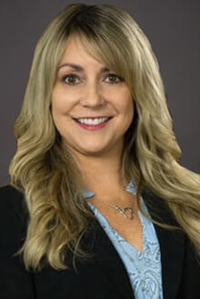
Gaelle Esposito: Passion and policy

Gaelle Esposito was first attracted to Arizona politics as a high school student.

Esposito started working on campaigns at the local, state and national levels, including a couple of state superintendent of public instruction races and the recall against then-Senate President Russell Pearce.

That grassroots work has allowed her to build a career throughout the years lobbying for education and housing policy, civil rights and LGBTQ issues with Creosote Partners.

Answers have been slightly edited for clarity. 

How did you get your start in lobbying?

I first got involved in Arizona politics in high school back in 2004 because I was a very cool kid. I started working in political campaigns. I volunteered and eventually did some paid work for everything. You know, local to county to statewide and all of that kind of culminated in my work on the recall of then-Senate President Russell Pearce, where I kind of ran the signature collection efforts. And after that, I kind of got out of dodge for a little bit. I needed health care, I needed a little more stability. The reason I got involved in politics was because I was passionate about policy and how it impacted people’s lives, and particularly education policy. 

Some of the first campaigns I worked on were campaigns for superintendent of public instruction in 2006 and 2010. I wanted to leverage my grassroots campaign experience into the lobbying world. So I got a grant-funded position doing just that in Massachusetts with the (American Lung Association of the Northeast). And when that grant funded position ended, I applied for a job here. There was an opening with the (Arizona School Boards Association), and I was lucky enough to be able to come back and work there for five years. 

What attracted you to education policy in particular?

I was really first interested in education policy, because when I was in school — little did I know this would be the sort of high point of spending on education — (I saw) budgets with increased K-12 spending. But you know, at that point, we were still seeing the effects of an underfunded school system, and really, like the first signs of breakage, like a reduction in programs, in the arts and in music. These pieces of a well-rounded education were being set aside for what was, at that point, the high stakes testing structure of the (Arizona Instrument to Measure Standards). We were seeing a lot of attacks — it’s Tom Horne’s first go around. We were seeing attacks on dual language learners and Mexican American studies. You know, all of the sort of hits he’s playing again this time around. And I was tired of seeing that within the schools. I wanted to do something to help my classmates at that time, and I thought that was the right thing to do.

What were some of the biggest issues that you followed last session?

In the last few sessions, I’ve been very heavily focused on housing policy and civil rights. Those have been significant aspects of the work I’ve been doing that intersect with our schools, particularly in terms of how kids are treated and the books they can access. We’re just seeing so much of a negative and cruel focus on students who are LGBTQ+. I have spent a lot of time on this over the last several years, and I believe in 2024, we were fortunate enough to prevent a referral to the ballot. We saw young people come forward and tell their stories, moving the hearts and minds of Senator Ken Bennett, who stood up and said that the ballot isn’t the place for this. And housing has also been an issue very close to my heart, not just as a millennial, but as someone who’s been both a renter and a homeowner. I have seen the explosion in costs. I’ve seen the barriers to getting new housing, more affordable housing types built, and so I’m trying to get changes there. I’m very proud of the work that led to legislation legalizing casitas and middle housing. And you know, last year, working on refining and expanding that. Trying to get legislation that re-legalizes starter homes passed has been a big project that, you know, has been a contentious fight in each of these sessions. 

What were some of the most significant victories experienced last session?

We saw some big advancements in housing. We continue to see successful vetoes of bad policy around civil liberties. You know, it was a mixed bag, but there were some things I was very proud of. And I think last session was one where I definitely was feeling the shifts in the legislative makeup and how I think people are approaching trans people in this environment today.  So, I feel very proud of some of the legwork we were able to do, the connection we were able to build and some of the momentum there, and recognizing there are a lot of very hateful voices that are gaining traction. 

How has the Legislature shifted in the last few years?

You ask any lobbyist, no matter what their background, and they’ll tell you that the environment down there has gotten more toxic. Frankly, it’s harder to get people to talk to one another. It’s harder to bridge gaps, and people are more interested in what might get them on Fox News or Newsmax, or whatever new flashy thing is out there, than in the substance of what they’re doing. And, for me, that means I end up hearing a lot of deeply discriminatory remarks about me and my community, and that can be a lot to carry.

How does it affect you to testify and sit through some of those hearings as a transgender woman?

It wears on you. It’s tough not just to have your own personal experience ignored, but also to see the young people who give up a lot to come down there to share their stories, only to be ignored and have to sit through these things.

There’s a real disconnect, I think, once again, where these are folks who have their mind made up. These are folks who are just looking to get their media hit. And they don’t care about the costs. And it can be a very dehumanizing experience.

When did you come out as a transgender woman?

So I came out in … 2022. I came out to my close family and friends in January of that year. And came out publicly in July. I have been so moved by the warm reception I’ve received, not just from those family and friends, but even from some unexpected people. I think there’s definitely a community at the Capitol, too, that I know has my back, which is wonderful, and it remains the best thing I’ve done for myself. 

What do people misunderstand about being a lobbyist?

We have a kind of different approach at Creosote sometimes, not from everybody. But I think when the general public hears ‘lobbyist’ they think (of) somebody who is a hired gun for a big corporation, who’s just writing big checks to politicians in back rooms. And whoever writes the biggest check gets what they want. And there are certainly lobbyists who operate in that way. But we are a company that prides itself on being values based. We have principles that we may not always reach in the same way, but we can find agreement in a non-partisan manner. This allows us to build coalitions on issues like criminal justice reform and housing, and we’ve been very successful in doing so. I think this approach is not how people traditionally think about these things being done. And I’ve been very proud to do this work in that way.

So what do you enjoy most about your job?

I enjoy the people I get to work with every day. I get to work with some of, if not, the finest folks down there. And I get to work with clients who I truly believe in, and what they’re trying to do to improve my community. And that’s a rare luxury these days. So I am always grateful, but especially grateful for (Creosote Partners Founder Marilyn Rodriguez) and the partnership that I have had with her over these last almost eight years now. I am very lucky to be in business with someone like her.
Court finds Legislature failed to provide adequate public school maintenance funding

Key Points: 
  • Judge rules public school facilities funding scheme unconstitutional
  • Ruling identifies disparities between districts based on bonding capacity
  • Legislature found at fault, leadership plans to appeal ruling 

One school district boasts freshly renovated facilities, manicured turf fields and a new performing arts center, while another has hundreds of failing HVAC units and collapsed and leaking roofs. 

After years of litigation and discovery and a two-week bench trial in 2024, a Maricopa County Superior Court judge found the disparities in funding and subsequent state of school facilities across Arizona to be a constitutional failing, with blame falling squarely on the shoulders of the Legislature. 

“After carefully and thoroughly reviewing the record and considering the parties’ arguments, the Court concludes that the current public school capital finance system does not meet the constitutional minimum standards established by the Arizona Supreme Court,” Judge Dewain Fox wrote in a ruling on August 11. 

In 2017, four school districts, a taxpayer and three education organizations — the Arizona School Boards Association, the Arizona Education Association and the Arizona School Administrators — sued the state for facilitating an allegedly slow-moving and underfunded system that puts districts lacking the tax base and property wealth to pass bonds at a significant disadvantage in upkeep and condition of schools. 

The plaintiffs, represented by the Arizona Center for Law in the Public Interest, claimed the Legislature failed to meet obligations to provide a “general and uniform public school system” as provided in the state Constitution. One requires appropriate funds to ensure proper maintenance, development and improvement of all state educational institutions. 

The Arizona Center for Law in the Public Interest litigated the same issue before. It successfully argued that passing the buck to local taxpayers to pass bonds to cover school maintenance costs disadvantages low-income areas. 

In 1998, the Legislature enacted the Students FIRST Act and created the School Facilities Board to administer funds to cover capital needs across the state and determine a set of minimum adequacy guidelines to ensure schools could provide an environment conducive to achieving academic standards. 

The Legislature got off to a strong start, doling out about $1.2 billion to fix deficiencies in schools across the state and administer additional programs for building renewal and new facilities. 

But over time, appropriations to respective funds declined, or were repealed or modified in statute. 

For one, the Legislature changed Building Renewal funding from a formula structure based on the size and age of a facility to the Building Renewal Grant program, which excluded funds for any non-academic buildings and required that schools must fall below the minimum adequacy guidelines to qualify. 

Danny Adelman, attorney for the plaintiffs, said,“Initially, after those court rulings, they did it and fixed a lot of schools. And there were decent schools all throughout the state. And then just bit by bit, and then more than bit by bit, they started taking away all that funding until we’re largely right back where we were.” 

Adelman said the burden again falls to districts to seek bonds to make up the difference, which proves difficult for areas with low property wealth or with voters lacking a desire to greenlight a bond. 

“In either case, you’re just doing without,” Adelman said. 

In a 114-page ruling, Fox agreed with the plaintiffs that the state had failed to appropriate funds for the “establishment and maintenance of a general and uniform public school system,” in violation of the state Constitution.

Fox pointed out the Building Renewal grant program “routinely” lacks funding to complete approved projects and defers millions in repair year over year. 

Strapped funds make it so schools with “an eligible and urgent fire/life and safety” minimum adequacy guidelines (MAG) deficiency are pushed to the top, which creates a system that “guarantees that districts must operate below the MAG – often for significant periods of time – before state funding is provided to correct the deficiency,” Fox wrote.

And, because not all districts can secure bonds or override funds in the meantime, and solely rely on the Building Renewal Grant, they are left to “operate their schools in deficient facilities for months or even years while awaiting funding.” 

Fox’s ruling recounted schools with cracking walls, ceilings and floors, water damage, broken toilets and sinks, aging windows, failing HVAC units, collapsed and leaking roofs and sinkholes.

While others, with the bond capacity and voter base, could afford to fix deficiencies fast, as well as build and renovate schools and facilities. 

Fox found that the setup and lack of funding to the state system itself created the disparities, and it is therefore the responsibility of the Legislature to remedy them. 

In response to the ruling, the plaintiffs put out a joint statement. 

“Our state’s constitution requires the legislature to fund our public schools. It’s time for our legislature to fulfill its constitutional obligation to fund public schools in every corner of Arizona so that all students, whether or not they live in a wealthy area, can receive a quality public education.”

The court has yet to enter a final appealable judgment, but plans to do so soon. Fox noted, though, that he intends to grant a temporary stay while the issue makes its way through the appellate process. 

In a statement, Senate President Warren Petersen said, “We will appeal.” 

Adelman said the Legislature had “every right to do that,” but again made a plea for a more immediate fix. 

“They can say they’re going to appeal, but the evidence is the evidence, and the law is the law, and all they’re doing is digging the hole deeper,” Adelman said. 

He continued, “These roofs that are leaking, if they’re not fixed, it just causes more damage. And so when you do ultimately fix it, it’s more expensive, and there’s more things to fix, and there’s mold and you have to replace insulation, and it’s just not good management. They would never run their own buildings like that. They would never run their own businesses like that.” 

Daniel Adelman: The fight for Arizona’s Constitution

Daniel Adelman took up the helm at the Center for Law in the Public Interest in 2018. During his tenure, he led litigation to keep people housed during the pandemic, cut the Legislature’s ability to sneak provisions into budget bills, ensured funding for vital school facilities, and, most recently, challenged a $15 million pork appropriation to the Prescott Rodeo. As he transitions out of his role, he hopes his successor shares his passion for leaving the law better than he found it. 

What drew you to public accountability law? 

The school work was actually what drew me to the center. I joined the board in 1994 — the same year that the center won the first case that declared the way Arizona was financing its public schools as unconstitutional. I used to run this camp for underprivileged kids, and I used to go to the schools to meet with parents of these kids, so we could assure them their kids will be safe and everything. (The schools) were horrible. We won that case, and the state ended up putting in over a billion dollars fixing and building schools. I went back to those same schools, and they were nice … and it just drew me to the power of impact litigation and forcing the state to obey the Constitution.

How has the state changed in terms of compliance and constitutionality? 

In a lot of ways it really is worse than it’s ever been. 

Part of the reason that I really appreciate good journalism is people have to know what’s really going on, and if all you get is your social media feed, or all you look at are reporters that are going to agree with you and feed you whatever, it is really easy to try to take away people’s rights … I think that conspiracy-driven narrative is for real, and it’s taken hold, not by any means with all of the legislators, but with a lot of them.

Republicans were in charge of both houses (when I started), but everything was very fact driven. And people choose which facts they think are most important, and that’s fine, but it wasn’t all just fake, and I think that’s changed, and it’s scary.

Has your approach changed at all now that conspiratorial thinking has gained more legitimacy? 

It makes the law even more important, right? Because there’s this narrative that we’re increasing public school funding, and they’re just wasting it all on administration. And if all you’re doing is giving a press release, it’s super easy to say stuff like that. When you go to court, you have to prove it with evidence. There is no evidence to support that in Arizona. Arizona spends less on administration than every other state … I feel like it’s even more important with some of the battles between the different houses in the Legislature, or between the Legislature and the governor. There are times when you need a court and you need someone, like the reason. 

The center does pro-bono work. Why is that important? 

We advocate for people who otherwise would have no voice. We’re litigating the rodeo case. The reason we’re doing that case is the principle involved. There are these limitations in the Arizona Constitution. If the Legislature doesn’t follow them, all kinds of bad things can happen. It’s not just ‘Does a rodeo get the money or not?’ That isn’t the point. The point is, do they have to comply with the Constitution? Two residents who are just people in Prescott are the ones (who) retained us. It’s been a lot of work. They could never afford attorneys. Regular people could never afford that … The center, which is totally pro bono, it’s just this huge tool that gives regular citizens the power to challenge the legality of what’s going on.

How do your personal values lead you in the work you do? 

Family is hugely important to me. I have wonderful kids who are all adults now, and all successful and in wonderful stuff. I’m making sure that I am a good husband and a good dad, but also a good lawyer trying to make the world a better place. My parents are and were people who devoted their whole lives to making the world a better place. My dad was in the Air Force and a professor, and my mom was a principal. It was just a big part of everything we did, that our job here is to make the world a better place … that’s driven my whole career.

What are some of the concrete changes you’ve seen happen as a result of action the center has taken? 

When we did the budget reconciliation bill case, like you hear about that, and you think that is like the most boring constitutional law, who cares? But it was at the height of Covid and the things that they were putting in what were supposed to be budget bills had these really far reaching health consequences, and this emergency physician came up to me and just said, “You have no no idea how many lives you saved by having the Supreme Court rule that those things were unconstitutional.” A lot of doctors saved a lot of lives, not every lawyer gets to.

What parts of the cases you litigate stick with you? 

A lot of the witnesses in the school finance case, after they would testify about how bad it was and how they’ve been trying to get help fixing a roof, or whatever. Well, after they testified and they were in the case, that roof that they’ve been trying to get fixed for eight years suddenly got fixed.

Once you have these people under oath, they’re talking about what’s really happening. This isn’t somebody just saying something on social media. It’s like they really have skin in the game. The most frustrating thing is the kids are the ones who suffer from this. The people who are most responsible will never suffer any of the bad consequences of their decisions, like to not fund the capital needs of public schools. The children who have no responsibility for causing the problems, they’re the ones who suffer.

What are your next steps after the center? 

This has completely been a dream job for me, like it is exactly what I hoped it would be. And I feel like we’ve accomplished a lot of good things. There’s no shortage of public interest work in Arizona, but I’ve just been doing full time law for 38 years now. So it’s just time to kind of step back from the full time practice. I think I will continue to be involved in probably a fair amount of the center’s work … I plan to stay involved as the education finance case will likely be appealed no matter who wins. I put a lot into that case, and will certainly offer, like my predecessor did, to continue to help even after he stepped down. 

What are you looking forward to doing with a little more time? 

So I’m in a rock band. And I do plan to continue to do that and to do it some more. I have a bunch of hobbies, gardening, art, stuff like that. I’m hoping someday in the not too distant future to be a grandpa, and I plan to devote a lot of time to that, and I’ll probably stay in the law in some ways too. So yeah, I have a lot of interests. Excited. I definitely have both parts of my brain that like doing stuff.

Lawmakers aim to renew teacher funding by end of session

A lawmaker leading the charge on Proposition 123 said stakeholders are moving closer to cohesion on the specifics of continuing a state land trust funding mechanism to increase teacher pay.

Sen. J.D. Mesnard, R-Chandler, said he expects and hopes for a more final package to materialize in the coming weeks, with some building consensus on the distribution rate, timeline and general funding aim of the bill.

But there are still battles left to be fought. At the heart of current contention now is a desire by Republicans to tie protections for school choice into Prop. 123. What exactly those provisions will look like is still up in the air for the majority and is likely to be unpopular with Democrats and the governor.

Though a long road lies ahead, Mesnard and Gov. Katie Hobbs remain confident that a new version of the measure will pass this session, with an election in November 2025 or 2026.

Mesnard said, “We want to put a package before the voters that we believe is appealing to them, and I think it’s one of the reasons we think teacher pay has to be the focus, not just because we acknowledge that, you know, the crisis we have with within the teaching profession, but also we believe that’s what the voters want to prioritize. “But another aspect is, again, the ability of parents to make the choice that makes the most sense for their family.”

Proposition 123, an education funding measure drawing on the state land trust fund, is set to expire at the end of the fiscal year. The Legislature already backfilled roughly $300 million to cover funds lost by the lapse and plans to do so going forward, leaving an opportunity to reimagine a long-utilized funding stream.

Republican lawmakers have continued to push for the reallocation of Prop. 123 funds to increase teacher pay.

In February, Rep. Matt Gress, R-Phoenix, and Mesnard introduced mirror legislation that proposed continuing a 6.9% draw from the state land trust to grant all eligible teachers, defined as educators with positive performance evaluations and 75% of their time spent in the classroom, or 50% for special education educators, around a $4,000 raise.

The Republican proposal would again lapse in 10 years. In getting each of the bills through committee, education and business stakeholders shared fears of another fiscal cliff with a 10-year cut off and a higher draw from the state land trust.

Hobbs released her plan for Prop. 123 in early March, pitching a permanent 5.5% distribution rate, with a maintained 2.5% into basic state aid and 3% directed to the Classroom Site Fund to provide a permanent increase in teacher pay. She also proposes a 10-year 1.4% distribution rate to increase base level funding.

Mesnard said the proposal now coming together is closing in on consensus.

“There’s more cohesion around a plan that is teacher-focused,” Mesnard said.

As for a distribution rate, stakeholders seemed to be supportive of the 6.9% but have been working on a more hybrid approach to make 4.5% permanent and have the remaining difference continued for 10 years.

Mesnard said member conversations are still ongoing in both chambers.

“We’re actively drafting language,” Mesnard said. “As things do get solidified, we’ll be putting that in ink.”

Once a proposal is put together, Mesnard and Gress plan to introduce mirror amendments to the legislation on the floor. Mesnard said they have until sine die to do so.

Though a proposal is coming together, the timing of a special election is still up in the air.

Hobbs originally pushed for a November 2025 special election in her Prop. 123 plan and is still advocating for the same.

“I am still hopeful that we can see something passed this year. I think it’s really important to get something to the ballot this year, and we’re still having those conversations,” Hobbs said.

If the Legislature were to go for this November, a spokesperson for the Secretary of State’s Office said the office recommended giving the counties six months to prepare.

Putting the proposal on the ballot for the 2026 midterm election is still a possibility too.

Election timing aside, Mesnard said all involved parties want to at least see legislation passed this session.

“I would say, I have a fair amount of confidence (that) we’re going to be able to pass something this year. That’s what we’re all working towards,” Mesnard said.

Report finds Arizona spends more on education, but less on teachers

More than half of the school districts in Arizona spent a smaller percentage of their total available dollars in classroom instruction in the last school year than the year before, according to a new report.

And the chairman of the House Education Committee says he knows whose fault that is: School Administrators.

Rep. Matt Gress concedes that, strictly speaking, Arizona schools overall spend less on pure administrative costs than the national average, things like salaries for superintendents, principals, business managers, clerical and accounting staff and human resources. 

The issue, said the Phoenix Republican, is not their salaries but the decisions that they make on how to divide up the money they get on other priorities, ranging from support services to utilities, which means fewer dollars for classrooms and, by extension, less money for teacher pay. But the executive director of the Arizona School Administrators Association said what’s missing from that analysis is that schools are required to have things like guidance counselors, nurses and speech pathologists.

Those are all things that benefit students, said Paul Tighe, Executive Director at Arizona School Administrators. But the way the Auditor General measures how districts spend their money does not include them as part of that highly watched figure of “instructional spending.” And Chuck Essigs, lobbyist for the Arizona Association of School Business Officials, said there’s something else to consider. 

Not only are there fewer school-age children as demographics change, but some of them are choosing to go to charter schools or private schools, especially with vouchers of state dollars available to everyone.

However, he said these schools don’t tend to take students with special needs, who traditional public schools cannot turn away. He said these students need additional services — the kinds performed by counselors, audiologists, and other specialists, not classroom instructors. Essigs also said that blaming schools for having to spend more on electric bills ignores the role of utilities in setting rates.

What is at the center of the issue is that overall spending on what is classified as instruction hit the lowest point since the Auditor General’s Office began monitoring that in 2004.

The report found that overall spending on instruction among all the districts in the state increased by more than $158.1 million. And overall spending for the 2023-2024 school year for all education functions hit nearly $10.6 billion, up about $500 million from the year before.

But while there was more money in the system, the report says that just 52.6 cents of every dollar was spent in the instruction category. That covers everything from teachers and aides to instructional supplies, field trips and athletics. That is down 0.8 percentage points on a statewide basis from the prior school year. 

What makes this year’s report particularly significant is it comes as Gov. Katie Hobbs and lawmakers are negotiating whether to tap the state land trust to increase K-12 funding. Much of that debate comes down not just to how many dollars the state would withdraw from the trust each year but exactly how those funds would be allocated.

Republicans are proposing to boost salaries by $4,000 a year; the governor’s plan adds money, but her office provides no specific figures. Gress, one of the Republicans working to craft that solution, seized on the new findings to charge that education funding in Arizona is not being properly managed. 

Consider, he said, that back in the 2003-2004 school year, 58.6 cents of every dollar going into education went into instruction. “The report shows that if districts allocated the same percentage to classroom instruction as they did 20 years ago, an additional $624 million would be available for teacher pay,” he said. And that, said Gress, would be enough to increase teacher salaries by $8,500 a year. 

“Resources are available, but teachers are taking the back seat to administration,” he said. 

That, according to the report, is not due to purely administrative costs.

According to the auditor general, in 2022, the most recent year for which comparable figures are available, Arizona schools spent 10.2% out of every dollar on administration. The comparable national figure was 11.6%.

That, however, still leaves the fact that Arizona devotes less of each dollar to instruction than the national average. So if not administration, what causes that? Some of that falls in that category of student support, the costs of counselors, audiologists, speech pathologists, nurses, social workers and attendance services. This year that ate up another 9.8 cents of every dollar.

Then there’s another 6.2 cents for instruction support which includes librarians, teacher training, curriculum development, special education directors, media specialists and instruction-related technology services.

Arizona has historically spent more than the national average in two areas. One is “plant operations,” which includes utilities. This becomes a crucial issue during the hottest months of the year, consuming close to 12 cents of every dollar. Arizona also tends to spend more than the national average, particularly with rural districts having long bus routes. 

“If you really want to find where the blame is in school budgeting, it’s your superintendents and the administration,” Gress said. “They are deciding to allocate resources away from the classroom, away from instruction.” 

“It’s a clarion call for us, as state lawmakers, to begin reorienting our state spending and school district spending back toward the classroom,” he continued.

And what of the need for things like librarians, nurses and counselors? 

“That’s true if you have all of your teachers taken care of,” Gress said. “You can have all of these other great support services in place, but if you don’t have solid, qualified classroom teachers at the front of every classroom, then the whole point of education is under threat. Call it a day because learning is not going to be happening if you don’t have these classrooms led by full-time qualified teachers.” 

And Gress said he doesn’t believe that all of the non-instructional staff being hired by schools is necessary. 

Essigs said what’s left out of that argument is why Arizona schools spend a higher percentage of their dollars than other states on other non-classroom areas. 

“One is that utility companies in Arizona have raised their rates,” he said, which inflates the category of what is called “plant operations.”

“And the weather has not been friendly to school districts,” Essigs added, with higher expenses just to keep classrooms comfortable. Gress has a different explanation. And it’s tied to the fact that overall school enrollment is down by nearly 45,000 in the past five years, a 5% drop. In fact, in the last year, 149 of 230 school districts reported a decline in the number of students. 

“One of the top reasons for over expenditure is underutilization of space,” Gress said. “They’re keeping buildings open, paying utilities, paying staff to manage these facilities when they could be closing down schools and reallocating those students to other buildings.” 

Essigs said districts are closing schools at rates he’s never seen in his career. But he said it’s not a simple matter of shuttering underutilized schools, and not only because there may not be space at other district schools. 

Essigs said there is “pushback” from communities who, even knowing the cost of operating a school, want those neighborhood schools preserved. He also said it’s wrong to blame schools for high transportation costs, saying that is a simple function of higher costs for everyone from the bus drivers to the diesel fuel to run them. And as to 4.6 cents of every dollar spent on food services, Essigs pointed out that most of the employees there are minimum wage workers whose salaries, under the terms of a voter-approved initiative, have to be raised yearly to match inflation.

On that underlying issue of teacher pay, the new report finds that the statewide average teacher salary is $65,113, with 11.8 years of average years of classroom experience. But what it also finds is an apparent decision of more experienced teachers leaving the profession. 

In 2023, 82% of teachers had been doing this for four years or more; in 2024, that figure declined to 78%.

That, in turn, was reflected in figures for more than a third of districts which saw a decline in average teacher salaries, due in part to older teachers leaving and being paid by new ones being hired at starting pay.

Learn more:

If you want to do a deeper dive on the funding of Arizona’s school districts, check out http://sdspending.azauditor.gov/district and select a district. 

Don’t let Governor Hobbs take away school choice!

With less than one in three fourth-grade Arizona students reading at grade level, now is not the time for Governor Katie Hobbs to play politics with children’s futures. Arizona now has a massive education funding surplus; the governor should invest it in school choice policies that put the best interests of students first.

As a former public school teacher in Arizona, I am deeply invested in the educational opportunities available to students in my home state. Minority and lower class students are falling behind. In 2022, Black and Hispanic fourth-grade students had an average reading score that was 23-24 points lower than their white peers, and low-income students lagged by 25 points compared to those from middle and high-income families. This is why families need options and funds to send their children to better schools.  

Laurie Todd-Smith

Every child deserves the opportunity to receive the best education tailored to their unique needs. It is alarming that one of Hobbs’ first actions in office was revoking scholarship opportunities from nearly 50,000 students using the Empowerment Scholarship Account (ESA), thereby limiting family choices in education. While Hobbs seems unconcerned about the reading proficiency of our children, Arizonians are deeply troubled by it.

Contrary to Governor Hobbs’ claims that the cost is too high, the truth of the matter is that school choice actually saves taxpayers money. If students choose to use an ESA and leave their public school district, a significant portion ($3,300–$7,500) of their education dollars remain in that district. This means the school district receives thousands of dollars for students it does not have to educate, which will help increase per-pupil spending. This is a fact that Hobbs has not acknowledged, much like she has failed to utilize the state’s recently announced $4 million surplus in education funding for school choice initiatives.  

Prior to this surplus, publications with a left-leaning bias in Arizona claimed that the school choice program was wrecking the budget, citing the original $65 million price tag. However, the fiscal note clearly stated that the estimate was highly speculative and indicated a steady increase in cost each year. School choice costs more than the speculative estimate simply because it has succeeded more than anticipated and has become a popular option for families. 

These publications have also blamed the cost of school choice for a multitude of budget cuts. However, this assertion lacks a solid foundation, especially given that the cost of ESAs ($332 million) only accounts for a quarter of the deficit ($1.4 billion). It is misleading for these publications to frame it this way, especially when the cuts they specify add up to much more than the cost of ESAs. For instance, Arizona water infrastructure projects cost the same as ESAs, yet they also blame school choice for cuts to Arizona highway expansions and community colleges. Hobbs’s math does not add up, and Arizona parents know it.

Growing up in a family of five children in Arizona, we were required to attend the neighborhood public schools despite our differing needs and struggles. My family could have benefited from school choice if it was available at the time. The issues I saw as a student became more magnified when I became a public school teacher. I observed that students learn differently and that parents need more options to meet the needs of their children better.

After years of teaching in Arizona and elsewhere, I decided to dedicate my time to fighting for children and families to have educational opportunities. Now, 12 states have passed universal school choice and have seen exceptional results. Other states are working on passing expanded school choice. I am frustrated that politicians like Hobbs are threatening to take it away with false information. Despite incredibly high rates of parent satisfaction and improved student outcomes, she is choosing to play partisan politics at the expense of our children’s future.

Hobbs should not take away universal school choice from Arizona families and students who need it. Instead, Arizona should rein in spending in other areas and stop making education the scapegoat for leadership failures. School choice works, and that’s why Arizona families are using it. All Arizona parents have a right to options — they should stand up and demand that Hobbs retract her proposals against school choice and deliver the real facts!

Laurie Todd-Smith is director of the Center for Education Opportunity and director of the Center for the American Child with America First Policy Institute.

K-12 funding formula antiquated, students lose

Over four decades ago, the state of Arizona instituted “equalization funding” in order to balance funding amounts for public schools across the state. Unfortunately, the state’s practice has never lived...

Get 24/7 political news coverage and access to events honoring top political professionals

Inequitable funding of Arizona K-12 schools must be fixed

The language in the Arizona Constitution that inspired lawmakers to equalize school funding four decades ago still exists. And it is brazenly being violated by our...

Get 24/7 political news coverage and access to events honoring top political professionals

Governor targets results-based funding for schools 

Democratic Gov. Katie Hobbs proposed the end of results-based funding in her budget, effectively untying additional per-pupil funding from achievement determined by the school letter grade...

Get 24/7 political news coverage and access to events honoring top political professionals

Special session possible to avert education cuts

After a marathon 167-day session, lawmakers could be headed back to the Capitol to ensure schools don’t have to cut spending by more than $1 billion next year. At issue...

Get 24/7 political news coverage and access to events honoring top political professionals

Lawmakers, Ducey should be proud of state budget 

When it comes to the state budget, numbers always matter. But getting caught up in the numbers game will not yield another powerful aspect to this budget that also really...

Get 24/7 political news coverage and access to events honoring top political professionals

You don't have credit card details available. You will be redirected to update payment method page. Click OK to continue.