Please ensure Javascript is enabled for purposes of website accessibility

Republicans bring back Florida-style election measure

Key Points:
  • House sponsor says measure would speed up election results
  • It includes a voter ID provision
  • Governor vetoed a similar proposal last year

House Republicans have approved a returning measure intended to reshape Arizona’s election process in the form of Florida’s. 

The Arizona Secure Elections Act, known formally as House Concurrent Resolution 2001, passed Feb. 9, with the express purpose of speeding up the ballot counting process by moving the state’s early voting deadline to 7 p.m. on the Friday before an election. 

Arizona’s Republican officials have wanted to speed up election results for years, and this isn’t their first attempt at moving up the early voting deadline. Their reason? Election results across the state, most prominently in Maricopa County, have come in late — sometimes nearly two weeks after Election Day — for years. 

In 2020, the county needed 10 days to complete its election count. In 2022, it needed 13 days. Now, Republicans are proposing their solution to a problem they claim has frustrated the many voters and politicians whose parties, livelihoods and policy measures depend on speedy results. 

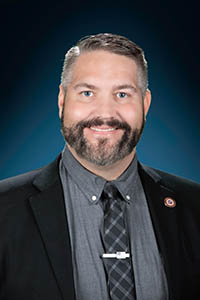
“Arizona voters deserve elections that are free, fair, and transparent. It shouldn’t take weeks to count ballots,” said House Speaker Steve Montenegro, R-Goodyear. 

Election officials such as former Maricopa County Recorder Stephen Richer have cited “late early ballots,” or early ballots that are turned in at a voting location on Election Day, as the most significant factor causing the delayed results. 

By moving the deadline to return an early ballot to the Friday before an election, proponents seek to eliminate the problem of late early ballots by giving election workers more time to process and verify signatures. The move would effectively align Arizona’s election system more closely with Florida’s, and that isn’t a coincidence. 

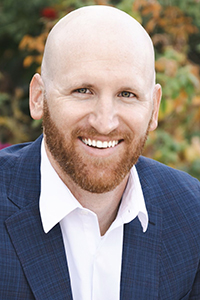
The sponsor of HCR2001, Rep. Alexander Kolodin, R-Scottsdale, has credited Florida’s election system for the idea and has made its adoption a personal goal for the last two years. 

On the House floor, Kolodin blamed “bad faith” negotiations from some Senate Republicans for blocking his measure in the past. This year’s version of the measure includes a requirement for an individual to show a government-issued identification card in order to return a mail ballot, which Kolodin said some Senate GOP members weren’t happy with. 

“Voter ID aligns with President Trump’s agenda for securing our elections. And to the Republicans in this body, it is nonnegotiable,” Kolodin said. “For two years, certain Republicans in the Senate have played a game of cat and mouse in bad faith, requesting ever-changing lists of demands and begging us to chase the ball.”

Two other House Republicans on the House Federalism, Military Affairs and Elections Committee also publicly said they wouldn’t budge on a voter ID requirement. The committee’s chairman, Rep. John Gillette, R-Kingman, said any bill he receives from the Senate in his committee that doesn’t include voter ID is “dead on arrival.”

“In regards to voter ID, this is not something that we should even be discussing, especially with our friends over in the Senate,” said Rep. Rachel Keshel, R-Tucson. 

In a text to the Arizona Capitol Times, Senate President Warren Petersen, R-Queen Creek, wrote that he wasn’t sure why some Republicans were critical of the Senate and reaffirmed his caucus’ support for voter ID. 

“I believe we have the support to get it on the ballot,” Peterson wrote.

In the 2025 legislative session, the Senate failed to pass the predecessor of this year’s measure, HCR2013, after a marathon session abruptly ended following the Senate’s attempt to adjourn without consent of the House. The final result? A failed 11-18 vote at nearly 1 a.m. on June 20.

Sen. Shawnna Bolick, R-Phoenix, said during that vote that a floor amendment added that night which removed all provisions relating to the new Friday early ballot deadline from the measure, was made without her agreement, so she voted against it. Sens. Janae Shamp, R-Surprise; David Gowan, R-Sierra Vista; and Hildy Anguis, R-Bullhead City, also voted against it.

In addition to moving the early voting deadline, this year’s measure would require voters to confirm their address with their county recorder each biennial general election if they want to stay on the Active Early Voting List.

No Democrat in the House voted for the measure.

In context, about 80% of Arizonans vote by mail, according to the Arizona Clean Elections Commission, and Democrats did not want to implement a policy that would make it more difficult for that population of voters. 

“This should be called the bill to kill vote by mail,” said House Minority Leader Oscar De Los Santos, D-Laveen. 

De Los Santos also said he believes the measure is unnecessary as a constitutional amendment because the Arizona Constitution already requires citizenship to vote.

Kolodin disagrees with the idea that he’s trying to end voting by mail. 

“It doesn’t change really anything about vote by mail other than making sure that there’s some form of government issue ID provided with it,” he said.

If the Florida-style election system were adopted as a constitutional amendment, it would make the law much more difficult to change or update in the future. That’s because Arizona law requires a supermajority vote from the Legislature to change constitutional measures that are placed on the ballot and approved by voters.

The first bill that Hobbs vetoed in the 2025 session was a version of a Florida-style elections measure – House Bill 2703. The governor wrote in her veto letter that she believed the measure would disenfranchise voters, and she would not support a bill that makes it less convenient for people to vote.
Who’s Maricopa County Recorder depends on legal interpretation – for now

Think you know who’s the current Maricopa County recorder?

You may be wrong.

And it’s all because of how the Arizona Constitution is worded.

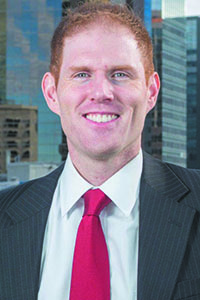
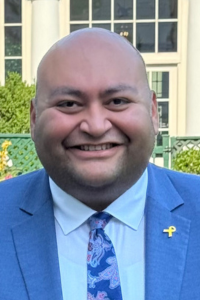
Yes, Republican Justin Heap won the November election, defeating Democrat Tim Stringham. And, under normal circumstances, county elected officials take office on the first Monday of the new year.

In fact, Heap was sworn in to his new position Monday afternoon.

But it’s not that simple.

elections, voter intimidation, ballots, Richer, Kavanagh, legislation, hand counts, tabulation
Maricopa County Recorder Stephen Richer

Heap was elected a state representative from Mesa in 2022. And the Arizona Constitution says no member of the Legislature is eligible to hold any other office or be employed by the state, county or any city “during the term for which he shall have been elected.”

More to the point, lawmakers legally remain in office until their successors are sworn in. And that won’t occur until noon on Jan. 13.

At least part of the point of the provision is to keep state lawmakers from creating some new government position and then quitting their $24,000-a-year job as a legislator to take that more lucrative post. And while Heap and lawmakers didn’t create a new post of county recorder, that still doesn’t permit him to be employed there just yet.

So who, right now, is the recorder?

Richer said it’s him.

He was the recorder, first elected in 2020. But he was defeated in last year’s GOP primary by Heap.

Under normal circumstances, the terms of county officials are up the first week of the year.

But the Arizona Constitution has a provision to cover that. It says that the term of every elected or appointed officer “shall extend until his successor shall be elected and shall qualify.” 

And if Heap is not yet qualified to be recorder, that leaves Richer in office for another week.

Richer, who is an attorney, told Capitol Media Services that’s his reading of how the constitutional provision works. More to the point, he said that’s the advice he got from the Maricopa County Attorney’s Office.

A spokeswoman for the office confirmed that the advice was given.

But Heap, who also is a lawyer, said he got his own advice from attorneys at the state House of Representatives. And he said they told him that his term as a legislator ended on Monday, meaning he was free to be sworn in for his new job as the county’s 31st recorder.

A House spokesman confirmed that there was such advice.

Richer said he saw no reason to challenge the move. In fact, anticipating that Heap would claim the office immediately, Richer said he moved out all of his personal belongings Friday lest he find himself locked out of his own office.

Anyway, he said, he is preparing to teach at Harvard Law for the next year.

The issue of how long lawmakers serve, however, is far from new.

In 1980, for example, then state Rep. Arnold Jeffers, a Tucson Republican, got elected to be the Pima County Assessor.

Jeffers, however, did not take office on the first Monday of 1981 along with all the other elected county officials. Instead, he was told he had to wait a week since, strictly speaking, he was still a legislator until his successor was sworn in.

In fact, Jeffers said, the way the constitutional provision is worded it would not have made a difference even if he resigned: He was still in the term for which he had been elected.

And that left Steve Emerine as assessor for the extra week.

The interpretation that Heap said he got about the terms of state lawmakers ending the first Monday of January presents an interesting issue: If all the lawmakers are out of office now and the new legislators are not being sworn in until Jan. 13, is there a state Legislature this week that can be called upon if necessary?

“Effectively, no,” said Heap. But he said that makes it “the best week of the year for the people of Arizona.”


Lake, Richer settle defamation suit

Stephen Richer has settled his defamation lawsuit against Kari Lake.

The agreement comes eight months after Lake conceded in legal papers she had, in fact, made false statements about the Maricopa County recorder and the way he conducted the 2022 gubernatorial race that she lost to Katie Hobbs.

elections, voter intimidation, ballots, Richer, Kavanagh, legislation, hand counts, tabulation
Maricopa County Recorder Stephen Richer

Despite that, Lake and her husband, Bruce Halperin, continued to argue that they did not owe Richer anything – or at least very little -– saying that there was no evidence he actually was harmed.

No details were released. But an attorney involved in the case confirmed it was resolved on mutually agreeable terms.

In her March filing in Maricopa County Superior Court, Lake effectively defaulted on the lawsuit, acknowledging everything that Richer first alleged.

That specifically included that she knew it was false when she claimed he had “sabotaged” the 2022 election by having ballots printed in the wrong size so they would not be read by on-site tabulators. Lake also acknowledged that she knew it was false when she claimed that Richer illegally inserted more than 300,000 phony early ballots into the system.

But that did not end the litigation.

In a video statement at the time explaining her decision, Lake insisted her legal capitulation had nothing to do with her conceding that what she said was factually wrong – even if that’s exactly what was in the legal papers filed in Maricopa County Superior Court. Instead, she said it was a strategic move to allow her to focus her attention on her bid for the U.S. Senate.

“By participating in this lawsuit it would only serve to legitimize this perversion of our legal system and allow bad actors to interfere in our upcoming election,” Lake said.

As it turned out, Lake lost to Democrat Ruben Gallego by close to 80,000 votes.

Richer, for his part, said Lake’s March filing was a total victory for him and his fight to clear his name of the charges Lake made.

“It is now official that she accepts that all of that is a lie,” he told Capitol Media Services.

“She has been lying the entire time, we have told her she has been lying the entire time,” Richer said. And he said Lake knew she was lying because judges in other election cases she had filed challenging her loss had found there was no basis for either the claim that the ballots were deliberately mis-sized or that there had been fraudulent ballots inserted into the final count of the election that was won by Democrat Katie Hobbs by 17,117 votes.

“And now she officially will have a judgment entered against her for lying about me in connection with the 2022 election,” Richer said.

In filing suit last year, Richer said that Lake, her campaign, and the Save Arizona Fund, a political action committee which she has used to raise money, all acted with “actual malice.” That is crucial because, in general, people who are considered public figures like Richer cannot get a defamation judgment unless they prove by clear and convincing evidence that the person making the statement knew it to be false or that the statement was made with reckless disregard for the truth.

Lake initially sought to have the case thrown out, claiming that her comments were “mere rhetorical hyperbole” that were never meant as statements of fact. A trial judge rejected that assertion, a decision upheld earlier this year by the Arizona Supreme Court.

That left only two options for Lake: go to trial or concede. Richer said at the time that, based on Lake’s record in this case, he presumed she would choose the former.

“I thought, great, we’ll relitigate whether 2022 was stolen or not for the umpteenth time,” he told Capitol Media Services at the time. “But, apparently, she doesn’t want to do that.”

Lake, however, had a different explanation for her decision.

“It’s called lawfare: weaponizing the legal system to punish, impoverish and destroy political opponents,” she said.

Once Lake admitted liability, what that left was figuring out how much she owes Richer, something Lake wanted determined by a jury.

In legal filings, Tim La Sota, one of Lake’s attorneys, said the decision not to fight the defamation claim placed the burden on Richer to prove how he was harmed.

That, he said, included showing that any damage to Richer’s reputation was caused by anything Lake did or said. He argued there were plenty of other reasons the recorder suffered what he said in his complaint was a “decline in career prospects.”

For example, La Sota said, Richer had made comments about Donald Trump, at one point calling the former president “unhinged” for accusing the county of deleting an elections database.

Whatever the reason, Richer lost his bid for a new four-year term when he was defeated in the Republican primary by state Rep. Justin Heap. The Mesa Republican then won the general election over Democrat Tim Stringham.

But Richer also claimed actual expenses, like additional security for his home and family he said was necessary because of threats, including calls for their execution. Then there are the damages Richer said to his reputation.

And Daniel Maynard, his attorney, said in court filings there was also the aspect of “unjust enrichment.” That, he said, is based on the amount of money both her campaign and her political action committee took in each time Lake made one of her false statements and then used those statements to solicit donations on social media.

In filing suit, he pointed to a website for her political action committee that featured a six-minute video of Lake discussing the 2022 election and accusing Richer of intentionally sabotaging the election. The site also asked visitors to “donate to support Kari Lake and Save Arizona,” seeking donations from $25 to $100,000.

Maynard said at the time he believed that just between Dec. 5 and Dec. 24 she raised hundreds of thousands of dollars through the Save Arizona Fund. That was a period when the trial judge in a separate case Lake filed to challenge her election loss determined there was no evidence of fraud in the election. And Maynard said all the funds raised have been used to boost Lake’s political ambitions.

For example, Maynard said, the Save Arizona Fund paid for campaign events in Iowa where Lake had met with voters.

“That follows a prior pattern where Lake has told her supporters that fundraising money was needed to contest the election, but then spent the money raised on other items, including more than $35,000 on travel and hotel accommodations,” Maynard said.

There also was something else that could have paved the way for a settlement.

In admitting that she acted with actual malice, Lake opened herself up to having to pay punitive damages. These are awards designed not so much to compensate victims but to punish those who are liable.


Matt Salmon: Unbridled and seeking to return Republicans to their roots

Eight years after his congressional career ended, former U.S. Rep.  Matt Salmon has become one of the state’s most vocal critics of the Republican party. Salmon, with the help of other conservatives like Maricopa County Recorder Stephen Richer, former state Sen. Paul Boyer and Maricopa County Supervisors Clint Hickman and Bill Gates, is spearheading the newly formed organization, Conservative Agenda for Arizona, to help conservatives like himself find a home in Arizona’s political scene.

The questions and answers have been edited lightly for style and clarity.

Tell me about your organization.

There’ve been a lot of Republicans that I’ve spoken with that feel like the current Republican party just doesn’t represent them any more. With so many conspiracy theories that have been thrown out there and the election denialism, a lot of conservatives want to get back to our roots so to speak. The idea that we’re focused on a smaller government, less taxes, low regulation, safe neighborhoods, strong education. Those are the kinds of things that motivated conservatives for years and years. A strong military, free trade, pro business. Ronald Reagan was running for president when I registered and he embodied all of those things. Today, the Republican Party seems more committed to the personality of one individual rather than ideas and conservative policies.

What are some of the steps the group has taken to accomplish this?

We’ve organized the group. We’ve created a webpage. We’ve filed as an organization. We had a kick off event with former Gov. Jan Brewer speaking. Next, we just want to really do a couple things. We want to recruit like-minded people to come and participate with the group, but we also want to get back to actually drafting policy and putting that policy out there.

Any specific policy in mind?

Lower taxes, lower regulations, smaller government. One of the things just off the top of my head that I am very committed to at the federal level is a balanced budget amendment to the U.S. Constitution so that the people in Congress have to balance the budget every year instead of deficit spending as far as the eye can see. Term limits is another thing I’m really committed to. I was part of the team in Congress that actually balanced the budget four years in a row. That’s only been done once in the last 100 years. Runaway spending creates monetary policy at the Federal Reserve of printing more money and the end result is hyperinflation, which we’ve seen. It’s directly related to the spending that’s going on in D.C. 

How do you reach a voter who is still unconvinced about our elections?

We’re trying, and I think repetition is a good thing. Providing people with the facts. The fact that there have been literally dozens of lawsuits filed across the country and they’ve all been unsuccessful regarding a stolen election or a failed election. I mean the Republican party has long considered itself to be the party of rule of law and rule of law means that you abide by what happens in the court system. Evidence is an important thing. One of my heroes was John Adams, one of the framers of the Declaration of Independence and the Constitution. Adams once said “facts are stubborn things.” I think that we need to make facts stubborn things and just keep repeating them until people understand what the facts are.

What was different about your two runs in Congress?

It was far more polarizing.There were no Blue Dog Democrats anymore. There were very few Centrists. I’m very conservative, but I think you have to have a balance.  Social media didn’t exist when I was in Congress the first time and it existed in a big way my second time. I think a lot of the problems were because of 24-hour-news cycles and social media. It contributed a lot to the problem – people providing misinformation through social media but also just people being so unkind. Many times, not even backing up their accusations with facts or even their real name. That really contributed in a big way toward the degradation of working together. For one thing too, I never saw a president that disrespected the Congress as much as Obama. He really tried to do everything through executive order and he kind of operated more like a king than a president. Obama wasn’t the first to really exceed constitutional authority through executive orders but he sure put it on steroids.

Favorite moment from office?

The very first year that we balanced the budget because it hadn’t been done in over 40 years. The fact that we did it four years in a row – I was very happy when I left because we had a balanced budget and had a surplus of $140 billion. I felt like I had done my job because the thing I was most concerned about when I ran for Congress was the deficit spending and the federal debt growing as it was.

What was the worst part of the job?

About 80% of the time, I was away from my family. Another worst part of the job is the pressure from the leadership in your own party to capitulate on your beliefs and do what they tell you to do. Both parties do it. It’s very frustrating for me. You don’t get placed on committees unless you basically agree to give them your voting card. I don’t think that’s what the American people expect. I remember one time a speaker referred to himself as the “boss” and I said you’re not the boss. The people are the boss, they’re the ones that elected us. I don’t report to you and you can’t hire me and you can’t fire me. You are the person that runs this place but you’re not my boss. Both parties don’t seem to have a real meritocracy. If you’re willing to raise money for your party, then they put you on the A-level Committees. If not, then they put you on other committees. So many people are joining the independent ranks because people are fed up with both parties being so self-serving. 

Tell me more about these A level committees.

The A level Committees are Energy and Commerce, Ways and Means, and Appropriations in the House side. Banking and Insurance is probably an A-minus committee but if you want to serve on one of those committees you have to basically pledge your life away and raise hundreds of thousands a year for the national Republican Congressional committee. They ought to be putting people on there that know something about those subjects. That’s what voters expect and that’s what they deserve.

What’s life been like for you post-Congress?

I’ve been able to spend a lot more time with my children, my grandchildren, my wife, and that’s been incredibly important. I’ve been able to be a lot more outspoken. When you’re in office, you’re always worried about the next election. It’s liberating to not concern yourself with that. Many of my former colleagues are so afraid to speak truth to power because they’re afraid that under the current regime, they’ll be primaried and it’ll be a tough election. They’re more concerned about that than speaking truth and that’s tragic. Now, I don’t have to pull any punches. I can say what I believe without concern of an election. We need a lot more truth speaking because our nation is in a bad way right now. It’s the greatest nation on Earth but I’ve never seen it so polarized, where people hate one another for their beliefs. Political beliefs, religious beliefs, whatever. They literally hate them and sometimes on both sides of the aisle, they wish them violence. That’s really tragic and sad. We shouldn’t be here.

Why are term limits important to you?

You don’t worry about losing. I made a term limit pledge when I was first elected. It was really liberating. Under the traditional set up, it was shackling because people considered me a lame duck from day one. I took on the speaker of the House Newt Gingrich. I went on to Larry King Live and Good Morning America, and I said I’ve got five votes with me to deny Gingrich the speakership and two days later, he resigned. Would most people in my position, if you were worried about serving for the rest of your life, do something like that? No.

Are you nervous about the upcoming election?

Yeah. Either way, and I can’t tell you how many people have brought it up to me that they’re nervous too. They’re nervous that there’s going to be violence either way the election goes.

I’m surprised to see a founding member of the House Freedom Caucus take on the position that you have.

The House Freedom Caucus started out with very good intentions.. It was a group of fiscal hawks that was about balancing the budget. That was our number one job. It was about adhering to Constitutional principles and holding the body accountable. it morphed into a cheering section for Trump when I left. They became a bunch of sycophants and people that were rubber stamps for whatever Trump wanted. Trump actually added more into the federal deficit than any other president in one term in the history of the country, including Joe Biden. I wouldn’t have stood for that. In a way, it was kind of a blessing I left when he was elected because I actually took our mandate seriously. He’s not a conservative. Never has been.

Political Threats and Violence Cannot Be Ignored

As a former elected official who has faced death threats and survived the January 8th shooting in Tucson, Arizona, I have a unique perspective on the alarming rise of political violence in America. This issue, once a rare and shocking occurrence, has become disturbingly common in recent years. The threats and attacks against individuals based on political ideology are unfortunately not just isolated incidents; they reflect a growing culture of hostility and aggression that threatens the very fabric of our democracy.

Rep. Daniel Hernandez

The attack I survived in Tucson was a horrifying example of how heated rhetoric and divisive politics can lead to real-world violence. On that fateful day, a gunman opened fire at a constituent meeting, killing six people and injuring thirteen others, including Congresswoman Gabrielle Giffords. This tragic event was a stark reminder of the dangers faced by those who serve in public office.

Sadly, since that event, threats against election workers and elected officials have surged to unprecedented levels across the nation and here in Arizona. We have witnessed two horrendous and despicable assassination attempts on former President Donald. There is no place for violence of any kind in our political process or anywhere else. Whether I support a particular candidate or not,

I am appalled at the actions of some to potentially negate the will of the American people.

Recently, a Democratic campaign office in Tempe was damaged by gunfire. Luckily, no one was injured. But this violent act has a chilling effect on the thousands of Democratic and Republican campaign volunteers across the state who are supporting in support of candidates. 

Earlier this year, a Maricopa County GOP Board Member made a reprehensible threat to lynch County Recorder Stephen Richer. This abhorrent statement, rather than being condemned, was met with silence from many within the party. This normalization of violent rhetoric within our political discourse is deeply troubling and sets a dangerous precedent.

The rise in political violence and threats is not just an issue of personal safety; it strikes at the heart of our democratic institutions. When election workers and elected officials are targeted, it undermines the integrity of our electoral process. The constant barrage of threats creates an environment of fear and intimidation, discouraging people from serving in public roles, eroding public trust in our government, and creating fear among voters when they cast their ballot.

It is imperative that we, as a nation, take a stand against this culture of violence. Political leaders, regardless of party affiliation, must unequivocally condemn threats and acts of violence and together we must work to change our political discourse away from unfounded conspiracy theories and violent rhetoric to one of truth and mutual respect. It is important that we recognize that we may have differing opinions, but violence is never an acceptable means of resolving our differences.

There is no justification for using violence or violent rhetoric to settle political disputes or to intimidate opponents. We must all stand united in condemning such acts, regardless of our political affiliations or beliefs. Our commitment to nonviolence must be unwavering, for the sake of our democracy and the future of our nation.

Daniel Hernandez is a former legislator from Tucson and board member of the Democracy Defense Project

Arizona Supreme Court asked to address nearly 100,000 voters made ineligible by 2005 law

PHOENIX – The Arizona Supreme Court is being asked to decide whether close to 100,000 registered voters can cast a ballot in upcoming state and local elections.

A pair of lawsuits being filed today ask the justices to decide how the state and counties must deal with the fact that there is no evidence that close to 2.5% of all voters have not provided the legally required “documented proof of citizenship.” That makes them legally ineligible to vote a full ballot under the terms of a law that took effect Jan. 24, 2005.

Maricopa County Recorder Stephen Richer wants the court to declare that the affected individuals will be able to vote only in federal races. That’s because federal law has no such proof-of-citizenship requirement to cast a ballot for president, Senate or House.

But Secretary of State Adrian Fontes is filing his own legal papers, saying there is no reason to believe that virtually all of these people – many of whom have been voting for years – are not actually citizens, even if the paperwork is missing. He said all have signed forms swearing, under penalty of perjury, that they are eligible to cast a ballot.

There’s also the chaos it would cause so close to the election.

Both Richer and Fontes describe their litigation as “friendly,” designed to get a clear decision from the Supreme Court – perhaps by the end of the week.

Speed is crucial.

Overseas ballots are supposed to go out by Friday. And early ballots will be mailed in less than a month.

What’s behind the last-minute scramble is that a check of records by Richer’s office found that someone who was presumed registered to vote in all elections had never provided the legally required “documented proof of citizenship.” And that, he said, means that person had not complied with that 2005 law.

Fontes said that discovery led his own agency to take a closer look at others in the voter rolls. And what his staff found, he said, was something close to 98,000 who are in the same situation.

The secretary of state stressed stressed this wasn’t intentional, saying many of these people have been voting for years – and their ballots have been accepted – under the premise they were in compliance with the law.

Still, it is likely to rekindle complaints by some who insist that the state’s election rolls are packed with people who are ineligible. That includes a federal court lawsuit by a conservative group which is accusing all 15 county recorders of failing to do their jobs to ensure that only citizens are voting.

It starts with that 2005 law which imposed the state’s first-ever requirement for proof of citizenship to register, a requirement that exists nowhere else in the country.

But that law also says anyone registering from that point forward who already had a driver’s license issued after Oct, 1, 1996 is presumed to be legally registered. That’s the effective date of a law signed by then-Gov. Jan Brewer that individuals needed to prove legal presence to get a license.

And the same law essentially grandfathered in as presumed to be a citizen anyone whose license is older than that, all without having to provide new citizenship proof.

The problem involves those who registered to vote after that 2005 effective date but whose driver licenses predate 1996.

As new registrants, they expect to provide documentary proof of citizenship, regardless of the age of their license. Ditto those who move to another county and reregister to vote there.

That, said Fontes, normally triggers a check of MVD records.

Richer said the problem is that some people who had pre-1996 licenses – the ones without proof of citizenship – have gone to MVD for a duplicate license or to change their address.

The agency, however, used this new issue date indicating the person actually had a post-1996 license – meaning they had provided proof of citizenship – when, in fact, they never had. And county election officials, relying on those MVD records when facing someone trying to register to vote after 2004, never asked for any citizenship proof.

“This data coding oversight resulted in an inaccurate belief that certain people had provided documentary proof of citizenship to the MVD,” according to Fontes’ office.

It only came to light earlier this month.

Maricopa County was checking the citizenship of one person who had one of those older licenses who was updating voter registration. It turned out that this person was a lawfully permanent resident – entitled to an Arizona license under the 1996 law – but not a citizen, with the issue being that MVD coding.

Fontes said despite the registration, that person never cast a ballot.

Now aware of the problem, Fontes said further checks were made across the system. And he believes there are about 98,000 whose records reflect the lack of submission of documentary proof of citizenship.

“We don’t have any reason to believe that anyone in this gap is not an eligible voter,” Fontes said.

“We don’t have any reason to believe that they’re not eligible citizens in spite of the fact that we did find one,” he continued. “All we know is they fit into this category and all of this requires more research.”

But with time running out, the plan was hatched to have Maricopa County ask the Supreme Court for an order spelling out that anyone in this category could cast a federal-only ballot. That is based on that federal law saying people can vote in federal elections without proof of citizenship.

Then, the Secretary of State’s Office would be ready with a response asking the justices to allow those affected to vote in all elections, as they have been doing until now.

“I think that they should,” said Fontes. “Each of these individuals have sworn an affidavit, under penalty of perjury, that they are United States citizens.”

In fact, Fontes said, that is sufficient in the other 49 states to register to vote. Only Arizona requires would-be registrants to provide documentary proof.

But the real goal is to get a definitive decision – which the state Supreme Court should be able to provide – as soon as possible. Fontes said since this is strictly an interpretation of state law, there is no reason for federal court involvement.

He said if the justices conclude that these people are entitled to vote only in federal races there will be an outreach effort to let them know – and not just that they will get a ballot without state and local races, either when early ballots go out or when they show up at the polls.

Fontes said there’s actually another option for those who want to cast a full ballot. He said they can provide proof of citizenship to county officials, the same proof now required of new registrants, right up through 7 p.m. on Election Day.

Not everyone with a pre-1996 license falls into this questionable category, even if they haven’t changed their voter registration.

Fontes said many people have applied for a Real ID. That is an enhanced driver’s license that, among other things, will be required next year to board a commercial aircraft.

And, in getting a Real ID, an applicant had to provide proof of citizenship like a passport, meaning they are, and remain, eligible to vote in all elections.

Fontes also said none of this has any legal effect on prior elections, even if it turns out that someone without the required proof of citizenship voted on a statewide race. He said courts presume that there has to be finality to elections.

Of those affected, Fontes said it appears they are spread out among all the counties in about the same percentages as the number of registered voters.

So, for example, of the slightly more than 4.1 million registered voters, he would expect about 59% of them to be from Maricopa County, 15% from Pima County, close to 6.5% from Pinal County, about 4.1% from Yavapai County and the remainder in proportion to the remaining counties.

Fontes said it also appears that there are more Republicans on the list than Democrats or independents, also largely a function of total registration.

Gov. Katie Hobbs, in a prepared statement, said she identified and fixed what she called an “administrative error” dating back to 2004.

As soon as I became aware of the problem, I directed MVD to aggressively develop and implement a solution,” she said. Hobbs also said that she “will be implementing an independent audit to ensure that MVD systems are functioning as necessary to support voter registration.”

All of this is occurring as some Republicans on the state and national level, without citing proof, contend that people who are not citizens are affecting federal elections. They are pushing for a national law to require proof of citizenship to vote in federal elections.

Groups sue officials to remove illegal voters from rolls

Unhappy with the response to its queries about possible illegal voters, an Arizona group that has claimed election irregularity in the state is now suing all 15 county recorders, accusing them of failing to do their jobs to ensure that only citizens are voting.

The new filing Sept. 4 by Strong Communities Foundation of Arizona contends the recorders have an obligation under both state and federal statutes to perform “list maintenance” on their voter rolls. More to the point, the organization and its legal team, formed by former Donald Trump adviser Stephen Miller, are telling U.S. District Court Judge Susan Bolton that the recorders are not complying with those laws s.

Now they want the judge to order the recorders to make what they claim are mandatory checks. And they also want the recorders to turn over a list of those who registered without providing proof of citizenship, which is legal, to Attorney General Kris Mayes.

Maricopa County Recorder Stephen Richer, who was the first one sued last month, already has denied his agency is not following the law.

The expanded lawsuit comes because America First Legal, which is representing Strong Communities, sent similar letters to the 14 other county recorders demanding they follow the law as attorney James Rogers sees it. Now it has added them to the lawsuit.

“The defendants have ignored these requirements,” Rogers said of the county officials.

“They have failed to take the actions required by law to ensure that foreign citizens are removed from their voter rolls,” he wrote in the lawsuit. “These failures cause voters to lose confidence in the integrity of our election system.”

But Gov. Katie Hobbs, on Sept. 6 was asked about this litigation and other similar lawsuits Hobbs said it is the challengers who are causing the problem.

“I think it is absolutely unconscionable that folks are trying to, as we head into this important election season, this close to an election … that they’re trying to undo and upend how we do elections and how Arizonans can have their voices heard,” she said. “We’re going to do everything we can to make sure the processes in place which ensure that we have accurate and secure elections stay in place so that Arizonans can participate.”

The issue surrounds the National Voter Registration Act. It allows people to register to vote without the same proof of citizenship that the state requires on its own forms.

But those who use the federal form can vote only in presidential and congressional races. At last count there were more than 41,000 on that list out of more than 4.1 million registered voters in Arizona.

Rogers acknowledges what the federal law allows. But he insists that it doesn’t absolve election officials of a separate affirmative duty to use other resources and databases to scrub the rolls of anyone who is not a citizen.

“Foreign citizens do register to vote,” he told Bolton.

And Miller, who is president of America First Legal, said his organization “will do everything in its power to fight mass illegal alien voting and foreign interference in our democracy.”

The evidence cited in the lawsuit about illegal voters, however, consists solely of information about efforts in other states where election officials said they had purged foreign voters from the rolls, including situations where Rogers said some actually had voted.

There is nothing in the litigation, however, that suggests people who are not citizens are signing up to vote in Arizona, much less they are actually casting ballots. And neither Strong Communities or America First Legal responded to requests for any evidence they have.

Hobbs, for her part, said she doubts those federal-only voters are not citizens.

“These are people who didn’t have the documentary proof of citizenship at the time of registering with the federal form,” she said.

“That does not mean that they’re not eligible voters,” the governor continued. “And our systems in place ensure that every voter who’s registered is eligible to vote.”

That’s also the assessment of the Secretary of State’s Office, which is not a defendant in this lawsuit.

“The federal only ballots are made up of groups like Native Americans, college students and the elderly,” those who may not have easy access to the documents to prove citizenship, said office spokesman Aaron Thacker.

Pima County Recorder Gabriella Cazares-Kelly, asked Sept. 6 about the new lawsuit, responded with a copy of a letter she sent when he first threatened to sue her in July. In it, she detailed the activities of her office to ensure that anyone who signs up using the federal form is eligible. And, like Hobbs, she questioned the premise of charges to the contrary.

“Reality has proven that as a general rule, those who are not citizens do not register to vote.” Cazares-Kelly wrote. “In rare cases where someone who is not eligible actually attempts to register to vote, there are safeguards and laws to ensure that only eligible persons can vote.”

Others, like Cochise County Recorder David Stevens, said he did not want to respond now that there is an active lawsuit against him.

Democrat running as ‘firewall’ in county recorder race

When Maricopa County Recorder Stephen Richer lost his re-election bid in the Republican primary on July 30, many in Arizona were surprised. But the Democrat running to replace him was not. 

Tim Stringham, who ran unopposed in the Democratic primary for recorder, stayed mostly in the background while three Republicans duked it out and gave varying opinions on whether previous elections in the state had been stolen. But after Richer’s loss to state Rep. Justin Heap, R-Mesa, a groundswell of support emerged for Stringham as elected officials, candidates and voters reacted to the toppling of an important figure in Arizona elections. 

“The people that were the most surprised about what happened in the primary were the people who were paid to know what would happen in the primary,” Stringham said. 

Since taking over the Recorder’s Office in 2021, Richer fought against a sea of conspiracy theories related to the 2020 presidential and 2022 midterm elections. Heap, who could be his successor, has not answered questions about whether he believes those elections were stolen or interfered with. He is running on a platform that describes elections in Maricopa County as a “laughing stock” and has promised to undo many of Richer’s efforts.

Tim Stringham

A veteran with a law degree, Stringham said he only jumped into the race as a “firewall” against more right-wing candidates like Heap. 

Stringham served in the U.S. Army before heading to law school at the University of Notre Dame. He went from law school to the U.S. Navy Judge Advocate General’s Corps, where he served on active duty as an attorney practicing international and military operational law.

After the military, Stringham returned to his home state of Arizona and began working in veterans’ advocacy, which is how he learned about the recorder’s race. 

Stringham said his campaign for recorder is partially motivated by his military service.

“I took an oath to the Constitution in the United States,” Stringham said. “This little segue in my life for the next four years is about trying to honor that oath.”

Stringham said he only considered running for recorder after realizing that Democrats in Maricopa County were convinced Richer was unbeatable. Eventually he was recruited to run by the county Democratic Party Executive Director Jon Ryder, but said party members were still sure Richer would win.

“[I thought] ‘the Republican incumbent probably isn’t going to win his bid in the Republican primary,’” Stringham said. “So why is it they can’t find anybody? Why would you find me off the street? Why isn’t there some aspiring politician?’ The answer that we kept getting from people over and over was that Stephen Richer was raising so much money he wasn’t beatable.”

Heap, House, infants, Hobbs, Hernandez, birth
Rep. Justin Heap, R-Mesa

According to the most recent campaign finance reports, Richer had nearly $200,000 in cash on hand ahead of the July 30 primary and had raised nearly $500,000 during the election cycle. Heap had around $81,000 in cash before the primary and has raised around $182,000 since his campaign began. 

Richer also had an incumbent advantage and received a fair amount of national media attention throughout his tenure, making him a well-known name not just in Maricopa County but across the state. Heap and Stringham have far less name recognition to lean on in the November general election. 

Stringham said he met with Richer last year to let him know he would be running as a Democratic challenger. While he respects Richer and the job he has done, Stringham said the meeting solidified for him the need for a contingency plan.

“I think [Richer] knew that this would be an uphill battle, but I left very unconvinced … that he actually had a viable path in the Republican primary,” Stringham said.

Democrats are now coming out in full force for Stringham, who saw his social media following and campaign donations skyrocket overnight. Tony Cani, a Democratic political strategist, said in a post on X that Stringham raised more than $50,000 in the day after Richer’s loss. 

Heap’s win in the primary means a Democrat has a much better chance of taking the seat, something Stringham has acknowledged.

“We knew that if Stephen Richer had won his primary, we would lose the race,” Stringham said. 

However, Stringham said this is still “an uphill race” and a win for him will require Republican supporters of Richer to vote Democrat. Arizona Republicans have been reaching across the aisle this election cycle to endorse Democrats like Kamala Harris for president and Ruben Gallego for U.S.Senate. Richer himself said he would vote for President Joe Biden before Biden stepped out of the presidential race. 

Richer garnered 129,344 votes in the primary and Stringham said he is already receiving “effusive” support from those voters.

“We have these conversations with Republicans who two, three days ago, were on Stephen Richer’s side, and we’ll talk to them and they’re like, ‘Hey, we’re so excited to support you.’” 

So far, Richer has not endorsed a replacement for himself, but Stringham said he hopes to meet with the incumbent soon to discuss it. Richer did not respond to a request for comment on his endorsement plans. 

Stringham wants voters to know that he has voted for Democrats and Republicans in the past and does not plan on making a career out of politics. He referred to his run for recorder as a “segue” and said he tells his staff he plans to buy a boat and sail around the world in four years if he makes it to the Recorder’s Office. Stringham said he might consider staying if he loves the job, but he hopes either Democrats or Republicans find someone better to replace him in 2028. 

He said he knows he’s not the most qualified person for the job, but that the current political climate is “driving good people out.”

“If the Democrats or the Republicans are in a position where they can bench me in four years and bring out somebody who really is a qualified elections official that hopefully we’ve inspired to get in, that’s my victory,” Stringham said. “That’s what I want to see.”

If Stringham is lucky, he might succumb to the Recorder’s Office “curse,” described by Richer in a post on X after his loss on July 30. Both Richer and his predecessor, Secretary of State Adrian Fontes, only served one term before losing their bids for re-election. 

Stringham said voters should take those losses as a sign that elections in the county are running as they should. 

“I hope some of them are taking a look at it and saying, ‘Well, we had two back-to-back elections officials who were accused of rigging elections and they failed to rig their own elections,’” Stringham said. “Maybe this process is a little bit safer than you thought it was.”

Heap did not immediately respond to a request for comment. 


Court keeps names of low-level election workers secret

Members of the public aren’t entitled to know the names of election workers who review the signatures on ballot envelopes, a judge ruled Thursday.

We The People, an organization that has aligned itself with Kari Lake, had sought the information from Maricopa County since January 2020. The group said it wanted to conduct further investigations given how quickly it said some signatures were verified.

In a five-page ruling, Maricopa County Superior Court Judge Scott Blaney, an appointee of former Gov. Doug Ducey, said that such information is generally considered a public record. But he said that presumption can be overridden if there is a legitimate public interest.

And in this case, he said, there was credible evidence of threats or harassment of workers. And that, said Blaney, trumps the public’s right to know.

Much of what is behind the request goes back to efforts by Lake to overturn her 2022 election loss in the governor’s race to Katie Hobbs.

One of her witnesses she called said about 274,000 signatures on early ballots were compared to samples in less than three seconds, with about 70,000 in two seconds or less. So far, though, courts have thrown out all of Lake’s challenges, even ruling the evidence of the time taken to be legally irrelevant.

Blaney said We The People, in its own action filed in April 2023, submitted evidence that some signature verifiers worked remotely from their homes during recent elections. And the group argued that the rapid pace, coupled with some confirming 100% of their signatures were valid, was highly improbable.

What getting their names would do, the group argued, would allow the workers to be interviewed about their training and procedures.

Maricopa County Recorder Stephen Richer agreed to provide the names of managers and those higher in the organization. But he refused to identify the lower-level employees, saying it could expose employees to harassment and threats.

“The public has a right to inspect public records,” Blaney wrote. He said anyone rejecting such a request has to demonstrate specifically how production would “violate rights of privacy or confidentiality or be detrimental to the bests interests of the state.”

That, said Blaney, is the case here, saying there was “credible, uncontested, sworn testimony” from two defense witnesses – Richer and Kristi Passarelli, former assistant director in the office – of “alarming threats that they personally received arising from their positions and activities in the Recorder’s Office.” And the judge noted that at the time of the hearing the U.S. Department of Justice had already charged three individuals for their threats to Richer and one had pleaded guilty.

Blaney said there was other evidence of security concerns, including a new black fence outside the facility, the addition of drones for surveillance, snipers on the roof, more security guards and the installation of bullet-proof glass.

“It is not reasonable to assume that the Recorder’s Office would take such extreme measures if the threats had not been as frequent, intense, and alarming as the defense alleged,” the judge wrote.

Then there was the concern that threats would have a chilling effect on Richer’s ability to recruit and retain employees.

“The Recorder’s Office could not accomplish its critical mission without sufficient temporary workers,” Blaney wrote. “These concerns outweigh the public’s right to know the identities of these lower level, non-managerial employees.”

He noted that Richer had offered to provide unique identification numbers for each of the workers. While that would not open them up to the interviews that We The People wanted, it would allow their data to be tracked.

A message to We The People was not immediately returned.

Richer lost his bid for reelection in the Republican primary to Rep. Justin Heap who now will face off in November against Democrat Tim Stringham.


Court dirt could become mud to sling in Senate campaigns

With ad blitzes impending and court dates orbiting closer to key election dates, court proceedings revolving around senate candidates Kari Lake and Ruben Gallego stand to reveal information that could...

Get 24/7 political news coverage and access to events honoring top political professionals

Kari Lake concedes defamation lawsuit brought by fellow Republican

Maricopa County Recorder Stephen Richer’s defamation suit against former gubernatorial and current Senate candidate Kari Lake is ending in a default judgment in Richer’s favor and an award of damages...

Get 24/7 political news coverage and access to events honoring top political professionals

You don't have credit card details available. You will be redirected to update payment method page. Click OK to continue.