Sign In
Upcoming Event
 Free Newsletter

Arizona program wipes out $429M in medical debt for 352,000 residents
Howard Fischer, Capitol Media Services//July 16, 2025//

Arizona program wipes out $429M in medical debt for 352,000 residents
Howard Fischer, Capitol Media Services//July 16, 2025//


Key Points:
-
Undue Medical Debt charity leverages donations to purchase and erase medical debt
-
Program using $10M in COVID funds provided by Gov. Hobbs
-
Debt forgiveness is anonymous, with recipients receiving a surprise letter
Owe a lot of money in medical debt?
If you’re eligible, it could be wiped out. And you won’t even know about it until after it’s done.
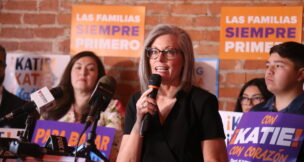
It’s all part of a year-old program where Gov. Katie Hobbs set aside $10 million in COVID funds to Undue Medical Debt. This organization leverages donations from governments and private donors to buy up unpaid debt from collection agencies and hospitals.
According to the governor’s office, the charity, having already used $2 million of the governor’s allocation, has erased $429 million in medical bills owed by about 352,000 state residents. An estimated $2 billion of medical debt for Arizonans could be wiped out by the time the charity runs out of funds.
And it’s all done anonymously — sort of — with the recipients not even knowing that the obligation has been wiped out until they get a letter from Undue Medical.
In fact, it’s impossible for anyone to actually apply: The charity finds you.
But the deal Hobbs cut with the charity does require that beneficiaries know that the financial relief is happening because of the governor’s action: It spells out that any fliers, advertisements, press releases or other marketing materials to include “logos or insignia as required by the governor’s office and approved by the governor’s office before publication.”
In fact, the letters sent to those who already have been recipients have the governor’s name and signature, something press aide Christian Slater defended as appropriate. He said they are designed to tell people not just that their medical debt was relieved but “how it happened.”
Why does the governor need the credit?
“The medical debt relief would not be possible without the governor’s leadership and focus on lowering costs and delivering economic opportunity for every Arizonan,” Slater said.
Undue Medical Debt, established in 2014, acquires portfolios of medical debt from health care providers or debt buyers.
Courtney Story, the charity’s vice president of government initiatives, said the targeted debt has reached the point where those who own it are willing to sell it for pennies on the dollar.
How much the debt is sold for depends on the situation.
Overall, she said, Undue Medical has been able to purchase at least $100 of debt from every dollar contributed from government partners.
So far, that ratio is better in Arizona, with the $2 million allocated able to wipe out $429 million — that translates to more than $200 for every state dollar.
“That is likely due to a chunk of this debt being a little bit older,” she said, with those holding the debt being more willing to sell it for less. However, Story said, that ratio may change.
“When we purchase debt from hospital systems it’s a little bit younger and a little bit more expensive over the course of the program,” she said.
But you can’t apply. Instead, Undue Medical has to find you.
It starts with eligibility.
The program is designed for individuals with an income below 400% of the federal poverty level. That is currently $128,600 for a family of four.
Also eligible are those whose debt is 5% or more of their annual income. That would aid those who have higher income levels than the cutoff, but much higher debt than they may be able to handle.
Undue Medical works with a credit reporting agency, buying what it calls “relevant income data” from them. That is then compared with the information it receives from medical providers and others who hold past-due debts.
Once the bills have been paid off, the patient receives a letter — in the case of Arizona residents, one signed by the governor and Allison Sesso, the organization’s president and CEO — stating that their debt is now cleared and that the credit bureaus have been notified.
What’s also crucial is that the patient starts from scratch.
Generally speaking, when a debt is forgiven, it can be considered income for tax purposes. But Story said that doesn’t apply when the money comes from a “disinterested third party.”
“Because we’re a nonprofit, we’re not part of the health care system, we count as a disinterested third party, as does the government,” she said. Ditto, Story said, for private donors, though they have the option of remaining anonymous.
There are other benefits beyond the immediate financial relief.
“We hear a lot of anecdotal stories from our beneficiaries that share that this medical debt relief was a mental burden that had really been affecting them,” she said. There also are potentially more tangible physical benefits. For example, people who, now relieved of their debt, feel comfortable seeking out medical care again.
“We’ve also heard that from hospitals that we partner with as well that once folks don’t owe this debt any more that they’re actually less afraid to go back and see the doctor, that they’re less afraid that they’re going to get a surprise bill or be made to pay that before they can receive care,” Story said.
“I have been plagued with lasting medical debt and figured it would stay with me forever,” said Charity from Scottsdale, who received a surprise letter from Undue Medical Debt. “You have no idea how much this helps, especially with my family is in such a need with my father in hospice.”
The original deal Hobbs made last year with RIP Medical Debt, the organization’s previous alias, would have provided up to $30 million.
What changed, Story said, was the realization that the funds from the American Rescue Plan Act — the COVID relief dollars — have to be spent by the end of 2026. And she said it was concluded there was no way to use that much in the time remaining.
In announcing the plan last year, Hobbs insisted that there’s nothing illegal about the state using money it has received from the federal government to pay off the medical debts of private Arizonans.
A provision of the Arizona Constitution makes it illegal to “make any donation or grant, by subsidy or otherwise, to any individual, association or corporation.”
“I can assure you we would not be taking this action if we weren’t fully confident in the legality of it,” Hobbs said. Anyway, she said, Arizona wouldn’t be the first jurisdiction to use COVID dollars from the American Rescue Plan Act in this way.
The program exists separate from the Arizona Health Care Cost Containment System. But the state’s Medicaid program provides state-funded insurance only for those earning up to 133% of the federal poverty level, or about $44,367 a year for a family of four.