Sign In
Upcoming Event
 Free Newsletter

Legal challenges to elections manual go on and on and on
Kiera Riley Arizona Capitol Times//August 10, 2025//
Deposit Photo
Legal challenges to elections manual go on and on and on
Kiera Riley Arizona Capitol Times//August 10, 2025//


Key Points:
-
Litigation over 2023 EPM prompts changes in 2025 draft
-
A litany of legal questions still remain in flux and on appeal
-
Public comment opens manual up to another round of edits
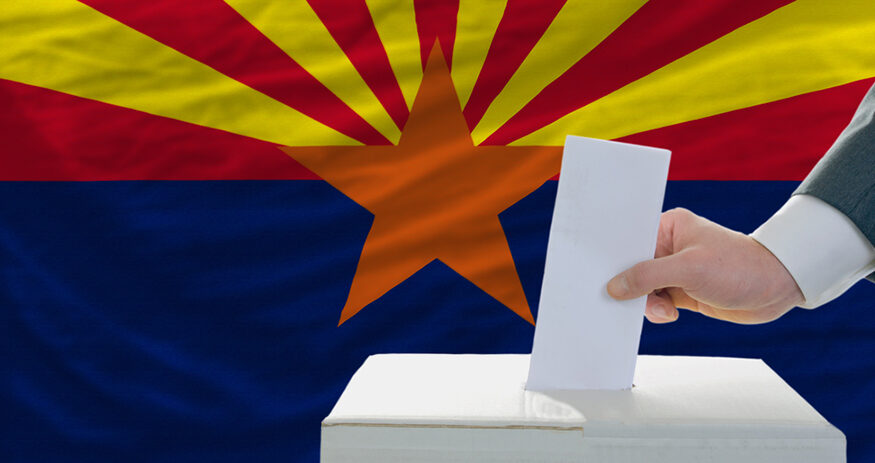
A draft of the 2025 Elections Procedures Manual spun out of a web of litigation over the prior elections guidebook, with some provisions yielding to successful legal challenges from Republicans and others still waiting on pending lawsuits.
Since its adoption, the 2023 EPM has faced a surge of litigation, leading to manual changes in 2025, many of which conform to court rulings.
Still, the fight is far from over.
Though Secretary of State Adrian Fontes ceded some ground, some key legal questions are still on appeal. And the Legislature, both the state and national Republican parties, and some conservative groups plan to take a fine-tooth comb to the 2025 manual for compliance.
“We’re not entirely satisfied that the new EPM remedies the problems of the old EPM,” said Andrew Gould, attorney for EPM litigants the Arizona Free Enterprise Club and America First Policy Institute.
On Aug. 1, after months of consultation with county recorders, the Secretary of State’s Office put out the 2025 EPM for public comment.
The new manual featured key changes, such as an edited section on voter intimidation and harassment, the removal of a provision allowing the secretary of state to go forward with the statewide canvass without the votes of a county that fails to certify on time, and a requirement for county recorders to cancel a voter’s registration, as opposed to putting a voter in inactive status, if they claim to be a nonresident.
On the voter intimidation front, the 2023 EPM prohibited “any activity by a person with the intent or effect of threatening, harassing, intimidating, or coercing voters (or conspiring with others to do so),” with a list of examples of what could constitute voter intimidation.
But two lawsuits, one filed by the Arizona Free Enterprise Club and the America First Policy Institute in state court, and another filed by America First Policy Institute and American Encore in federal court, claimed the provision had the propensity to chill speech and expanded beyond the reach of state law.
Maricopa County Superior Court Judge Jennifer Ryan-Touhill found the section went beyond the statutory scheme governing intimidation and roped in examples of free speech protected by both the state and U.S. Constitution.
District Court Judge Michael Liburdi found the language to be “unconstitutionally vague” and noted a potential to grant election officials and poll workers “nearly unfettered discretion in categorizing and regulating a voter’s speech.”
In the 2025 EPM, Fontes noted litigation is still pending on appeal in both cases but preemptively reworked the prohibition line to cite direct to state statute and specified examples of what could, depending on context, may be considered intimidating conduct.”
Fontes also ceded ground on a provision allowing for the secretary of state to canvass the state election without the results of counties that fail to canvass and certify on time.
The language change came about after the Cochise County Board of Supervisors pushed certification past the deadline after the 2022 election, prompting a court order and a later indictment of the two Republican supervisors responsible for the delay.
Liburdi, in the same lawsuit, deemed the language illegal given its potential propensity to disenfranchise large swaths of voters. And, in a separate challenge by Senate President Warren Petersen and House Speaker Steve Montenegro, Maricopa County Superior Court judge Scott Blaney rendered the canvass provision “invalid and unenforceable” on similar grounds.
Fontes cut the language, though again noted a pending appeal. The manual instead includes the board of supervisor’s “non-discretionary” duty to canvass and certify and “has no authority to change vote totals, reject the election results, or delay certifying the results without express statutory authority or court order.”
And, again in response to a legal challenge, the 2025 EPM changes a provision instructing recorders to put a registrant who claimed to be a non-resident on inactive status to a requirement that the registration be cancelled. But the question is still pending in both a state court case and in the legislative leaders’ appeal.
The draft also provides further clarity on the state of litigation in the federal challenge to two voting laws in Mi Familia Vota v. Fontes – including notes on county recorders’ responsibility to hunt down documentary proof of citizenship for voters who fail to provide any, as well as instruction to continue registering voters as “federal only” if there is no definitive proof a voter is not a citizen.
In footnotes, there is further clarification that court orders block any attempt to forbid federal only voters from submitting a ballot in presidential elections or by mail.
Beyond the changes and pending appeals, remnants of the 2023 EPM still under court challenge persist in the 2025 manual.
For one, the 2025 EPM keeps a footnote granting some leniency to petition circulators and makes it so mistakes or inconsistencies in personal information would not warrant the invalidation of collected signatures — despite a Superior Court order enjoining the same provision in the 2023 EPM.
And overarching the entire manual, there is still the question of whether the creation of the EPM must be done in accordance with the Administrative Procedures Act.
The Court of Appeals found Fontes’ failure to provide a 30-day public comment period for the last draft of the EPM could prove fatal to the manual as a whole and ruled the EPM to be subject to the state law, in response to a lawsuit from the Republican National Committee, the Republican Party of Arizona and the Yavapai County Republican Party.
In line with the office’s current legal position, the secretary of state maintains the EPM to be outside the bounds of the APA but agreed to provide the 30-day public comment period.
The case is pending at the Arizona Supreme Court.
Kurt Altman, attorney for the Republican National Committee, noted Fontes’ efforts to at least attempt to comply with the public comment period in the APA, even if it is a contingency.
“The current state of the law is the Court of Appeals opinion, right? That doesn’t mean the Supreme Court couldn’t disagree, but it sounds to me, with the new version, they are making attempts, at least to comply with the APA,” Altman said. “I think that’s good. That’s what we were looking for in the litigation.”
Chair of the Republican Party of Arizona Gina Swoboda weighed in, too.
“It is unfortunate but not surprising that the people of Arizona must go through the time and expense of litigation in order to have Secretary Fontes comply with the law,” Swoboda said in a statement. “The Secretary should accept the appellate court ruling that the APA applies to the EPM and allow the process to move forward without interruption.”
With provisions up in the air, interested parties have vowed to keep a close eye on the manual and provide feedback through the rest of the drafting process.
Gould said his firm, Holtzman Vogel, would be “looking very carefully at what’s in the 2025 EPM given the problems that we have with the 2023 EPM.”
Petersen said in a text, “We are reviewing to ensure full compliance.”
Public comment is open until Aug. 31, after which the draft undergoes another round of changes and is then sent to the governor and attorney general for their final sign-off, mandated to be completed by Dec. 31.
“This manual has always been the backbone of how Arizona runs elections,” Fontes said in a statement. “But in today’s environment, it carries more weight than ever. What was once a technical guide for election officials is now a document scrutinized by the public, the press, and the courts. That’s why we’re inviting every Arizonan to take a look, ask questions, and offer ideas.”