Sign In
Upcoming Event
 Free Newsletter

Jared Keenan: Liberty and government accountability
Kiera Riley Arizona Capitol Times//November 23, 2025//

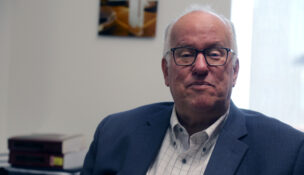
Jared Keenan (Kiera Riley / Arizona Capitol Times)
Jared Keenan: Liberty and government accountability
Kiera Riley Arizona Capitol Times//November 23, 2025//


As Jared Keenan, former legal director for the American Civil Liberties Union of Arizona, takes up the helm at the Arizona Center for Law in the Public Interest, he asks himself, if not me, who, and if not now, when?
From facing the state as a public defender to taking up the center’s mission to defend civil and legal rights statewide, Keenan follows the thread of government accountability wherever it leads him.
What led you to the Center for Law in the Public Interest?
I don’t know if there ever is a linear path to these types of positions, but I started my career as a public defender. I was a public defender in Boston, Massachusetts, and in Mohave County for a short period, and in Yavapai County. And I thought, at least when I started that work, that it might be what my whole career was going to look like. I love the work. I still do. I love public defense work. I had nothing but respect for public defenders across the country, but there was a point doing that work where I was not yet burned out, but I saw that coming. It’s very difficult work. You are often a single attorney standing between your client and the full force and power of the state, and it can be draining.
So, there was an opportunity at the ACLU of Arizona to do criminal legal reform work. And so I decided that it made sense at that time in my career. I became a senior staff attorney, then a legal director, and expanded the types of impact litigation I worked on, which is ultimately what brought me to the center.
Continuing to do impact litigation is extremely important. It’s vital, frankly, right now, to have organizations that are fighting to make the state and country a better place.
I felt like, if there’s a through line between the public defense work ACLU and now the work with the center, it’s holding the government accountable for its actions, ensuring that they comply with the law and the Constitution, or constitutions both state and federal.
Are there any cases that stick out in your work in public defense that brought you closer to impact litigation?
The first impact case that I ever worked on was actually a case that I worked on when I first got to Prescott. Arizona had passed the Medical Marijuana Act, and at the time, the Yavapai County Attorney’s Office was inserting in every plea deal that they made a provision that prohibited, or, at least attempted to prohibit, medical marijuana patients from using marijuana while on probation. And I had a client who was in that situation. She was a medical marijuana patient and had been for some time. She ended up taking a plea deal that would put her on probation. Medical marijuana was the only thing that really helped her. And so we challenged that provision, arguing that it was unconstitutional, contrary to public policy as the voters dictated in passing the Medical Marijuana Act. And that case actually went all the way to the Arizona Supreme Court, and I got to argue that at the court. It was super exciting, but also it made a real impact, not just on my client’s life, which it did, but like the ruling applied statewide. And so now everybody on probation who was a medical marijuana patient cannot be prevented either by a prosecutor or by a judge from using medical marijuana while on probation.
I think it was the first time that I thought about using cases like that to make systemic change. So now that’s precisely the type of cases that I’m working on, that I worked on with the ACLU, and now I’m working on with the center — cases that have sort of a broad impact. And they don’t just help one or two individuals, but hopefully help, you know, thousands of individuals across the state.
When you think about your work at the ACLU, what cases stick with you?
Some of them had big impacts. Some of them stand out because we lost. At times, we’ve taken on difficult issues that we knew might not go our way, but the thing that I think about the most is the bravery of the clients, because, you know, they don’t have to be involved in those cases, and they often take on a degree of risk when they do.
For example, we had a number of cases at the height of the pandemic, challenging jail and prison conditions and arguing that these facilities, including Maricopa County Jail and a CoreCivic facility in Florence, were not doing enough to protect people in congregate housing from contracting Covid-19. When people in jails and prisons sue the jails and prisons, they are also retaliated against by staff or others. And it can be scary, it can be dangerous, right? And we had an amazing group of clients who, despite that real possibility, made it possible for us to challenge those conditions. And ultimately, the pandemic sort of wound its way down, and those cases kept going and kept going, and some cases were ultimately dismissed. But what was clear to me was that conditions had significantly improved because we fought. It didn’t necessarily matter that we ultimately lost the case. On a day to day basis, there were improvements being made by the facility that they likely would not have done but for the fact they knew that there was a group of attorneys watching them and folks inside willing to speak with us.
I’m sure a lot of it is dictated by what comes in the door but what have you found your instincts to be in assessing cases and finding instances where you want to step in?
I don’t just work in Arizona and in Phoenix in particular, I live here. So I see things that I view as problematic. I’m lucky and privileged to be in a position where I can see a problem and potentially do something about it. Frankly, it’s why I went to law school. I didn’t know what I wanted to do when I started law school, but I knew it would give me the tools and empower me to make changes when I saw things that needed to be changed. I’m grateful that I’m continuing in a position now at the center where I have some authority and autonomy to see problems and try to fix them.
When you were thinking about this job, how do you imagine yourself shaping the work?
The center has a long history, and it’s a strong history built upon former executive directors, former staff. I obviously bring a unique sort of expertise and perspective, and so we’ll certainly use that to guide what type of cases the center takes on. But we also have amazing staff who are experts in their fields and are taking on super important cases. Environmental work is super important. The work on school funding is super important. The work related to foster care in Arizona is super important. And so all that is going to continue.
The mission of the center is quite broad, which is great. It allows us to be able to pivot when we need to. It’s sometimes impossible to know what the challenge will be tomorrow, let alone next year. And so given that the mission is broad enough to sort of let us adapt to the types of challenges that we see in Arizona, I think it will allow us to rise to the challenge when new threats to our rights and our liberties are presented.
As you approach this work, what’s on the priority list?
It’s hard for me to say right now, since I’m just a few weeks into the position.
I certainly have some areas that I think are super important. Some of them include public records litigation and open records open meetings. So that’s sort of like within a government accountability space. I bring some experience with First Amendment litigation, and so often that litigation is sort of tied with government accountability, right, whether it’s ensuring that the residents of Arizona are able to hold their government accountable.
I have experience working on criminal legal reform issues, and I think that the criminal justice system is almost all encompassing. It touches on so many things people don’t really think about, like the medical field, health care, the foster care system … democracy issues. The criminal justice system winds its way in there as legislators try to make it harder for people to vote, or make it harder to collect signatures, to get a referendum or a ballot initiative on the ballot. All of those things that dilute the power of voters in Arizona often have a criminal law component as well, and so I think all of those areas sort of intersect and are ripe for challenges to be brought by the center.
What guides you in this work, and what will be your north star as you continue in this position?
My wife is a public defender, and she has always been someone that I look to when I’m like, not sure which way I should go with cases or with work or whatever. And, in fact, she’s the person who convinced me to try public defense, which I tried about halfway through law school. I’ll rely on her and look to her for that sort of support and guidance.
Like I said, I went to law school to get a degree that would empower me to do impactful work to make the world a better place, and that is what I’ve tried to do ever since. And now I have a son, and he is another inspiration to keep doing this work, because I’d rather leave this world a better place for him.
Why is this work so important? Why is holding the government to account so important?
The way I look at it is like, if we don’t do it, if I don’t do it, who is going to do it? There are lots of great organizations doing lots of great work, but, it doesn’t mean that that’s inevitable, right? You need dedicated lawyers doing meaningful work.