Sign In
 Free Newsletter

Arizona short-term rental bill likely dead for the year
Bob Christie, Capitol Media Services//April 7, 2026//
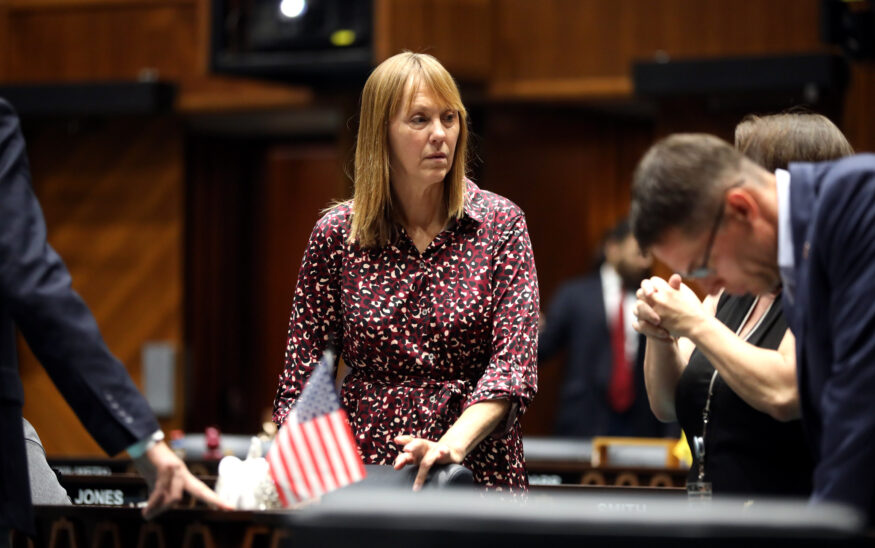
Rep. Selina Bliss speaking on the floor of the Arizona House of Representatives at the Arizona State Capitol building in Phoenix, Arizona, in July 2023. (Gage Skidmore / Flickr)
Arizona short-term rental bill likely dead for the year
Bob Christie, Capitol Media Services//April 7, 2026//


Key Points:
-
Arizona House measure on short-term rentals likely dead for the year
-
Rep. Selina Bliss’s House Bill 2429 missed key deadlines in the state Senate
-
The bill aimed to allow cities to limit the number of new short-term rentals
An Arizona House measure boosting rules for short-term rentals like those offered through Airbnb and Vrbo is likely dead for the year after failing to get a hearing in the state Senate.
Short of some legislative sleight-of-hand, Rep. Selina Bliss’s House Bill 2429 faces nearly impossible odds after missing key deadlines when the final scheduled committee hearings of the legislative session passed in both chambers without it being heard.
She had hoped to get it on the March 31 Senate Appropriations Committee’s agenda, but it didn’t make the chairman’s cut. And it was too late to make it onto the companion House committee agenda the same day, leaving few options for her to resurrect it.
Bliss, R-Prescott, said she’s not giving up, but realizes her chances are between slim and none.
“I don’t want to walk out of here at the end of session thinking I left a stone unturned,” the Prescott Republican said in an interview with Capitol Media Services. “This is too important to too many people, too many districts.”
What that most immediately means is that, at least for this year, there will be no limits on the number of people who can stay in these short-term rentals, no easing the path for communities to shut down bad actors, and no checks to see if renters are sex offenders.
Bliss’ long odds come despite Senate President Warren Petersen’s comments that the short-term rental bill “sounded like a reasonable compromise.” The Gilbert Republican said he told his staff to convey to the House his willingness to put it to a vote.
Petersen’s comment that he didn’t oppose the measure was prompted by Bliss saying she was told he was opposed to bypassing committees by allowing “strike-everything” amendments to move bills that fail to get Senate committee hearings.
She said she and backers of her compromise legislation, including cities, Realtors and Airbnb, worked every angle in recent weeks to get it heard in the Senate.
But by the time the final Senate committee agenda was posted, it was too late to get it on last Tuesday’s House appropriations committee agenda to add it to a previously-passed Senate measure — an act known as a strike-everything amendment. Bliss said she was getting mixed messages and was never able to speak to Petersen directly to hash out a way forward.
Bliss has been pushing for three years for new rules on short-term rentals, or STRs, including giving municipalities the ability to limit their numbers.
The number of STR’s has exploded in Arizona since then-Gov. Doug Ducey signed legislation in 2016, which he strongly backed barring regulations of the industry.
That led to big problems in vacation towns like Sedona, where average workers can’t find housing, and even Scottsdale, where rental properties are increasingly scarce because of the number of Airbnbs.
Despite calls from many municipalities, she was unable to win backing for proposals allowing cities and towns to limit the number of new STR’s or add new regulations because of opposition from the industry and from some lawmakers who support free-market principles.
But she was smiling earlier this year when she negotiated a deal with the industry, Realtors and cities and towns to allow at least some new rules.
They included limiting the number of people who can stay overnight in STRs to two per bedroom, a move that should slow parking complaints. The measure also lets cities suspend a local license if there are three violations in 24 months, immediately act if there is just one serious health and safety violation, refuse a permit if there are unpaid fines, and allow cities to require that renters be checked for sex offender status.
That last item — sex offender checks — was one of the reasons the bill was late getting to the Senate. After passing the House on a 36-19 vote on March 10, some members demanded the bill be amended to make the checks mandatory.
In a rare move, Bliss pulled the bill back for a new amendment doing just that, and a second House tally. It passed for a second time on March 17 on a 37-14 count.
That week-long delay meant most Senate committees were down to their final hearing of the year, and it never made it onto the agenda for its assigned committee, or for last week’s final scheduled hearing of the Senate Committee on Appropriations, Transportation and Technology.
She said she spoke with Sen. David Farnsworth, R-Mesa, the committee’s chair, and that he was supportive and would put it on his agenda. But that didn’t happen.
“I missed the deadline because I thought Farnsworth was going to do it for me on the Senate side, and then the agendas got published at the same time, and then I lost both opportunities,” Bliss said last Tuesday.
“That was the point when I knew it was officially dead, when Farnsworth did not have it on his approps agenda,” she said.