Sign In


Upcoming Event
 Free Newsletter

A century of service — Arizona News Service covers the Capitol, and always has
Don Harris//April 5, 2026//
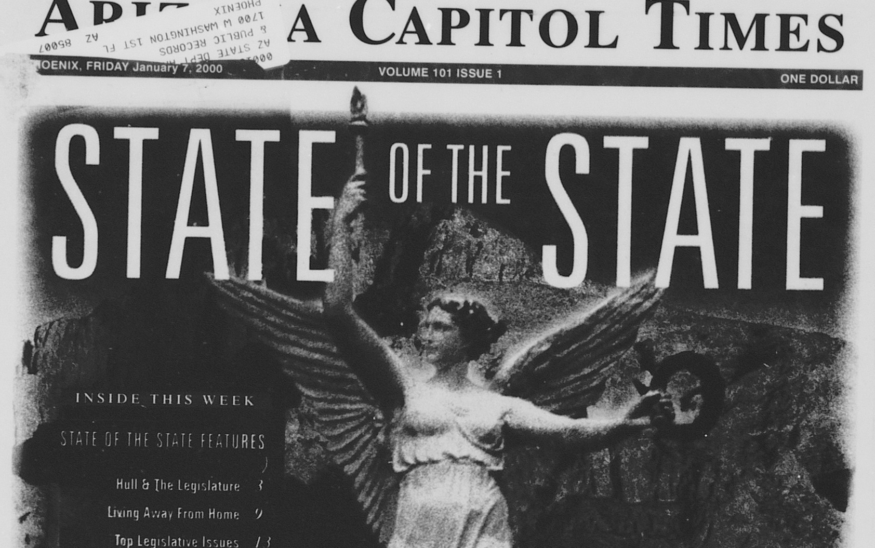
The Arizona Capitol Times special State of the State edition, dated January 7, 2000, commemorates the first Arizona legislative session of the new millennium. (Credit: Arizona Capitol Times Archive)
A century of service — Arizona News Service covers the Capitol, and always has
Don Harris//April 5, 2026//


 A lot can happen in 100 years. Just look around.
It’s an ever-changing landscape. But one constant that continues to provide a wealth of information on the Capitol scene — in a fair, comprehensive and accurate manner — is Arizona News Service.
Launched and guided by the Creighton family for nearly the entire century, Arizona News Service and its many publications, including Arizona Capitol Times, joined State Affairs in 2024. Legislators, lawyers, lobbyists and public officials at all levels of government rely on Arizona News Service as their information pipeline to the Arizona Capitol.
Ned Creighton recalled some of the history of Arizona News Service, founded by his grandfather, also Ned, in 1906, before Arizona was a state, expanded by his father, Robert, until 1970, when Ned assumed control of the business.
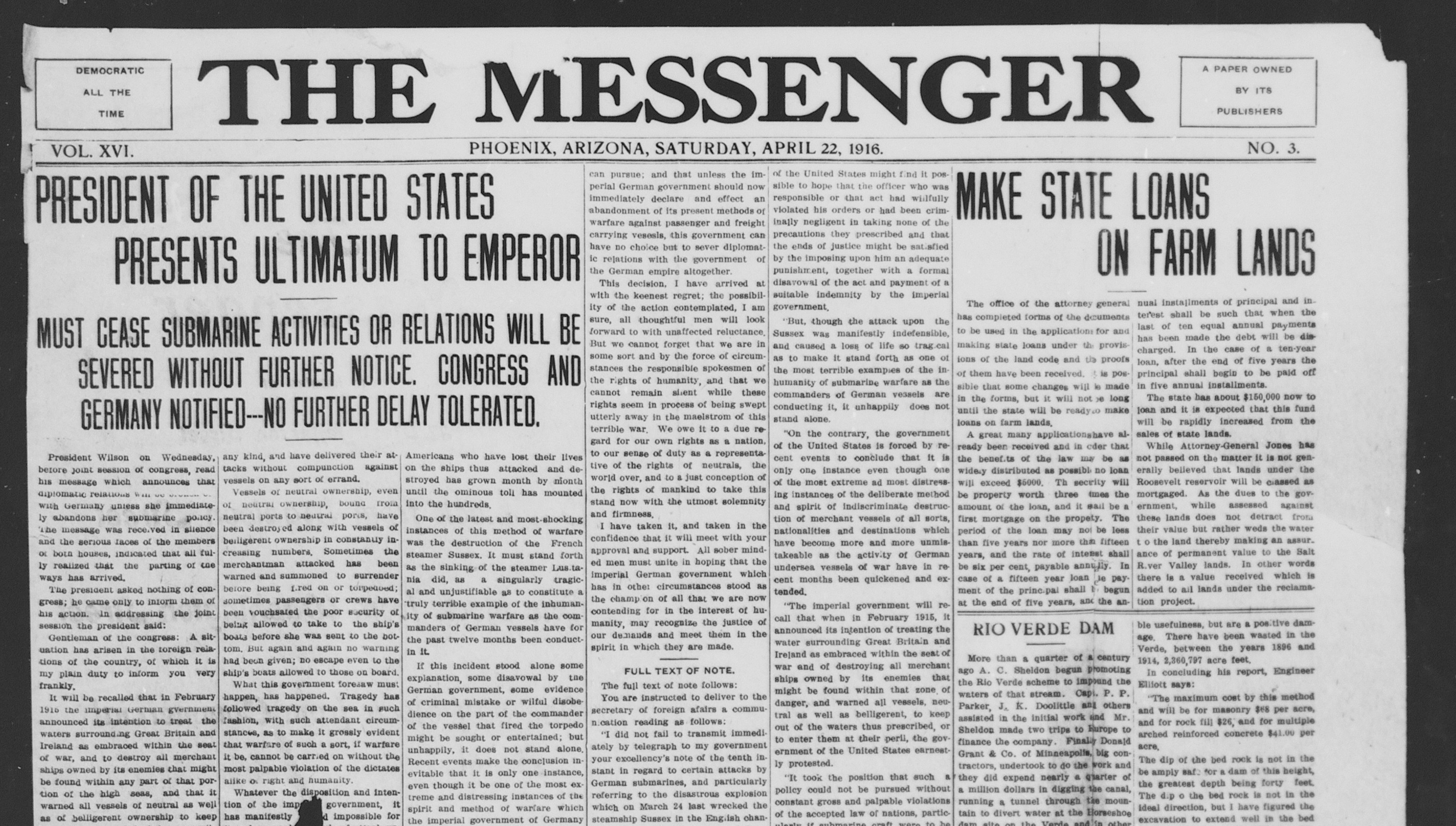
In the first four decades, Creighton’s grandfather ran Arizona News Service out of various downtown Phoenix buildings. Creighton’s father worked for his father during World War II and, in 1946, convinced him to jointly purchase a newspaper called The Messenger, founded in 1900. They each chipped in $750 so they could buy the little paper for $1,500.
“My dad worked for granddad and took over the News Service in the mid-1950s,” Creighton said. “The newspaper grew out of the News Service. They had handled a lot of legal notice ads and started putting the notices in this newspaper. To make content for the newspaper, they had a boilerplate front page of who knows what and bought two syndicated columns.”
Arizona Legislative Review
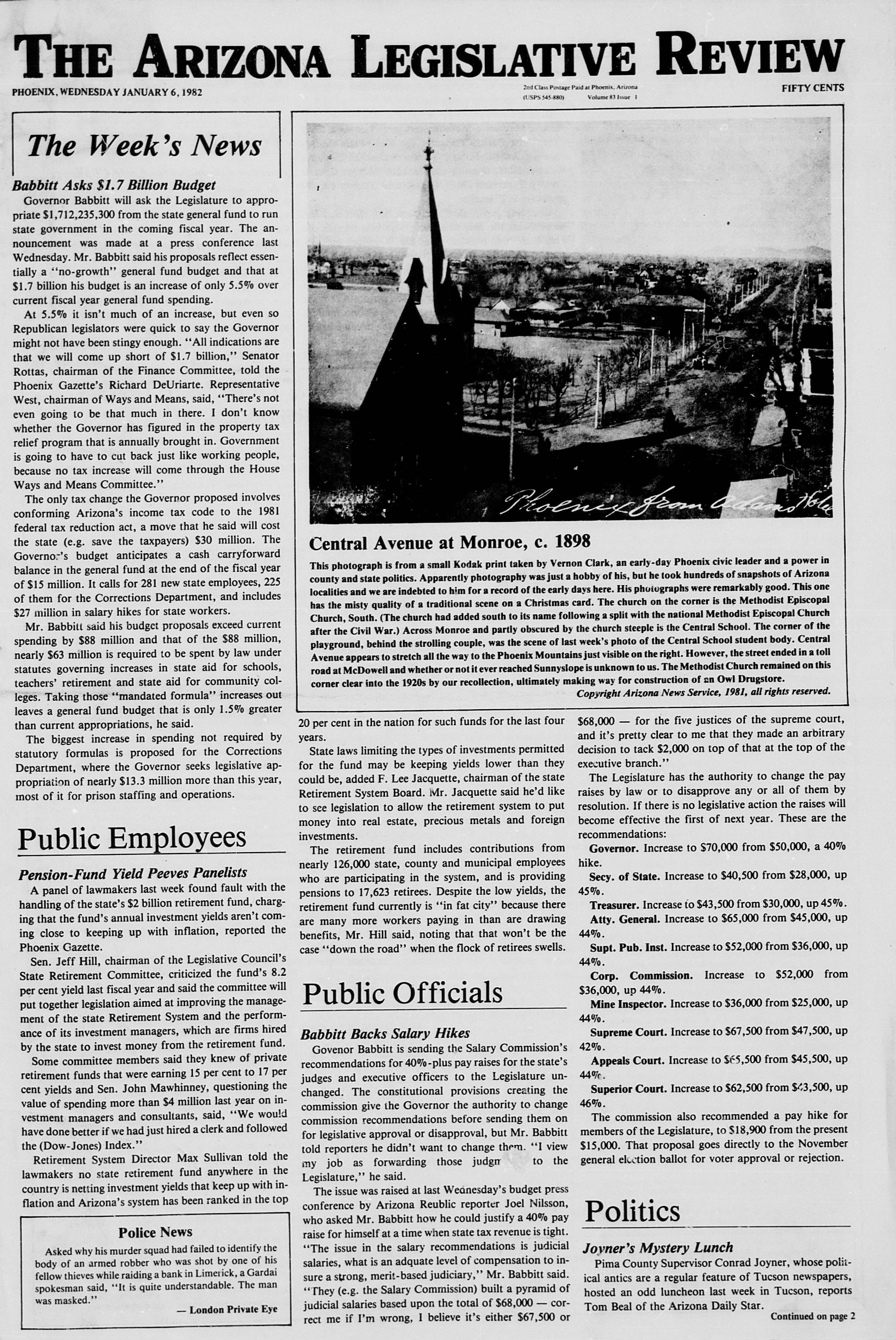
The columns and bill descriptions gave the newspaper its content. In 1959, the name of the paper was changed from The Messenger to The Arizona Legislative Review.
“Dad ran it by himself,” Creighton said. “The newspaper was largely a recital of bills in Legislature, where they were and an occasional news story about Arizona politics. He hired a reporter late in the 1950s and into the 1960s. The paper began to become more like a newspaper of news stories, not just a paper of record.”
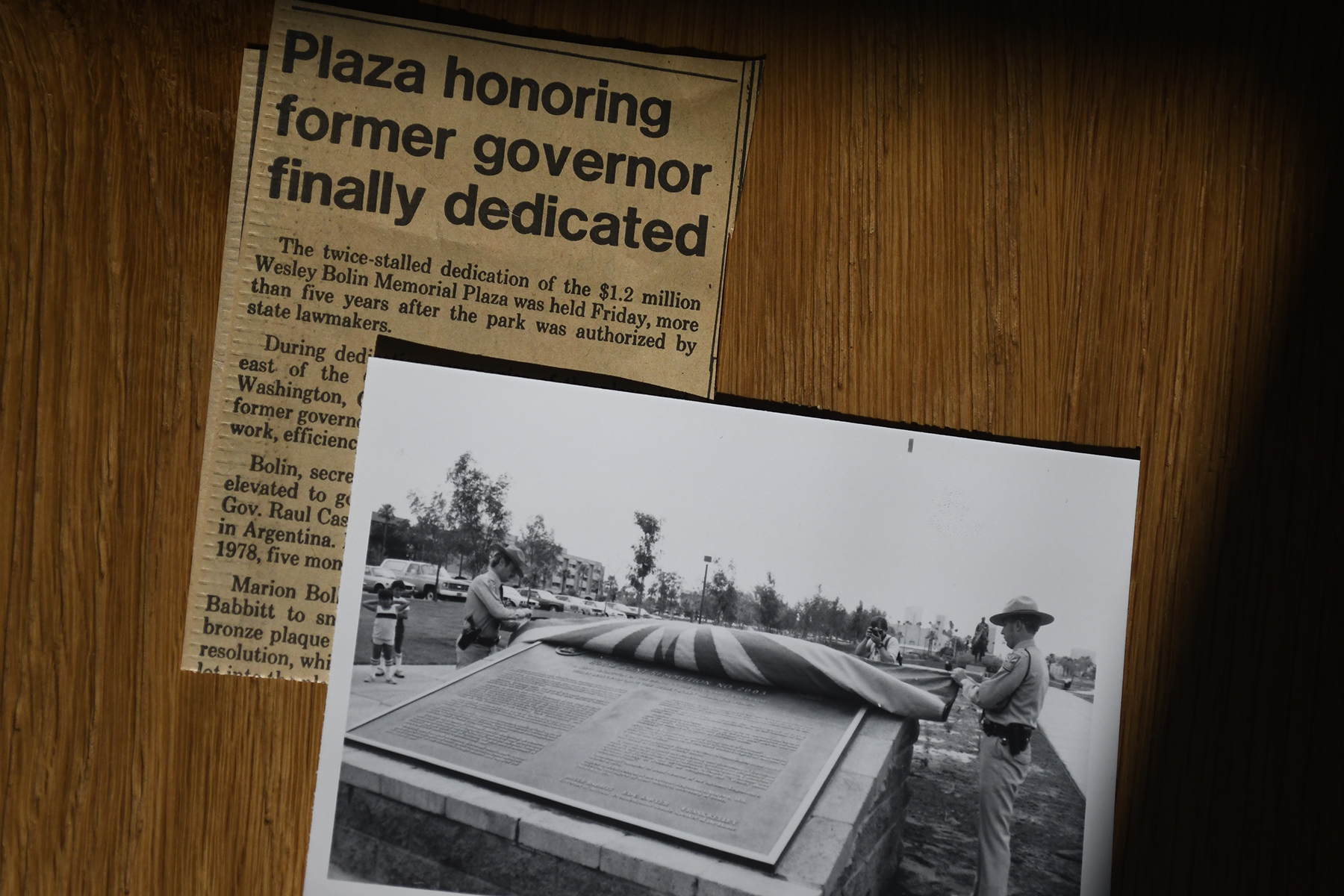
 To get closer to the source of the News Service’s news, Creighton’s father moved the business into the house that he had been born in at 1622 W. Washington St., and where Creighton’s grandmother was still living. The house was about where the USS Arizona anchor is today. In those days, Washington Street ran straight up to the Capitol building.
Arizona News Service was still operating out of the Creighton home until 1967, when, as Creighton put it, “We ran out of room and built that grand new building” on a vacant lot at 14 N. 18th Ave.
It was all private land then, and several old apartment buildings lined 18th Avenue from Washington to Adams streets. Eventually the state bought them all, tore them down, and turned the land into state parking lots, virtually surrounding the Creighton operation.
Then in September 1999, Arizona News Service moved into its new two-story building at 1835 W. Adams St. In 2025, the Arizona Capitol Times moved to its current office at 1001 N. Central Ave, Phoenix.
The Creightons come to Arizona
Ned Creighton’s newspaper career began in 1963, working for about eight months at the Bisbee Daily Review. He put in a stint with an even smaller daily newspaper in the San Francisco Bay area, covering Santa Clara County government before he and his wife, Diana, moved to Arizona in 1966, and Ned joined Arizona News Service.
“That’s when I went to work for my dad,” Creighton said. “It was the first time he had an actual reporter — and that was me. The other reporter was so involved in bills and that’s all he had time for. Now we had a guy in the House and the Senate, and it allowed us to publish more about the stories behind the bills.”
Creighton recalled covering the last legislative session — the 27th Legislature’s second regular session in 1966 — before federal judges drew new legislative boundaries. That’s when the one-man-one-vote concept was imposed, creating the so-called modern Legislature and wresting control from rural Democrats, giving the power to urban Republicans.
“It was all new to me then,” he said. “I didn’t know anything about how the Legislature worked, but I caught on. You can’t help but learn fast, watching those guys argue.”
With urban Republicans mostly from the Phoenix area in virtual control of the entire state, it became apparent quickly that the GOP lawmakers were big-time reformers. The first bill introduced in the upper chamber, Senate Bill 1, dealt with air pollution.
“Right off the bat they started to reform and reorganize state government,” Creighton said. “These legislators took little commissions and boards and reinvented state government, creating large state agencies. Time magazine christened them the ‘Gung Ho Legislature.’ Here was this astounding Legislature in a tiny — by population — Southwestern state reinventing state government, and it was by Republicans. How times have changed!”
In 1970, Creighton’s father suffered a heart attack, and the younger Creighton took over the business. “I had to learn the business fast,” he said. “Times were thin, and Diana was raising our three kids. But we got our feet on the ground, and in the late 1970s began developing it into a newspaper.”
Arizona Capitol Times is born
In 1982, The Arizona Legislative Review was renamed Arizona Capitol Times.
Until the Watergate scandal of the early 1970s that brought down the Nixon administration, Arizona politics was influenced by a considerable number of conservative rural Democrats — ranchers and farmers — who provided an enormous crossover vote for Republicans.
For example, Creighton recalled that in the primary elections for governor, the Democrat winner would get far more votes than the Republican, but in the general election, due in no small part to the crossovers, the Republican would win. In legislative races, political insiders followed the so-called 40-percent rule.
“If a district was 40-percent Republican, we knew the district would elect all Republicans,” Creighton said. “But about the middle 1970s, most of that was washed away by the tidal wave of Watergate. The 40-percent rule stopped working immediately after 1974. People were so revolted by what happened in D.C., and the Democrats took control of the state Senate.”
In the early 1980s, about the time of the name change to Arizona Capitol Times, Creighton’s wife, Diana, had reared their three children and wanted to get into the news business. She read and rewrote short versions of the attorney general opinions and developed an old-photograph feature that continued for many years. Times Past was one of the newspaper’s most popular features.
“My dad did it sporadically,” Creighton said. “He had the original photos, and Diana contacted historical societies around the state. She invented the feature, and served for a while as our photographer. She gradually worked into the advertising end of it, building that side of the paper. I had no talent for that.
“So when Diana came in, it became a useful and valuable publication. We expanded as we could, as you do in business. If you get enough money, you hire another person to write more stories.”
About that time a new-fangled computer made its appearance at Arizona News Service. It became immediately apparent that the computer was the best way to organize the legislative information, keeping the bills in order.
“We created the first online bill-tracking service,” Creighton recalled. Similar subscription services were getting under way in California, Texas and Ohio.
“We met with the others and formed a national online association,” he said. The first acronym was NOLA, but locally Creighton chose LOLA for Legislation On Line Arizona.
“At the time I felt like I was inventing the wheel,” he said. “Looking back, it was a lot of fun.”
Throughout the years, Creighton refrained from writing and publishing his own editorials and says he tried awfully hard not to lean one way or the other in the newspaper’s coverage.
“I think what’s more interesting is a column from one side that will spark a column from a fellow on the other side — letters and columns from intelligent, thoughtful people.”
Today, the Arizona Capitol Times/State Affairs staff produces the newspaper and its websites, special publications, newsletters, LOLA, two special events, display and legal advertising.
Arizona Newspapers Association
John Fearing, who was executive director of the Arizona Newspapers Association (now the Arizona Media Association) when this original version of the article was published, praised Arizona News Service and Arizona Capitol Times for their contributions and standing in the community.
“Its strengths are the credibility of the paper, the people behind it who manage it and the people who write it,” Fearing said. “They have kept high quality people there all these years. The Creighton family started it and built it into a very respected publication, and it’s important that the newspaper is a member of ANA.”
What’s more, Fearing said, “If we miss something as lobbyists, Arizona News Service is a backstop for us.”
Fearing commented on an ANA luncheon for legislators and others at what was then the Arizona Capitol Times building, 1835 W. Adams St. “One of the reasons that our luncheon was a success is that the Capitol Times is so well known and ingrained in the capitol community,” Fearing said. “It’s very well respected and that’s kind of what a newspaper is supposed to be.”
Creighton was asked if he has any disappointments related to his news experiences. “Looking backward makes hindsight so clear,” he said. “I wish I had tried harder to keep this fella or get rid of that one. I wish I had been able to step back, rather than writing all those bill summaries, take a breath and do some analysis. I regret that I didn’t have that time. All I had time for was some of those humorous footnotes that we used to publish. We didn’t have the horses. But I still believe in the information we provided and what we tried to develop our business into.”
After selling the newspaper, the Creightenon began living a totally different lifestyle in retirement. They settled in the wooded outskirts of Oracle just northeast of Tucson. Did he miss the day-to-day operation of the news business?
“I can’t say that I do miss the business,” he said. “Sometimes I reflect at this time of year as you guys are hammering out bills. But no, I’m really enjoying what I’m doing, which is clearing the land around here because of the fire dangers. It’s a daily physical labor, something I never did before. I truly enjoy this.”
This article was originally published 20 years ago to mark the 100th anniversary of Arizona News Service and the Arizona Capitol Times and has been updated.