Sign In


Upcoming Event
 Free Newsletter

Proposed Arizona dental law may leave some students in limbo
Jordan Gerard, Arizona Capitol Times//April 4, 2026//
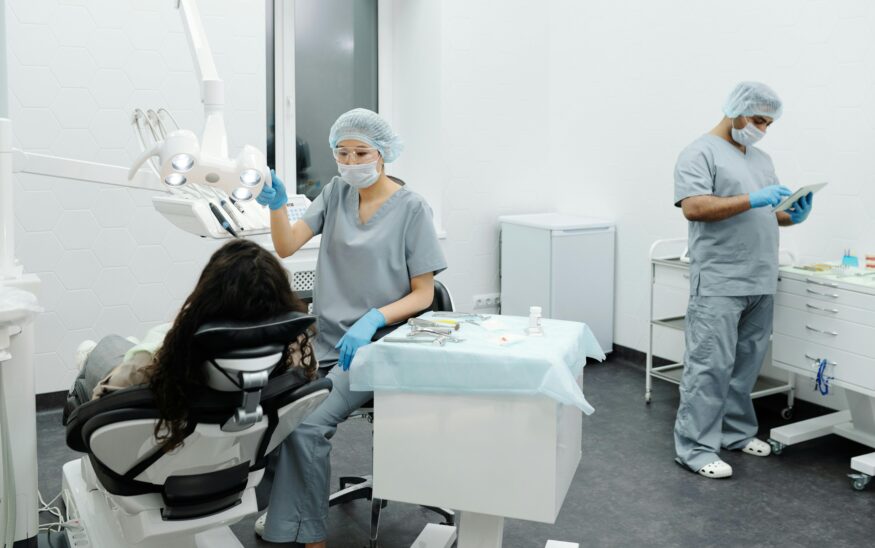
(Cedric Fauntleroy / Pexels)
Proposed Arizona dental law may leave some students in limbo
Jordan Gerard, Arizona Capitol Times//April 4, 2026//


Key Points:
-
A law passed last year to help the dental health care professional shortage, but has excluded some students
-
Students who graduate from non-accredited dental assistant schools have to take extra courses and exams
-
An oral preventive assistant can perform more dental care than a dental assistant
Arizona is not alone in its need for dental professionals, but how the shortage gets addressed has become a difficult pathway for some.
The Grand Canyon state has about 34% of its dental health needs met, according to a 2026 quarterly summary from the Health Resources and Services Administration at the federal Department of Health and Human Services.
The 2022 report by several dental and dental hygienists’ groups also cited inadequate benefits, compensation challenges, poor communication, a lack of professional fulfillment, and a negative workplace culture as factors in the shortage, in addition to retirement and effects from the pandemic.
Last legislative session, Senate President Pro Tem TJ Shope, R-Coolidge, filed Senate Bill 1124, which created the Oral Preventive Assistant program. Gov. Katie Hobbs signed the bill in March 2025.
An oral preventive assistant is an expanded function dental assistant who provides preventive dental care to patients under the supervision of a dentist or dental hygienist. Preventive care includes removing plaque and stains with scalers or ultrasonic scaling devices on patients who have already received an evaluation from a dentist or hygienist.
Dental assistants who want to advance to an OPA can complete a training course that includes 120 hours of classroom and clinical instruction. The dental assistant must hold a current CPR certification, board-approved certification in teeth polishing and radiography, and national board certification in dental assisting, or have completed an accredited dental assistant program.
The accreditation provision is the part that has caused frustration for dental assisting schools that are not accredited.
Bryan Hastings, chief operating officer for the American Institute of Dental Assisting, said students at schools like his would not be able to take the course immediately after they graduate because his school isn’t accredited under the Commission on Dental Accreditation, which is recognized by the U.S. Department of Education as the sole agency to accredit dental and dental-related education programs. Hastings’ family has owned and operated the school in Phoenix for 25 years, and they have a Mesa campus.
“They need to have the skill set and the knowledge and training of how to be a dental assistant,” he told the Arizona Capitol Times. “That’s where our program has become so effective. We teach our students with that real life experience and that training and (it) allows them to go out and quickly get employed into a position.”
To enter the OPA course, Hastings’ students must become certified dental assistants and take additional tests, whereas students from accredited programs can take it right away.
He brought his concerns to Sen. Shawnna Bolick, R-Phoenix, who filed a strike-everything amendment on House Bill 2910 to repeal the OPA program, effectively hitting the “undo” button and starting over.
The bill died in the Senate Regulatory Affairs and Government Efficiency Committee in March, where both sides presented their case, but committee members did not vote on it because the majority party wouldn’t have had a majority of votes to move it out of committee, Bolick told the Arizona Capitol Times.
Bolick said she took on the issue because she felt not everyone’s voice had been heard and she wouldn’t want someone’s ambition for their future livelihood to be pushed aside.
“I wouldn’t want it to be precluded from potentially some sort of oversight or potentially not having the right stakeholders in the meeting or behind a bill,” she said. “Once someone starts investing money into a future job, I don’t want the government getting in the way of them having that right to earn a living in Arizona.”
She also told both sides to work on the bill in the interim. If that happens and they come to an agreement, she’d be open to carrying the bill in the future, she said. For now, she didn’t want to be the intermediary.
“I feel like I’m an arbitrator. I’m a judge whenever they come in and everybody’s upset still, and it’s supposed to be something beneficial, but it doesn’t seem like it actually is moving in that direction,” Bolick said.
Shope said in a text message he didn’t support the effort to overturn a negotiated and agreed upon bill that passed with wide bipartisan support and only took effect less than a year ago.
Senate Bill 1124 went through many amendments before the final version last year. The accreditation provision was added at the last minute, but Hastings’ and other schools like his weren’t included in those discussions, he said.
Dr. Regina Cobb, the executive director of the Arizona Dental Association, said Hastings was invited to the stakeholder meetings and was informed of their dates. She said he didn’t respond until after the bill had been signed into law.
Cobb said the original draft of the bill didn’t include the accreditation, but after a few stakeholder meetings, it was added. The governor might not have signed the bill without that piece, she added.
She took issue with repealing the entire law because the program hasn’t started yet.
“I think this is very anti-competitive,” Cobb told the Arizona Capitol Times. She wants the Legislature to wait and see how the programs do in their first year before expanding it. “We haven’t even had a first program started yet, and he’s trying to repeal it before the program even starts.”
The effort is supposed to help the workforce shortage. One dentist can supervise three OPAs and one hygienist can supervise one OPA, according to the law. The effort allows dentists and hygienists to focus on more difficult cases, Cobb said.
“There are a lot of patients that don’t need periodontal treatment, that don’t need subgingival scaling, that they only need what we call supragingival scaling, which is above the gum line,” Cobb said. “So there are a lot of patients, especially children that don’t necessarily need to go to that type of cleaning. So these dental assistants that have extra training can actually do those kinds of cleanings.”
Hastings said it was a last-minute change that he and other schools didn’t know about, leaving hundreds of students in limbo. They’ll have to either take more education and clinical hours to enter the OPA course or wait until the law changes.
“It’s a system that benefits certain schools while shutting out thousands of Arizona graduates,” he said. “The law is steering students away from private dental programs and towards programs that the law has favored.”
House Bill 2326, filed by Rep. Laurin Hendrix, R-Gilbert, would have added schools like Hastings’ to the law, but it died before it got a hearing in House Health and Human Services.
Beyond accreditation, others raised additional concerns.
Kiara Ortega, owner of Desert Dental and Health Academy, said the law lacks oversight and safeguards because it did not clearly define how the training would be approved, what curriculum should include or how the role would be regulated and tracked.
“We want a pathway that includes clear oversight, defined training standards, and accountability before expanding patient care roles,” she said.
Three schools are preparing to launch the OPA curriculum by next fall, including Phoenix College, Rio Salado College, and Midwestern University, Cobb said. The law doesn’t dictate a specific curriculum, she added, but it dictates boundaries.
“We gave them 120 hours. They can take those 120 hours and educate their kids the best way they know how,” she said.