Sign In




 Free Newsletter
Rachel Walden: Digging into the data at the Arizona Corporation Commission
Reagan Priest, Arizona Capitol Times//May 24, 2026//
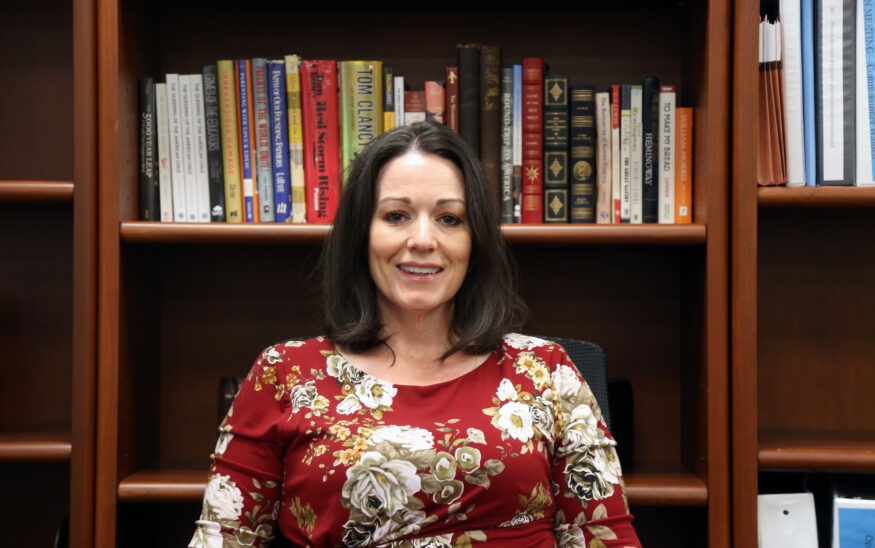
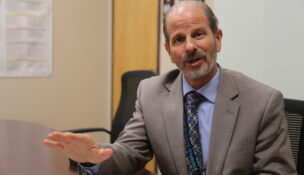
Arizona Corporation Commission Vice Chair Rachel Walden poses for a photo in her office on May 19, 2026. (Reagan Priest / Arizona Capitol Times)
Rachel Walden: Digging into the data at the Arizona Corporation Commission
Reagan Priest, Arizona Capitol Times//May 24, 2026//


In 2024, Rachel Walden went from school board member to the Arizona Corporation Commission. Now, over a year into the role, she’s serving as the commission’s vice chair and bringing her background in finance to the stand to examine the budgets of the state’s largest utility companies.
Questions and answers have been lightly edited for style and clarity.
Can you tell me about your career trajectory?
I have a bachelor’s degree. I went to graduate school, I did the two-year graduate program for history and humanities at ASU. During that time that I was in college, I worked at my mom’s company that she started. She was a financial planner, so I did a lot of financial work for them and tax work, and I ended up in a career in finance. I started at Vanguard in 2004, and I spent 10 of the 12 years that I was there in the client relationship role, where I ran the retirement plans for the corporations. I left in 2017 when my daughter was born, so I was a stay-at-home mom. Like a lot of moms, I got more and more political during 2020. I was really opposed to the school shutdowns and the government overreach, so I was looking for ways that I could get involved and I ended up running for school board. It was actually my conversation with (ACC Commissioner) Nick Myers that put the idea in my head. He said, “You should look at running for school board.” I didn’t think I would ever run for office, that was a really foreign concept to me. I said, “I don’t know if I’m qualified to do that, what are the qualifications?” And he goes, “Are you a Republican? (Then) you’re qualified.” So I ran for school board in 2022 and that started this political path that I’m on now.
What led you to run for the ACC?
It was Nick’s fault again. It was going really well on the school board, and I was in my first year, and I had actually reached out to him about what the game plan was going to be for the commission seats. He’s like, “Well, how do you feel about a statewide race?” I was like, “I don’t have time to help with the statewide race.” He’s like, “I don’t mean to help, I mean for you to do it.” I think he knew that we were similarly minded in what we thought was important, like free markets, trying to keep costs down, not being energy-biased. I spent probably the next three weeks sweating over it. My husband was on board immediately. I’m like, this is crazy, because I just got on the school board, you don’t really go from school board to a statewide race. I thought a lot about it, did a lot of reading and studying until I could get to a place where I felt like, “I think I’m the right person for the job, I’m gonna do it.”
How did your background in finance prepare you for this role?
There is a part of the commission that is very, very important that no one talks about, and that’s the securities side of it, where we do securities fraud. With (former Commissioner) Jim O’Connor not running again (in 2024), there was a void where none of the other commissioners had that financial experience, and I’ve been able to really showcase that on those (securities) cases that we’ve had. I argued in my campaign that the commission role is more of a financial role than anything. There’s a lot of expenses the utility could try to slip into their rates, and it’s the judge’s job and then our job to ensure that the expenses truly reflect the cost of service. To do that, you do have to get into the data and into the financial reporting.
What have you learned in your time on the commission so far?
There’s been a learning curve in the prep work. When I first started, I was like I’m gonna read this 7,000-page rate application. (But) not every piece in the rate application is necessarily applicable to the work that I’m going to do to try to keep expenses down. So learning where to go to really home in on information that I can try to write amendments and maybe modify a recommended order and opinion to cut costs. I have the best adviser in the country, not just the state. I talked to her a lot on the campaign trail too, because I’m more interested in facts than ideology. I hate the idea of ever misrepresenting anything. So I will get more down into the weeds than another elected official would get, because I like to dive in and then understand something well enough that I can then explain it in simple terms. If I can’t think of a simple analogy or a way to explain it to a lay person, then I don’t understand it well enough.
What has been your biggest challenge in this role?
The biggest challenge is actually the continual work it takes to try to keep voters informed and educated on the commission. Historically speaking, energy wasn’t complicated in Arizona, and inflation and rising costs have never been as high as they are, either. For a lot of people, it feels like the utility bill is their final straw. That’s just one more nail in the coffin of the demise of their wallet. They feel like, “Well, we elected you, and why aren’t you standing up for us?” So we’re trying to spell out, I am standing up for you, here’s what’s happening. You can disagree with me, but at least understand why I voted how I did, or understand the process, understand the facts. It was challenging on the campaign trail, and it’s challenging right now. I think it’s always going to be that way, so long as we have all these other groups that are giving false information and upsetting people. It is upsetting because nothing makes people angrier than when they feel like they have no control.
What do you wish more people knew about the commission?
I wish they knew more about the rate case process. We’re trying to get that out, our (public information officer) wrote a really good handout that I posted. The Legislature, the Governor’s Office, they don’t all know the process. And the voters don’t know, and when they understand it’s very eye-opening for them. I actually had a couple of precinct committeemen from the East Valley in my office a couple weeks ago, and we were talking to them, and they said, “Oh, you guys are like a court.” I said yes, and we can only rule on what’s in the evidentiary record. It’s not ideology here, we’re dealing in cold, hard facts. If you think something is raising rates, whether it’s renewables or fossil fuels, you’ve got to give us the data, because we can’t rule on ideology here. We’re not the Legislature. And when people understand the process, then they understand that we’re not a rubber stamp.
What do you do to stay grounded in a role like this?
I do a lot of physical activity. It’s really helpful, and it keeps me calm. It’s hard to have people say nasty things about you. It’s hard to have people lie about you. So I have to be OK with walking away. I love the work I’m doing. I like the challenges, and I hope I can continue to work in government for a while, because I feel like I have a knack for solving problems and a passion for really getting into the details to look for solutions. But on the flip side, I have to be willing to know that I may not get reelected again, and that’s OK. I have a great life to go back to.