Sign In


Upcoming Event
 Free Newsletter

Critics say religious service protections could run afoul of right to free speech
Howard Fischer, Capitol Media Services//June 10, 2026//
(Pexels)
Critics say religious service protections could run afoul of right to free speech
Howard Fischer, Capitol Media Services//June 10, 2026//


Key Points:
-
Arizona bill HB 4117 aims to protect religious services from interference
-
Critics argue the bill is too broad and could silence free speech and dissent
-
Opponents fear the bill may lead to increased harassment and violence
A measure to protect religious services from interference is drawing opposition amid claims that it is so broad it could be used to silence free speech and dissent.
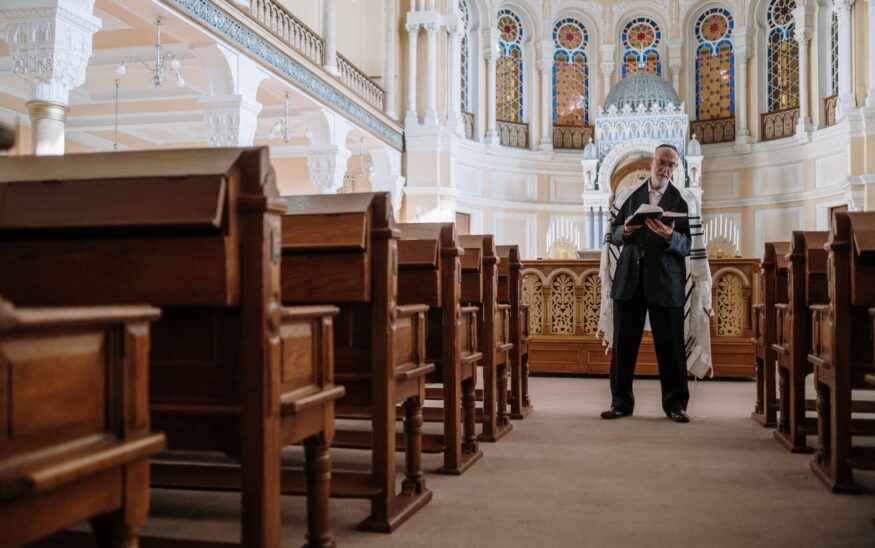
House Bill 4117 was designed in large part to address the rise in antisemitism and the disruption of synagogues, according to Rep. Alma Hernandez.
“None of us want to be disturbed when we’re at a religious service,” said the Tucson Democrat who said she’s seen it firsthand as a board member of her synagogue.
“We had to, unfortunately, hire an actual police officer to be present every time we’ve had a Shabbat service,” she said, referring to the Jewish Sabbath.
The original version of HB 4117, while approved by the House, used language that made it illegal to “disturb” or “disquiet” a religious service through indecent protest. That ran into issues over whether its prohibitions against things like “profane” speech and unnecessary noise unfairly infringed on First Amendment rights.
So Sen. John Kavanagh, R-Fountain Hills, crafted new language he said would resolve those issues.
But when that revised bill arrived at the full Senate, Sen. Analise Ortiz said things had only gotten worse.
“This original text was a simple misdemeanor for indoor disruption,” said the Phoenix Democrat.
“The amendment has now expanded it to outdoor, adjacent spaces, covering an undefined, protracted commotion near any religious activity.”
Kavanagh said expanding it beyond the actual churches, synagogues, mosques and other houses of worship is necessary.
Consider, he said, a tradition in his home community where a religious group rents a section of a city park for an Easter sunrise service. Similarly, he said the law as amended would protect services even if they were held in a room at a community center.
Ortiz, for her part, said she sees quite a different scenario. And it starts, she said, with the new version of HB 4117 protecting not just religious services but “religious activities”
Consider the Westboro Baptist Church, she said. It is known for picketing the funerals of gay people with signs like “God Hates Fags.”
“People might claim that that’s religious activity,” Ortiz said, potentially inviting legal retaliation for anyone who might seek to interrupt that group’s activities.
Ditto, she said, of the activities of some anti-abortion groups that pray outside of Planned Parenthood clinics.
Ortiz is not alone in her concerns about the breadth of the measure.
“There’s a Planned Parenthood clinic in my district,” said Tempe Democrat Sen. Lauren Kuby. “It’s often the site of protests with people spouting religious themes, shall we say, and trying to interfere with patients getting their healthcare.”
The federal Freedom of Access to Clinic Entrances Act already makes it illegal to use force, physical obstruction or other activities designed to injure, intimidate, or interfere with people going into a facility. Kuby said she fears what might happen if HB 4117 gives those protesters new rights based on the measure’s protections for religious activities.
“My concern is this bill would really put abortion patients in greater danger of harassment and violence than they’re already under,” she said.
“It will allow protesters, say, to gather outside a privately owned Planned Parenthood clinic, on a public parking lot,” Kuby said. “And as long as they’re assembled for a vaguely defined religious activity, they will be protected.”
And that could mean someone who interrupts what is happening, even just to speak to a protester or mutter some comment, could be classified as having interfered with a religious activity, she said.
A first time offense would be a Class 1 misdemeanor, carrying a potential penalty of six months in jail. But a second offense — or any offense committed by two or more — carries a maximum penalty of a year and a half in state prison.
Kavanagh said the concerns about the breadth of the proposal are not justified.
He said the first part of the legislation deals with issues that have broad agreement: that it should be against the law to obstruct, block, or impede another person’s ability to enter or exist a place of religious worship.
As to the rest of it — the parts that apply to religious services or activities — Kavanagh said a violation would occur only if someone makes “protected commotion, utterance, or display” that disrupts the religious service or worship. And he said that a protest of any type “does not become a religious service because somebody says a prayer in the middle of a protest.”
What Kavanagh said he is aiming to protect is something more basic.
“I don’t know when in our society it became OK for people to get up close to people worshiping and begin yelling and chanting to disrupt their religious service,” he said.
“The First Amendment guarantees freedom of religion,” Kavanagh said. “This stops people from interfering with religious worship.”
That’s true, said Sen. Mitzi Epstein, but she’s still worried about the breadth of the definitions — particularly the idea that it would cover a religious service being conducted in a park and how that could affect others in that same park exercising their own First Amendment rights of speech and assembly.
“One group might plan a rally to protest the current president or the current governor,” said the Tempe Democrat.
At the same time, she said, another group could say a ramada in that same park is its designated place of worship. And the wording of HB 4117, said Epstein, could result in the other group being charged with disrupting a religious service or activity.
“We do want to protect our freedom of religion,” she said. “But we do not want to trample freedom of speech when we’re trying to protect religion.”
Epstein said the bill in its current form should be scrapped and replaced with something better.
That wasn’t the position of Sarah Kadar, deputy regional director of the Anti-Defamation League. She told lawmakers new laws are needed.
“Frequent violent clashes between protesters and congregants have drawn considerable attention,” Kadar said. “Incidents at synagogues, churches, and mosques and other institutions of faith have proven to be dangerous.”
Rep. Alexander Kolodin acknowledged the “disturbing resurgence of antisemitism” in the United States.
“I find that very unfortunate,” said the Scottsdale Republican, saying he appreciates “the good faith efforts of my colleagues to address it.”
But Kolodin, who is Jewish, said this kind of legislation isn’t the answer to any part of the problem.
“We only make antisemitism worse when we crack down on First Amendment rights because that makes people resent the Jewish people,” he said.
The changes the Senate made to the bill still need to be reviewed by the House.