Sign In




 Free Newsletter
Bipartisan-backed law seen as a move toward affordable housing
Jakob Thorington, Arizona Capitol Times//June 20, 2026//
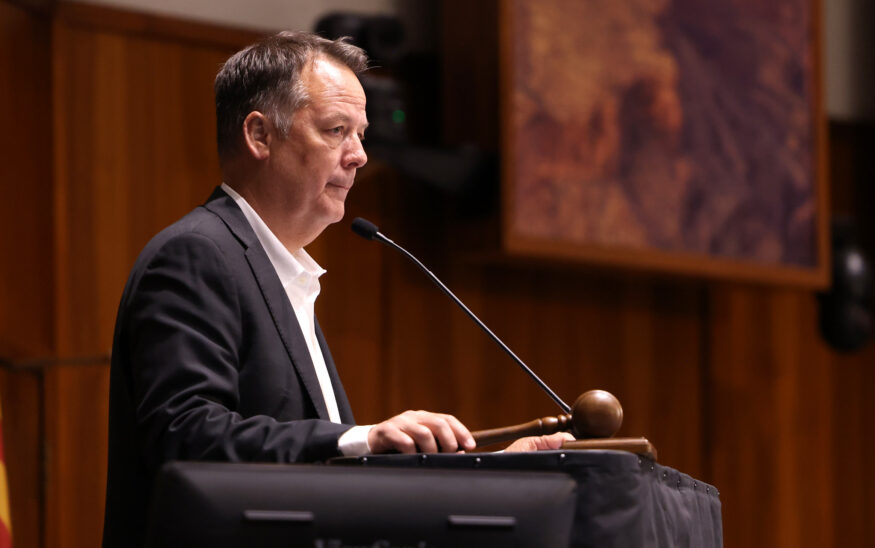
State Rep. Jeff Weninger on the floor of the Arizona House of Representatives on the final day of the second session of the 57th State Legislature at the Arizona State Capitol building in Phoenix. (Gage Skidmore / Flickr)
Bipartisan-backed law seen as a move toward affordable housing
Jakob Thorington, Arizona Capitol Times//June 20, 2026//


Key Points:
-
SB 1431, a bill that includes some similar language to the “Arizona Starter Homes Act,” didn’t get a vote before sine die
-
Gov. Katie Hobbs has already signed one bill intended to reduce home prices
-
Lawmakers did approve an amendment to give cities slightly more control over safety design requirements for homes
A bill similar to the Arizona Starter Homes Act didn’t quite make it to the finish line, but lawmakers did get one housing affordability measure signed into law during their final weeks before leaving the Capitol.
Gov. Katie Hobbs recently signed House Bill 2999, a bipartisan bill that supporters say will speed up home construction and help make new homes more affordable by giving communities a new tool to pay for housing-specific infrastructure costs like roads and sewer lines.
It accomplishes this by allowing property owners to establish a state affordability infrastructure district which can sell bonds and levy taxes to help pay for infrastructure costs and help housing projects move to a construction phase without impacting taxpayers outside the zone.
“Housing prices are not what they used to be when I was growing up, and one of the things we can do about it is to get more shovels in the ground and more housing built,” Gov. Katie Hobbs said during a June 11 bill signing event for HB 2999.
The bill had bipartisan support, clearing the House by a supermajority in a final reading. The bill’s sponsor, Rep. Jeff Weninger, R-Chandler, called the measure a “pro-growth” and a “pro-taxpayer” housing solution.
“Arizona needs more homes people can actually afford, and that means we have to be honest about what drives up the cost of building,” Weninger said in a statement.
On the final day of the legislative session, the House did discuss a housing bill that would give homebuilders more flexibility in how they design homes in new developments. It was moved with an amendment in the chamber, but House members did not vote on the bill, Senate Bill 1431, before they adjourned sine die.
SB 1431 would prohibit cities and towns from requiring certain design features or amenities for homes and prevent cities from interfering with a home buyer’s right to choose the features and design of a home.
While SB 1431 is not called the Arizona Starter Homes Act, it does share some language with that bill, which has appeared in previous sessions. The Starter Homes Act also called for cities from enforcing regulations related to home lot sizes but SB 1431 and the Starter Homes Act both include provisions that prevent cities from interfering with home design features.
“Housing affordability starts with getting government out of the way of responsible homebuilding,” said the bill’s sponsor, Sen. Shawnna Bolick, R-Phoenix, in a statement.
Rep. Kevin Volk, D-Tucson, attempted to help get SB 1431 through the House on the final day of session. He sponsored the amendment included in the bill which adds that prohibited home design requirements don’t supersede building or fire codes that cities have implemented for weather reasons, or affect walls that are located right next to an arterial road to a collector street.
“I do not want this bill to be heard without those powers reserved for cities and towns,” Volk said.
But since the House didn’t take up the measure for a vote on the floor, it’ll have to wait until next session. Weninger said stakeholders for SB 1431 have agreed to Volk’s amendment, so it could be included in a future version of the bill.
Many housing affordability advocates have been asking lawmakers for de-regulation on building requirements for years. Arizona Multihousing Association President Courtney LeVinus told the Arizona Capitol Times that her organization took a break this session on that effort because the organization’s staff believed lawmakers had “housing fatigue.”
Tyler Cobb, an attorney who specializes in municipal bond transactions and special district law, helped draft HB 2999 and said he’s hopeful the new law could help other housing proposals like the Starter Homes Act since the infrastructure needed for more dense developments could be financed by the law.
“Whether it’s in one of these districts or not, the reality is, if we’re adding inventory to these districts, it’s going to help affordability across (metropolitan areas) in Arizona,” Cobb said. “If you’re still missing that prerequisite piece — the infrastructure that is required, then those other reforms and those other initiatives just won’t be as effective.”
Cities and towns have opposed the Starter Homes Act in previous sessions for a variety of reasons. Nick Ponder, a lobbyist who represents multiple cities at the Capitol, said in a March House Commerce Committee hearing for SB 1431 that municipal leaders in Arizona haven’t been impressed by the product that’s come out of similar legislation in other states, including Texas, Florida and Tennessee.
“There’s a difference between cheap and affordable,” Ponder said.