Sign In




 Free Newsletter
Water woes continue as funding for statewide solutions dwindles
Jakob Thorington, Arizona Capitol Times//June 26, 2026//
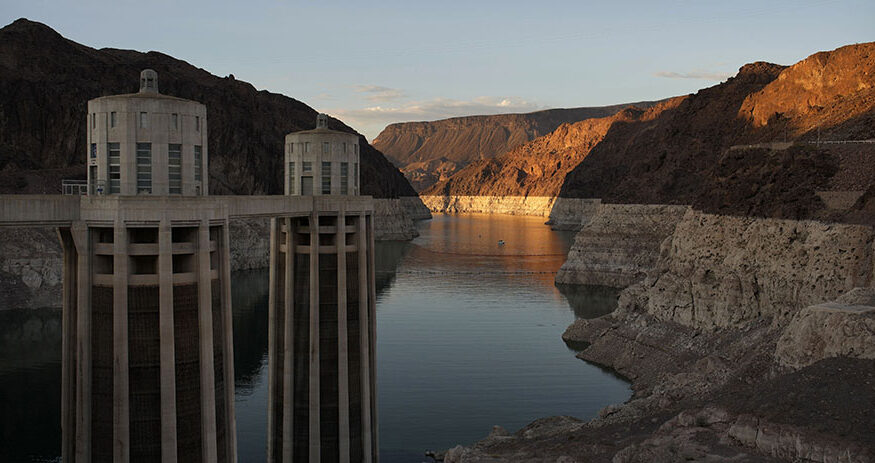
A bathtub ring of light minerals shows the high water line of Lake Mead near water intakes on the Arizona side of Hoover Dam at the Lake Mead National Recreation Area on June 26, 2022, near Boulder City, Nev. The U.S. Interior Department has chosen an official with the federal government’s water management bureau to serve as a deputy assistant secretary for water and science. (AP Photo/John Locher)
Water woes continue as funding for statewide solutions dwindles
Jakob Thorington, Arizona Capitol Times//June 26, 2026//


Key Points:
-
Western states that rely on Colorado River water fail to reach agreements
-
Governor says upper basin states won’t compromise
-
Federal intervention looms
Water advocates are worried about the future of supply following yet another financial withdrawal from a state authority once tasked with solving Arizona’s water shortage.
Since lawmakers funded the Water Infrastructure Finance Authority of Arizona with $1 billion to develop long-term water sources in 2022 under former Republican Gov. Doug Ducey, most of that money has been clawed back to help manage the state’s budget.
Lawmakers have already swept about two-thirds of the $1 billion funding in previous budgets, and this year’s budget takes another $20 million from WIFA’s water supply development to backfund new shortages in the state budget.
The budget cut to WIFA follows a May letter to Gov. Katie Hobbs wherein a coalition of water users, municipalities and utility companies asked the governor to do more to protect WIFA’s funds. More than 30 groups signed onto the letter, including the Central Arizona Project, the League of Arizona Cities and Towns, the Homebuilders Association of Central Arizona and the Arizona Municipal Water Users Association.
“We as a state need to show that we are seriously working to come up with new supplies to help offset reductions to the Colorado River,” said Warren Tenney, executive director of the Arizona Water Municipal Users Association. “We’re definitely behind. We’re not as far along as we should be.”
Most of WIFA’s cuts in recent years have come from its long-term water augmentation fund, which financially supports projects intended to bring reliable and sustainable water solutions to the state. This year’s $20 million cut doesn’t touch that fund, a choice which Tenney said water users appreciate.
Hobbs indicated on June 25 that negotiations among the seven Colorado River basin states haven’t left much compromise between the upper basin states and the lower basin states, which includes Arizona.
“The upper basin has consistently refused to come to the table with real solutions. They refuse to conserve any water in a southern state deal. That is not acceptable to Arizona,” Hobbs said. “We will end up taking the largest shortages, no matter what happens.”
And whatever cutback Arizona does get from the Colorado River may impact rural areas of the state that don’t get any Colorado River resources, said Ron Doba, executive director of the Northern Arizona Municipal Water Users Association.
“We definitely hate to see metropolitan areas impacted because they have to get their water from somewhere,” Doba said. “Rural Arizona, more and more as time goes on, is concerned about protecting the rural water supplies that we need for growth.”
The state budget does include a $6 million appropriation into a litigation fund for Colorado River negotiations. Hobbs said there’s nothing to litigate right now, but a decision from the U.S. Department of Interior that state officials are expecting soon may spring legal action.
WIFA’s board of directors last week reaffirmed its leadership and re-elected Chairman Jonathan Lines, Vice Chairman Peter Kim, and Treasurer Tim Thomure to another term, doubling down on the agency’s leadership. WIFA is close to getting cost estimates on four long-term water importation projects the board approved for a study phase last fall, including importing desalinated water and groundwater from California.
Lines told the Arizona Capitol Times WIFA should have cost estimates for those projects in August and project partners are currently working on finalizing their proposals to present to the board.
“We’ve got some serious work to do and we’re approaching a point where it becomes more critical to have more water,” Lines said.
Many water users are also looking for the state to expand funding for finding new water solutions. Tenney said he believes it’s important for the state to show a funding commitment along with stopping future cuts to WIFA.
Last year, Texas voters approved Proposition 4, which will dedicate about $20 billion of sales tax revenue over 20 years to finding new water supplies. Tenney said while there’s no similar funding proposal in Arizona being considered, lawmakers and Ducey approved WIFA’s 2022 $1 billion investment with the intention of that being a starting point for funding.
“Everyone knew that more money was going to be needed,” Tenney said.
Arizona Capitol Times Executive Branch Reporter Reagan Priest contributed reporting to this story.