Sign In




 Free Newsletter
Schweikert, Neely spend down war chests in bid to derail Biggs
Howard Fischer, Capitol Media Services//July 16, 2026//
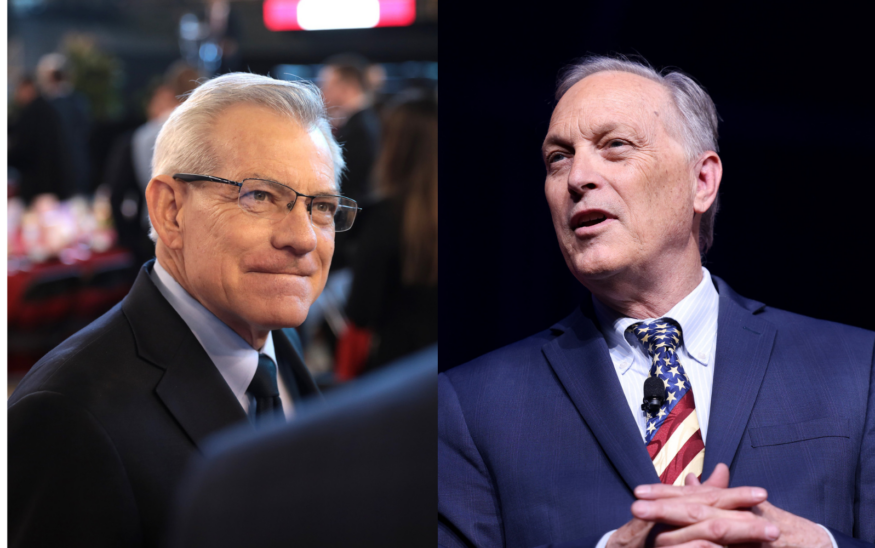
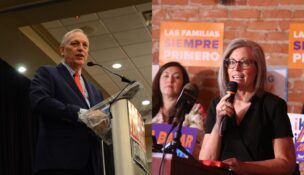
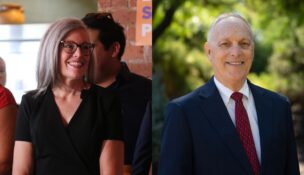
This combination photo features U.S. Rep. David Schweikert, left, and U.S. Rep. Andy Biggs. (Gage Skidmore / Flickr)
Schweikert, Neely spend down war chests in bid to derail Biggs
Howard Fischer, Capitol Media Services//July 16, 2026//


PHOENIX — Two Republican gubernatorial hopefuls, trailing in the polls, are spending nearly all the money they have in hopes of clinching the nomination in the Tuesday primary.
New campaign finance reports show that Congressman David Schweikert has burned through the $1.2 million in his war chest. That includes $534,000 in donations, $572,000 he moved from his prior congressional campaigns and $99,000 from his own pocket. That left him with just $42,495 in the bank as of June 30, according to reports.
Schweikert spent more than $100,000 gathering the signatures needed to get his name on the ballot. Nearly $60,000 was spent on “texting.” He also sent out campaign mailers accusing fellow Congressman Andy Biggs, the front-runner in the gubernatorial race, of associating with white supremacist and antisemitic groups.
The Biggs campaign responded by calling it “a desperate tactic by our opponent.”
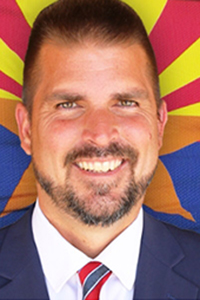
Businessman Scott Neely, unlike GOP would-be governors, is running with public funds. He reported spending most of the $1.1 million he collected, largely on billboards, a texting campaign and Facebook ads attacking Biggs. Neely reported having $218,000 cash on hand, as of the reporting period.
He argues that Biggs cannot win against incumbent Katie Hobbs.
In one poster, he melds together pictures of Biggs and 2022 GOP gubernatorial nominee Kari Lake, whom Hobbs defeated that year.
“Don’t make the Biggs mistake like we did with loser Kari Lake,” the sign reads. Then there are ads attacking Biggs for being one of only a handful of votes against releasing the full records of investigations into Jeffrey Epstein, the politically connected financier who trafficked young women.
Biggs, for his part, has pretty much ignored the other candidates, attending one four-way debate but skipping other joint appearances.
Biggs has reported spending $2.4 million in the race. But with donations of $3.6 million — plus $50,000 left over from his own prior races — that still leaves him with more than $1.2 million in the bank.
He is also benefiting from almost $489,000 spent on his behalf to get him elected, with most of that coming from the conservative advocacy group Turning Point USA. Plus, he has President Donald Trump’s endorsement, which can carry a lot of weight in a Republican primary.
There was no campaign finance report immediately available for businessman Ken Miceli, the fourth Republican in the gubernatorial race.
No Labels Party contender Hugh Lytle reported nearly $1.2 million in the bank as of June 30. But his campaign has been mostly self-funded with $2 million of his own cash. His foe in the No Labels primary, Teri Ann Hourihan, who also is using personal money, reported having less than $4,500 on hand.
Green Party candidate Lisa Lombardo, like Neely, has the benefit of more than $1.1 million in public funds. She said that, after expenses, she has about $159,000.
The benefits of incumbency
Whoever survives the July 21 primary could need a lot of money to beat Hobbs. With the benefit of incumbency, she reported hauling in more than $2.6 million in the three-month period ending June 30.
But despite having no primary, Hobbs, who won her first race by just 17,117 votes, also has been spending money fast and furious, with expenses in the same three-month period topping $7.4 million. She could sustain that because she already had more than $7 million in the bank on March 31.
Hobbs has been all over the airwaves, spending about $6.5 million on TV and other advertising trying to reach independent and some Republican voters with a mix of ads touting what she said are economic wins for the state and her willingness to work across the political aisle with the Republican-controlled legislature. There also are expenses for staff salaries.
PAC money flowing
The governor also benefits from financial help from Copper State Values, a separate political action committee run by the same people who run her campaign.
What makes that separate PAC important is that donations to candidates are capped at $5,500. That is not true of political action committees, which not only have no donor limits but are also allowed to accept corporate dollars, something strictly off-limits to candidates.
State election law does preclude Copper State from transferring funds above that limit to Hobbs. But the PAC can help Hobbs in other ways, such as a $400,000 transfer to the Navajo County Democratic Committee, which is running a coordinated campaign to drum up support for Hobbs and incumbent Attorney General Kris Mayes.
And the PAC also has transferred about $170,000 to the governor’s own reelection committee in “shared expenses” for payroll.
The governor is clearly not done raising money — and not just in the small contributions she seeks in text messages to individuals. MS NOW reports that Cindy McCain and her son Jimmy will host a fundraiser in September in Sedona on behalf of the Democratic governor.
This isn’t Cindy McCain’s first foray into supporting Democrats. The widow of Sen. John McCain, she backed Joe Biden in his successful campaign to oust Donald Trump after his first four years as president.