Sign In




 Free Newsletter
Data centers, water and vouchers: Democrats’ unfinished work, in Sundareshan’s words
Jordan Gerard, Arizona Capitol Times//July 9, 2026//
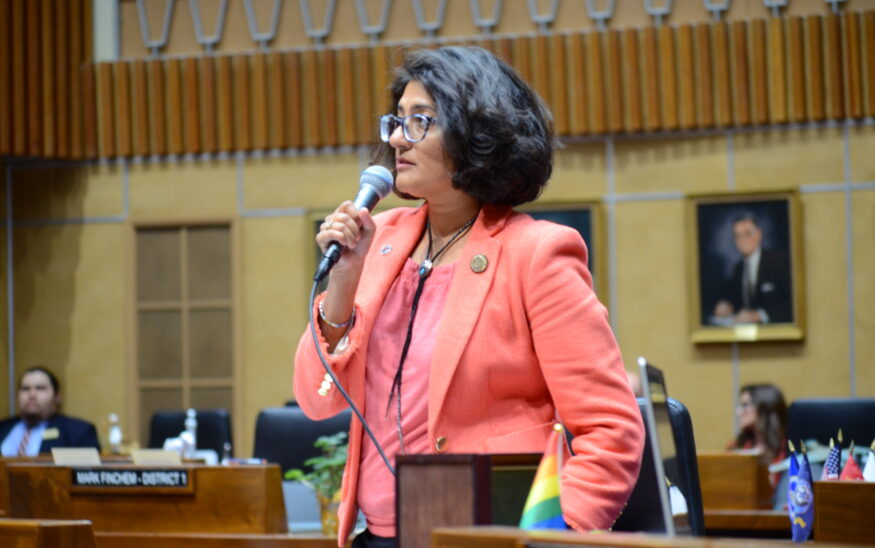
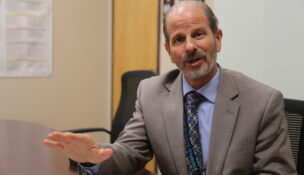
Senate Minority Leader Priya Sundareshan speaks on the Senate floor during the last two days of session. (Credit: Jordan Gerard/Arizona Capitol Times)
Data centers, water and vouchers: Democrats’ unfinished work, in Sundareshan’s words
Jordan Gerard, Arizona Capitol Times//July 9, 2026//


Senate Democrats spent much of this legislative session playing defense, but they’re already eyeing ways to play offense next year.
Senate Minority Leader Priya Sundareshan said Democrats stood up and stuck together in all of the places where it mattered, including standing up against a lot of bad bills that Republicans put forward.
“It’s a difficult job trying to manage a caucus full of leaders within their own right. Every single senator comes as an elected member of this Legislature from their district. They come with a lot of experience and expertise on some of the topics,” she said. “I’m very proud of my caucus for coming together and uniting where we needed that unity.”
Some of their biggest wins outside the budget were a result of Democrats standing together and voting no as a party, she added.
Sundareshan recently finished a two-year term as Senate minority leader. It’s unclear if she will run for the position next year or who would be Senate president if Democrats gained the majority.
Questions and answers have been lightly edited for style and clarity.
Overall, how’d the session go this year?
It was a tough one, but I think we as Democrats did the best we could to center our fight for affordability and to put working families first. We were united as Democrats in the House and Senate.
Democrats ran “An Arizona We Can Afford” campaign this session. Did we move the needle on affordability?
We did somewhat. We introduced at the very beginning of session a number of bills that we highlighted and brought forward at every chance we could, given the constraints that we live under, which is that the Republican majority does not hear any of our bills. The vast majority of those bills never saw the light of day, we’ve accomplished aspects toward that in the budget, but there still remains a lot to do to be able to lower costs and help Arizonans afford everything.
We had a number of bills geared toward lowering costs in healthcare, lowering energy, supporting public education and making sure that the government is functioning smoothly and providing all of the necessary support that it is intended to do.
We knew this wall was ahead of us. The Republican majority would not be thrilled to hear our bills. I think we did manage to achieve some significant wins in the budget that we were targeting from the get-go.
What do you count as budget wins?
We’re very excited. I think the big one in the budget is that three-year moratorium on new data center tax giveaways. There’s been public enthusiasm for not having these giveaways go to data centers, especially given that these are corporations that are profitable, doing pretty well in the stock market, there was a lot of public support for repealing that tax exemption.
We are very proud of that as our big budget win, protecting the important agencies and services, healthcare services, food support services that our state agencies provide in the face of Republicans seeking to cut those programs.
From this session, what’s the biggest accomplishment, along with data centers?
We did successfully negotiate an election timeline fix bill. It was nearly unanimous out of the Senate, if not fully unanimous.
We fought back against a lot of Republican bills. A lot of the Republican bills really wanted to embrace ICE even more, given that they’ve been so lawless, and so we stood firm in opposition to that. There were a number of Arizona communities who were targeted based on one aspect of their identity or another by a lot of the Republican bills, and we stood up against those bills, and made the case for either veto or even stopping their momentum from going further.
What’s the biggest loss?
Education and our failure to rein in ESAs and failure to invest in secure public education funding.
We saw Republicans fail to come to the table on Prop. 123 discussions, so we here we are in an election year where there is no Prop. 123 on the ballot, which means that public education does not have a separate and secure funding source to be able to make sure we can pay for everything that we need to, even on a maintenance basis. It puts us in the 48th to 50th in the country on per pupil spending on public education, so I think that’s the huge loss or opportunity lost that we did not do this session yet again. We just continue to see so many reports after reports about what those ESA funds are being used for that really stretch the definition of what might be educational, if not outright waste and fraud.
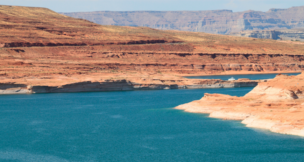
We’re seeing national news stories about the Colorado River and the seven state negotiations that have still not really produced a negotiated solution. I think that that’s, of course, something that is outside the Legislature’s hands, but what we have failed to do at the Legislature is anything further to strengthen our own groundwater resources, given the challenges we know we will be seeing from the Colorado River.
A lot of things have changed since 1980 (Groundwater Management Act) so we do need to be much more with the times and that’s even just within our urban areas. The other half of that equation is our rural groundwater completely remains unregulated and unprotected, and we’ve seen the news stories about people whose wells have gone dry, and we have really done nothing to help.
What are your plans for next year on data centers?
The tax exempt incentive moratorium is a great start in the right direction. All that does is really kind of re-establish the fair playing field, where corporations, especially the data center corporations, should be able to pay the sales tax that all of us pay, and should not be receiving special favors for.
We should look at completely extending or completely eliminating the sales tax exemption. There’s so much else about the resource use involved with data centers that we need to talk about and get a handle on. For example, on the water use side, I think we need to have a good understanding of the water that’s being used and also whether they’re paying their fair share of that water.
Then on the energy side of things, we’re going to see more information about how a lot of the rate increases people have been experiencing might be as a result of a lot of these large loads that data centers are a key example of hitting the grid.
I also think it’s really important that if we have large loads coming onto the grid, we do need to be talking about heat waves. We’ve got to be talking about how we are powering these vast energy consuming facilities in a way that isn’t going to further cause the heat waves that we’re seeing from climate change. I think we need to be having much more of a conversation around requiring those data centers and large loads generally to be sourcing their electricity from renewables.
What do you hope legislators will make serious progress on next year?
Everything that I just listed is an opportunity lost, right? I want us to be seriously finally grappling with our water situation and protecting our groundwater, demonstrating that Arizona can be the leader and continue to be the leader in groundwater protections.
I want us to be able to finally rein in ESAs in one way or another. We’ll see how the initiative that is currently getting onto the ballot does, and if so, that will put in place a good chunk of ESA reforms. There’s likely more the Legislature might want to do still on reining in all of the waste and fraud we see. We’ve got to be fully funding our public education space. A lot of it is funding and a lot of it is the misalignment of the legislative majority’s priorities in delivering tax breaks instead of investing in the things that we should be doing.
It’ll all depend on who’s in charge in the Legislature. We will continue our defense, and even hopefully be able to be on offense on so many issues. I’d like us to be protecting voting rights and making voting more accessible rather than just be on the defense all the time against attacks.
As America turns 250, what is the one piece of unfinished work we must finish by its 300th — and what part of it is Arizona’s responsibility?
Equality and diversity. It’s still all about being for the people and for all the people.
We started 250 years ago with these grand ideals. We have continually recommitted ourselves to those ideals, but we know we have not gotten there, and it will always be a work in progress. We should always be doing that self-reflection about whether or not America is achieving those ideals, and how we can do better.
What has motivated me in my whole career is growing up in this beautiful place and knowing that it continues to be beautiful because we continue to protect it. We have these beautiful national monuments, national parks and national forests that we protect for the public, and maybe that’s the thing that Arizona can continue to showcase and be a leader in protecting that access to all of these beautiful places. Access to those beautiful places in a way that benefits everyone.
I think that’s something that we can really look to Arizona’s relationship with our outdoor spaces and our public lands and recommit on behalf of the country … that represents the ideal of this country as being for the people and not just for the few.