Sign In


Upcoming Event
 Free Newsletter

Susan Nicolson: How a small department keeps Arizona real estate fraud at bay
Jordan Gerard, Arizona Capitol Times//August 19, 2026//
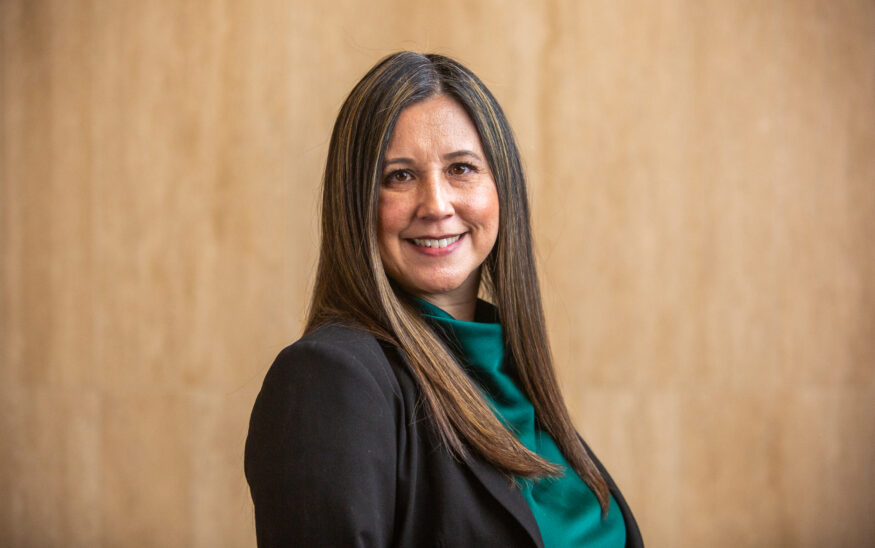
Susan Nicolson serves as the commissioner of the Arizona Department of Real Estate. (Submitted)
Susan Nicolson: How a small department keeps Arizona real estate fraud at bay
Jordan Gerard, Arizona Capitol Times//August 19, 2026//


As the commissioner of the Department of Real Estate, Susan Nicolson keeps a sharp eye on real estate fraud while overseeing thousands of real estate licensees.
It’s no small task. Nicolson said her department receives at least one, if not two or three, reports every week of some type of real estate fraud.
According to the Attorney General’s Office, they have received 372 real estate fraud complaints since January 2024. Several lawmakers have written legislation to address these issues, such as Sen. Wendy Rogers’ Senate Bill 1426, which more quickly stops squatters from claiming a home as their own. The bill was signed into law this year.
“I knew the pain and the pressure points because I was a practicing agent,” said Nicolson, whom Gov. Katie Hobbs appointed in 2023. “Whenever it is that I am finished, I know Arizonans will be better protected in their property.”
She also taught real estate courses as an instructor and added several courses that are now required for licensees, including deed fraud, water education and renewing licenses. Nicolson said that when licensees provide good, reliable information, they become better agents for their clients.
She grew up in Florida and married a pilot who was based in Phoenix. They have two daughters.
The questions and answers have been edited lightly for style and clarity.
How big is your department?
We are only 25 people. We regulate 83,000 real estate licenses. We have to be enormously efficient and good at what we do. Our budget is about $3.2 million each year.
What are your responsibilities?
We regulate real estate licenses. We also issue subdivision public reports. There are 25 items in statute that are required to be in a public report. We can make exceptions if it’s warranted and if it’s not going to cause any harm to the public. I wish everybody would read them. They are packed with great information.
We have our licensing team. We license entities, schools, instructors and we review continuing education courses for content and the minimum course requirements.
Then we have investigators and auditors. They do audits over the bank accounts of real estate brokerages to make sure that if there’s money that’s set aside in a trust account, that money is being kept properly, not being commingled and not being used for Nordstrom’s runs or anything.
Investigations is where we receive complaints from the public, and we investigate all complaints received in writing. And then if we have findings, that moves into enforcement and compliance. That determines if this is going to be a letter of concern. Is this an accelerated settlement statement, or are we going all the way to a summary suspension or a cease and desist?
How common is real estate fraud and predatory practices in Arizona?
Not a week goes by that something doesn’t come in. Sometimes there’s two or three a week. It’s a big-ticket item if you can successfully steal real estate. It’s like robbing a bank. I realized law enforcement and the Department of Real Estate were all just disjointed and not communicating with one another. Real estate licensees would help if they knew how, but they don’t know what to do when they encounter this.
I released a mandatory deed fraud education course that would teach real estate licensees the red flags to look for in a real estate transaction. I made it mandatory to renew your real estate license because I knew if licensees knew how to recognize the signs of the crime and the red flags, they would raise the red flag on a transaction.
It’s a class five felony to record a fraudulent deed, and there’s an alert system at the county that will let you know that somebody did that. But then an Arizonan still has to pay an attorney to undo [it]. We set our minds to figure out how we could create a system to alert people in a real estate transaction when the innocent buyer is about to buy stolen property. That system should release in three weeks, and I’m really excited about it.
It’s a truly devastating crime.
Are there any recent trends to be on the lookout for?
The other problem we have is our elder population is constantly being attacked with romance scams and catfishing scams. The ultimate goal seems to be to get them to sell their houses and give the money to these scammers.
We’ve worked really hard with a group called Home Fraud Defense. It helps consumers because if you receive a text message and you’re kind of suspicious, or you’ve got a postcard in the mail and you’re wondering if that’s a scam, you can take a picture of it and upload it. This free site runs it against known real estate fraud, and it can say it is very likely fraudulent. Then it gives instructions on how to report it and how to protect yourself.
There are people out there that pose as investors, and one of the big things that we’re seeing right now is they call it “Sub-to,” and what they mean is subject to your existing mortgage. They are “buying somebody’s house” without paying off the original lender on loans that are not assumable loans. Or even if they are assumable loans, they are not properly assuming the loan.
We see people fall victim to this, and obviously, if this person who has bought your house that you’ve signed your deed over to stops paying the mortgage, it’s not on their credit. It’s still on your credit, and you don’t have a house to back it up anymore because you signed over the ownership portion of it. I can’t warn people enough not to get into bed with one of those quick offers for a little bit of cash in your pocket, and they just take over your mortgage. Mortgages don’t work that way.