Sign In



 Free Newsletter


Nick Myers: Outgoing Corporation Commission chair on legacy and next steps
Reagan Priest, Arizona Capitol Times//November 2, 2026//
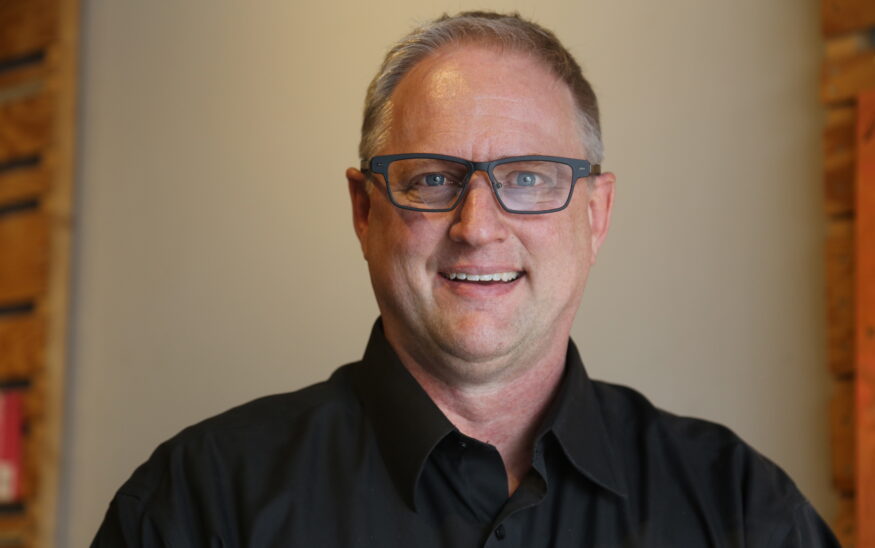
Arizona Corporation Commission Chair Nick Myers poses for a photo at Cartel Roasting Co. in Tempe, Arizona on Oct. 30, 2026. (Reagan Priest/Arizona Capitol Times)
Nick Myers: Outgoing Corporation Commission chair on legacy and next steps
Reagan Priest, Arizona Capitol Times//November 2, 2026//


Arizona Corporation Commission Chair Nick Myers lost his reelection bid in July. Now, he thinks he may have gotten the better end of the deal.
Myers’ four-year term coincided with unprecedented interest in the ACC’s work, stemming from spats with the Legislature and the attorney general, concerns about rapid data center growth and energy costs, and conflicts surrounding the commission’s formula rate policy statement.
The outgoing utility regulator sat down with the Arizona Capitol Times to discuss what he’s learned from serving in a statewide elected office and how his future plans might keep him close to the commission.
The questions and answers have been edited for style and clarity.
Can you tell me about your path to the commission?
I started as a software engineer, did that for 18 years. Ultimately, I got tired of the corporate world and started doing my own entrepreneurial activities. I built fuel systems for aircraft; I did dog training; I had an IT business — just very eclectic, hodgepodge businesses. One of those was delivering water, and that’s where I met George Johnson and ended up picking a fight with him. That led to six or seven years of fighting in front of the commission and getting to know it fairly intimately. When I was done with that, somebody said, “Hey, you’ve got a lot of experience now. Why don’t you run for a seat?” My dad was [on] city council back in Kansas, so I went to him, and I said, “I’m thinking about doing this. Am I crazy?” I think his exact words were, “Yes, but do it anyway.” So I did. And, it turns out I really do love the job.
Was there still a learning curve when you were elected to the commission?
I did have an advantage because [when] I ran the first time, COVID hit, so I couldn’t shake hands, which meant I lost. [Then] Rep. [Jacqueline] Parker got elected, so she could no longer be Commissioner [Justin] Olson’s deputy policy advisor. So when she went to the Legislature, I stepped in. That was my fire hose drinking time. So when I actually became a commissioner and took office, I was well prepared, much more than most commissioners when they come in. I’m not going to tell you that there wasn’t a lot that I had to learn. This is a huge field, and we do a lot of wonky things. Securities, corporations’ filings, telecommunications, and railroad and pipeline safety. So yes, there was a bit of a learning curve, but the fact that I had that two-year advantage really did help a lot.
What do you wish more people knew about the commission?
The reality is, we have constitutional responsibilities. We can’t just turn down a rate case. If the utility thinks that their rates need to be adjusted in order for them to continue to do business, we have to go look at all of that evidence and assign rates. It’s not a matter of, “No, you don’t get a rate increase this time.” And I really wish people understood that. That it’s not [utilities] spending money and then coming back and taking it from the pockets of the ratepayers. It’s how much money you need in order to operate effectively and with a little bit of a profit. It’s not us rubber-stamping rate cases; it’s going through an 18-month process in front of a judge with intervenors and putting everything on the table, cross-examining witnesses. It’s a personal goal [and] a constitutional responsibility to keep [rates] as low as possible, but also [to] let the utility run.
What do you wish other elected officials knew about the commission?
The biggest thing that I can point to is they need to stop thinking that we are the Legislature. We act more like a judicial branch, not more like a legislative branch. We can’t just snap our fingers and say, “Thou shalt not put solar panels up.” No matter what your feelings are, that’s just not the way it works. We have to have evidence. We have to go through a hearing process. And sometimes it works out that those are the best technologies. Sometimes not. I wish they would realize that we aren’t the legislative branch and we have to do things in a very structured, logical, due process-type environment. It’s a very technical and very specialized field, which is why we have great employees at the commission that know how to do this stuff. They’ve done it for decades, and the commissioners are just there to kind of give direction.
What do you see as your proudest accomplishment during your time at the commission?
My very first docket that I opened hours after I was sworn in was the rate structure docket, which ended up being the formula rate [policy statement]. That will be the legacy that I leave, and I know it’s received a lot of mixed feedback. But I personally very strongly believe that this addresses a lot of concerns that a lot of people have in Arizona. Like, why do we have utilities that don’t come in for 40 years for rate cases? It’s because we can’t force them to come in. But if we have formula rates and they voluntarily take the formula rate process, part of that is you’re going to come in every year, and we’re going to keep tabs on you. It also helps keep the rates more aligned with what inflation is doing and what the economy is doing, which is something that was specifically asked for on the campaign trail four years ago. People are upset about the fact that we’re allowing rates to increase every year, potentially because inflation really doesn’t ever go down. But also there’s an opportunity [for rates] to go down because what utility is going to voluntarily come in if they want a rate decrease? It will never happen. With formula rates, they’re required to come in every year, so at least we’ve opened the door to the possibility of lowering rates. There’s a lot of big advantages both to the utility, but also to the ratepayer, and it’s a balance. So I’ll stand behind it all day.
What do you want to see the commission pursue after you leave?
I wish I could have seen more nuclear come to fruition, because nuclear is a huge topic lately. Everybody wants it; it’s not even a partisan issue anymore. It just takes so long to get it built, and there are so many hurdles to jump through, and there are new technologies that need to be finished being developed. I really wish we could see that, and I really wish Arizona was more of an industrial complex for nuclear.
What did you learn from your loss in the primary election?
One thing I’ve learned in my short time in politics is that if you’re doing things 100% correctly and honestly, you will not make it in politics. That’s a very sad thing to say, but I don’t want to go out there and try to destroy an opponent. It’s just not in my nature. There are people who are willing to play that nasty game, and then they’re going to be the good guy when they’re in office. I had an opponent who said a lot of things that flat-out weren’t true, and he ended up winning. I am, and always have been, a firm believer that this is a public service. I did not join the military, so this is the way I’m serving my country and my state. And if the people don’t want me to serve, so be it. I’m OK with that. Now that I’m out of it, I think I’ve gotten the better end of the deal by not being reelected.
What comes next for you after you leave the commission?
I’ve interviewed with the [Federal Energy Regulatory Commission]. I’ve given my resume to a couple of different people at the [U.S.] Department of Energy. One of the FERC commissioners asked for my resume. There is a deputy executive director position at the commission that is now unfilled. Could that be a possibility? Maybe. It’s something I would be more than qualified to fill, and I would actually bring a great skill set to it. I’m one of the guys who has a lot of the historical knowledge of the commission at this point, and I have legislative contacts; I already have those connections. So it might be a good fit if [the executive director] chooses to put me there. It’s safe to say that because I like the energy world and I like the utilities space that I’ll be around somehow, some way.
Would you ever consider running for office again?
No. Would I 100% rule it out? No. Maybe when all the kids are moved out, I’ve served my time as a government employee and got my pension, and I don’t care anymore. Maybe if Turning Point doesn’t exist, if the [Arizona] Free Enterprise Club doesn’t exist. Then maybe I would, because I don’t want to have to fight my own people to do a job. If people want me to do it, I might consider it, and there are a lot of people that think I should. Commissioner [Lea] Màrquez Peterson is termed out, so people have asked if I am going to run for her seat. The answer is not only no, but hell no. Especially since it’s a two-year process away from my family. My wife has said no. I’m not going to rule it out altogether. It just probably won’t be a statewide position unless the stars really align perfectly. It’ll be something more close to home, and it’ll be something that I really have an interest in doing.