Sign In


 Free Newsletter

A Sun City West resident had problems with her HOA, so she wrote a bill
Jordan Gerard, Arizona Capitol Times//August 20, 2026//
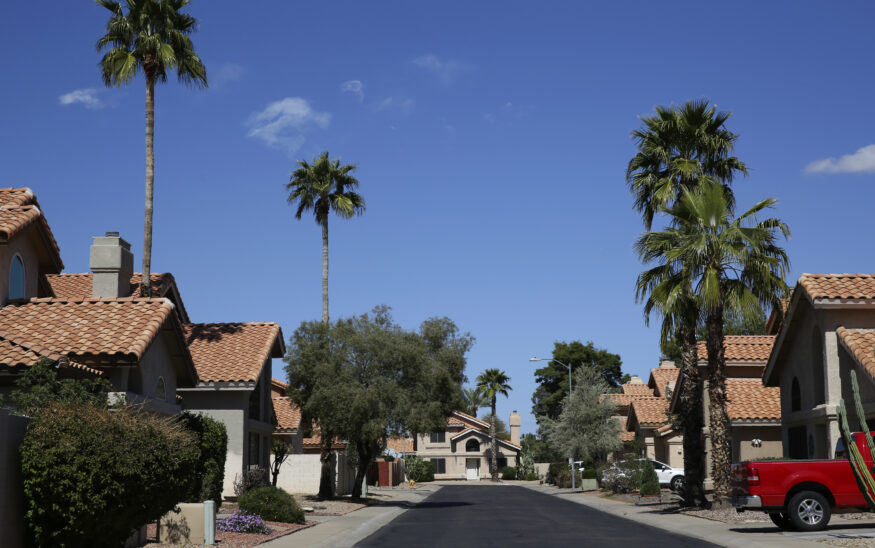
Palm trees line a typical neighborhood at a suburb in Phoenix, Ariz., Sunday, March 9, 2020. (AP Photo/Dario Lopez-MIlls)
A Sun City West resident had problems with her HOA, so she wrote a bill
Jordan Gerard, Arizona Capitol Times//August 20, 2026//


Key Points:
-
Residents who face HOA issues are talking to lawmakers to address the laws
-
Six bills were signed that rein in HOAs’ power
-
The Arizona Department of Real Estate takes complaints but does not regulate HOAs
When Sun City West resident Caroline Trotter ran into problems with her homeowners association, she did something many might not think to do: She took her fight to the state Legislature.
This dispute — started over squabbles with neighbors, an unsightly concrete wall and a retaliatory HOA — ultimately led to the bipartisan approval of a new law requiring HOA boards to be more judicious in how they use their powers and not play favorites.
Trotter’s experience is part of a broader and growing push by Arizona homeowners to rein in HOA authority. More than 30 bills affecting HOAs were introduced this legislative session, though only six became law, according to an Arizona Capitol Times analysis. The proposals addressed everything from backyard shade structures to military flags and unpaid assessments.
More HOA bills will likely be filed next legislative session, but Sen. John Kavanagh, R-Fountain Hills, said it depends on the constituents.
“Possibly. Most of my legislation is in response to some horrible story of victimization by some HOA member that I then respond to,” he said. “I haven’t gotten any yet so far, but the interim is young.”
It’s no small matter in Arizona, where nearly a third of homes are governed by HOAs, according to Today’s Homeowner. HOA fees are also the second-highest in the nation: about $448 a month.
“I’m delighted this will help others, especially seniors,” Trotter said about House Bill 4011, which she got passed with the help of Rep. Beverly Ringerelli, R-Peoria. Trotter added that a home is often the only thing seniors have left.
The new law states that planned community association boards have a duty to act reasonably when exercising their authority. It defines “duty to act reasonably” as exercising discretionary powers neutrally, fairly, without favoritism and in a nonarbitrary fashion.
The goal is to educate HOA boards — quasi-government groups often made up of volunteers — who might not be aware of all the HOA’s legal responsibilities. Both Pingerelli and Trotter said it’s a starting point to move the needle and help homeowners in the future.
Pingerelli said she hasn’t had any issues with HOAs, but knows people face issues in other associations.
“The language we came up with was the most appropriate to start out the conversation,” she said. “It’s a very bipartisan issue.”

From HOA dispute to state law
Trotter moved to Arizona after a long career in international business as a senior executive, president and CEO of several companies. For six years, she said she’s loved her neighborhood despite the issues she’s experienced over the past year.
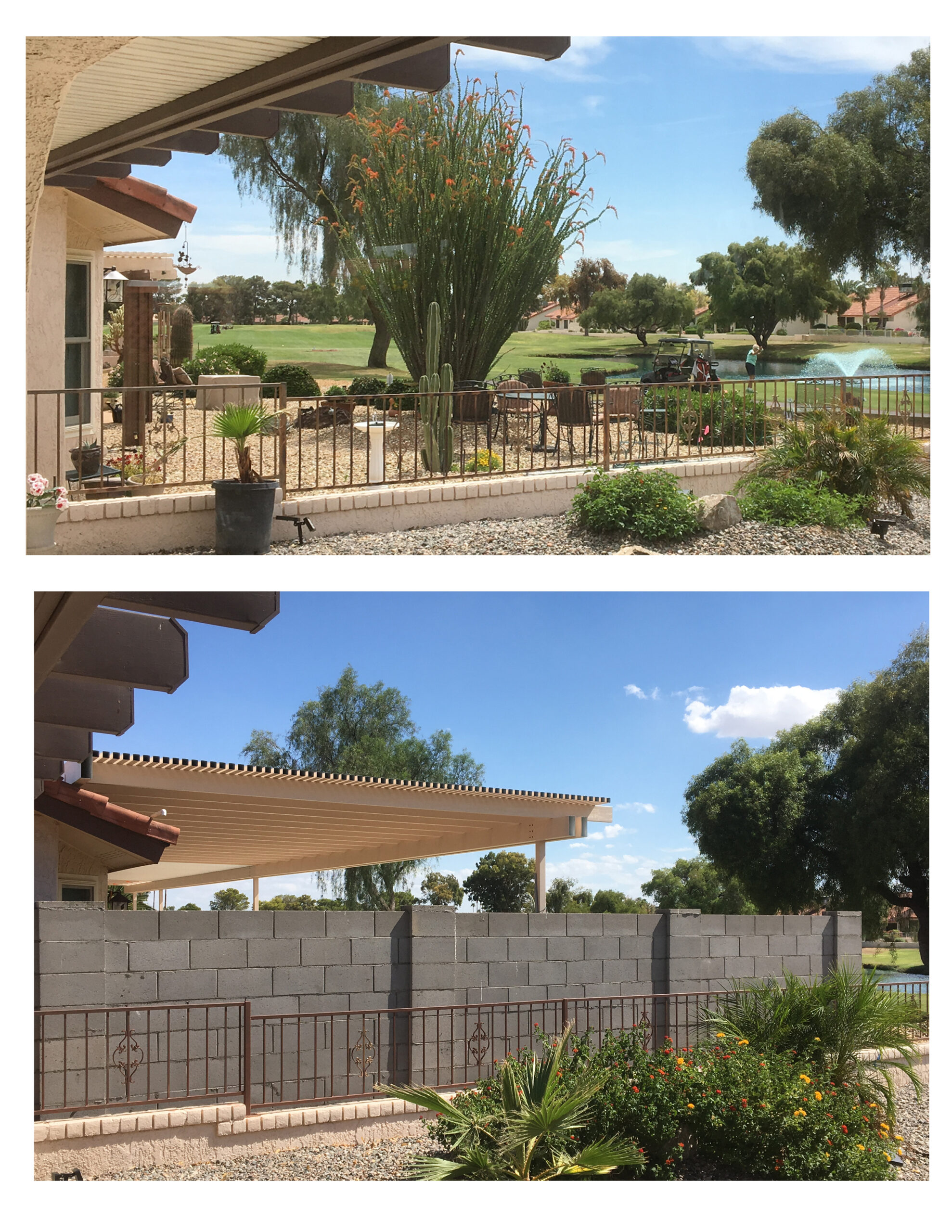
Trouble started with a series of small disputes that culminated in one neighbor building a concrete block wall on what Trotter said was her property. The wall is unpainted on Trotter’s side, and it’s the only one in the neighborhood. It also blocks her view of the golf course.
Trotter went to the Recreation Centers of Sun City West to complain. But instead of solving the problem, she said they accused her of violating HOA rules. She declined to go into details because she has since filed a lawsuit against her neighbors over the issue.
Representatives for Recreation Centers of Sun City West declined to comment at length about the case. Instead, they released a statement saying they “acted reasonably regarding issues and interactions with Mrs. Trotter.”
About HB 4011, they added, “Since 1979, the Recreation Centers of Sun City West has been and continues to be one of the nation’s top active adult communities. We set the standard for 55-plus planned communities. We have always and will continue to act reasonably in the exercise of the Association’s discretionary powers, so HB 4011 will not require any changes in how we operate.”
Three key laws curbing HOA power
House Bill 4011 isn’t the only new law trying to rein in HOA power.
Rep. Stacey Travers, D-Phoenix, filed House Bill 2342 and got it signed into law. It prevents HOAs from restricting the installation or use of a shade structure in a backyard.
Travers said earlier this year that the bill was inspired by a family in Chandler who installed a shade structure so their child could play safely outside.
The HOA told them to take it down, almost to the point of harassment, Travers said. They tried to use an umbrella, but they were told to take that down too.
“Expanding shade structure regulations within our HOA is a practical, forward-thinking step that benefits the entire community,” Travers said. “With clear design standards in place, the HOA can maintain neighborhood aesthetics while giving residents the ability to adapt to rising temperatures and changing needs.”
Senate Bill 1184, sponsored by Senate Majority Leader John Kavanagh and signed into law in June, states that HOAs cannot prohibit the display of flags of military branch divisions. This bill met some resistance from Democrats, who proposed an amendment protecting homeowners who want to fly pride flags. The amendment failed on the House floor.
A third law, filed as Senate Bill 1246 and sponsored by Sen. Wendy Rogers, protects homeowners from losing their homes over relatively small, unpaid HOA or Condominium Owners Association assessments. It passed unanimously in the Legislature.
Homeowners have limited recourse
For retired attorney Steve Cheifetz, who has litigated HOA cases involving both homeowners and associations, the new laws highlight a larger issue: HOAs have considerable authority to limit homeowners’ rights over their own property.
HOAs generally operate under what’s known as a Declaration of Covenants, Conditions and Restrictions (or CC&Rs). These are legally binding documents that outline what property owners can and cannot do with their properties, and the consequences for violating the rules. State laws limit some HOA authority, Cheifetz said, but homeowners are still bound by HOA property use limitations.
No state department or agency oversees HOAs. Homeowners can file a $500 petition with the Arizona Department of Real Estate. It’s a legal action one party is choosing to file against another, and the matter is adjudicated by an administrative law judge through a case assignment at the Office of Administrative Hearings, Commissioner Susan Nicolson said.
But they offer reduced-fee mediation, and often the case will not proceed because there isn’t really a complaint, Nicolson said. They do not have any regulatory authority to enforce HOAs, and they don’t interpret the CC&Rs either, she added.
Between July 1, 2025, and June 30, 2026, Nicolson’s department received 261 petitions regarding HOA complaints. Of those, the department issued 28 decisions and coordinated four rehearing requests.
So far in 2026, she said the department has received 246 petitions, and 77 cases are currently open.
Nicolson said the best advice she can give prospective homeowners who are considering an HOA is to read the CC&Rs before they buy. Many times, HOAs win their cases because they were following the law, she said.
“Homeowners associations are basically [homeowners] giving up some of [their] private property rights that came with the land in order to live in a community that’s agreed to certain rules,” she said. “Other people just want their private property rights, and if they want to paint their house turquoise and copper … go forth. They do not want anybody to tell them that they can’t do that, and that’s a personal choice.”