Sign In




 Free Newsletter
Jake Hinman: Affordable homes, American principles
Jakob Thorington, Arizona Capitol Times//July 27, 2025//

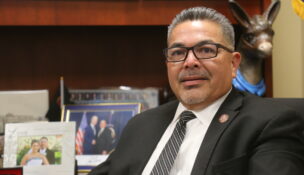
Jake Hinman (Courtesy of Jake Hinman)
Jake Hinman: Affordable homes, American principles
Jakob Thorington, Arizona Capitol Times//July 27, 2025//


The “Arizona Starter Homes Act” failed to become law again in 2025, marking the second consecutive year it was not enacted. Lawmakers have attempted to pass zoning reform for multiple years now, but have had little success. Jake Hinman, a lobbyist with Mavrik Policy Group and one of the bill’s outspoken supporters, discussed the Starter Homes Act with the Arizona Capitol Times.
The questions and answers have been lightly edited for style and clarity.
What are the biggest challenges to the housing market?
The most obvious challenge is we’re in a huge supply and demand deficit. There simply aren’t enough homes and not enough options out there for people to choose something that fits within their budget. Arizona continues to be one of the fastest growing states. Maricopa County continues to be one of the fastest growing counties in the country. Our state is doing a marvelous job with its growth and implementing policies to attract new investment. Because of that, people are moving here and families are growing in Arizona and we just simply don’t have enough homes to fill that market gap. Imagine that you have a dinner party and you have 10 chairs around your dinner table and you invite 11 guests over to that dinner party. No matter what, there will be one person without a chair at the dinner party. That’s sort of where we’re at with housing in Arizona and across the country right now. Because so many housing types have been made illegal, the market is left with very few options to choose from. So, you get very affordable housing because it’s subsidized, or you typically get very expensive houses as your option, but we’ve cut essentially everything out in the middle.
The Starter Homes Act could be one of those mechanisms. Sell me on the bill.
It all kind of goes back to how we’ve outlawed or made illegal a variety of housing types that were once abundant across Arizona and abundant across America. One of those types are what we just casually call starter homes. These were the homes that our parents and our grandparents bought in their mid-20s and late-20s, and it’s what they used to build their equity and climb up the housing ladder. Throughout this entire process, I would talk a lot about how the average age for first time homebuyers is now 38 years old. The average home across Greater Phoenix is close to a half a million dollars right now. When you think about all of these Arizonans who desperately want to lay down their roots and have access to the American Dream, they’ve been simply boxed out of it all. The bill, we thought, was pretty straightforward. It’s just simply saying if somebody owns land, they should be able to build a modest or small house on it. These homes were once abundant in Arizona. If the market desires it, let builders bring those homes to the free market. These exact homes were once abundant in Arizona, but if we’re forcing an entire generation to wait until they’re 38 years old to purchase property and to obtain their American Dream, I think we have bigger societal issues that are going to be at play here, aside from economic issues of being able to attract a good workforce in Arizona.
This is an issue I know you’re passionate about. Why is it important for you?
This issue really goes back to the birth of our nation. America was founded on a number of principles, but one of those was private property. If you look at the early teachings of our founding fathers, you know that private property was a critical component in the formation of our country. It feels that, over the years, we’ve moved away from that to where a private land owner in the state of Arizona or across the country has lost control of their property, and now the government or the neighbors now have more control of somebody’s private property. Imagine telling Thomas Jefferson or James Madison that one day the government will be in the position of telling a private property owner what color to paint their house or what type of roof shingles they have to use or the type of exterior lighting for their house.
Were you encouraged by lawmakers’ attention to this issue?
There is so much interest in this on both sides of the aisle, and you’re seeing lawmakers who may not typically work together, come together on this issue to try to bring solutions for Arizona families. This is one of the top issues for voters. Constituencies really care about this right now because there’s a lot of people who are hurting. They’re hurting because rental rates are high right now, and they can’t access home ownership. I think lawmakers across the aisle are recognizing that and we are seeing other great policies to legalize backyard accessory dwelling units and other middle housing options get across the finish line. To me, that’s incredibly encouraging.
What’s going to be your approach in the next session?
I honestly don’t know what next year will hold. I don’t know if starter homes will come back, to be quite honest with you. We’ve had two years where we haven’t been successful, so maybe we’re not ready for starter homes and home ownership just yet in Arizona. I hope this will be the year where we see local action.
What other legislation were you involved with this session?
I had the pleasure of working on a number of issues this year. One issue that I was really excited about working on was school lunches with House Bill 2164. This one was really interesting from the beginning. Health and wellness has always been an issue near and dear to me so it was very rewarding to work on this one. Probably what made it even more special was the fact that my wife was heavily involved. The bill is pretty straight forward. It basically says, any school sponsored meal or snack can’t contain eleven ingredients that we list off in the bill. Those ingredients are mostly synthetic foods dyes and some other ingredients that have been linked to certain health issues. But the basic idea is, if taxpayers are going to pay for school meals, then we can at least try to make these meals healthier with less ultraprocessed ingredients.
How did you feel about getting that bill to the finish line?
Honestly, I don’t think I was expecting the level of support and excitement. In fact, Rep. Leo Biasiucci and I often joke that we thought this bill would just end up being a conversation starter and maybe not get across the finish line. I don’t think either of us thought it would pass unanimously. Right from the start, we had so much support and I think that support, and frankly the national conversation that we are having around food right now, certainly helped in a big way. We had so many voices involved in this one. Biasiucci and Sen. Janae Shamp were incredible. Rob Schneider has been a huge vocal supporter and has been with us since day one and really brought a ton of energy and excitement around this bill. Calley Means, whose sister Casey has been nominated for surgeon general, was a huge proponent of the bill. All of this was capped off in April when, after the bill passed unanimously in the Senate, Secretary Robert F. Kennedy Jr. came to Arizona to talk about the bill. This one really was such a great team effort.