Sign In


 Free Newsletter

Colorado River negotiations remain bogged down
Reagan Priest, Arizona Capitol Times//October 10, 2025//
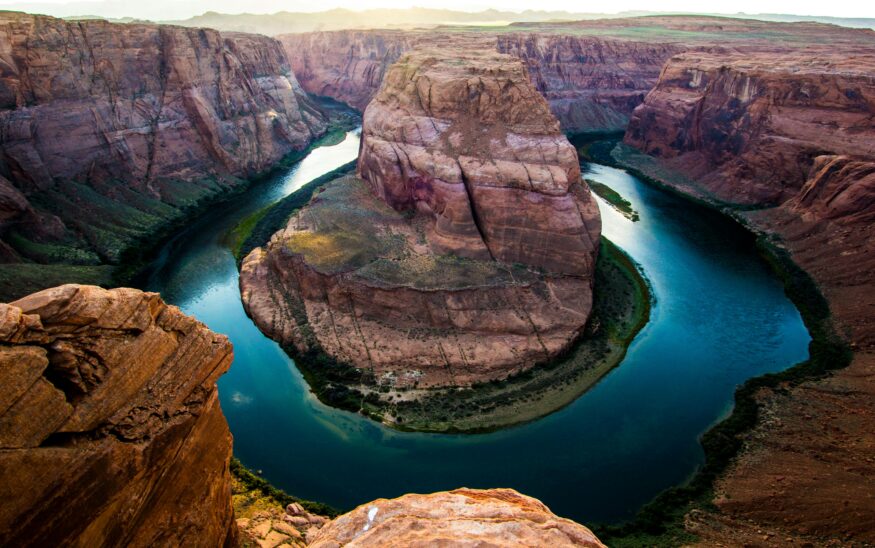
Arizona could face drastic cuts to its Colorado River allocation under newly announced federal plan. (Sarah Howell/Pexels)
Colorado River negotiations remain bogged down
Reagan Priest, Arizona Capitol Times//October 10, 2025//


Key Points:
-
Arizona’s Colorado River negotiators say they are no closer to a deal
-
A newly proposed plan failed to gain traction with the Upper Basin states
-
If a deal isn’t made, the federal government could intervene
As a federally-imposed deadline looms for a deal in Colorado River negotiations, Arizona water officials say conversations are still not progressing.
The seven states that use Colorado River water are currently deadlocked in negotiations over how to share the river in the coming decades as its supply dwindles. New guidelines for sharing the river must be in place by Oct. 1, 2026, but the Department of the Interior has imposed a Nov. 11 deadline for the states to come to an agreement without federal intervention.
Arizona’s negotiators, along with those from its fellow Lower Basin states — California and Nevada — maintain that the Lower Basin has made deep cuts to its current allocation of Colorado River water and continue to urge the Upper Basin states of Colorado, Utah, Wyoming and New Mexico to do the same. And despite reports of progress in late summer, members of Arizona’s team say the conversations are not exactly moving forward.
“The Lower Basin, for more than a decade, has been providing substantial support for the Colorado River system and has proposed solutions which would continue to support the river system,” said Clint Chandler, deputy director of the Arizona Department of Water Resources. “The Upper Basin states of Colorado, Wyoming, Utah and New Mexico, have not answered the challenges relating to conservation to date or proposed meaningful solutions for the post-2026 guidelines.”
Or, in the words of Central Arizona Project Board President Terry Goddard: “We’re up the creek without a paddle.”
Yet while negotiations are at a standstill, both Goddard and Chandler said the seven states are still meeting regularly. Most recently, conversations centered around a plan based on the “natural flow” of the river, which would allocate water supplies based on the actual amount of water in the river rather than the historical amounts states were promised in past agreements.
Goddard said that despite initial interest in the natural flow concept from the Upper Basin states, that plan did not bring about any compromises that could have led to a deal.
“I don’t think (the Upper Basin states) intended to change their position from ‘hell no we won’t go,’” Goddard said.
Chandler said the Upper Basin states are still stuck on their ability to build water storage, which would not be possible under a natural flow plan. The Lower Basin states have long argued that the Colorado River’s current water supply cannot sustain increased water storage, despite what may have been promised to the Upper Basin in the past.
“We submitted something that, with just a few adjustments, could become operational, and the Upper Basin answered with a proposal and alternative that would have continued to build storage in the Upper Basin reservoirs, even at high elevations, while reducing deliveries to the Lower Basin,” Chandler said.
And though Arizona’s negotiators haven’t had much luck with their Upper Basin counterparts, both Goddard and Chandler said the leadership at the Department of the Interior has been instrumental in keeping conversations alive. Both praised Scott Cameron, the acting head of the Bureau of Reclamation and a senior adviser to the secretary of the interior, for his work on the negotiations.
“The only thing I can say that’s kept the ball in the air is Scott Cameron,” Goddard said. “He has continued the meetings … and has kept it from stopping, otherwise it would have just stopped cold.”
However, Cameron only became the acting commissioner of the Bureau of Reclamation after his predecessor, Ted Cooke, was forced out in September, as Upper Basin negotiators worried that he would favor Arizona in his role. Cooke previously served as the general manager of the Central Arizona Project, the 336-mile canal system that delivers Colorado River water throughout the state.
“From his experience, he understands the river better than most people, but he would not have favored Arizona over the Upper Basin,” Goddard said. “He would have been straight down the middle and they pulled all the stops out to get (his nomination) killed.”
As the federal deadline for a deal looms, Arizona’s negotiators see only a few options for a path forward. Chandler said the federal government has adjusted deadlines in the past, which could allow for more time to iron out details if the states can come to a consensus.
But if not, the other option that the state has been preparing for is litigation. The Department of the Interior has signaled its willingness to create Colorado River guidelines on behalf of the seven states, which is likely to result in lawsuits from both sides.
Arizona’s Legislature and Gov. Katie Hobbs already set aside $500,000 in this year’s budget for potential litigation, a possibility that many in Arizona see as nearly inevitable at this point.
“Hope for the best and brace for the worst is the best advice I can think of,” Goddard said.