Sign In
Upcoming Event
 Free Newsletter

Bill aims at removing criminal court fees for adults
Kiera Riley Arizona Capitol Times//January 25, 2026//
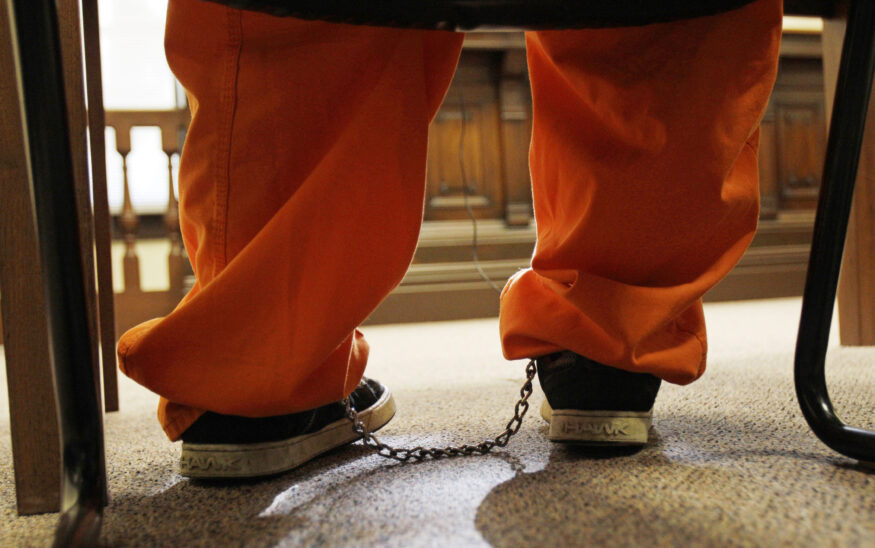
FILE - In this Jan. 3, 2011 file photo, a defendent sits with leg irons in a courtroom during his court appearance in Millersburg, Ohio. (AP Photo/Tony Dejak, File)
Bill aims at removing criminal court fees for adults
Kiera Riley Arizona Capitol Times//January 25, 2026//


Key Points
-
Lawmakers seek to eliminate adult criminal court fees
-
Proposal follows successful juvenile justice fee reform
-
Advocates claim limited impact to courts
With momentum from a successful effort to end select court fees levied on juveniles, lawmakers are looking to end certain costs for adult criminal defendants.
Rep. Neal Carter, R-San Tan Valley, introduced House Bill 2265, which would cut fees imposed for securing a public defender, filing for a jury trial and filing an appeal.
“In the United States of America, there are not two concurrently operating justice systems, one that operates for those of us rich enough to pay for access, and another that operates for the rest of us,” Carter said. “House Bill 2265 will go a long way in ensuring that fact.”
Under state law, the court is allowed to charge an administrative assessment fee of no more than $25 and require a defendant to pay “a reasonable amount” to reimburse the county for legal services costs, considering the defendant’s financial resources and the prospective burden a fee would impose.
All funds from fees go back into the public defense budget, though with the caveat that the “assessments shall supplement, not supplant, funding provided by counties” for public legal services.
The court can also impose a fee to cover juror expenses and to file an appeal. But, under HB2265, the court would no longer be able to impose a jury or appeals fee in criminal cases and would not be allowed to adopt any new fees not previously authorized by statute.
“We do not collect fees for the enjoyment of constitutional rights that every American citizen is entitled to,” Carter said.
The bill carries a bipartisan torch from the passage of Senate Bill 1197, which removed instances in which juvenile defendants were charged for probation, attorney services, foster care, treatment, education and community programs and supervision, health care, food, clothing and shelter while in custody.
After its passage, the Administrative Office of the Courts worked with an implementation group, IT, Supreme Court justices, Superior Court judges and local courts to automatically or manually flag fees to be forgiven.
The courts forgave about $39.7 million in unpaid debts for more than 110,000 juveniles and families, and in the process, set a framework for future debt forgiveness.
The success of SB1197 prompted a run at adult fees this session.
Stand for Children Arizona advocated for juvenile fee reform and is continuing the effort with HB2265.
“These fees affect families when they’re living paycheck to paycheck and they can’t get clear and they can’t continue with their lives because of these fees,” Georgina Monsalvo, campaigns and government affairs director for Stand for Children, said. “All the work we did with the juvenile fees have basically cascaded into, OK, now where can we make an impact in the adult space?”
The Justice Action Network is also pushing the legislation. Estrella López, senior state policy manager, said excessive fees and fines have created unintended consequences in reentry.
“Rather than improve public safety, they create serious barriers for individuals and families,” López said. “This makes reentry harder and traps people in cycles of debt to prevent them from moving forward and becoming stable productive members of their communities.”
Emily King, senior advocacy and campaigns strategist for Fines and Fees Justice Center, said the fees targeted in the legislation are not intended as a penalty, but operate as “strictly a revenue generation tool, and a failed one at that.”
King claimed the effort spent recouping unpaid fees often outweighs the value of the funds themselves. She cited a 2019 study by the Brennan Center for Justice which found counties in Texas and New Mexico spent an average of about 41 cents for every dollar collected in court and jail fees.
Meanwhile, the Internal Revenue Service spends about 34 cents for every $100 collected, meaning the jurisdictions studied spent 121 times more to collect criminal fines and fees.
“We are spending taxpayer money to chase uncollectable debt, often spending more on the administration of these fees than we ever bring in,” King said.
Carter said they had yet to collect data on individual payors, and that it was his understanding the revenue collected from the fees represents less than 0.009% of the operating budget for public defense in Arizona.
A spokesperson for the court said they had not yet offered input on the bill.