Sign In
 Free Newsletter

Public safety over politics – why our county partnered with ICE
Brad Miller, Guest Commentary//February 11, 2026//
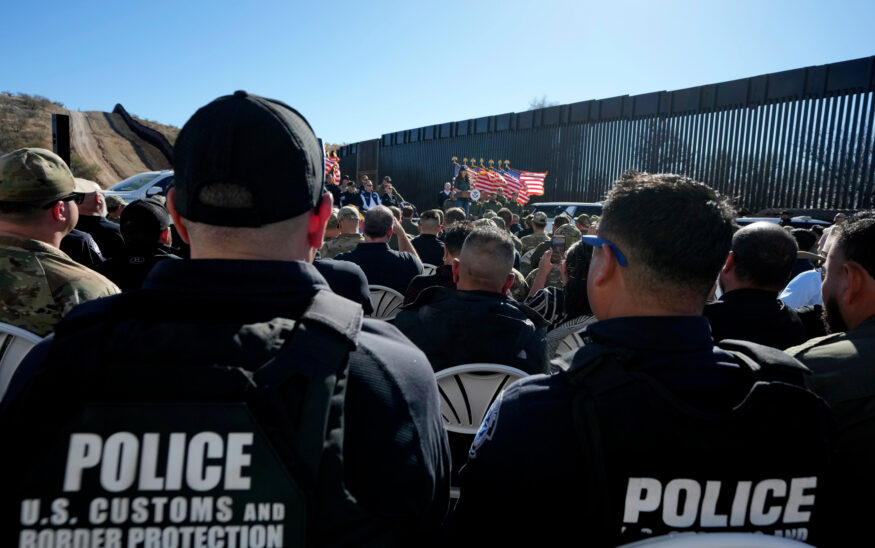
Law enforcement from various federal agencies listen to Kristi Noem, Secretary of the Department of Homeland Security, speak at the border with Mexico, Wednesday, Feb. 4, 2026, in Nogales, Ariz. (AP Photo/Ross D. Franklin)
Public safety over politics – why our county partnered with ICE
Brad Miller, Guest Commentary//February 11, 2026//


We’ve heard from a lot of Pinal County residents who are confused by the board’s public claims about our 287(g) agreement with ICE and what the law actually allows. You deserve clarity — not spin. This partnership isn’t politics. It’s public safety. The Pinal County Attorney’s Office is using every lawful tool in the toolbox to protect our residents.
It also aligns with President Trump’s public-safety priorities: Remove repeat and violent offenders, dismantle trafficking networks and restore the rule of law.
Let’s be clear. We target specific offenders based on documented criminal behavior, with warrants, already known by law enforcement. We are not patrolling communities.
Here’s where the narrative is misleading:
Myth #1: “The sheriff already does this.”
Yes — the sheriff has long cooperated with ICE, and that continues. When criminals land in jail after committing new crimes, ICE is notified and can act. That matters. But jail processing is only one tool.
287(g) has three models: Jail Enforcement (in-custody screening), Warrant Service (serving ICE warrants in jail), and Task Force (ICE-supervised operations targeting specific offenders).
The sheriff uses the jail model. PCAO signed the Task Force model — because Pinal County needs more than one tool.
The Task Force model allows all those who participate to receive information about known criminals in our community that should be arrested and held accountable. We shouldn’t wait for new victims to arrest known violent criminals.
Myth #2: “PCAO has no law enforcement.”
Wrong. Arizona law allows county attorneys to employ AZPOST-certified, sworn peace officers as investigators. This is standard across Arizona and has been for decades.
They gather intelligence, support investigations, and help prevent additional crimes — working with the sheriff, task forces and now ICE.
Myth #3: “This was signed in secret.”
False. In July, we asked to address it in an open meeting — not for permission, but to notify the Board of Supervisors of our intent. The purpose was to provide the board and the public with much needed information about the program and give an opportunity to ask questions. We do not need board approval to carry out our constitutional duties.
Myth #4: “Outside counsel said it’s void, so it’s void.”
A legal opinion is not a court ruling. Reasonable lawyers can disagree. But the board declared the issue “settled” and presented only one side to the public. That’s not transparency. That’s narrative control.
The bottom line? This is about lawful authority, proper process and protecting the people of Pinal County. Public safety isn’t just a talking point on this one. It’s our job.
Brad Miller is the Pinal County attorney and a career prosecutor.