Sign In




 Free Newsletter
Lawmakers under fire for limiting public testimony
By Jordan Gerard, Reagan Priest, Kiera Riley & Jakob Thorington//February 20, 2026//
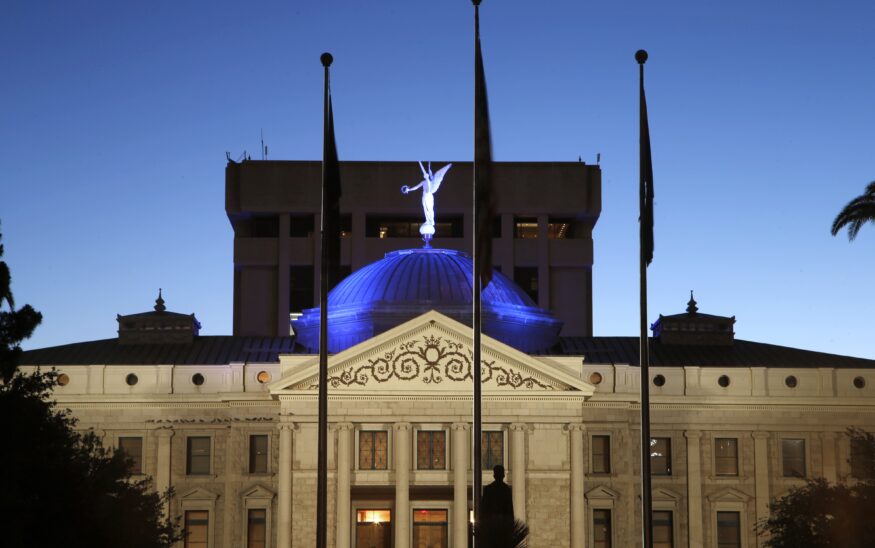
The dome of the Arizona Capitol building is illuminated in blue as buildings and structures around the state are lit in blue as a symbol of support for Arizona's frontline medical workers and emergency responders battling the coronavirus Wednesday, April 15, 2020, in Phoenix. (AP Photo/Ross D. Franklin)
Lawmakers under fire for limiting public testimony
By Jordan Gerard, Reagan Priest, Kiera Riley & Jakob Thorington//February 20, 2026//


Key Points:
-
Rising tensions have led to contentious legislative committee meetings
-
Lawmakers’ schedules, increased legislation make it harder for constituents to be heard
-
Many hope legislators will promote more respectful discourse in future state government
“Your House.”
“Your Senate.”
It’s an all too common sentiment invoked by lawmakers when welcoming constituents into the Legislature. Their Legislature.
But the welcome only extends so far.
Members of the public who muster up the courage to stand at the dais in the first place, take time off and get to the Capitol, fight to be one of the three, or two slotted speakers and patiently wait in the wings, sometimes late into the night, to be heard.
A speaker can field hostile, pointed questions and cater to the changing whims of committee chairs. They can have their testimony clipped, shared, spread online and endure the harassment that can follow.
The Legislature is not held to any internal rule or state law requiring public comment, but the practice of allowing constituents and lobbyists to weigh in on legislation has always been seen as a necessary part of a functioning government.
But past legislative sessions have shown a decline in the number of speakers allowed to state their piece, limits on how long someone can engage with lawmakers and growing instances of selective antagonism, all of which work to chill public testimony.
Public comment is not required by the state’s open meeting law. And if it were, it wouldn’t matter to the Legislature.
In the 2022 case, Puente v. Arizona State Legislature, the Arizona Supreme Court declined to wade into an alleged open meeting law dispute, finding it a non-justifiable question and leaving the Legislature to police itself.
That leaves sole discretion over public comment and committee operations with committee chairs, chosen by majority leadership.
Gregg Leslie, a First Amendment law professor at Arizona State University’s Sandra Day O’Connor College of Law, said state legislatures across the country have been battling issues with public testimony since the birth of the country about 250 years ago.
Leslie pointed out that lawmakers have often found alternative solutions, such as allowing majority and minority members to select who speaks or allowing members of the public to submit written comments, but he cautioned against giving a single committee chair discretion over how meetings are conducted.
“That’s been a never-ending question. What do you do when there are more speakers who want to speak than there is time to allow them,” Leslie said. “One person in control of it all is just not a good solution. You always need to try to accommodate as many interests as possible.”
In many committee hearings, chairs limit testimony to two to three minutes per person on each bill. Some committee chairs limit the number of speakers, usually asking those who have signed up to speak to choose three to speak for a bill and three to speak against it.

Long-time lobbyists say the limitations on speakers are a relatively new development, attributable to an increased number of bills introduced by lawmakers, a lack of communication behind the scenes, and worsening political tensions.
This year, lawmakers introduced a record-breaking 2,116 bills, resolutions and memorials.
Barry Aarons, owner of the Aarons Company and a long-time Capitol lobbyist, said the limitations can serve a practical purpose particularly when committee agendas are filled with legislation that keeps lawmakers at the Capitol into the late evening.
“Some of the members justifiably try to reduce the numbers because they know everybody is going to get up and say the same thing,” Aarons said. “They have added so many bills for consideration and they have added the fact that they’re not willing to just put bills in a drawer.”
Aarons also said the Legislature’s schedule of hosting several afternoon committees after floor sessions contributes to the need for urgency from lawmakers. Afternoon committees usually start following a floor session, which can vary greatly in duration depending on how many bills are discussed on the floor.
A seven-hour House Education Committee hearing on Feb. 17 didn’t end until 10 p.m., and several lawmakers on that committee were back at the Capitol for 9 a.m. committees the next day.
Sandy Bahr, executive director of the Sierra Club’s Grand Canyon chapter, has decades of experience testifying on environmental issues at the Legislature. She said the increase in legislation makes it nearly impossible for lawmakers to hear all perspectives on a bill before voting.
“There’s no way the legislators can be informed on that many bills,” Bahr said.
She said lawmakers are no longer holding the kind of robust, closed-door stakeholder meetings seen in sessions past, meaning lobbyists have no choice but to raise issues with bills during committee hearings. That leaves less time and opportunity for members of the public, who are less likely to get such an audience with lawmakers to voice their opinions.
Occasionally, lawmakers on both sides of the aisle will use their authority to ask questions to allow speakers to finish their testimony if they have been cut off at the two- or three-minute mark.
But not all committee chairs take kindly to granting time extensions or to speakers expressing opinions they disagree with. For lobbyists paid to represent varying interests at the Capitol, it’s a familiar occupational hazard that some say has extended to average Arizonans looking to share their thoughts with elected officials.
Lobbyists, Capitol observers and even some lawmakers told the Arizona Capitol Times that the past few sessions have seen an increase in committee chairs badgering, cutting off and even removing members of the public.
The trend is not necessarily new, but lobbyists and public advocates have noticed tempers continuing to rise.
Cathy Sigmon, co-founder and co-director of Civic Engagement Beyond Voting, an organization dedicated to encouraging public participation in local and state government, trains people to navigate the request-to-speak system and testify before state legislators.
Sigmon said the group previously housed a program to walk those who wanted to testify through every step of the process.
But the organization cut the program short in 2023, when a high school student left a hearing room in tears after her time sparring with a lawmaker at the dais.
“We consulted among ourselves and just said we can’t, in all honesty, continue to ask people to go down to the Legislature and speak if they’re going to be treated so badly,” Sigmon said.
Sigmon said the group still coaches people on how to testify, with forays into how not to be “baited,” what to say if thrown a question a person can’t answer, and how to generally prepare for the full scope of what legislative testimony could entail.
Though she still encourages people to testify, Sigmon said, now, it always comes with a caveat.
“You need to have thick skin,” Sigmon said.
Ben Scheel, executive director of the progressive organization Opportunity Arizona, said he has observed several lawmakers shut down a member of the public speaking after a lawmaker has accused someone of impugning their motives, but he said that rule, which lawmakers cite, applies to themselves, not to members of the public.
“They will allow people they like to impugn the hell out of the governor,” Scheel said. “They’ll let that run rampant but then when another member of the public says something they don’t like, they erroneously pull out this rule about impugning.”
On Jan. 28, Albert Levenshon attempted to provide public comment against a ballot referral aimed at restricting bathroom access to transgender students and prohibiting teachers from using a student’s preferred pronouns without parental consent.
Levenshon told lawmakers on the Senate Government Committee that the bill they were considering and others like it are “nothing more than further actions by your party attempting to carry out a genocide of transgender and intersex queer people.”
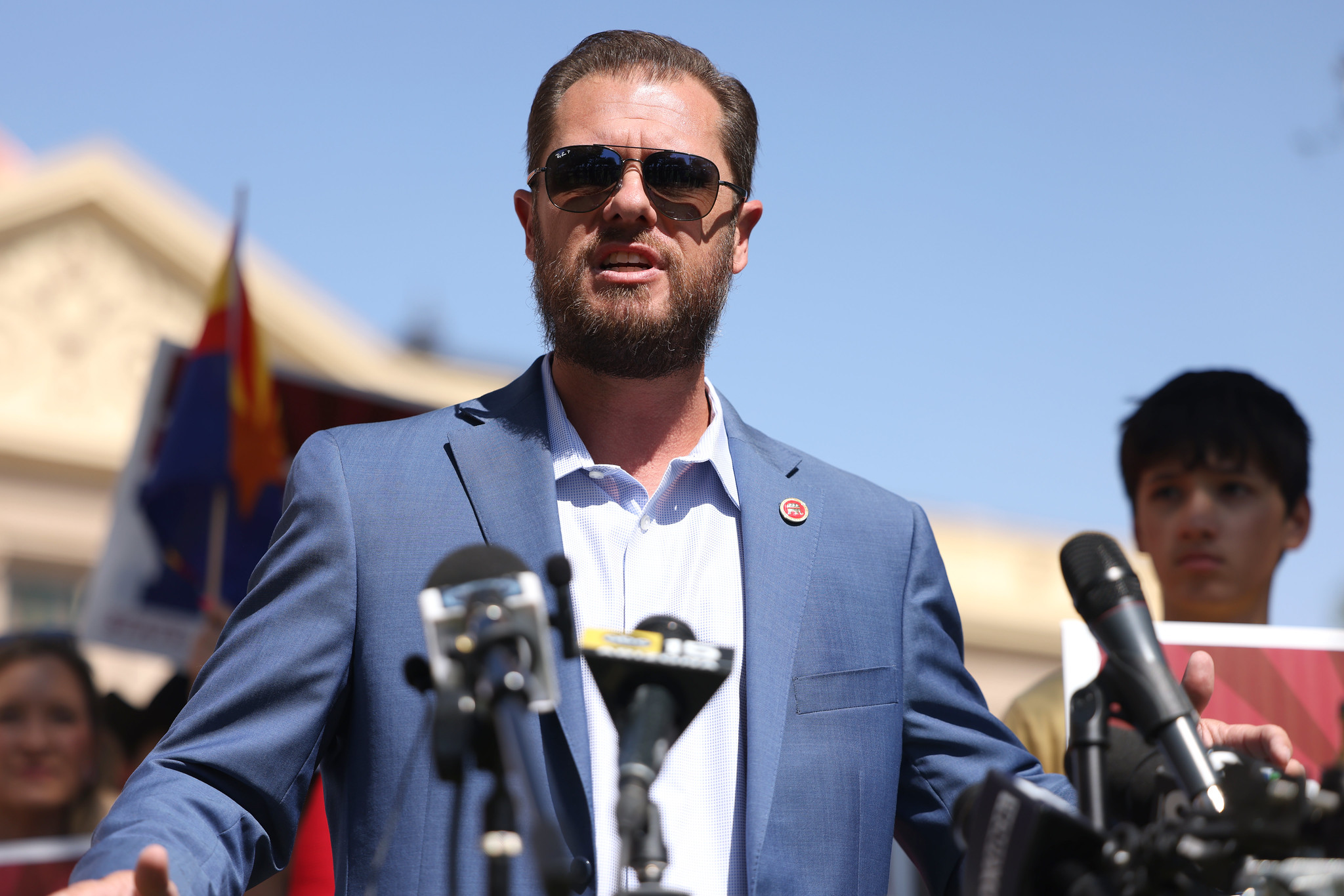
Sen. Jake Hoffman, the committee’s chair, interrupted Levenshon’s testimony with several bangs of his gavel and when Levenshon protested, Hoffman and Sen. John Kavanagh had him removed from the committee.
Two Arizona State University students, Leah Silverman and Aaron Lige, who were shadowing Sen. Lauren Kuby, D-Tempe, were nearly removed from the same committee a few weeks later for laughing during a bizarre discussion over banned library books.
During a debate, Kuby and Hoffman got into a heated exchange. Eventually, Kuby declined to answer questions from Hoffman, saying she was “tired of the badgering.”
Hoffman responded, saying “this is exactly what the left does.”
Silverman, sitting in the audience during the exchange, started laughing. Hoffman immediately scolded them.
“You will be quiet or you will leave this room,” Hoffman said.
Silverman told the Arizona Capitol Times that they had been laughing throughout the hearing because Hoffman kept reading excerpts from books he deemed inappropriate for children, throwing out phrases like “strap-on dildo” and “lube.” Silverman said the committee hearing was their first experience at the Legislature, and the conversation struck them as unprofessional.
“They’re not even there to listen to their constituents, they’re just there to yell at them about dildos,” Silverman said.
After Silverman testified on the bills, Lige got up to tell the lawmakers how disappointed he was in the conversation. Hoffman attempted to interrupt Lige’s comments, saying “when we speak, you stop. That’s the way this works.”
Lawmakers often interrupt members of the public who attempt to give comments that are not “germane” to the bill being discussed, another rule imposed by the Legislature on lawmakers that does not necessarily extend to testifiers.
Silverman and Lige said the experience left them feeling discouraged about the efficacy of state government.
“I don’t feel like I am able to make much of a difference by going and testifying,” Lige said. “I think that I would recommend it to friends, but I would recommend it to them in the sense that I think it’s important for people to see how, in my opinion, useless it is.”
Later in that same committee hearing, Noah James Markham testified against the bill. His comments were later clipped and shared on social media by the Senate Republican Caucus’ official account with a meme mocking Markham.
Senate Democrats called on Republicans to delete the post, noting that Markham has autism and comes to the Capitol to advocate on behalf of individuals with disabilities.
“Noah should feel safe walking into a committee. He shouldn’t be targeted for his testimony,” Senate Democrats said in a post on X.
Accessibility at the Legislature has been a consistent issue for several members of the public and lobbyists, too.
Ruthee Goldkorn, a disability access consultant and advocate, was nearly removed from a Jan. 14 joint House Ways and Means Committee and Senate Finance Committee hearing when she was unable to reach the podium in her wheelchair and told lawmakers the only way she could speak was if other people got up and left the room.
Sen. J.D. Mesnard, R-Chandler, was co-chairing that committee and told Goldkorn that she could either thank a legislative staffer who held a microphone for her or leave, but Goldkorn took exception to the staffer holding the microphone toward her face.
In a Feb. 16 interview, Goldkorn said her accessibility complaints have often gone ignored, and that committee rooms often lack accessible seating, accessible podiums, and enough space for clear paths of travel.
She said she has been frustrated with the Legislature because she wants to speak about other topics, but feels she’s become a “one-trick pony” on accessibility issues.
“This place is an abomination. It totally violates our civil rights,” Goldkorn said.
Lawmakers have also attempted to limit photography and videography at committee hearings. Rep. Teresa Martinez, R-Casa Grande, has twice called out people sitting in the audience of committee hearings for taking photos and filming.
All committee hearings and floor sessions in the Legislature are filmed, livestreamed and posted online. But on Feb. 2, Martinez attempted to have a woman removed from the House Land, Agriculture and Rural Affairs Committee for filming, not realizing the woman was actually a communications staff member for the Democratic caucus.
Over a week later, Martinez called out reporter Joe Duhownik from Courthouse News for taking photos during a Feb. 12 House Natural Resources, Energy and Water Committee.
Rep. Gail Griffin, R-Hereford, chair of the committee, had Duhownik removed from the hearing after he continued taking photos and asked lawmakers to cite the rule prohibiting photography during committee hearings.
In both instances, Martinez maintained that it is against committee rules to film during hearings and that the Democratic staffer and Duhownik were disrupting the committee’s work. However, a review of committee rules shows no provision banning photography or filming in committee rooms.
A spokesperson for the House Republican Caucus did not respond to a Feb. 12 request for clarification regarding rules for journalists taking photos or filming during committee hearings.
Additionally, House Minority Leader Oscar De Los Santos said the Democratic caucus has not received a response from House Speaker Steve Montenegro regarding “the majority’s policy on cameras in public hearings.”

“It is clear Republicans are berating Arizonans who provide comment during committee, kicking the press out of open committee hearings, and attacking House staff for simply doing their jobs,” De Los Santos said in a statement. “That’s not what ‘The People’s House’ is supposed to mean.”
Spokespeople for the Senate Republican and Democratic caucuses and the House Republican Caucus did not immediately respond to a request for comment on the instances outlined in this story.
While tensions at the Legislature are rising, some are optimistic that lawmakers can turn down the temperature and set an example for civil discourse and polite disagreement.
Jane Andersen, the Arizona state director for Mormon Women for Ethical Government, says her group is dedicated to promoting more respectful discourse in state government and is confident that goal is achievable.
“We want this next generation to understand what it looks like to be a citizen … that citizenship looks like being vulnerable and willing to step into that committee room and share your opinion, citizenship looks like an elected official meeting with someone who maybe didn’t vote for them,” Andersen said.
She encourages those interested in testifying at the Legislature to humanize all parties involved, respect the committee process, and show up as their full selves, not just as members of one political party or the other.
But Andersen also has a few pointers she hopes lawmakers will consider, such as modeling bipartisanship in public rather than behind closed doors, making committee hearings open and welcoming spaces, and expressing gratitude to members of the public who take the time to speak.
“What could be avoided is (the idea) that the purpose of the committee is to show the party that’s in the majority that they have domination over the committee experience,” Andersen said. “I have so respected chairmen and chairwomen who take the time to create a culture in their committee that they would like to hear from the public, not that they would only like to present things that they agree with.”