Sign In
Upcoming Event
 Free Newsletter

When minutes matter, policing can’t run on misinformation
Justin Harris, Guest Commentary//February 26, 2026//
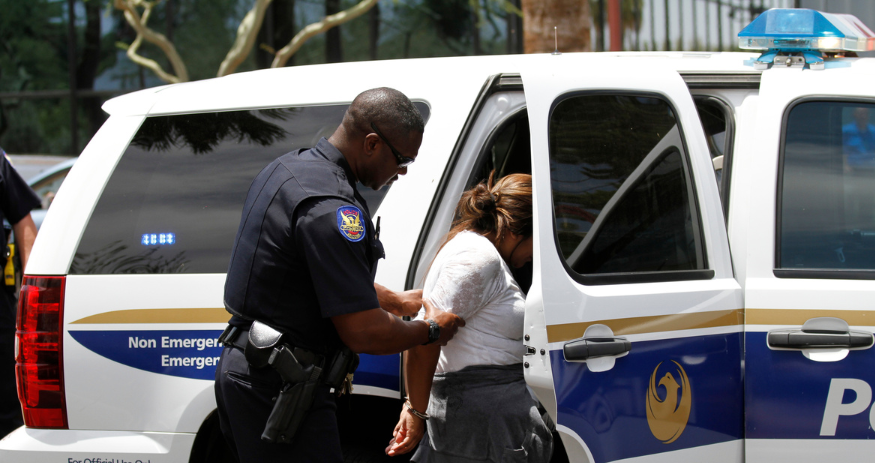
A Phoenix police officer guides an arrestee into a squad car in Phoenix, Ariz. (AP Photo/ Beatriz Costa-Lima)
When minutes matter, policing can’t run on misinformation
Justin Harris, Guest Commentary//February 26, 2026//


I’ve worn a badge long enough to know that most people never see what happens after the headlines fade. They don’t sit with parents waiting for news of a missing child. They don’t knock on doors at three in the morning. And they don’t stand on the side of the highway trying to piece together a case with nothing but fragments and time slipping away.
That’s why debates about law enforcement tools aren’t theoretical to us. They’re personal.
In recent months, I’ve watched communities across northern Arizona argue over license plate reader technology as if it were a political abstraction. From the perspective of someone who actually works cases, responds to alerts, and chases leads before they disappear, I can tell you that these tools save lives.
When a one-year-old child was kidnapped at knifepoint in Southern California and an Amber Alert went out, time was everything. That vehicle crossed into Arizona. A license plate reader picked it up, and officers were alerted. A trooper located the car near Winslow and the child was recovered safely. One tool used exactly as intended made the difference between a tragedy and a miracle.
That isn’t surveillance. That’s policing.
I’ve worked cases where stolen vehicles vanished within hours, where suspects moved across jurisdictions faster than radio traffic, and where traditional investigative methods simply weren’t enough. In those moments, license plate readers provide the only viable lead. Not one of many. The only one.
Without that data, cases stall. Evidence goes cold, victims lose answers, and criminals walk free.
Yet increasingly, officers like me are being told by people who have never worked a scene or written a report that these tools are dangerous, unconstitutional, or part of some imagined mass-surveillance scheme. Those claims spread quickly online, stripped of context and become untethered from reality. And unfortunately, some are allowing those narratives to dictate policy.
Let me be clear about how this technology is actually used. License plate readers do not track people. They do not monitor behavior. They scan license plates that are already visible to anyone driving down the road. The data is governed by strict policies, limited retention periods, and controlled access. We don’t sit around watching random vehicles. Law enforcement responds to alerts tied to crimes, missing persons and active investigations.
In my career, I’ve seen these systems help locate missing people, identify vehicles tied to crimes, recover and disrupt smuggling operations. These aren’t hypotheticals.
What’s frustrating is watching tools like this be taken away not because of documented misuse, but because of speculation. When communities remove public safety resources based on fear rather than facts, the burden doesn’t fall on elected officials but rather on officers and the people we serve.
Every time a tool is stripped away, we are asked to do more with less. Supporting law enforcement doesn’t mean blind trust. Oversight and transparency matter. Accountability matters. Most officers I know welcome clear rules because they protect both the public and the badge. But dismantling effective tools because of online conspiracy theories is not accountability — it’s negligence.
Justin Harris, a current police sergeant with over 30 years of law enforcement experience, is the immediate past president of the Arizona Police Association.