Sign In


 Free Newsletter

Arizona’s economic momentum depends on smart energy policy
Steven G. Zylstra, Guest Commentary//February 19, 2026//
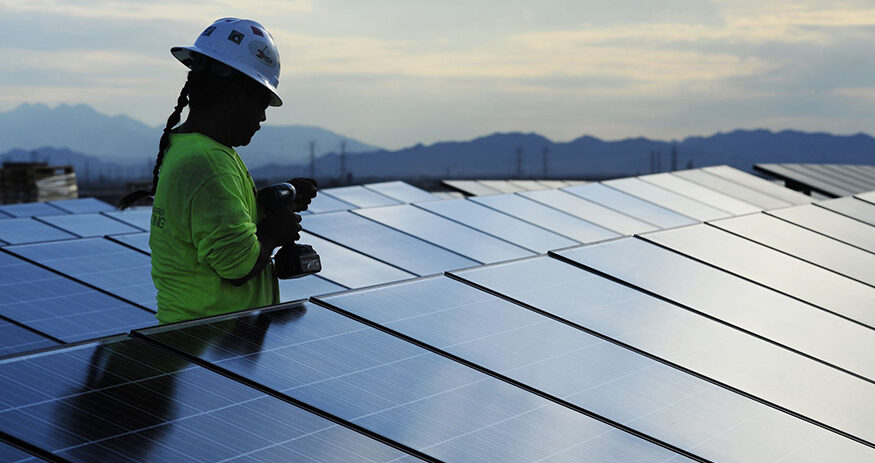
Daniel Baldonado, a contract worker for a steel fabrication company, Ironco Enterprises, installs a series of solar panels on the roof of Wells Fargo Arena on Arizona State University's Tempe campus. (Photo by Brandon Quester/Cronkite News Service)
Arizona’s economic momentum depends on smart energy policy
Steven G. Zylstra, Guest Commentary//February 19, 2026//


Electricity demand in Arizona is accelerating at an unprecedented pace, with no indication it will slow. Projections show statewide electricity demand could increase by as much as 40% in the next five years. That growth is being driven by population gains, advanced manufacturing, data centers, semiconductors, aerospace and an expanding innovation economy.
Meeting that demand requires pragmatic, forward-looking energy policy. Unfortunately, several bills introduced this session of the Arizona Legislature would stall new wind and solar development across the state. While framed as regulatory or siting reforms, they will limit some of the fastest, most cost-effective sources of new generation available to the grid. The ripple effects would extend far beyond the energy sector, impacting economic development, business attraction and affordability for Arizona families.
Arizona’s technology sector alone generated approximately $5 billion in regional economic activity for the period 2023-2024 and added more than 24,000 jobs in fiscal year 2025 with average wages exceeding $95,000 annually. Advanced manufacturers, semiconductor fabs, aerospace companies and data centers are making long-term location decisions based on infrastructure readiness, including access to reliable, affordable electricity.
Energy is now a core economic development incentive.
To sustain this momentum, Arizona must modernize a grid largely built in the 20th century when agriculture, mining and ranching defined the state’s economy. Today’s economy is digital, electrified and innovation driven. Updating transmission infrastructure, strengthening grid resilience and expanding diverse generation sources are essential to meeting this new reality.
Affordability is equally critical. Businesses and residents alike are feeling the strain of rising energy costs. Nationally, Americans are paying hundreds of dollars more per year in electricity bills. Here in Arizona, utilities are pursuing rate increases that are adding further pressure to family and business budgets.
Wind and solar are currently among the lowest-cost sources of new electricity generation. They are also the fastest to deploy at scale. Expanding these resources helps diversify supply, stabilize long-term pricing and reduce overexposure to volatile fossil fuel markets. Restricting them will not reduce demand. It will simply limit supply options and increase upward pressure on costs.
Public sentiment reflects this reality. A recent Environmental Defense Fund poll found nearly two-thirds of Arizonans believe expanding wind and solar energy will help lower electricity costs. A majority of those polled also believe that policies restricting renewable energy would discourage economic growth and raise costs over time.
Beyond affordability, clean energy represents a major economic engine for the state. Since 2022, more than $12 billion in clean energy investments have been announced in Arizona. Today, more than half of all energy jobs statewide are held by over 65,000 Arizonans working in clean energy roles. The solar industry alone supports roughly 10,000 workers and nearly 400 companies, with many based in the Phoenix metro area. Industry projections estimate more than 30,000 additional clean energy jobs could be created by the end of the decade.
Arizona averages nearly 300 days of sunshine each year and ranks among the top states in wind potential. These are natural competitive advantages. Leveraging them is strategic, not ideological.
A reliable and affordable power system — generation, transmission and grid resilience — is foundational to economic prosperity. The policy choices made today will determine whether Arizona remains a magnet for high-wage industries or constrains its own growth.
This is not the moment to remove low-cost energy options from the table. Limiting solar and wind development will not stop demand. It will increase costs and slow economic momentum. Arizona’s leaders should focus on expanding supply, modernizing infrastructure, and maintaining a balanced and diversified energy portfolio that supports long-term growth.
Smart energy policy is economic policy. And Arizona’s future depends on getting it right.
Steven G. Zylstra is president and CEO of the Arizona Technology Council and SciTech Institute.