Sign In


 Free Newsletter

HB 2375 is a step backward for housing fairness and just plain wrong
Anna Hernandez, Guest Commentay//March 20, 2026//
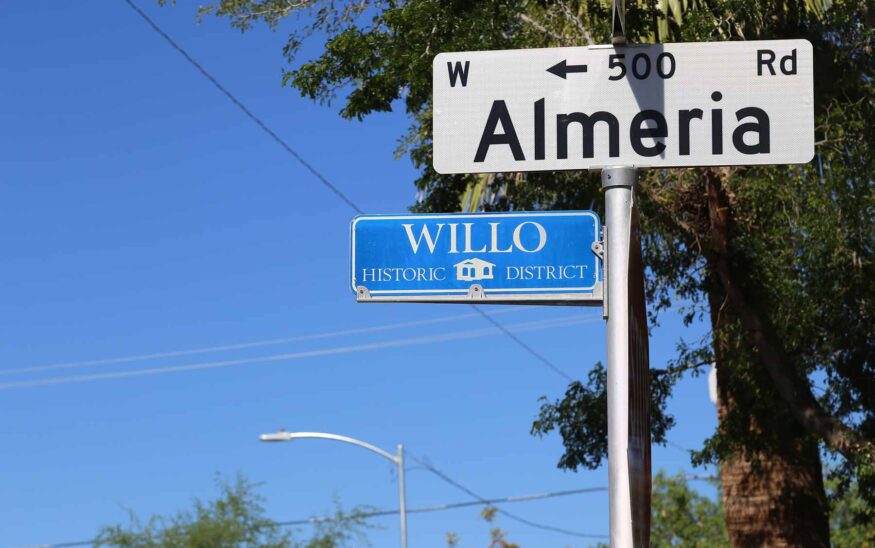
Signage at an intersection in the historic Willo Historic District in Phoenix. (Jakob Thorington / Arizona Capitol Times)
HB 2375 is a step backward for housing fairness and just plain wrong
Anna Hernandez, Guest Commentay//March 20, 2026//


Arizona is facing a housing crisis. Working families can no longer afford to live in Phoenix. This crisis has been made worse by a shortage of available housing opportunities. In 2024, the Legislature took an important step forward to remedy this shortage by passing HB2721, which allows “middle housing”— modest homes that are more affordable for working families, such as duplexes, triplexes, and fourplexes — within one mile of a city’s downtown core. The goal was simple: allow more diverse and attainable housing options in areas with good access to jobs, transit, and other services.
Now, just as cities are beginning to implement that law, rich neighborhood groups and their lobbyists are threatening to undermine our progress toward creating more opportunities for working families.
Rich neighborhood groups and their lobbyists are pushing HB2375, which will create special exemptions from housing laws just for them. Rather than participating constructively in local planning discussions, these groups are asking the state to shield their neighborhoods from change.
In Phoenix, we have already had this debate.
When the state passed its middle housing requirement, the process was contentious, particularly after opposition from the Willo neighborhood, where homes regularly sell for more than $1 million. Of course, the city still had to comply with the state law, and I hoped that the small group of opponents would soon come to see the benefits of the policy for the overall city.
Unfortunately, the benefits for everyone are being overshadowed by the fears of a few wealthy homeowners who do not want to see any changes to a status quo that benefits their interests.
The neighborhoods that want special exemptions are precisely the kinds of neighborhoods where additional housing makes the most sense. They are close to downtown jobs, public transit, schools and health care. They provide access to opportunities that many families are currently locked out of because of high housing costs and restrictive zoning.
Letting these neighborhoods deny new residents access to opportunities would reinforce patterns of exclusion, like red-lining, that have shaped our cities for generations.
What makes this effort even more frustrating is that the city of Phoenix is already engaged in a thoughtful conversation about expanding housing choices. And the city council directed staff to study how middle housing could be implemented more broadly throughout Phoenix. That work is happening now and it is exactly the kind of planning process communities should undertake when addressing growth and affordability.
Housing policy should not be dictated by whichever neighborhood can afford high-paid lobbyists. It should reflect the needs of the entire community. Phoenix is a city of more than 1.6 million people, all of whom deserve a fair chance at attaining a stable home. Every neighborhood must do its part to ensure all residents have the best housing options possible.
At a time when Arizona faces a severe housing shortage and a lack of diverse housing options, using disproportionate financial and political power to block new homes, particularly in high-opportunity areas, sends the message that only the rich should have access to these opportunities. And that message is plain wrong.
Anna Hernandez has been a serving Phoenix Councilmember since 2024.