Sign In
 Free Newsletter

City officials warn proposed tax freeze could jeopardize water projects
Mary Jo Pitzl, Capitol Media Services//March 23, 2026//
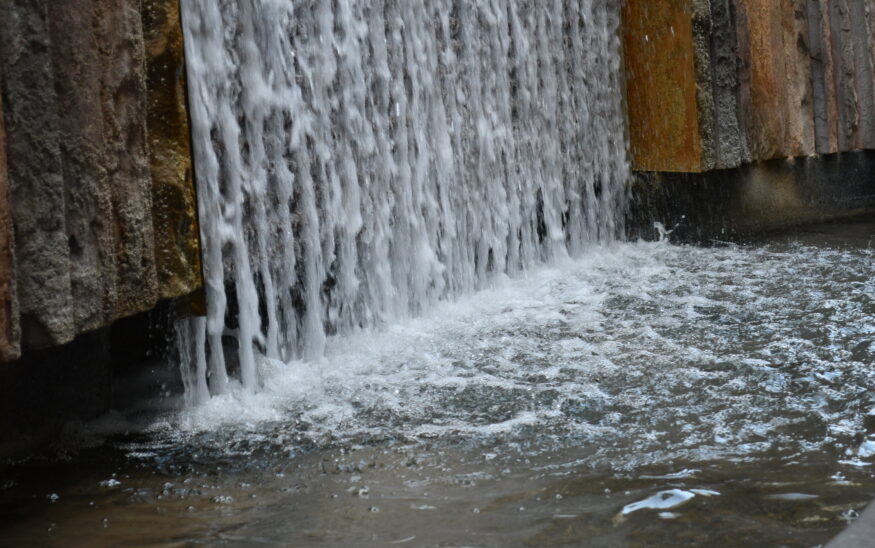
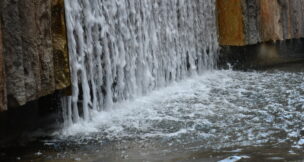
A manmade waterfall built into the architecture of Arizona State University's Tempe campus. (Brock Blasdell / Arizona Capitol Times)
City officials warn proposed tax freeze could jeopardize water projects
Mary Jo Pitzl, Capitol Media Services//March 23, 2026//


Key highlights:
-
Arizona lawmaker proposes four-year moratorium on tax and fee hikes for cities and towns
-
City officials across the state say the freeze would limit their ability to meet pressing needs, such as water infrastructure and transportation
-
Lawmakers’ proposals passed a committee on party line votes
A state lawmaker wants to protect people from higher taxes and fees, but he wants the cities to do the belt tightening.
In response, city officials statewide complain the proposed four-year moratorium on tax and fee hikes would hamstring their ability to meet pressing needs, from water infrastructure to transportation.
HB 4030 and its accompanying ballot referral would freeze current tax and fee rates charged by Arizona cities, counties and towns. Rep. Justin Olson, a Mesa Republican who is sponsoring the measures, casts it as a way to counter the lingering effects of high inflation and advance affordability.
“Given the high cost of living, let’s put a pause on any tax increases,” Olson said as he introduced his plan last month. Cities should be able to tighten their budgets and live within their means through June 2030, when the moratorium would end. Besides, he said, his proposal is only a freeze on rate increases; cities could see revenue gains with growth.
Olson’s idea sounds appealing on its face, said Nancy Smith, the mayor of the city of Maricopa. After all, no one likes tax hikes. But there’s more to the story, she said.
“Here’s what they don’t tell you,” she said of lawmakers. The proposed moratorium continues a string of legislative efforts to dictate city policy, Smith said.
She said many cities lost a reliable stream of money when the Legislature banned rental taxes in 2024. Last year, lawmakers froze local food taxes. Those moves were made in the spirit of affordability, but the impact fell only on local coffers, not on the state’s general fund.
Smith also worries about legislative mulling of a rollback of city property taxes at some point, yet another move she said would limit a city’s ability to run its affairs.
“They need to let the cities have local control,” Smith said.
A threat to water projects
Most immediately, however, the tax and fee freeze is a threat to water projects, city representatives say.
They point to the persistent drought that has sapped the Colorado River’s capacity, coupled with the unresolved question of how the river’s water should be allocated amid the drought, to argue that it’s important for cities to adapt to a dwindling water supply.
“When it comes to water, we don’t know what water is going to cost,” said René Guillen, executive director of the League of Arizona Cities and Towns. “If you lock in utility rates, costs still remain.”
The Arizona Municipal Water Users Association, a coalition of 10 major cities that get water from the Colorado River, told lawmakers the legislation could harm efforts to address water delivery during drought.
“Any limitation you want to put on a city that is trying to maintain and build its water infrastructure through taxation is something that you do not want to do,” Barry Aarons, the association’s lobbyist, told lawmakers at a committee hearing last month.
Aarons warned the proposed moratorium would exacerbate the ability of cities to deliver clean, reliable water to their residents.
“The problem is we’ve had reasonably priced water,” Aarons said in an interview. Now, he added, it’s going to cost more because local governments have to spend money on investments to make water delivery more efficient and to find new water sources.
Coping with rising costs
Although Olson amended his proposals to make exceptions for water-related fees, city officials say they don’t go far enough.
That’s because the relief applies only to rate hikes needed to acquire and deliver new or additional water resources. It does nothing to reduce the costs of maintaining the existing system, which several cities are grappling with.
In Tucson, city officials froze water rates for two years during the pandemic, said Laura Dent, the city’s lobbyist. They’re now trying to catch up on maintenance, but the freeze would complicate those efforts, she said.
Clarkdale, in north central Arizona, has already thought through the consequences of a four-year freeze. They say it could stymie the city’s effort to update its century-old wastewater treatment plant.
Mayor Robyn Prud’homme-Bauer said it will cost about $20 million to upgrade the plant, and the current fee structure for wastewater services won’t cover the bill.
“If we had to live with the rates today, we’d have to take from our general fund to cover the operation and maintenance of that plant,” she said.
And pulling from the general fund would leave less money for police, road maintenance and parks, a solution Prud’homme-Bauer called “unacceptable” for the town.
Clarkdale, like other cities, has already had to deal with higher costs for its water and wastewater systems. That includes a 1,426% increase in permit fees for the state Department of Environmental Quality, according to a city budget analysis.
Lawmakers didn’t directly approve the fee increase. Instead, they authorized the agency to adjust as it saw needed. Such a move avoids having lawmakers go on the record. Plus, a legislatively approved fee increase would need a two-thirds vote, which is — a nearly impossible hurdle for the divided body to clear.
That additional cost, plus increasing bills for things such as electricity and chemicals, makes belt-tightening hard to do.
“The bottom line is we can’t begin to comprehend how the Legislature expects us to stay compliant with ever-changing regulatory requirements when everything around us is going up in cost,” the city’s analysis concluded.
Cost savings not recognized
There are also concerns of how bond rating agencies would view the freeze. Utility bonds are backed by the fees paid by rate payers; if the rate is frozen, that may lead to downgraded ratings — meaning higher borrowing costs — or even disinterest in issuing a bond, Guillen said.
The legislation also doesn’t acknowledge the efforts cities have made to hold down costs, municipal leaders say.
For example, some cities, such as Tucson, have done some belt tightening in recent years. The Gilbert City Council drew attention when it hiked water rates by 25% earlier this year. The council’s vote also calls for an additional 5% increases in 2028 and 2029.
But those hikes came after 10 years of holding rates steady, Guillen said. The city should get some credit for holding the line on costs, which is the spirit of the Olson legislation.
Olson acknowledged the Gilbert action caught his attention, but he’s focused more broadly. He doesn’t trust governments — city or otherwise — to be cautious on spending without some guardrails.
“Taxpayers need protections from abusive governments,” Olson said in an interview. “We’ve already, as a state, put in similar protections.”
That’s a reference to the two-thirds vote needed to advance any tax or fee increase from the Legislature.
Time running out for a vote
Olson’s proposals passed a committee on party line votes, with Republicans in support. It has yet to get a vote from the full 60-member House, and time is running short: This week is the final chance to send House bills to the state Senate, although there are workarounds.
Anticipating a likely veto from Democratic Gov. Katie Hobbs, Olson also put the same policy in HCR 2052. If approved, it would go directly to voters in this fall’s election, avoiding the governor’s pen.
The legislation would not impose an outright ban on tax and fee hikes; if a city wants to raise rates, it can put the issue to voters on its local ballot.
But there’s a new hurdle.
Typically, it takes a simple 50% majority to pass a rate or tax hike in Arizona cities. But Olson’s bill would require 60% approval before any increase could take effect. A higher threshold is necessary, he said, to protect everyday Arizonans from higher costs.
And there’s something else: Such an election would be allowed only in even-numbered years, and only in November of those years. That raises the possibility of higher costs because of delays.
Olson, however, said the legislation looks out for the individual, whether he is looking to save money on city taxes or whether he believes more spending is needed.
“My position is there is nothing more local than the individual, and that’s who is empowered with this bill,” he said.
Reporter Mary Jo Pitzl can be reached at 602-228-7566 or at “maryjpitzl@cox.net.” Find her on social media @maryjpitzl