Sign In


 Free Newsletter

Bill to expand protection for religious activities leaves abortion clinics concerned
Jordan Gerard, Arizona Capitol Times//April 24, 2026//
(Pexels)
Bill to expand protection for religious activities leaves abortion clinics concerned
Jordan Gerard, Arizona Capitol Times//April 24, 2026//


Key Points:
-
HB 4117 would add new protections for religious services and activities
-
Supporters say the proposal addresses increasing protests and disruptions of religious services
-
Opponents say it would limit how abortion clinics can manage religious protesters
After protesters interrupted a church service in Minneapolis in January, Arizona legislators moved to expand protections for religious services and activities. Now, with a proposal underway in the Senate, abortion clinics are saying the measure goes too far.
Under HB 4117, filed by Senate Majority Leader John Kavanagh, R-Fountain Hills, intentionally disrupting a religious service or activity could result in a misdemeanor or felony charge.
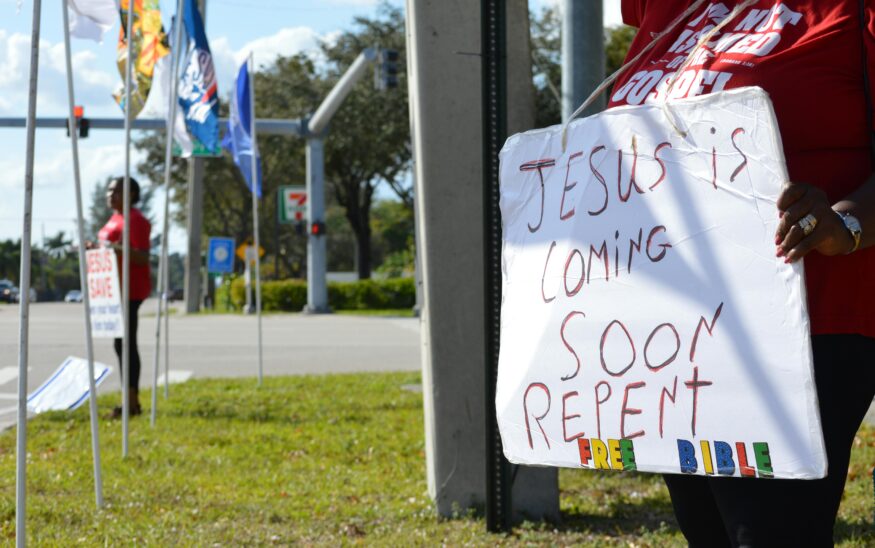
But Planned Parenthood Arizona says that, if approved, the bill would limit its means to address protesters outside their clinics, especially those who read from the Bible or pray during their demonstration.
“This bill expands to not just services, but religious activities. And not just in a church or a mosque or a building or a temple, but it’s expanded to places where people regularly show up to have religious services or activities, which in our mind is right outside our clinic doors,” Kelley Dupps, director of external relations for Planned Parenthood Arizona, said.
At least 22 other states have introduced similar legislation during the 2025 or 2026 legislative session related to expanding protections for religious services.
The bill specifically defines places of religious worship as any designated location where people regularly assemble for a religious service or activity. It also defines it as any public or private location when an organized religious service or activity is occurring or about to occur.
Contextually, protesters at abortion clinics are required to stay on public property and cannot block entrances or impede people from entering or exiting clinics or religious places, as required by the federal Freedom to Access Clinic Entrances Act, or the FACE Act, passed in 1994.
But to Dupps, HB 4117 amounts to an open invitation for more incursions into their space under the guise of religious liberty and protection. More importantly, he believes it could put their volunteers and private security at risk of a felony charge if they interact with the protesters.
“Weekly we have protesters that show up outside our clinics, many of them pray, many of them bring Bibles. Many of them want to engage our patients,” he said. “That could be a religious service or even a religious activity.”
Instead, Dupps said the bill should stick to the protection of religious services in established religious buildings.
“Harassment is not free speech, and yet these folks are allowed to accost our staff and patients every day. What makes me think that I can call the police as Planned Parenthood and they would show up and say these folks need to leave?” he said.
Quelling those concerns, Kavanagh, who wrote the HB 4117 strike-everything amendment, told the Arizona Capitol Times that reading the Bible on the street will not be considered a religious service or activity.
“They’re hallucinating,” he said. “If you intentionally engage in disruptive behavior in a church or a synagogue or whatever, but your intent is not to disrupt the service, you’re only guilty of regular disorderly conduct and not this enhanced disturbing religious service.”
Similarly, if two people get into a fight in the middle of a religious service and start screaming at each other, they wouldn’t violate the law because their intent is not to disrupt the service, he added. The main difference is if someone disrupts the service intentionally, the penalty is enhanced from disorderly conduct.
Sarah Kader, deputy director of the Anti-Defamation League’s Desert Region, said the intent is to have narrowly tailored language within HB 4117 that protects people attending religious services from those who want to intentionally interfere and obstruct them following an increase of protests at places of worship in Arizona over the past few years.
“We’ve seen protests that are prohibiting people from safely entering their places of worship and being able to participate in their religious services,” Kader said. “Peaceful protest remains a protected constitutional right. We’re just trying to make sure people that are trying to enter their place of worship can do so safely.”
If the bill becomes law, the penalty could go two ways. It would be a class 1 misdemeanor, which carries a possibility of six months in jail, $2,500 in fines and/or three years of probation. But the penalty increases to a class 6 felony if the person has a previous conviction for intentionally disrupting services, or if there is more than one person involved or if they use force, threaten force or physical intimidation.
The language is still getting ironed out between Republican and Democratic legislators, the Anti-Defamation League and the Governor’s Office, Kavanagh said.
But some legislators aren’t convinced the law will be narrowly tailored enough to protect places like Planned Parenthood from religious protestors.
Sen. Analise Ortiz, D-Phoenix, said she has formerly worked as a Planned Parenthood clinic escort and has seen the range of people who meet outside of the clinics. She said some were very aggressive, but others were peaceful. A few times, police were called and in some instances that she saw, it was clear that officers had a bias about abortion and would side with either the protesters or the escorts. The bill could open the door for police and prosecutors to bring politically motivated charges, she said.
“I think really what this comes down to is that if there is an interaction outside of an abortion clinic and there are people there who police determine are practicing a religious activity, that could lead to people being hit with an increase on their charge just because they were interacting with a Christian group on the sidewalk,” Ortiz said. “The government should not be empowered to use the criminal justice system to go after political opponents, and this bill is a very slippery slope that opens the door for the government to be able to do that.”