Please ensure Javascript is enabled for purposes of website accessibility

Bill to expand protection for religious activities leaves abortion clinics concerned

Key Points:
  • HB 4117 would add new protections for religious services and activities
  • Supporters say the proposal addresses increasing protests and disruptions of religious services
  • Opponents say it would limit how abortion clinics can manage religious protesters 

After protesters interrupted a church service in Minneapolis in January, Arizona legislators moved to expand protections for religious services and activities. Now, with a proposal underway in the Senate, abortion clinics are saying the measure goes too far. 

Under HB 4117, filed by Senate Majority Leader John Kavanagh, R-Fountain Hills, intentionally disrupting a religious service or activity could result in a misdemeanor or felony charge. 

But Planned Parenthood Arizona says that, if approved, the bill would limit its means to address protesters outside their clinics, especially those who read from the Bible or pray during their demonstration. 

“This bill expands to not just services, but religious activities. And not just in a church or a mosque or a building or a temple, but it’s expanded to places where people regularly show up to have religious services or activities, which in our mind is right outside our clinic doors,” Kelley Dupps, director of external relations for Planned Parenthood Arizona, said.

At least 22 other states have introduced similar legislation during the 2025 or 2026 legislative session related to expanding protections for religious services. 

The bill specifically defines places of religious worship as any designated location where people regularly assemble for a religious service or activity. It also defines it as any public or private location when an organized religious service or activity is occurring or about to occur. 

Contextually, protesters at abortion clinics are required to stay on public property and cannot block entrances or impede people from entering or exiting clinics or religious places, as required by the federal Freedom to Access Clinic Entrances Act, or the FACE Act, passed in 1994. 

But to Dupps, HB 4117 amounts to an open invitation for more incursions into their space under the guise of religious liberty and protection. More importantly, he believes it could put their volunteers and private security at risk of a felony charge if they interact with the protesters.

“Weekly we have protesters that show up outside our clinics, many of them pray, many of them bring Bibles. Many of them want to engage our patients,” he said. “That could be a religious service or even a religious activity.”

Instead, Dupps said the bill should stick to the protection of religious services in established religious buildings. 

“Harassment is not free speech, and yet these folks are allowed to accost our staff and patients every day. What makes me think that I can call the police as Planned Parenthood and they would show up and say these folks need to leave?” he said.

Quelling those concerns, Kavanagh, who wrote the HB 4117 strike-everything amendment, told the Arizona Capitol Times that reading the Bible on the street will not be considered a religious service or activity. 

“They’re hallucinating,” he said. “If you intentionally engage in disruptive behavior in a church or a synagogue or whatever, but your intent is not to disrupt the service, you’re only guilty of regular disorderly conduct and not this enhanced disturbing religious service.”

Similarly, if two people get into a fight in the middle of a religious service and start screaming at each other, they wouldn’t violate the law because their intent is not to disrupt the service, he added. The main difference is if someone disrupts the service intentionally, the penalty is enhanced from disorderly conduct. 

Sarah Kader, deputy director of the Anti-Defamation League’s Desert Region, said the intent is to have narrowly tailored language within HB 4117 that protects people attending religious services from those who want to intentionally interfere and obstruct them following an increase of protests at places of worship in Arizona over the past few years.

“We’ve seen protests that are prohibiting people from safely entering their places of worship and being able to participate in their religious services,” Kader said. “Peaceful protest remains a protected constitutional right. We’re just trying to make sure people that are trying to enter their place of worship can do so safely.”

If the bill becomes law, the penalty could go two ways. It would be a class 1 misdemeanor, which carries a possibility of six months in jail, $2,500 in fines and/or three years of probation. But the penalty increases to a class 6 felony if the person has a previous conviction for intentionally disrupting services, or if there is more than one person involved or if they use force, threaten force or physical intimidation. 

The language is still getting ironed out between Republican and Democratic legislators, the Anti-Defamation League and the Governor’s Office, Kavanagh said. 

But some legislators aren’t convinced the law will be narrowly tailored enough to protect places like Planned Parenthood from religious protestors. 

Sen. Analise Ortiz, D-Phoenix, said she has formerly worked as a Planned Parenthood clinic escort and has seen the range of people who meet outside of the clinics. She said some were very aggressive, but others were peaceful. A few times, police were called and in some instances that she saw, it was clear that officers had a bias about abortion and would side with either the protesters or the escorts. The bill could open the door for police and prosecutors to bring politically motivated charges, she said. 

“I think really what this comes down to is that if there is an interaction outside of an abortion clinic and there are people there who police determine are practicing a religious activity, that could lead to people being hit with an increase on their charge just because they were interacting with a Christian group on the sidewalk,” Ortiz said. “The government should not be empowered to use the criminal justice system to go after political opponents, and this bill is a very slippery slope that opens the door for the government to be able to do that.”

Arizona Capitol Times – April 24, 2026

The conversation on short-term rentals must continue

Across rural Arizona, tourism is our lifeblood. Visitors fuel small businesses, sustain restaurants, and support the tax base that keeps our communities thriving. That is why we thank Representative Selina Bliss for accomplishing something no one has managed in more than a decade. She brought stakeholders, including Airbnb, to the table to begin a real conversation about short-term rental challenges.

While HB 2429 did not ultimately advance, the effort matters. It created space for dialogue, acknowledged the realities communities are facing, and demonstrated that progress is possible when people are willing to engage in good faith.

For rural Arizona’s tourism communities, this conversation is essential. Housing affordability is a statewide challenge, but its impact is especially acute in small destination towns. When a significant share of homes is purchased by investors and converted into short term rentals, the character and stability of neighborhoods begin to change. Streets that once housed teachers, nurses, hospitality workers, and first responders can gradually become corridors of revolving weekend guests.

It is important to remember the original intent behind Arizona’s short term rental laws. These policies were designed to help homeowners, particularly empty nesters and seniors with a guest house or spare bedroom, earn supplemental income. For retirees on fixed incomes, renting an extra room provided financial flexibility and security. The goal was to empower residents, not incentivize the bulk acquisition of single-family homes by corporations or investors.

In many communities today, the reality looks very different. Entire streets are increasingly owned not by local families but by remote investors whose primary connection to our towns is financial. As owner-occupied homes shift to investor-controlled properties, long term housing availability shrinks and prices rise in already limited markets.

Many residents describe this shift in a simple way. Neighborhoods begin to fill with neighborless neighbors. Homes are occupied, but not lived in. There is activity, but no continuity. Over time, the sense of community that defines our towns begins to fade.

We love sharing our communities. Rural Arizona offers extraordinary natural beauty, historic districts, vibrant arts scenes, and world class outdoor recreation. Tourism is not the problem. It is central to our identity and our economy. Visitors are not the enemy.

But when housing stock is increasingly absorbed into the short term rental markets at scale, the people who power our local economies struggle to remain as residents.

Consider what it means when police officers cannot afford to live where they patrol, when teachers commute long distances, or when hospitality workers, the backbone of our tourism industry, are priced out of the communities they serve. A healthy economy requires residents who can plant roots, volunteer in schools, join civic organizations, and invest in their neighborhoods.

This issue is not about banning short term rentals. It is about restoring balance and local empowerment. Rural communities vary widely in size, infrastructure capacity, and housing supply. Local leaders are best positioned to understand how many short-term rentals their housing markets can sustain without displacing essential workers or weakening neighborhood stability.

Representative Bliss’s efforts showed that collaboration is possible. That progress should not stop here. The conversation she started must continue, with a broader focus on both safety and housing availability.

We remain committed to welcoming visitors from across the country and around the world. Tourism enriches Arizona culturally and economically. But welcoming guests should not come at the expense of displacing neighbors or eroding the fabric of our communities.

Rural Arizona is ready to be part of the solution. We ask state leaders to continue this conversation and work with local communities to ensure that growth does not come at the expense of the people who call these places home. The cost of delay will not be measured in policy debates, but in the continued loss of housing, neighbors, and the stability our communities depend on.

Co-Authors: 

Holli Ploog, Mayor, City of Sedona

Cathey Rusing, Mayor, Prescott

Robyn Prudhomme Bauer, Mayor, Clarkdale

Tom Armstrong, Mayor, Chino Valley

Becky Daggett, Mayor, Flagstaff

Cal Sheehy, Mayor, Lake Havasu City

Don Dent, Mayor, Williams

Alex Barber, Mayor, Jerome

Ann Shaw, Mayor, Cottonwood

Ken Budge, Mayor, Bisbee


School safety program faces bipartisan criticism, proposal for reform

Key Points
  • School safety program faces bipartisan criticism
  • House members failed to pass a reform bill on April 20
  • Opponents says bill is intended to help one contractor

A GOP bill attempting to resolve issues with a school safety program facing bipartisan criticism has attracted new opposition from Republicans during its run through the House.

On April 20, House members failed to pass Senate Bill 1315, a school safety measure intended to better help law enforcement respond to emergencies at school campuses. The bill failed 25-25 with eight Democrats and two Republicans not present on the floor to vote. 

Republicans motioned to reconsider the measure, meaning it may come back for another vote in the chamber. 

The bill would direct the Arizona Department of Education to assist school districts and charter schools with meeting interoperable communication system requirements, which are secure systems between law enforcement and schools for emergency situations. 

Democrats have broadly opposed the bill, with some even calling it a “vendor bill” designed specifically to funnel money to one company offering the communications systems. 

Since the school safety interoperability fund was created in 2019, $26 million has been put into the program and three companies have worked with law enforcement agencies across the state to set up school interoperability systems: Mutualink, Motorola Solutions and Navigate360. The majority of county law enforcement agencies have contracted with Mutualink for their systems.

“Special legislation is bad for Arizona because it reduces the state’s options and prevents us from getting the best price for high quality services,” Rep. Stephanie Stahl Hamilton, D-Tucson, said during the House’s vote on the measure. “Senate Bill 1315 compels all local law enforcement agencies to apply for the money from that fund so that it is available for their schools for interoperable communications, thus generating even more business for this specific vendor.”

Sen. Kevin Payne, R-Peoria, helped create the interoperability fund and said during an April 16 Joint Legislative Audit Committee meeting that he wanted to have a better system for law enforcement following the 2018 Parkland high school shooting which killed 17 people. He said law enforcement in that area were overwhelmed with 911 calls during the shooting, and he wanted Arizona schools to have a panic button with an interoperability system that could notify all surrounding law enforcement of an emergency with access to school cameras and floor plans to better help them prepare for the situation. 

Payne also said during the audit hearing that he was only aware of one company, Mutualink, which satisfied all requirements of statute to be an interoperability provider, but he still denied the accusations that he’s sponsoring a vendor bill. 

“I didn’t even know Mutualink even existed when this started,” Payne said. “There were three companies, not just one, so this was never a vendor bill.”

Some Republicans have grown frustrated with how law enforcement agencies have used the interoperability fund. Sheriff offices from Pinal County, La Paz County and Mohave County were scheduled to attend the April 16 audit committee hearing over their interoperable systems, but those offices did not have anyone speak for them at the hearing.

Committee co-chairman Rep. Matt Gress, R-Phoenix, said during the hearing that he supported SB 1315 because it would give the education department the ability to audit the use of interoperability funds and systems. 

“The fact that we don’t have sheriff offices here who were invited to talk about the progress they’ve made is concerning to me and brings home the point that we need additional state oversight,” Gress said. 

But other Republicans opposed SB 1315, saying they want to keep charter schools out of the measure. Rep. Alex Kolodin, R-Scottsdale, said during the House vote that the bill continues a “disturbing trend” of trying to regulate charter schools similarly to public schools. He noted the Charter Schools Association is opposing the bill and six other Republicans in the House voted against the bill. 

“I’m not willing to do anything that would impair the ability of Arizona’s children to receive the world-class education that our charter system provides,” Kolodin said. 

The Charter Schools Association didn’t return a request for comment about its stance on SB 1315 before the Arizona Capitol Times’ deadline. 

Democrats have other issues with the measure as well. House Assistant Minority Leader Nancy Gutierrez, D-Tucson, told the Arizona Capitol Times that she and other members of her caucus have taken issue with the ability for law enforcement agencies to pick which schools have interoperable communications systems when they can’t cover each school with the funding available to them. She also wants to see more input from schools on the issue and said school officials have been largely ignored.

“(We need) to ask the schools what would help you? That hasn’t been done,” Gutierrez said.

Arizona can strengthen early literacy by investing in coaches

Kyrstyn Paulat

There are different perspectives and, sometimes, competing priorities in the debate over how best to improve our schools. However, one thing is becoming increasingly clear – if we want children to succeed in school, in their careers, and in life, our focus must be on helping them develop the literacy skills they need to read proficiently by the end of third grade.

State leaders, education partners and community organizations have united behind Arizona Literacy Plan 2030, a shared roadmap grounded in evidence-based instruction and aimed at significantly improving early reading outcomes. This plan details specific, research-supported actions to boost educator capacity, expand effective literacy practices, and coordinate resources to ensure that more students become strong readers by third grade. However, momentum alone will not improve reading scores. We must continually invest in the key strategies that bring this plan to life in classrooms, especially for students who have traditionally been left behind.

Children’s Action Alliance works to ensure that every child in Arizona is safe, loved and has access to a high-quality education, no matter their ZIP code or background. For us, that means making sure students — particularly those in underserved and rural communities — benefit from high-quality literacy instruction and the supports that make that instruction effective, day in and day out. One of the most proven ways to accelerate early literacy, and a central strategy of Arizona Literacy Plan 2030, is expanding access to literacy coaches.

Arizona Literacy Plan 2030 calls for building on the success of the state’s early literacy coaching initiative to deploy literacy coaches where they are needed most. Through the Arizona Department of Education’s Foundational Literacy Coaching Grant, more than 30 coaches are already serving high-need PreK – 3 communities, supporting more than 300 teachers and thousands of students. Schools with foundational literacy coaches have posted stronger growth than the state average, with benchmark scores increasing by about 12%. This evidence shows that coaching helps translate the science of reading into improved student outcomes.

High-quality literacy coaching works because it is job-embedded and directly focused on helping teachers implement evidence-based reading instruction. Coaches collaborate with educators to plan and model lessons, analyze assessment data, and refine instruction to be explicit, systematic, and aligned with how children learn to read. When teachers receive this kind of ongoing, classroom-centered support, students benefit through stronger decoding, comprehension, and overall reading proficiency.

Without this level of support, even strong curricula and standards may not reach the students who need them most. This is especially true in rural and under-resourced communities, where access to high-quality education and professional development for teachers can be limited by geography, staffing challenges, or funding constraints. Literacy coaching helps close those gaps, along with reinforcing other pillars of Arizona Literacy Plan 2030, such as increasing access to quality early learning opportunities, the K-5 Literacy Endorsement, and the use of high-quality instructional materials in every K-3 school.

That is why Children’s Action Alliance commends the governor’s budget proposal, which includes a targeted $2 million investment to expand literacy coaching in schools and districts with the most struggling readers. This funding aligns directly with the Arizona Literacy Plan 2030 “scale-to-succeed” strategy to increase the number of foundational literacy coaches, from a few dozen today toward the plan’s goal of more than 100 coaches serving the highest-need K–5 schools later this decade. Crucially, this approach is about supporting teachers in doing what we already know works, by adding no new mandates and including only the practical coaching needed to implement the plan effectively. When teachers are well-supported, students thrive. 

Improving early literacy is not just an early education issue – it is one of Arizona’s most powerful strategies for economic success and expanding opportunity. Students who are not strong readers by the end of third grade are more likely to struggle in every subject, less likely to graduate, and less prepared for the jobs that power our state’s future. By investing now in literacy coaching and fully implementing Arizona Literacy Plan 2030, we can give children a foundation for success, strengthen our workforce, and secure a more prosperous future for Arizona. 

Kyrstyn Paulat is the director of Early Learning and Education at Children’s Action Alliance.

When reality clashes with branding: Arizona. Public. Disservice.

Abhay Padgaonkar

The timing of APS’ “arizona. public. service.” commercial broadcast during a recent Diamondbacks game was a masterclass in corporate irony.

This branding — designed to evoke communal duty — came as APS agreed to a $7 million settlement with Attorney General Kris Mayes. The agreement resolved a consumer fraud investigation into APS’s disconnection practices during extreme heat following the death of 82-year-old Kate Korman.

APS’s assertion that it prioritizes customer safety rang hollow. “If that were true, my mom would not have died in the first place,” said Adam Korman, Kate’s son. For those watching the utility’s track record — and the Arizona Corporation Commission tasked with policing it — a more accurate tagline would be: Arizona. Public. Disservice.

‘Bad Policy’ — Now adopted by APS
The attorney general’s complaint followed the death of the Sun City West resident whose service was remotely disconnected for nonpayment on May 13, 2024. The settlement notes that APS disconnected service for nonpayment over 110,000 times in 2018, and that Korman was eligible for rate plans that could have lowered her costs.

A death like Korman’s was not only foreseeable; it was predictable. The commission had ignored heat activist Stacey Champion, who warned for years that prohibiting shutoffs only from June 1 to Oct. 15 was insufficient.

The commission failed to mandate a temperature-based rule. Worse, current Chairman Nick Myers previously called it a “bad policy” and refused to support it — despite Korman’s death occurring on a 99-degree day in May. 

Now, only after arm-twisting by the Attorney General’s Office, APS has agreed to a voluntary 95-degree hold outside the summer window and consented to encourage other utilities to do the same.

Rules followed, customer dead
Worse still is the callous conduct of those elected to oversee safety. 

Nick Myers, then-vice chairman, infamously clashed with Korman’s grieving sons on social media. He claimed the commission had “no control over the situation,” and insisted the utility went “above and beyond.” And he pointed the finger at Korman’s sons saying, “you failed to protect your own mother.”

It took the commission a full year to look into the fiasco — and only after pressure from Attorney General Mayes. Following a non-public inquiry, the commission claimed APS was in compliance, declaring “the utility followed the rules.” Even after the settlement was announced, the commission repeated its “no rule violation” finding.

Even though following those rules resulted in a death, the commission took no steps to update them. It is chilling when the body constitutionalized to oversee public health is satisfied with a status quo that the state’s top prosecutor proved was lethal.

A pattern of failure
This is not the first time APS has settled after accusations of violating the Arizona Consumer Fraud Act. 

Former Republican Attorney General Mark Brnovich secured nearly $25 million from APS in 2021 for providing inaccurate information regarding rate plan comparisons. Now, Democratic Attorney General Mayes has extracted another $7 million.

The commission, authorized to enforce health and safety rules, has failed to corral powerful monopolies, leaving it to the state’s top lawyers to protect citizens. The Republican-majority commission’s recent behavior suggests they are more interested in being a shield for utilities than a sword for consumers.

They have repeatedly sided with utilities while voting against the state agency that represents the interests of consumers. They have targeted energy rules for repeal despite billions in net benefits, and they have handed a gift to utilities by authorizing annual rate increases on autopilot while bypassing standard rule-making.

By failing to demand accountability, the commission isn’t just failing to lead — it’s providing cover. 

And as long as that continues, the tagline, “arizona. public. service.” will remain nothing more than a deceptive marketing slogan.

Abhay Padgaonkar is a management consultant and longtime consumer advocate who served as an expert witness on behalf of utility ratepayers in 2018. 

Congress needs to protect our kids from online harm

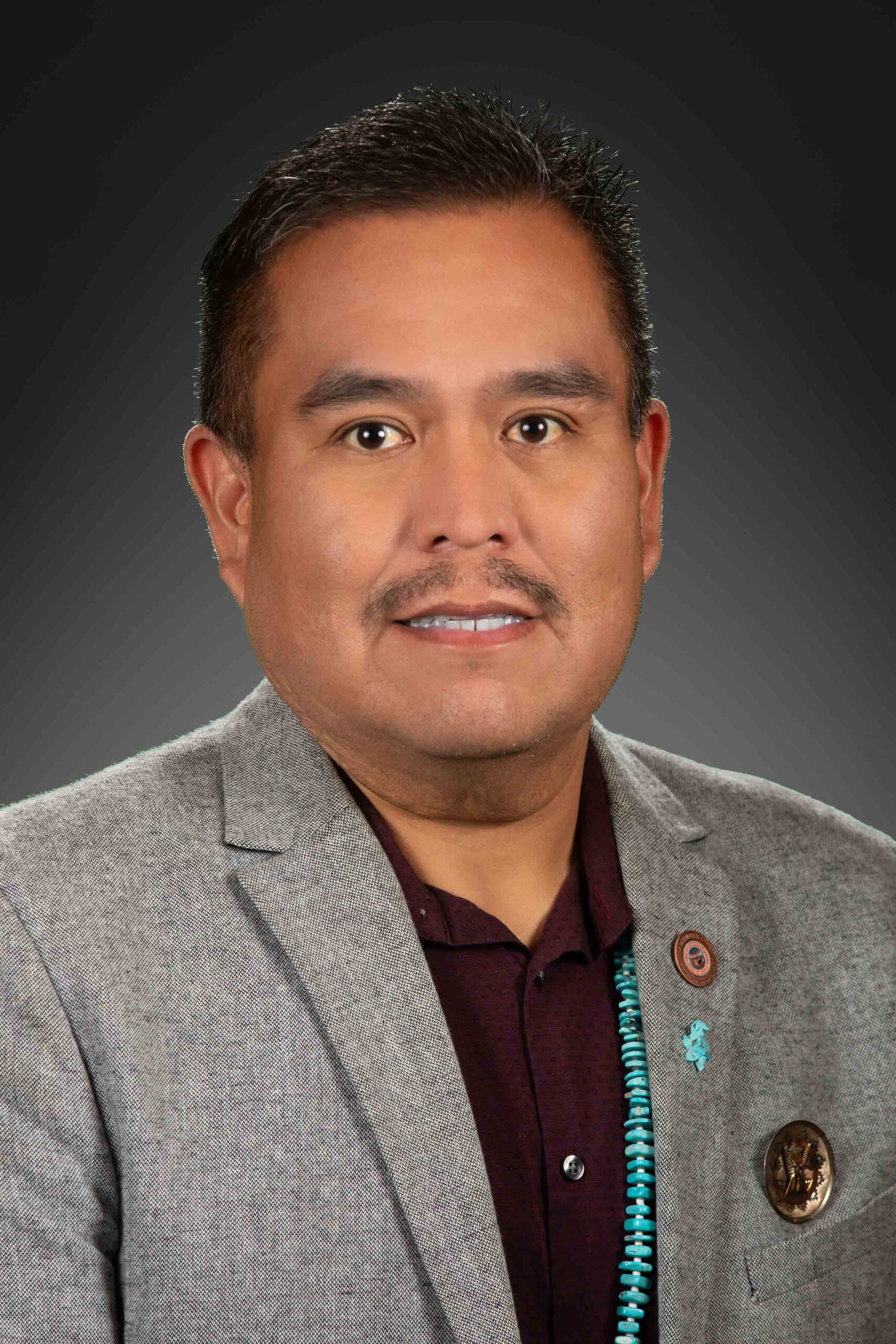
Rep. Myron Tsosie

My name is Myron Tsosie. I am Diné, a proud member of the Navajo Nation, and I reside in Chinle, Arizona, where I have spent my life serving the people of this community. Since 2014, I have served on the Chinle Unified School District School Board, working alongside local, state and national leaders in both the House and Senate on issues that matter to our students and families. The children of our community are currently left vulnerable to real harm coming from the online world, and the parents who want to protect them have not been given the tools they need to do so.

What is happening to our kids online is a serious problem, and the answers coming from lawmakers so far have not been good enough.

Social media is part of life for young people here, just as it is everywhere. It connects our students to family, information, and communities they might not otherwise find. Social media is a way young people share Diné traditions and keep our culture alive. It is also connecting our young people to the broader world while allowing them to live and practice our way of life at home. I have seen it help kids who felt alone. I take that seriously. But I have also sat with worried, frustrated parents who do not know what tools they have to protect their children. That is a problem we have to fix.

What we are doing right now is not working. States are each passing their own laws. Some require social media companies to verify ages on their own, one app at a time. Others are trying to restrict certain kinds of content. Others want outright bans. Every state is doing something different, and none of it adds up to a real solution. Diné parents in Chinle should not have to figure out which rules apply to their family based on which state’s law their child’s phone falls under. We need Congress to act, and there is a bill before them right now that I believe gets this right. The App Store Accountability Act would require age to be verified at the app store level, one time, when a phone is set up. From that point forward, a parent would have to approve their child’s app downloads. That is it. One process. One place. Parents are in control.

There is another reason I prefer this approach. When you require age verification app by app, you are asking families to hand over their children’s personal information to a long list of companies. I do not trust all of those companies to handle that data with care. Some of them have not earned that trust. The more places that data lives, the more chances there are for something to go wrong. Keeping verification in one place, through the app store, limits that exposure. It means our kids’ information is not scattered across dozens of platforms, each with its own security practices and its own incentives. That is important to me.

I also want to be clear about what will not work. There is another proposal in Congress called the Parents Over Platforms Act. It sounds good, but when you look at what it actually requires, it falls short. It does not verify anyone’s age. It just asks users to state their age. A child can say they are 18, and that answer is passed along to every app without a check. Parents are explicitly asking for a parental-approval mechanism to help them stay in the loop on their kids’ downloads. A system without verification does not provide that. Our kids and parents deserve better than that.

Arizona’s members of Congress need to hear from people in their communities on this. The problem is happening in every state. The solution has to come from Washington. I am asking them to support the App Store Accountability Act and give parents the tools they have been asking for.

Our Diné children are watching what we do. Let us make sure we are doing something that actually helps them.

Rep. Myron Tsosie is the Democratic state representative of Legislative District 6.

Resolution rejecting the term ‘West Bank’ wins approval in Arizona

Key Points:
  • Measure does not have the force of law
  • Opponents says Arizona should not get into an international issue
  • Lawmakers consider bill allowing Israel flag to be flown in Arizona

Arizona lawmakers have decided to wade into the thorny political and religious question of whether the state should recognize the West Bank by its historical name: Judea and Samaria.

Sponsored by Rep. David Livingston, R-Peoria, HCR 2047 lists all the reasons the nearly 2,200 square mile area between what had been Israel’s border before 1967 with neighboring Jordan and the Jordan River should be referred to by names that are listed in both the Old Testament and New Testament.

Israel gained control of the area during the Six Day War which pitted it against an Arab coalition primarily consisting of Syria, Jordan and Egypt.

Livingston said he aims to have the Legislature go on record as rejecting the term “West Bank” as “a modern political construct.”

But the measure has raised questions about whether its real intention is to undermine the claims of Palestinians living in the area, a population which outnumbers the Jewish settlers of the region. Despite those questions, the proposal has been approved by both the House and Senate as their formal position, although it has no force of law.

“The situation facing Palestinians today is not an abstract policy debate for many people in our state,” said Martín Quezada, general counsel for the Arizona chapter of the Council on American-Islamic Relations. “It is a humanitarian crisis that people around the world, including many Arizonans, view with deep moral concern.”

And Senate Minority Leader Priya Sundareshan said that, whatever the history of the name of the area, state lawmakers should not be getting involved. If nothing else, the Tucson Democrat said, it sets a bad precedent.

She said the claim inherent in Livingston’s legislation is the fact that the names Judea and Samaria show up in the Bible and in various historic maps. But what also is true, said Sundareshan, is that what is now called “Arizona” did not always bear that name.

Before statehood and before it became Arizona Territory, it showed up on maps as part of the New Mexico Territory.

“And long before that, we had the native inhabitants of this state, of this land, who had their own names for Arizona,” she said.

“Do you really want to open that can of worms and start putting things into statute?” Sundareshan asked colleagues during the debate. “We’d be happy to talk about the indigenous names of the land we’re currently standing on.”

The debate is not occurring in a vacuum.

The language for HCR 2047 comes almost verbatim from a draft by the National Association of Christian Lawmakers.

Livingston is its state chair, and he said NACL sponsored a trip to Israel over Thanksgiving last year for him and his wife.

“And we went to those cities,” Livingston testified.

“And it was obvious, so obvious, that this is Israel, the people there, the culture there, the historic history there, that I was moved,” he said. “And I thought it was that important that I run a bill like this.”

Livingston acknowledged this is part of a national movement, saying there are 20 states considering similar measures.

The measure drew support from Pinchas Allouche, the founding rabbi of Congregation Beth Tefillah in Scottsdale.

He said this isn’t about asking Arizona lawmakers to solve matters of diplomacy or international relations. Instead, Allouche said, this is about speaking “the truth” and that, for thousands of years, the area was known as Judea and Samaria.

“Even the most famous battle in the Bible, David versus Goliath, took place in Judea in the Valley of Elah,” he said. “By contrast, the term ‘West Bank’ was introduced in the mid 20th century by the Kingdom of Jordan which illegally occupied the territory in 1950,” he said, attempting to erase Jewish history in the area by replacing the historic names.

But Civia Tamarkin, president of National Council of Jewish Women Arizona, said she sees a different motive.

“The only purpose it serves is to further the agenda of the National Association of Christian Lawmakers,” she said. That organization has as its own mission statement to propose legislation and resolutions “to address major policy concerns from a Biblical world view.”

“It’s an attempt to make a statement about a Christian nationalist agenda,” said Tamarkin. “The only purpose is to infuse Biblical language into American liberties, into the American way of life,” she said, including American education.

And Rep. Kiana Sears said it is impossible to separate what supporters say is simply an academic exercise of renaming an area from the politics of the situation and the facts on the ground. The Mesa Democrat called the measure “appalling” and said it comes “in the face of hatred, bigotry and just basically inhumane way of vilifying and victimizing the Islamic community.”

Because the measure is crafted as a resolution, it did not need gubernatorial approval. It became effective with the majority vote of the House and Senate.

This isn’t the only measure this session dealing with Israel.

SB 1808 deals with the perennial fight over the ability of homeowner and condominium associations to regulate what flags its residents can fly. Right now that legislatively approved list includes the U.S. and state flags, flags of an Indian nation, flags honoring first responders, historic American flags, and flags remembering prisoners of war and those missing in action.

Sen. David Gowan proposed adding to that list any “flag from a nation that is allied with the United States.”

But by the time the Sierra Vista Republican was done with it, that had been narrowed sharply. As it passed the Senate 20-8 and gained preliminary House approval, it now would allow only “a flag from a nation that is allied with the United States as a major non-NATO ally and that was established on May 1, 1948.”

And that includes only Israel.

Gowan told Capitol Media Services it was always his intent to have it be an Israel-only bill.

“I have a constituent who asked me to run this bill to allow them to fly the Israel flag in their HOA,” he said. And he said he believed that the narrow focus would make it easier to get approval.

It did.

In fact, the only lawmaker who questioned the limited scope during the roll-call vote was Sen. Mitzi Epstein. The Tempe Democrat said she has a “huge problem” with a law that lists which flags are and are not acceptable.

“It represents the Arizona Legislature and HOAs censoring the speech of homeowners,” she said. “With Republican control, this list favors the priorities of the Republican majority party while quelling the speech and values of all other Arizonans.”

Epstein said the bill should have remained as originally crafted, allowing flags from all allied nations.

“But, for all of my Jewish constituents, I’m voting ‘yes,’ ” she said.

The measure still needs a final roll-call vote in the House before being ready to go to the governor.

Judge rules against ADWR’s water-based restrictions of Phoenix housing developments

Key Points:
  • Court rules Arizona Department of Water Resources acted illegally in 2023 when it restricted housing development in Phoenix over water supply concerns 
  • The state water department’s decision affected thousands of home sites
  • ADWR says it will appeal the ruling

The Arizona Department of Water Resources acted illegally when it changed its housing development regulations regarding groundwater and homes built in metro Phoenix in 2023 — a decision which left builders with thousands of lots they could not develop.

The April 21 decision from Maricopa County Superior Court Judge Scott Blaney came via a lawsuit filed on behalf of the Home Builders Association of Central Arizona and lawyers with the Goldwater Institute. They alleged that the Water Resources Department violated state law by changing how it evaluated the availability of groundwater that builders have long relied upon to meet demands of new homes.

Blaney agreed, writing that the department sidestepped the law when it unilaterally adopted a new formula for determining if a builder could pump enough groundwater to support new construction without going through a formal rulemaking process.

The 2023 decision by state water regulators was announced by Gov. Katie Hobbs and led to howls of protest from developers who had been relying on groundwater to meet the requirements of Arizona’s Groundwater Management Act, a 1980 law requiring builders to prove they have an assured water supply that will last for 100 years for each new construction. 

Until the change, the water resources department would review hydrology reports submitted by individual developers to determine if there was enough water below the proposed homes to meet the 100-year supply requirements.

But after a new study, the department determined the entire Phoenix Active Management Area, essentially the bulk of Maricopa County, was nearly 5 million acre feet short of what was needed. And the department then said it would not approve any new developments relying on groundwater because of that basin-wide shortfall. 

An acre foot is generally enough to supply three homes for a year.

The department argued it didn’t formally change its rules on determining the physical availability of water. Blaney wasn’t buying it.

“ADWR appears to argue that it can unilaterally change process and criteria while still claiming adherence to its current rules,” Blaney wrote. “This argument lacks merit and improperly elevates form over substance,” Blaney wrote.

A spokesman for the Department of Water Resources said the agency intends to appeal.

“Although there is no final judgment yet, the Arizona Department of Water Resources intends to challenge the decision once it is final,” said an agency statement.

A Goldwater Institute attorney who worked on the case, Timothy Sandefur, said the department was trying to avoid going through a formal rulemaking process under the state Administrative Procedures Act because they knew it would allow builders and others to flood them with objections.

“The agency wanted to find a way to make sure that the people didn’t have a say, and the way that they did that was by saying, ‘Oh, it turns out, we’ve discovered that the rule was always this way’ when that’s just not true,” Sandefur said. “If they were to go through the APA process, I think it would give the people an opportunity to object and say (that) by making home construction impossible, all you’re doing is raising the cost of housing and making Maricopa County unlivable. 

“So that’s why they tried to avoid going through the proper channels,” he added. “I think that if they did decide to try to go through the proper channels now, then they would have substantial opposition.”

Spencer Kamps, a lobbyist for the Homebuilders Association of Central Arizona, said tens of thousands of home sites owned by developers were affected by the 2023 decision, mainly in the far western part of the Phoenix metro area. Several of those master-planned developments already have neighborhoods that were built before the state put the brakes on issuing new certificates of assured water supplies. 

The water resources department has still been receiving applications for approval for those developments but has not been processing them. 

The agency also came up with two new ways for developers to obtain a certificate – buying up farmland and getting the water credits, called “Ag-to-Urban,” and one that creates a way to obtain assured water from alternate sources.

Kamps said neither helps the vast majority of the developments affected by the 2023 policy change.

Sanfedur said he doubts the state will succeed in an appeal.

“I think the ruling is as clear as it could be, and I have a hard time imagining what sort of legal arguments they would use if they were to try,” Sandefur said.

The 2023 decision led to news stories across the nation about how Phoenix and Arizona were running out of water, something developers, lawmakers and even Hobbs said were not accurate. Still, the finding that there simply wasn’t enough groundwater to support unbridled growth that has driven the Phoenix economy for decades stung.

“The reality is that there is plenty of water in Maricopa County to provide for the needs of development,” Sandefur said. “To have the governor and other people coming out and saying, ‘Well, there’s not enough water in Arizona,’ when, in fact, there is, is bad for the Arizona economy and bad for homeowners.”

Housing Department nominee narrowly clears Senate committee

Key Points:
  • Ruby Dhillon-Williams was narrowly approved by Senate DINO
  • Republicans raised concern over past financial mismanagement at ADOH
  • Dhillon-Williams’ nomination will go before full Senate for final vote 

The Senate Director Nominations Committee (DINO) returned this week after a nearly two month-long hiatus, narrowly approving Gov. Katie Hobbs’ second nominee to lead the Department of Housing.

Three of the committee’s five members voted to recommend the confirmation of Ruby Dhillon-Williams, who has been serving as interim director at ADOH since March 2025. It is a small win for an agency that struggled through intense legislative scrutiny in 2025 following its 2024 sunset review audit. ADOH has been without a Senate-confirmed leader since 2023.

Dhillon-Williams came to ADOH in 2020 after several years working in affordable housing development in the private sector. In addition to having a brief stint as a program manager at the department between 2010 to 2012, Dhillon-Williams started at the department as an assistant deputy director before becoming deputy director under Senate-rejected director Joan Serviss.

Dhillon-Williams’ confirmation hearing was not unlike those of the nominees who came before her. Two Republicans voted against the confirmation after nearly two hours of intense questioning regarding her opinions on the homelessness crisis and the effectiveness of government-funded affordable housing projects.

DINO Committee Chair Sen. Jake Hoffman, R-Queen Creek, and Sen. John Kavanagh, R-Fountain Hills, said they came to the April 20 confirmation hearing with the intention of voting in favor of Dhillon-Williams’ nomination, but changed their minds after hearing her answers.

Kavanagh accused Dhillon-Williams of being “evasive,” and Hoffman said she did not provide good enough answers about her attempts to improve financial processes during her time as deputy director. A 2024 auditor general report found two instances of financial mismanagement within ADOH: the approval of $8.1 million in unsupported expenses for grantees and the inadvertent payment of $2 million to fraudsters posing as a nonprofit housing organization.

Dhillon-Williams assured the committee that ADOH has rewritten its financial protocols and wire transfer procedures in the wake of those findings, but Hoffman insisted she should have identified the problems before they occurred since she oversaw the finance division in her role as deputy director. 

“There is nothing more indicative of future performance than past performance,” Hoffman told reporters after the hearing. “As I made clear, it was the Legislature and the Office of the Auditor General which identified the gaps in the process. Had the Legislature not intervened through the sunset review process as it did, we have no assurances that the Department of Housing would have made any changes.”

Hoffman also said she seemed to have a “lack of knowledge” on department information after she was unable to give him an exact number for the average cost per unit for the 10,000 affordable housing units ADOH created using the federal Low Income Housing Tax Credit program, known as LIHTC.

“LIHTC solutions have not made housing more affordable,” Hoffman told Dhillon-Williams during the hearing. “They’ve picked winners and losers, and some people have gotten the benefit of hundreds of millions of dollars, in aggregate, of government subsidies.That hasn’t actually done anything to help move the needle in terms of affordability.”

Kavanagh asked Dhillon-Williams to opine on the housing-first versus treatment-first debate in reducing the state’s homeless population, though he referred to it as “housing-first versus cure-first.” The debate surrounds whether individuals experiencing homelessness should first be required to undergo mental health or substance abuse treatment before being allowed to rent an affordable housing unit.

“I believe that it’s really important to evaluate each individual and find the best intervention that helps,” Dhillon-Williams told Kavanagh. “I don’t believe there’s a silver bullet or magic pill that will make sure an individual can move through the housing continuum successfully without evaluating the needs of that individual.” 

Kavanagh was not satisfied with that answer and continued pressing her until he felt she answered the question correctly. 

“Okay, that’s cure-first,” Kavanagh said after one of Dhillon-Williams’ responses. “A little tough getting that out, I know it can be difficult.” 

Sen Analise Ortiz, D-Phoenix, voted in favor of Dhillon-Williams’ nomination and called out her Republican colleagues for spreading “misinformation” about LIHTC and affordable housing.

“Nobody is going around giving away free apartments to anyone right now, and anyone who thinks that has not had a conversation with those who work in this space and know just how challenging it is for people who are looking for housing,” Ortiz said while explaining her vote. “… and anyone who thinks that LIHTC isn’t making a difference has never talked to a veteran who has been on the waitlist for low-income housing for a year or more, who has been told that they finally have keys to their own place.” 

Sen. T.J. Shope, R-Coolidge, ultimately voted alongside Ortiz and Sen. Flavio Bravo, D-Phoenix, to advance Dhillon-Williams’ nomination out of the committee. Notably, Hoffman commended Dhillon-Williams for her professionalism and her relationships within the regulated housing industry, a departure from his typically adversarial interactions with Hobbs’ nominees.

“To your credit, I think you are a lovely person,” Hoffman told Dhillon-Williams before voting against her nomination. “I think that you certainly have built incredible relationships and I’m sure you know this industry incredibly well. None of my commentary should detract from those things.”

Dhillon-Williams’ nomination will need to clear the full Senate before she is officially confirmed, which likely won’t occur for another week since the Senate is adjourned until April 27. 

“At this point I anticipate being a ‘no’ on the floor and I anticipate sharing my great concerns with members of the majority,” Hoffman told reporters after the hearing. “The ball is in their court, they now have to work members to see if they can get (Dhillon-Williams) across the finish line.” 

Other nominees, like Department of Environmental Quality Director Karen Peters and Department of Agriculture Paul Brierley, have been confirmed by the full Senate without Hoffman’s support, making Dhillon-Williams’ confirmation unclear but not out of the realm of possibility.

Arizona home builders want to reduce housing prices by eliminating city standards

Key Points:
  • Arizona House proposal aims to lower housing prices by blocking city design standards
  • Proposal would remove requirements for garages, patios and fencing in new homes
  • Critics argue the bill could lead to poorly built homes

They’re either ensuring more affordable homes, or they’re building junk houses.

That’s the basic breakdown of a proposal awaiting a vote in the Arizona House that would upend decades of municipal design standards builders are required to follow to develop new housing tracts across the state.

The proposal is the latest effort by builders and housing advocates on both sides of the political aisle to address high housing prices for single-family homes.

The method? Block cities and towns from requiring everything from garages, paved driveways, backyard patios or fencing between new homes or even main streets. That also includes any city or town standards requiring specific exterior designs, exterior lighting, roofing pitches, floorplans or exterior color requirements.

Also gone would be any requirements for developers to put in neighborhood parks, common areas or landscaping that would require a homeowner’s association and its associated fees. 

Without those new rules, proponents argue home buyers face being pushed out of a market now averaging nearly $500,000 for a new home. 

Opponents argue cities are best suited to making decisions on zoning, standards for new home development and neighborhood character, and that blocking their longstanding rules for new homes could see poor quality homebuilding that doesn’t stand the test of time.

They also note there’s nothing in the proposal requiring builders to pass on the savings to buyers, meaning big national builders could just pocket the savings they see from making cheaper-quality homes.

Sen. Shawnna Bolick, R-Phoenix, is the main sponsor of Senate Bill 1431, this year’s iteration of a measure previously dubbed the “Arizona Starter Homes Act.” The proposal failed in the past two legislative sessions but has seen new bipartisan momentum this year while moving through the chambers.

Bolick argues her bill is a much needed stopgap for rising home prices — prices which she says her own adult children cannot afford. More importantly, she says new home buyers are willing to forego the amenities for a more affordable home. 

“I can tell you, having 20 year olds and meeting with their friends over the weekend, they are all struggling,” Bolick said on March 2. “Because when they go and look at different communities, there are a lot of things in those developments on even a smaller house that they don’t want.”

The average age of a first-time home buyer has soared in the past 20 years and a December survey by the National Association of Realtors put it at an all-time high of 40. The same report showed that first-time buyers dropped to a record low of 21%, a drop of 50% since 2007, driven down by low inventories of budget-priced starter homes.

The toughest part of the bill’s journey so far has been the Senate, where Bolick faced a potentially dead measure had she not reached out for support. 

Sen. Lauren Kuby, D-Tempe, argued against the measure, noting her previous work with an Arizona State University center focused on housing affordability.

“And that work that I did with the university reinforced a core truth — that neighborhoods are not just collections of houses,” Kuby said. “They must include the social determinants of health, be it parks, walkable streets, green space, gathering places and safe, connected communities, all with the goal of creating healthy communities.”

“So I believe this bill broadly preempts local building standards and imposes a one-size-fits-all state mandate,” she said. “Cities and towns should retain the ability to require thoughtful design and shared amenities like small green space.”

Another Democrat, Sen. Analise Ortiz of Phoenix, strongly supported the bill, calling it “a common-sense measure” and bemoaning the fact that, at the time, it was failing. 

“You know, we consistently talk about the need to pass measures that will make home ownership more affordable and make Arizona more affordable,” Ortiz said. “This bill will do that.”

And she noted that the idea is bipartisan.

“If you look across the country, you have Democratic governors and Republican governors both agreeing that this is the type of policy that, in a common-sense way, will drive down the cost of home ownership,” Ortiz said.

Bolick then urged senators to change their minds and back the measure — with the promise that the bill before them wasn’t necessarily the final product.

“We are still working on potential amendments, so if you don’t love the bill, that’s wonderful,” she said, promising changes in the House. “We had a bill that was totally different last year, and I did say that I would continue to work in the House on the bill.”

Those changes, however, never happened in the House.

Bolick never asked for any amendments during a hearing of the House Commerce Committee. And none came this past week, when the measure passed on a voice vote of the full House with no changes.

A formal vote is needed before the measure goes to Gov. Katie Hobbs for her to consider.

The measure still contains the bones of last year’s proposal, preempting cities from requiring many amenities like fencing and garages, but gone are the most contentious issues, requirements that cities approve lot sizes as small as 3,000 square feet and setbacks of just 10 feet from the street. 

Cities are united in opposition, with dozens of representatives, including from Tucson, signing in in opposition. 

Nick Ponder, a lobbyist for several cities and for the League of Arizona Cities and Towns, told a Senate committee earlier this year that the measure presents a false choice, with many proponents presenting it as a proposal letting homebuyers decide about amenities, while those decisions are actually made by developers long before buyers enter the picture. He also noted that precluding city requirements for open space, stormwater retention and small community parks shifts those responsibilities to the broader community.

And those items and city design standards more broadly aren’t what is driving up costs, he said.

“It is the land value that is driving up costs,” Ponder told a Senate committee earlier this year. “Maricopa is more affordable — but it is more affordable because it is a little farther away.”

“It always goes back to the key tenet of real estate: location, location, location,” Ponder said.

At that same hearing, Sen. Brian Fernandez, D-Yuma, said he doubted home prices would fall if the bill passed.

Making housing affordable should be our goal — I just don’t know if this does it because I think that the prices will just rise with the markets,” he said. “This is all supply and demand. (As) these houses become available, Black Rock or some group will buy them up, and then they’ll just keep them and sell them when they’re able to make a bigger profit on them.

Also gone is a provision making it only apply to cities with population over 70,000 people — so if enacted and signed by Gov. Katie Hobbs, Bolick’s proposal would apply statewide.

Survey: What makes a good election in the eyes of Arizonans?

Dr. Sybil Francis
Dr. Sybil Francis

Elections matter. Voting matters. That’s what we learn in school. But changes being proposed to how Arizonans vote at the national and state levels would make your civics teacher cry. But even more importantly, the proposed changes — most designed to make voting more difficult — fly in the face of what large majorities of Arizonans say matters to them when it comes to voting and elections. I know this from multiple public opinion surveys we have conducted over the years.

For over two decades, we at the Center for the Future of Arizona have asked Arizonans across the state for their thoughts on issues critical to Arizona’s future, including education, health care, immigration and the environment. Our aim is to advance the voices of Arizonans on what matters to them and to our state’s future. We want to help leaders in our state see that Arizonans agree on many important issues, even when their voices get drowned out by partisan politics.

Our most recent survey explores what Arizonans believe a good election should deliver — regardless of party, candidate or outcome. 

We started with a very basic question. Do Arizonans think fair and secure elections are important to a healthy democracy? The answer is virtually unanimous: 97% of Arizonans agree. This is the highest level of agreement we have seen in two decades of public opinion research. And a significant majority of Arizonans believe that their vote makes a difference, with 79% believing that it does. The voices seeking to undermine trust in elections and claims of voter fraud have not eroded these fundamental beliefs.

And what do Arizonans think about some of the proposed changes to how elections are run? Do these hot button issues resonate with Arizonans? Where do Arizonans stand on limiting or eliminating the option to cast their vote by mail, cutting off early ballot drop-off before election day, speeding up reporting of election results, or reverting to precinct voting?

The disconnect between these proposals and what Arizonans actually want could not be greater.

With regard to voting by mail, 81% of Arizonans want to keep their option to do so. That’s a supermajority and includes majorities of Republicans, Democrats and independent/unaffiliated Arizonans. In 2024, 81% of ballots in Arizona were cast using returned mail-in ballots.

And while Arizonans certainly think receiving timely results is great, nearly seven in 10 prefer preserving their option to drop off their early ballot up to, and on, election day. We asked if they preferred this option even if it means election results take longer to report, and the answer was clear: yes. In 2024, an estimated 8% of Arizona’s votes were mail-in ballots returned in person on election day. 

With regard to voting centers, 89% of Arizonans want more voting centers, including 91% of Republicans, 95% of Democrats, and 83% of independent/unaffiliated Arizonans. These and other trends in our survey results show that Arizonans want more and more convenient options to vote, not fewer.

Finally, we asked Arizonans what makes a good election. What should a good election deliver regardless of your party or whether or not you like the outcome? How do you want to experience voting? Among nine core principles we asked about, three clear priorities rise to the top: accuracy, trustworthiness and transparency. Other priorities considered essential include voter access, fiscal responsibility, voter participation, preserving multiple ways to vote and the safety of voters and election workers.

Only one principle fell below 50% support: speed of reporting results. Speed is important to voters, but it’s not as important as accuracy, trustworthiness, transparency or other priorities such as voter access and convenience.

What does this mean for current debates about how elections are designed and run?

Arizonans have spoken on these issues. Will leaders listen? What will this mean for current debates about how elections are designed and run? Will the policies advanced reflect the interests of the voters or run cross-wise with them?

Listening to Arizonans and understanding their priorities doesn’t end debate, but should inform it. As changes to elections are considered, we should ask whether they align with what voters say are hallmarks of a good election. Arizonans know what matters to them, and that should matter to everyone, including our elected leaders.

Sybil Francis, Ph.D. is chair, president & CEO of Center for the Future of Arizona, a nonprofit, nonpartisan organization that brings Arizonans together to create a stronger and brighter future for our state.

You don't have credit card details available. You will be redirected to update payment method page. Click OK to continue.