Sign In
Upcoming Event
 Free Newsletter

New law provides clarity for firefighters’ health insurance
Howard Fischer, Capitol Media Services//July 14, 2026//
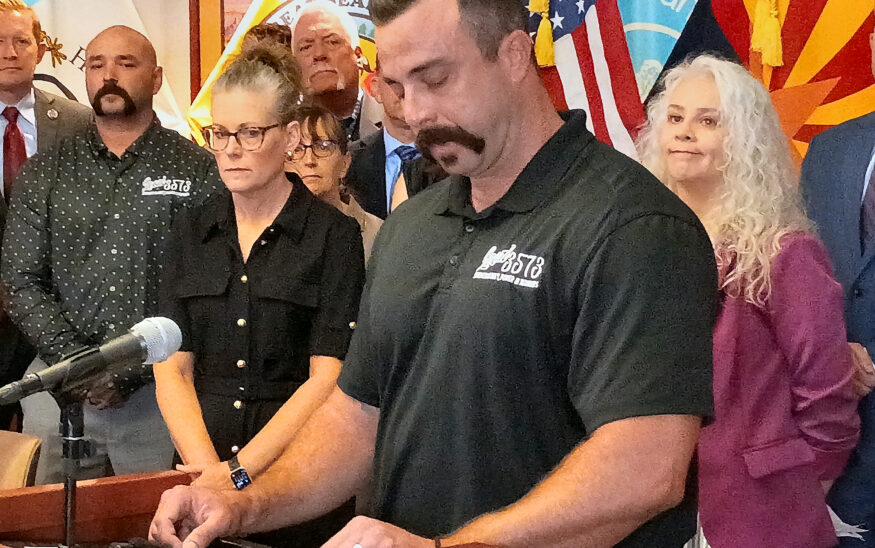
Firefighter Matthew O'Reilly details the hurdles he had to overcome to get his workers' compensation insurer to cover his cancer because of a missing comma in current law. (Capitol Media Services photo by Howard Fischer)
New law provides clarity for firefighters’ health insurance
Howard Fischer, Capitol Media Services//July 14, 2026//


PHOENIX — Firefighters denied insurance coverage for potentially deadly illnesses because of grammatical confusion in the state’s workers’ compensation package are finding relief in a new state law.
Prior to the adoption of Senate Bill 1215, presumptively covered conditions were listed in a single sentence, leading to disputes about what health insurance covers. Now, each of the 23 conditions has its own numbered paragraph.
Take the case of Matthew O’Reilly, a firefighter in Sun City, who was diagnosed with glandular cancer after a routine screening and had his thyroid removed. The insurer refused to pay for the treatment, claiming his cancer, known as adenocarcinoma, was not covered.
The dispute centered on the wording in the law that covered “adenocarcinoma or mesothelioma of the respiratory tract.” The insurer claimed his non-respiratory adenocarcinoma was not covered.
The sponsor of the bill, Sen. Kevin Payne, a Peoria Republican, said there should have been a comma after adenocarcinoma, to make it clear that the provision about respiratory tract included only mesothelioma.
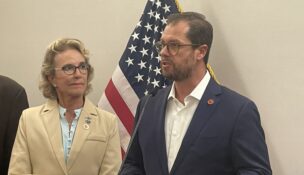
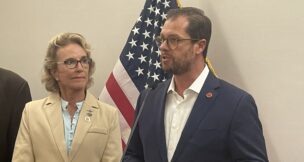
Punctuation disputes should not hinder coverage, O’Reilly said when Gov. Katie Hobbs signed the bill into law last month.
“As firefighters, we know that the job comes with risks,” O’Reilly said. “But if one of those risks gets you sick because of the job, we should not be abandoned; we should not have to prove over and over against the law what the law means and what it’s intended to mean.”
Dan Freiberg, president of the 9,000-member Professional Fire Fighters of Arizona, said the legislation sends an important message.
“Arizona will not allow insurance companies to exploit ambiguity in the law at the expense of sick firefighters,” he said.
Firefighters also gained another change in law designed to protect their health and prevent them from becoming ill in the first place.
HB 2641, which was also signed last month, prohibits the use of PFAS — a category known as “forever chemicals” — in the foam firefighters use to put out blazes.
The chemicals help the foam spread over burning flammable liquids, helping to shut off the flow of oxygen.
Arizona lawmakers, aware of the health hazards, had previously forbidden the use of PFAS, which have a known link to cancer, in foam used for testing and training. But it left the door open for other uses during actual firefighting.
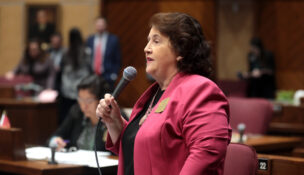
Rep. Sarah Ligouri, a Phoenix Democrat, said there is no reason for that exception, given the known health hazards posed by the chemicals.
“Firefighters spend their career running toward danger,” Ligouri said.
“Every time a firefighter answers a call, they accept risks the rest of us hope we never have to face,” she said. “But they shouldn’t have to prevent risks that are preventable.”
Liguori, noting the inherent risks of cancer to firefighters, said it makes sense to eliminate at least one risk factor.
She also said that anything that reduces PFAS use helps everyone else, what with the chemicals showing up in drinking water in many communities.
The immediate ban on PFAS in firefighting foam in Arizona does have an exception for public airports — at least through the end of 2030. That is in line with changes to the Federal Aviation Administration Reauthorization Act of 2024, which sets the same date.
Freiberg said the theme behind both new laws is to provide additional protections against the risks inherent in what is an inherently “dangerous job.”
“We know what it means to run toward danger when everybody else is running away from it,” he said.
“But the greatest threat facing firefighters today is not the fire directly in front of us,” Freiberg said. “It’s what follows us home: toxic smoke, burning plastics, diesel exhaust, contaminated gear, dangerous chemicals we cannot see. We can’t smell them, and we also cannot avoid them.”